
Did you know that 80% of people surveyed in Singapore are reactive to house dust mites? In our humid tropical climate, your bed can quickly become a breeding ground for microscopic triggers, contributing to the fact that nearly 40% of local adults suffer from allergic rhinitis. If you’re waking up with a stuffy nose or itchy skin, you’re likely wondering how often should you professionally clean your mattress to protect your family’s health. While changing your sheets is a vital habit, it doesn’t address the deep-seated allergens and stubborn yellow sweat stains that accumulate within the layers of your bed.
This guide reveals the scientifically backed frequency for mattress sanitation in 2026, moving beyond simple calendar dates to a more precise “Micro-Climate Audit” of your bedroom. We understand that a high-quality mattress is a significant investment in your well-being. You’ll discover how to identify the invisible signs that your bed needs professional intervention and learn how specialized deep extraction processes can remove contaminants. By the end of this article, you’ll have a clear roadmap to prolonging your mattress’s lifespan and achieving a sanitized, allergen-free environment for better sleep quality.
Key Takeaways
- Adopt a 3 to 6-month cleaning cycle to counteract Singapore’s 80% humidity levels, which can transform mattresses into micro-incubators for allergens.
- Perform a mattress health audit using the “Morning Sneeze Test” and odor checks to detect deep-seated contaminants that are invisible to the naked eye.
- Determine how often should you professionally clean your mattress by evaluating specific lifestyle factors, such as pet ownership and existing respiratory sensitivities.
- Understand the technical limitations of household vacuums and why industrial-grade suction is necessary for effective deep-core sanitization.
- Secure a healthier home environment through professional decontamination processes that eliminate bacteria and dust mites without leaving toxic residues.
The General Rule vs. The Singapore Reality: When to Clean?
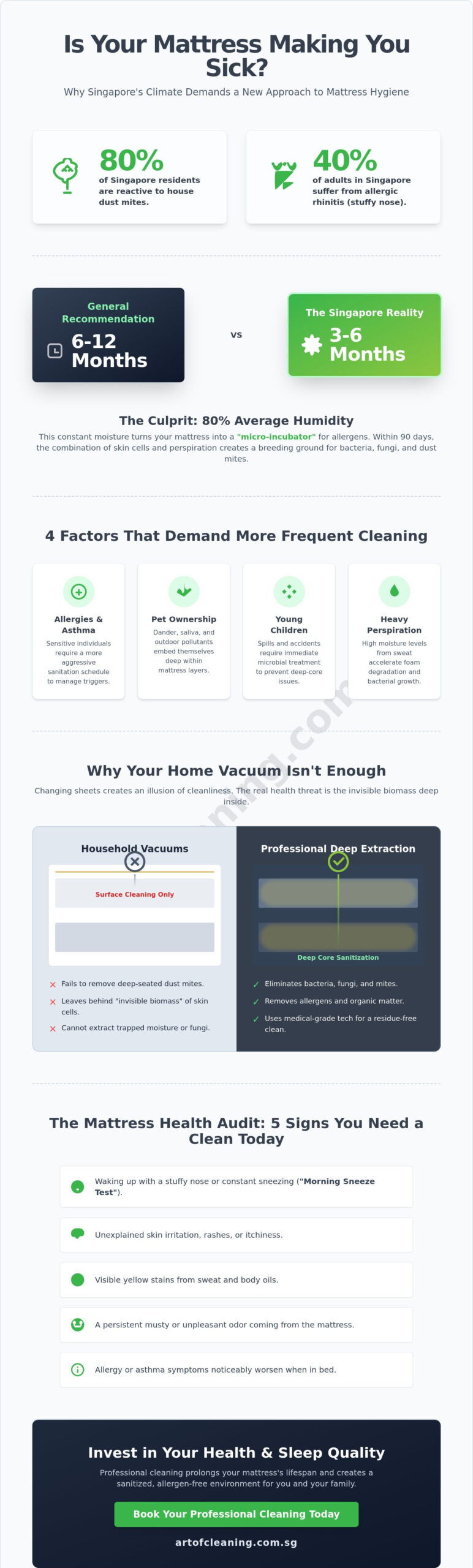
Standard international guidelines often suggest that a deep clean every six to twelve months is sufficient for the average household. In Singapore, these generic timelines fail to account for the unique environmental stressors of the tropics. Local health data and specific climate conditions suggest that residents should actually consider how often should you professionally clean your mattress based on a significantly shorter three to six-month cycle. Our region’s consistent heat and humidity create a unique set of challenges that standard Western advice simply doesn’t address.
The primary driver for this accelerated schedule is our consistent 80% average relative humidity. This moisture transforms a standard bed into a “micro-incubator” for bacteria, fungi, and microscopic pests. Within the first 90 days of use, even a high-end mattress begins to accumulate a significant amount of organic matter. This creates a “Critical Hygiene Window” where the combination of shed skin cells and perspiration reaches a tipping point, inviting rapid microbial colonization and pest infestation that can affect your respiratory health.
Why Singapore Households Need More Frequent Cleaning
Dust mites don’t just exist in our beds; they thrive in humidity levels above 70%. In Singapore, these microscopic organisms find an ideal sanctuary within the porous structures of your mattress. Many homeowners rely on air-conditioning to stay cool, but fluctuating temperature patterns often lead to moisture being trapped deep within the fibers once the unit is turned off. This stagnant humidity accelerates the reproduction cycle of pests. The hygiene threshold for tropical sleeping environments is defined by the point where accumulated moisture and organic biomass trigger a measurable decline in air quality within the immediate breathing zone.
Defining “Professional Clean” vs. Regular Maintenance
It’s a common misconception that changing your bedsheets equates to a truly clean bed. While laundering linens removes surface oils and odors, it does nothing for the “invisible biomass” buried inches deep within the foam or springs. This mixture of dead skin, salts, and the dangers of dust mites—specifically their potent waste products—remains untouched by standard household tools. Surface-level cleanliness is a dangerous illusion in the tropics because the most significant health risks are hidden from plain sight. To combat this effectively, Art of Cleaning utilizes medical-grade technology designed to penetrate the mattress core. This ensures a level of sanitation that household maintenance simply cannot replicate. Knowing how often should you professionally clean your mattress ensures you aren’t just sleeping on a clean surface, but in a truly healthy environment.
4 Factors That Shorten Your Cleaning Interval
While the tropical climate sets a baseline for hygiene, your personal lifestyle dictates exactly how often should you professionally clean your mattress. Standard recommendations rarely account for the specific biological and environmental loads that different households carry. If your home falls into one of the following categories, a six-month cleaning cycle is likely insufficient to maintain a safe sleeping environment.
- Allergies and Asthma: Sensitive individuals react to even trace amounts of allergens, necessitating a more aggressive sanitation schedule.
- The Pet Factor: Dander, saliva, and microscopic outdoor pollutants often bypass standard protectors, embedding themselves deep within the mattress layers.
- Young Children: Accidental spills or bed-wetting incidents require immediate microbial treatment to prevent deep-core colonization.
- Sweat and Body Oils: High-metabolism sleepers or those who prefer sleeping without air-conditioning produce higher moisture levels, which can accelerate foam degradation and bacterial growth.
To help manage these factors, many homeowners refer to a mattress cleaning guide for basic maintenance. However, specialized intervention is required when these factors overlap. Understanding how often should you professionally clean your mattress helps prevent the accumulation of “invisible biomass” that compromises your health.
The Impact of Chronic Respiratory Conditions
Nearly 40% of Singapore’s adult population is troubled by allergic rhinitis, a condition frequently triggered by dust mite excrement. For these individuals, we recommend a strict three-month cleaning cycle. This frequency prevents “Allergen Loading,” a phenomenon where high-density mattress foams trap microscopic particles that standard vacuums cannot reach. When these triggers accumulate, they often lead to nighttime coughing and disrupted sleep patterns. Maintaining a low allergen count is a scientific necessity for those with active asthma cases, as 15% of local adults are affected by this condition.
Co-sleeping with Pets and Children
Biological fluids like sweat, saliva, and urine don’t just stay on the surface; they penetrate into the deeper layers of the mattress. Once these fluids reach the core, they create a risk of bacteria and mold growth from “hidden” spills that may seem dry to the touch. This is particularly concerning in multi-user beds where the biological load is doubled or tripled. Utilizing professional upholstery cleaning services ensures that these deep-seated contaminants are neutralized through precision extraction. If your bed is a shared space, a quarterly check-up is the most reliable way to guarantee the safety of your family. You can easily schedule a health audit to ensure your sleeping environment remains pristine.
Why Your Home Vacuum Isn’t Enough
Many homeowners assume that a weekly run with a high-end cordless vacuum is enough to maintain hygiene. It isn’t. The “Suction Gap” between consumer electronics and industrial-grade machinery is significant. While a household motor might effectively clear surface lint, it lacks the static lift required to reach the core of a ten-inch mattress. Standard vacuums are built for airflow on hard surfaces; professional extractors are engineered for deep-tissue penetration. Without sufficient industrial power, you’re merely cleaning the “skin” of the bed while the core remains a reservoir for contaminants.
Relying on baking soda is another common mistake often suggested in DIY forums. While baking soda acts as a mild deodorizer for surface-level odors, it’s not a deep-core sanitizer. It doesn’t neutralize bacteria or kill the pathogens living deep within the foam layers. In fact, using improper DIY tools or low-power vacuums can cause a vibration that inadvertently “pushes” dust and debris further down. This technical reality is a major factor when deciding how often should you professionally clean your mattress to avoid permanent buildup within the internal structure.
The Myth of the Mattress Protector
Even high-quality waterproof membranes have a shelf life. Microscopic skin cells and dust mite waste eventually permeate these barriers through the “Pumping Effect.” Every time you sit or lie down, your body weight acts as a bellows, forcing air and fine particles through the fabric pores and into the mattress core. Over time, the underside of your protector can actually trap moisture against the mattress, accelerating mold growth. Protectors should be viewed as excellent delay tactics, but they aren’t a total solution for long-term sanitation.
Deep Extraction: The Only Way to Reach the Core
To achieve true sanitation, you need the specialized mechanics of deep-core extraction. Art of Cleaning utilizes medical-grade technology that goes far beyond surface-level suction. Our process involves targeted agitation combined with industrial-strength lift to pull out years of accumulated organic matter. By utilizing 170°C high-temperature steam, we effectively neutralize pathogens that thrive in the dark, humid center of the bed. Our professional equipment removes 99% of deep-seated allergens, providing a level of safety that a household vacuum simply cannot replicate. Understanding how often should you professionally clean your mattress ensures that these deep extraction methods are applied before the “invisible biomass” becomes a permanent health hazard.
The Mattress Health Audit: 5 Signs You Need a Clean Today
Determining how often should you professionally clean your mattress doesn’t have to be a guessing game. While the three to six-month rule provides a baseline, your bed often provides physical and biological signals when it has reached its hygiene limit. Conducting a self-audit is the most effective way to identify if your sleeping environment has become a liability to your health. Start by performing the “Morning Sneeze Test.” If you experience congestion or sneezing immediately upon waking that clears up once you leave the bedroom, your mattress is likely saturated with allergens.
Next, perform an odor check. Over time, body oils oxidize within the foam, creating a distinct “stale” or slightly sour smell that persists even after you’ve changed the sheets. You should also look for visual cues like yellowing or spotting, which indicate moisture penetration. Unexplained skin rashes or “itchy eyes” at night are often direct reactions to dust mite activity. Finally, consider the age factor. Any mattress over three years old that hasn’t been deep-sanitized already carries a significant contaminant load, regardless of how clean it looks on the surface.
Physical Indicators of Microbial Growth
Take a close look at the seams and piping of your mattress. In our humid climate, these areas are the first to show early signs of mold or mildew, appearing as tiny dark dots. You can also test for “dust plumes” by firmly patting the surface of the mattress in a well-lit room. If you see a visible cloud of particles rising, it’s a sign that the internal layers are packed with debris. For units that have reached this stage, specialized deep cleaning services are necessary to restore the core’s integrity.
Health Alerts: Listening to Your Body
It’s important to distinguish between general seasonal allergies and “bed-borne” triggers. If your symptoms, such as itchy eyes or a scratchy throat, peak specifically while you are in bed, the source is almost certainly within your mattress. Dust mites are the primary cause of respiratory allergies in Singapore, and their waste products are highly concentrated in older, untreated beds. To stay ahead of these risks, you can review Art of Cleaning’s price list to plan your next maintenance session. Monitoring these signs helps you decide how often should you professionally clean your mattress based on actual health needs rather than just the calendar. If you notice any of these signs, contact Art of Cleaning today to restore your home’s safety.
The Art of Cleaning Method: Professional Hygiene for Singapore Homes
At Art of Cleaning, we view mattress sanitation as more than just a service; it’s a critical health intervention. Our multi-stage decontamination process is designed to penetrate from the surface deep into the core, removing the accumulated organic biomass that thrives in our tropical climate. We prioritize family-friendly solutions that utilize non-toxic, hypoallergenic agents. This ensures your sleeping environment is free from dust mites and bacteria without leaving behind any harmful chemical residues. Our technicians are trained as artisans of hygiene, applying a level of meticulous care that goes far beyond standard cleaning routines.
Premium mattresses from brands such as King Koil, Sealy, and Simmons represent a significant financial investment in your well-being. Improper cleaning or neglecting how often should you professionally clean your mattress can lead to premature foam degradation and the permanent setting of sweat stains. Our specialized methods are engineered to protect these high-end materials while ensuring total sanitation. By maintaining a clean internal structure, you effectively prolong the lifespan of your mattress and preserve the specific comfort layers you invested in. We treat every bed with the precision it deserves, ensuring that visual results are always matched by deep-core health standards.
Our Specialized Mattress Cleaning Process
Our systematic approach begins with high-powered industrial extraction to remove loose debris, dander, and skin cells. We then apply specialized disinfection technology, utilizing 170°C high-temperature steam to neutralize 99% of bacteria and pathogens embedded within the fibers. A critical, often overlooked step in our process is the thorough post-cleaning drying phase. Given Singapore’s high humidity, ensuring the mattress is completely dry is essential to prevent the immediate return of mold or mildew. This rigorous methodology and commitment to precision are why we’ve been featured on major national media platforms as a trusted authority in domestic hygiene and safety.
Investing in Your Long-Term Health
A simple cost-benefit analysis reveals that regular professional cleaning is far more economical than the premature replacement of a high-quality mattress. Beyond the financial aspect, the health benefits of breathing clean, allergen-free air for eight hours every night are immeasurable. We recommend establishing a recurring hygiene schedule tailored to your household’s specific needs. Whether you require a three-month cycle for active allergy management or a six-month cycle for standard maintenance, consistency is the key to a safe home. Determining how often should you professionally clean your mattress is the first step toward a healthier, more restorative sleep. To secure your sleeping environment and protect your family, contact Art of Cleaning to schedule your scientific deep clean today.
Securing Your Sleep Environment for a Healthier 2026
Maintaining a hygienic bedroom in Singapore’s humid climate is a scientific necessity rather than a seasonal chore. We’ve explored how consistent 80% humidity levels accelerate dust mite reproduction and why standard household vacuums fail to reach the core of your bed. By understanding how often should you professionally clean your mattress, typically every three to six months, you can effectively neutralize the invisible biomass that triggers respiratory distress.
Since 2018, Art of Cleaning has been trusted by thousands of local families to safeguard their home environments. Our specialized medical-grade deep extraction technology is designed to remove 99% of deep-seated allergens. This level of technical precision has led to our services being featured on MediaCorp and major national news outlets. We don’t just clean for aesthetics; we sanitize for health and long-term well-being.
Don’t wait for persistent allergies or stale odors to disrupt your rest. Take a proactive step toward better sleep quality and a longer-lasting mattress today. Book Your Professional Mattress Deep Clean with Art of Cleaning Today. Your journey to a truly sanitized home starts with a single professional audit.
Frequently Asked Questions
How much does professional mattress cleaning cost in Singapore?
Professional pricing typically depends on the size of the bed and the specific decontamination methods required. Most service providers in the local market offer tiered rates for single, queen, and king-sized units. It’s advisable to check a transparent price list to ensure the quote includes medical-grade sanitization and deep extraction rather than just a surface-level vacuuming.
Can professional cleaning remove old yellow sweat stains?
Deep extraction technology can significantly fade or completely remove yellow sweat stains by neutralizing the oxidized body oils trapped in the fibers. However, the success rate depends on how long the stain has been allowed to set and the mattress material. Addressing these marks promptly helps you decide how often should you professionally clean your mattress to prevent permanent discoloration of the fabric.
How long does the mattress take to dry after a professional deep clean?
A mattress usually requires four to six hours to dry completely after a deep extraction service. Factors such as ambient humidity and bedroom ventilation play a significant role in this timeline. Technicians often recommend keeping windows open or using a ceiling fan to accelerate the moisture evaporation process. This ensures no residual dampness remains to trigger mold growth in our humid climate.
Is mattress cleaning effective against bed bugs?
High-temperature steam cleaning is highly effective at killing bed bugs and their eggs on contact. While deep sanitization removes these pests from the mattress surface and seams, it’s not a substitute for a full pest control treatment if the infestation has spread to the walls or furniture. Professional cleaning serves as a vital first step in decontaminating your immediate sleeping area.
Do I need to clean a brand-new mattress before using it?
Cleaning a brand-new mattress is a proactive step to remove manufacturing residues, warehouse dust, and volatile organic compounds. New units often undergo chemical treatments during production that can cause respiratory irritation for sensitive individuals. A quick professional sanitization ensures that your first night on a new investment is both safe and allergen-free.
Can professional mattress cleaning help with my nighttime asthma?
Yes, professional sanitization is a primary defense against asthma triggers in the bedroom. Research indicates that 15% of Singapore’s adult population is affected by asthma, with house dust mites being a leading cause of respiratory distress. By removing the microscopic waste products embedded deep within the foam, you can significantly reduce nighttime coughing and improve your overall sleep quality.
Is the cleaning process safe for babies and pets?
The sanitization process utilizes non-toxic, hypoallergenic solutions specifically chosen for their safety in family environments. These medical-grade agents effectively neutralize pathogens without leaving behind toxic residues that could irritate a baby’s sensitive skin or a pet’s respiratory system. This health-first approach ensures that the entire household can sleep safely immediately after the mattress has dried.
What is the difference between steam cleaning and dry mattress cleaning?
Steam cleaning utilizes high-temperature vapor to penetrate the core and kill bacteria, while dry cleaning often relies on low-moisture chemical compounds or powders. In Singapore’s humid environment, steam is generally preferred for its ability to sanitize deeply and neutralize the 80% of dust mites that locals are reactive to. Understanding these technical differences helps you determine how often should you professionally clean your mattress for optimal hygiene.