
Did you know that by 2026, the global mattress cleaning market has grown to an estimated $1.605 billion? This surge reflects a critical shift in how we view home health, moving beyond surface aesthetics to address the biological contaminants hiding in our bedding. Finding yellow marks on your bed can be deeply frustrating, especially when you consider that these stains often harbor dust mites and bacteria. Effective sweat stain removal from mattress fibers isn’t just about appearances; it’s a vital step in maintaining a sanitized sleeping environment for your family.
We understand the hesitation that comes with cleaning high-end materials like memory foam, where a single mistake with water or harsh chemicals can cause permanent damage. You deserve a solution that balances rigorous hygiene with material safety. This guide reveals the scientific approach to eliminating stubborn yellowing while restoring your mattress to its original, pristine state. We will walk you through professional-grade sanitization methods, EPA Safer Choice standards, and the precise steps required to prevent future stains from taking hold.
Key Takeaways
- Identify the biological triggers behind yellowing, including urea and sebum oxidation, to effectively neutralize odors at their source.
- Recognize the health implications of accumulated sweat, which serves as a primary food source for dust mites and bacteria within your bedding.
- Apply safe, scientific methods for sweat stain removal from mattress surfaces that eliminate stubborn marks without compromising the integrity of foam layers.
- Evaluate the limitations of standard household tools compared to professional “Deep Extraction” processes that reach contaminants trapped deep within the fibers.
- Establish a proactive maintenance routine using barrier protection and professional hygiene checks to ensure a sanitized sleeping surface year-round.
Understanding the Science of Sweat Stains on Your Mattress
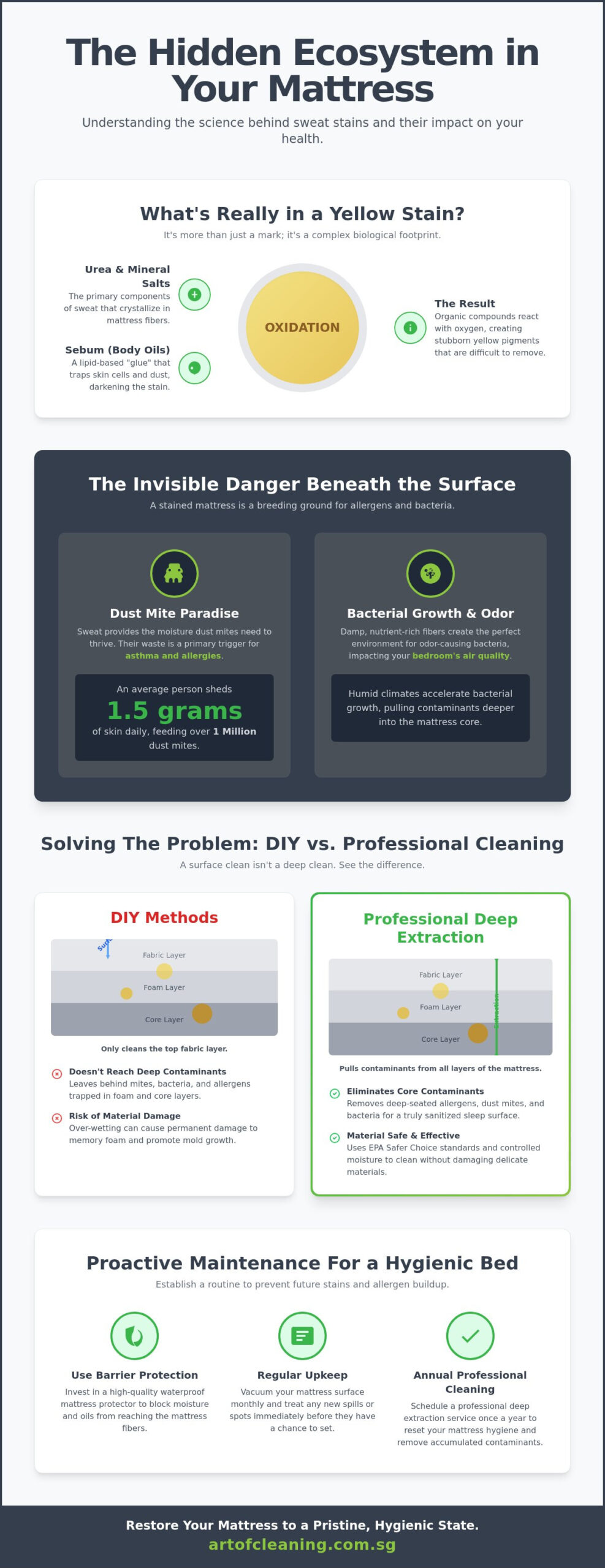
Yellow marks on a mattress are far more than a simple aesthetic issue. They are biological footprints left behind by the body’s natural cooling processes. These stains represent a complex chemical cocktail of urea, mineral salts, and sebum that accumulates over months of use. Understanding this chemistry is the first step toward effective sweat stain removal from mattress surfaces. When these organic compounds hit your bedding, they begin a process called oxidation. This is the same chemical reaction that turns a sliced apple brown. Over time, clear fluids react with oxygen to create the stubborn yellow pigments that seem impossible to scrub away.
While visible stains are frustrating, the “invisible” accumulation of sweat is often more hazardous to your home’s health. Before a stain ever appears, moisture and oils have already begun to saturate the fabric layers. This invisible stage creates a silent breeding ground for microscopic contaminants. By the time you see a yellow hue, the internal layers of your bed have likely been serving as a sanctuary for bacteria for quite some time. Addressing these residues early is essential for maintaining a sanitized sleeping environment.
The Chemical Composition of Night Sweats
To solve the problem, we have to look at the data. The Science of Perspiration shows that while sweat is 99% water, the remaining 1% consists of urea, salts, and proteins. These proteins are particularly difficult to manage because they bind tightly to mattress fibers, creating a resilient bond that standard vacuums can’t break. Sebum is the lipid-based “glue” that traps shed skin cells and household dust against the mattress surface, making the stain even darker and more difficult to lift.
Why Humid Climates Worsen Mattress Stains
In humid environments, the challenge of mattress hygiene is significantly magnified. High levels of moisture in the air prevent sweat from evaporating quickly, which means it stays in the fabric for longer periods. This leads to a “wicking” effect where moisture pulls dissolved body oils and salts deeper into the foam or spring layers rather than allowing them to dry on the surface. This persistent dampness accelerates the breakdown of organic matter and encourages the rapid growth of yellowing bacteria. For residents in these climates, professional intervention from specialists like Art of Cleaning is often necessary to perform deep extraction that surface-level DIY methods simply cannot achieve. Our process focuses on pulling these deep-seated contaminants out of the core to ensure your family breathes clean air while they sleep.
The Health Risks of Accumulated Sweat and Sebum
An average person sheds nearly 1.5 grams of skin every day, a quantity sufficient to feed one million dust mites. When this cellular debris mixes with night sweats, it creates a nutrient-rich environment deep within your bedding. A yellow stain is far more than a simple eyesore. It’s a visible confirmation that a complex biological ecosystem is thriving where you sleep. While most homeowners focus on the surface, the true danger lies in the invisible accumulation of organic matter that penetrates the mattress core. This buildup doesn’t just sit there; it reacts, decays, and eventually impacts the air quality of your entire bedroom.
The health implications are significant. Sweat provides the necessary hydration for microscopic pests, while sebum acts as a long-lasting food source. This combination transforms your mattress into a reservoir for allergens that can’t be removed by a standard household vacuum. Understanding the necessity of professional mattress cleaning is the first step toward reclaiming a healthy home environment. Ignoring these biological markers often leads to a cycle of poor sleep and physical discomfort.
Dust Mites and Respiratory Allergies
Sweat stains serve as a primary hydration source for dust mite populations. These organisms don’t drink water in the traditional sense; they absorb moisture from their surroundings. When sweat saturates mattress fibers, it creates a perfect microclimate for rapid reproduction. The primary trigger for nighttime asthma and morning congestion isn’t the mites themselves, but the potent proteins found in their droppings. As you move during the night, these allergens become airborne, leading to chronic respiratory irritation that many people mistake for a common cold.
Bacterial Growth and Odour Retention
The health risks of excessive sweating often manifest as skin irritation or persistent musty odors. Bacteria thrive in the warm, moist environment of a stained mattress, where they break down urea into ammonia. This chemical transition is why “stale” smells persist even after you’ve changed your bedsheets. The odor is actually a byproduct of active bacterial metabolism occurring inside the foam layers. Sleeping on this biological residue can lead to skin flare-ups, especially for those with sensitive skin or existing conditions like eczema. Effective sweat stain removal from mattress surfaces is essential to stop this bacterial cycle. If your bed has developed a lingering scent, it’s a clear signal to schedule a professional sanitization to ensure your sleeping surface is truly hygienic.
Step-by-Step Guide to Removing Sweat Stains at Home
Speed is the most critical factor in successful sweat stain removal from mattress surfaces. Once urea and mineral salts begin to oxidize, they form a chemical bond with the fabric fibers, making them significantly harder to lift. To address fresh residue, start with a mild solution of pH-neutral dish soap and cool water. It is vital to avoid hot water. Heat acts as a catalyst that “cooks” the organic proteins found in sweat, effectively setting the stain permanently into the mattress upholstery.
The method of application is just as important as the solution itself. Always use a white microfiber cloth to prevent dye transfer. Employ a firm blotting motion to pull the moisture upward and out of the fabric. You should never scrub the surface. Scrubbing creates friction that damages the delicate weave of the mattress cover and pushes the biological contaminants deeper into the comfort layers where they become unreachable by standard home tools.
The Baking Soda and Peroxide Method
For stains that have already begun to yellow, a more reactive approach is necessary. This three-step process utilizes the oxygenating power of peroxide to break down stubborn pigments.
- Step 1: Vacuum the entire surface thoroughly. This removes the millions of skin cells and loose dust that would otherwise turn into a sludge when wet.
- Step 2: Create a paste using baking soda and a small amount of 3% hydrogen peroxide. Apply this directly to the yellowed areas using a soft-bristled brush, but do not saturate the material.
- Step 3: Allow the mixture to dry completely. This can take several hours. Once dry, vacuum the residue to lift the trapped oils and salts away from the fibers.
Safety Precautions for Memory Foam
Memory foam requires specialized care because its open-cell structure acts like a giant sponge. If liquid cleaners penetrate the core, they can remain trapped for days, leading to internal mold and structural degradation. For a safer, dryer alternative, you can use plain white shaving foam. This hack, often highlighted in lifestyle publications like The Guardian, works because the foam contains surfactants that break down sebum without the high water content of liquid sprays. Apply the foam, let it sit for 15 minutes, and then wipe it away with a slightly damp cloth. Always ensure a high level of air circulation with fans or open windows to guarantee the mattress is bone-dry before replacing the linens.
Professional vs. DIY: When to Call the Specialists
While the home remedies discussed previously offer a first line of defense, they often fall short of a complete biological reset. Most household vacuums and blotting techniques only address the top 2mm of the mattress cover. This surface-level focus leaves the internal comfort layers saturated with the salts and oils described in our scientific breakdown. Professional sweat stain removal from mattress surfaces requires industrial-grade extraction power that standard domestic appliances simply cannot match. Investing in professional care for a high-end mattress is a calculated decision to preserve both the structural integrity of the foam and the health of your sleeping environment.
The primary risk of persistent DIY attempts is the accidental displacement of contaminants. When you apply liquid cleaners at home, the moisture often acts as a vehicle, carrying bacteria and urea deeper into the mattress core. Once these substances reach the center, they’re shielded from air circulation, leading to the musty odors and allergen buildup we previously identified. Professionals utilize specialized “Deep Extraction” technology. This process involves injecting sanitizing solutions and immediately vacuuming them out with high-impact suction, ensuring that no residual moisture remains to cause internal degradation.
Surface Cleaning vs. Deep Decontamination
The difference between a home clean and a professional service is defined by depth. A DIY approach is essentially a surface wipe. In contrast, professional decontamination reaches the full core of the mattress. High-suction industrial equipment removes significantly more moisture than manual blotting, which is vital for preventing the growth of yellowing bacteria in humid climates. This level of precision ensures that the “invisible threat” of dust mites and sebum is physically removed from the bed rather than just masked with household fragrances.
The Art of Cleaning Methodology
At Art of Cleaning, we treat mattress hygiene as a specialized craft rather than a chore. Our upholstery cleaning methodology incorporates professional-grade disinfectants and UV-C light treatment to eliminate 99.9% of bacteria and allergens. This rigorous process is why our services have been featured on major national broadcasting networks, serving as a hallmark of our verified quality and reliability. We don’t just remove the yellow stains; we restore the scientific purity of your home environment. If you want to ensure your family is sleeping on a truly sanitized surface, contact our specialists for a professional assessment today.
Preventive Strategies for a Hygienic Sleeping Surface
Prevention is the most effective way to avoid the complex process of sweat stain removal from mattress fibers. By controlling the bedroom environment, you can significantly slow the oxidation of organic matter before it bonds to the fabric. High humidity levels, often exceeding 60% in regional climates, act as a catalyst for bacterial growth and the breakdown of sebum. Using a dehumidifier keeps the air dry, ensuring that moisture from night sweats evaporates before it can be pulled into the mattress core by the wicking effect we discussed earlier.
Airing the mattress is another foundational habit for a healthy home. Every morning, leave the bed unmade for at least 30 minutes to allow residual heat and moisture to dissipate from the surface. While some suggest placing mattresses in direct sunlight, this can actually cause sun-induced decay of synthetic foam and fabric binders. Instead, position the bed near a window with indirect light and use a fan to encourage air circulation. While DIY cleaning can help, the most efficient way to avoid the need for intensive sweat stain removal from mattress surfaces is a proactive defense strategy.
Choosing the Right Mattress Protector
A high-quality protector serves as the primary barrier against the biological “glue” of sebum and urea. For memory foam owners, this is a mandatory investment because the material is highly porous and difficult to dry. You should distinguish between basic water-resistant covers, which only slow liquid penetration, and waterproof but breathable membranes. These modern covers use microscopic pores that are small enough to block liquid sweat but large enough to allow heat to escape, preventing the “sauna effect” that causes excessive sweating. To maintain these barrier properties, wash the protector every two weeks in 60°C water to eliminate dust mites without using harsh bleach that can degrade the waterproof lining.
The 6-Month Hygiene Maintenance Schedule
Even with a high-end protector, microscopic allergens and fine dust will eventually bypass the barrier over time. The industry standard for a truly healthy home is a professional hygiene check every six months. This frequency ensures that the internal layers are cleared of any accumulated residue before they can trigger the respiratory issues or skin irritations we identified. You can review our pricelist to find a maintenance plan that fits your family’s specific needs. Prioritizing your health by keeping your sleep environment pristine is an investment that pays dividends in sleep quality and overall well-being. Don’t wait for a yellow stain to appear. Proactive care is the hallmark of a healthy, sanitized home.
Reclaiming Your Sanctuary for Healthier Sleep
Your mattress should be a place of recovery, not a reservoir for biological contaminants. We’ve explored how urea and sebum oxidize over time, creating the stubborn yellowing that standard home cleaning can’t reach. While DIY solutions provide a temporary surface fix, effective sweat stain removal from mattress fibers requires a scientific approach to eliminate the microscopic allergens that trigger nighttime congestion. Understanding the link between moisture and bacterial growth is the first step toward a safer home environment for your family.
True hygiene requires precision. As a specialist featured on major national broadcasting networks, Art of Cleaning utilizes specialized deep extraction technology to physically remove contaminants from the mattress core. Our process ensures a 99.9% allergen removal guarantee, providing your family with the peace of mind they deserve. Don’t let invisible threats compromise your well-being. Restore your mattress to clinical hygiene standards with Art of Cleaning and wake up feeling truly refreshed in a sanitized environment.
Frequently Asked Questions
Is it okay to sleep on a mattress with yellow sweat stains?
No, it isn’t recommended for long-term health. Sleeping on yellowed surfaces exposes you to a concentrated reservoir of bacteria and dust mites. As we discussed, these marks are biological markers of sebum and urea. Over time, these residues can trigger skin irritation or respiratory issues. Maintaining a sanitized surface is essential for restorative sleep and overall family well-being. Regular sanitization ensures that your home environment remains a safe sanctuary rather than a health hazard.
Can yellow stains be removed from a mattress if they are years old?
Yes, but aged stains are more challenging because the oxidation process has fully bonded the proteins to the fibers. While DIY methods often fail on older marks, professional deep extraction can lift significant portions of the pigment. Success depends on the mattress material and the extent of the internal saturation. It’s always better to address these residues before they become permanent fixtures in your sleeping space. Our specialized equipment is designed to tackle these stubborn, set-in pigments effectively.
Does baking soda really remove sweat stains and odours?
Baking soda acts as a desiccant that absorbs surface moisture and neutralizes acidic odors. However, it can’t physically extract the sebum or salts trapped deep within the foam. For effective sweat stain removal from mattress layers, baking soda should only be viewed as a temporary surface treatment rather than a complete sanitization solution. It lacks the reactive power to break down oxidized pigments. You’ll need more advanced methods to reach the contaminants hiding beneath the surface.
Why do yellow stains appear on my mattress even if I use a sheet?
Standard cotton and linen sheets are designed for breathability, which means they easily permit liquid sweat and body oils to pass through to the mattress. Without a dedicated waterproof barrier, these fluids accumulate and oxidize over time. This process creates the yellowing you see despite regular sheet changes. A high-quality protector is the only way to block this transmission and keep your bed sanitized. Sheets offer comfort, but they don’t provide a biological barrier.
Will professional mattress cleaning remove the smell of sweat?
Yes, professional cleaning targets the root cause of the smell: bacterial metabolism of urea and sebum. By using specialized disinfectants and deep extraction, we remove the organic matter that bacteria feed on. This process doesn’t just mask the scent with fragrances; it physically eliminates the biological source, leaving the mattress fresh and truly sanitized. It’s the most reliable way to restore a neutral, clean scent to your bedroom. You’ll notice an immediate improvement in air quality.
How long does it take for a mattress to dry after professional cleaning?
Our high-impact suction technology removes approximately 90% of the moisture used during the process. With adequate air circulation from fans or open windows, most mattresses are bone-dry within 4 to 6 hours. This quick turnaround is vital for preventing mold growth and ensuring you can return to a hygienic sleeping environment the same evening. Efficiency and safety are our top priorities during every service. You won’t have to worry about dampness lingering through the night.
Can I use a steam cleaner on my memory foam mattress?
Steam cleaning isn’t recommended for memory foam because excessive heat and moisture damage the material. Steam can break down the cellular structure of the foam, leading to permanent sagging and loss of support. The internal core of memory foam dries very slowly, which creates a significant risk for internal mold growth. Stick to low-moisture professional methods instead to maintain the structural integrity of your bed. Preserving the foam’s density is crucial for long-term comfort.
What is the best way to prevent yellowing on a new mattress?
Investing in a high-quality protector is the most effective preventive measure. This barrier blocks fluids while allowing air to circulate, keeping the core dry. Combining this with a professional hygiene check every six months ensures that any microscopic bypass is addressed promptly. This proactive approach is the industry standard for long-term sweat stain removal from mattress surfaces and overall longevity. It ensures your mattress stays as clean as the day you bought it, protecting your financial investment.