
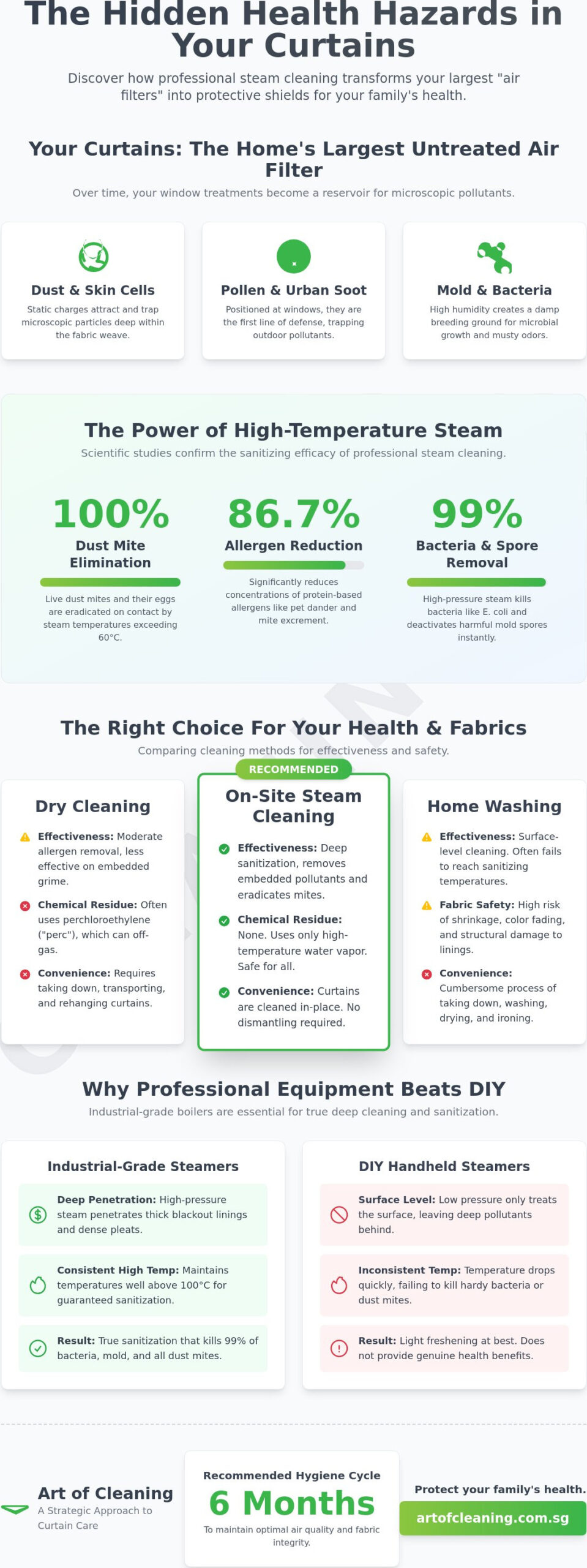
Scientific studies show that professional steam cleaning eliminates 100% of live dust mites on contact and reduces overall allergen concentrations by 86.7%. Your heavy curtains aren’t just decorative; they act as massive vertical filters that trap every airborne pollutant in your home. It’s exhausting to battle persistent allergy symptoms or musty odors when your window treatments are too cumbersome to dismantle and wash yourself. You shouldn’t have to choose between beautiful decor and your family’s respiratory health.
We understand that maintaining a truly hygienic environment requires more than just surface level tidiness. You’ll discover how specific curtain steam cleaning benefits, such as high-temperature thermal extraction, transform these fabric surfaces into active air-purifying shields for your family. This guide details the scientific processes that remove 99% of bacteria like E. coli while protecting the structural integrity of your expensive fabrics. We’ll show you how a specialized precision clean can refresh your living space, eliminate trapped humidity odors, and extend the lifespan of your window treatments for years to come.
Key Takeaways
- Learn why your curtains act as the home’s largest vertical air filters and how they accumulate a biological reservoir of dust, skin cells, and pollen.
- Understand the specific curtain steam cleaning benefits that occur when temperatures exceed 60°C, effectively eradicating dust mites and neutralizing protein-based allergens.
- Compare the efficiency and fabric safety of on-site steam cleaning against traditional dry cleaning and the physical stress of home washing.
- Discover why industrial-grade boilers are necessary to penetrate thick blackout linings and achieve true sanitization that consumer handhelds can’t match.
- Establish a professional six-month hygiene cycle to maintain optimal indoor air quality while protecting the structural integrity of your window treatments.
Why Your Curtains Are the Largest Air Filters in Your Home
Most homeowners view curtains as purely aesthetic additions to a room, yet they function as the largest, unpowered air filters in your living space. Fabric fibers are naturally prone to generating static charges that attract microscopic pollutants, while the physical weave of the material acts as a mesh that snags larger particles. Over time, your window treatments transform into a biological reservoir, holding onto a dense mixture of dust, human skin cells, and outdoor pollen. In high-humidity environments like Singapore, where morning humidity levels frequently reach 90%, these fabric reservoirs become damp, providing the perfect incubation chamber for mold spores.
Understanding what steam cleaning is becomes essential when you realize that standard vacuuming cannot reach the contaminants embedded deep within the weave. Steam cleaning uses high-temperature vapor to decontaminate these reservoirs at a molecular level. One of the standout curtain steam cleaning benefits is its ability to neutralize 99% of bacteria and allergens without the need for aggressive chemicals that could leave behind toxic residues. It is a precision health intervention designed to reset your home’s air quality.
The Invisible Load: Dust, Pollen, and Urban Soot
The sheer volume of debris trapped in your drapes is often startling. A standard set of floor-to-ceiling curtains can harbor significant amounts of particulate matter before the fabric even begins to look “dirty.” Because they’re positioned directly at your windows, they serve as the primary line of defense against urban soot and seasonal haze. This creates a significant “re-entry” problem for your family. Every time you walk past or draw the curtains, you disturb these settled particles, releasing a concentrated cloud of dust and allergens back into your breathing zone. Professional steam cleaning effectively removes this load, ensuring your curtains stop contributing to poor indoor air quality.
Humidity and the Threat of Micro-Mold
Micro-mold thrives in the small gap between your curtain layers and the window glass, where moisture often becomes trapped due to temperature fluctuations. If you’ve ever noticed a faint, musty smell in a room that otherwise looks clean, you’re likely smelling active microbial growth within your fabrics. These spores aren’t just an olfactory nuisance; they’re a respiratory trigger for children and those with sensitive immune systems. Industrial steam is the only non-toxic method capable of penetrating through thick blackout linings and dense pleats to kill these spores instantly. By utilizing high-temperature vapor, we can sanitize the fabric layers and eliminate odors at the source, ensuring your home remains a safe sanctuary.
5 Critical Health Benefits of Professional Curtain Steam Cleaning
Professional sanitation goes far beyond the surface. When you invest in expert care, you’re addressing the microscopic environment of your home. One of the most vital curtain steam cleaning benefits is the thermal eradication of dust mites. These pests and their eggs are biologically incapable of surviving temperatures above 60°C. While home washing often fails to reach or maintain these temperatures consistently, industrial steam penetrates the fabric to ensure total elimination on contact.
- Hypoallergenic Sanitization: High-pressure steam physically dislodges and neutralizes protein-based allergens like pet dander and mite excrement without requiring harsh detergents.
- VOC and Odor Neutralization: The molecular energy in steam breaks down trapped Volatile Organic Compounds (VOCs) from cooking oils, tobacco smoke, and urban pollution.
- Mold Spore Deactivation: Steam kills fungal spores instantly, preventing them from migrating from your window treatments to other upholstery or carpets.
- Chemical-Free Safety: Because the process relies on water vapor, it is the gold standard for households with infants, elderly residents, or pets who are sensitive to chemical residues.
Deep Sanitization Without Chemical Residue
Traditional dry cleaning often relies on perchloroethylene, commonly known as “perc,” which can leave behind a distinct chemical odor and toxic off-gassing. Steam cleaning offers a superior alternative by using a recognized decontamination method that leaves zero residue. This is particularly beneficial for residents suffering from contact dermatitis or chronic respiratory sensitivities. There is no “new carpet smell” or lingering solvent vapor; just a neutral, fresh environment that supports immediate occupancy after the service.
Breaking the Allergy Cycle at the Source
The “bio-burden” of your curtains refers to the cumulative density of living and dead biological matter trapped within the fibers. When this load is high, it triggers a constant cycle of morning congestion and poor sleep quality. By scientifically reducing this bio-burden, you create a cleaner breathing zone around your bed or sofa. We recommend incorporating this service into your broader home hygiene plan every six months to ensure your indoor air remains pristine. This proactive approach prevents the buildup of allergens before they can impact your family’s daily well-being.
Steam Cleaning vs. Dry Cleaning vs. Washing: A Comparison
Selecting the right maintenance method requires a balance between logistical convenience and fabric conservation. While traditional washing or dry cleaning might seem familiar, they often fail to address the invisible biological load trapped in your drapes. One of the most significant curtain steam cleaning benefits is the ability to treat fabrics while they remain hanging. This process supports the “active filter” role of your drapes, a concept backed by Scientific Evidence of Natural Chemosorption. By clearing the weave of pollutants without removing the curtains, you maintain a consistent defense against indoor air contaminants.
- On-Site Steam Cleaning: Performed while curtains are hanging; drying time is typically 1 to 2 hours; kills 99% of bacteria and dust mites.
- Professional Dry Cleaning: Requires dismantling and transport; takes 3 to 7 days; excellent for removing deep, oil-based stains but uses chemical solvents.
- Home Washing: High risk of shrinkage; requires 24 to 48 hours to air dry; often fails to reach the thermal death point for mites.
The Danger of Shrinkage and Fabric Distortion
Washing machines are the primary cause of “shortened” curtains. The aggressive mechanical agitation and the thermal shock of a spin cycle cause natural fibers like linen and cotton to contract permanently. Steam cleaning avoids this structural damage by using high-temperature vapor to gently relax the fibers rather than forcing them through friction. This is especially vital for curtains with blackout linings. These synthetic coatings can crack, peel, or melt when exposed to the high-heat friction of a commercial dryer or the soaking weight of a washing machine tub.
When to Choose Professional Steam Over Dry Cleaning
On-site steam cleaning is the superior choice for high-ceiling installations or heavy, multi-layered drapes where dismantling is a major logistical burden. It provides a deeper sanitization for health purposes, whereas dry cleaning is better suited for visible, heavy staining. For most urban homes, a regular steam maintenance schedule is more efficient than the occasional, expensive haul of off-site cleaning. You can review the Art of Cleaning pricelist to compare the cost-benefit ratio of these specialized services and determine which fits your home’s specific hygiene needs. Regular steam care ensures that your window treatments remain fresh and functional without the downtime of traditional methods.
Why Industrial Equipment Beats DIY Handheld Steamers
While consumer-grade handheld steamers are popular for removing surface wrinkles, they lack the thermal power required for deep sanitization. A true professional-grade clean relies on the temperature gap. To achieve the curtain steam cleaning benefits mentioned earlier, such as the total eradication of dust mites and bacteria, the steam must maintain a temperature of at least 100°C at the nozzle. Most DIY models may reach high temperatures inside their small reservoirs, but the vapor cools significantly as it travels through the hose, often hitting the fabric at a lukewarm temperature that merely dampens the surface.
Industrial boilers provide the necessary pressure to ensure deep penetration. Thick blackout linings and multi-layered drapes act as barriers that consumer tools cannot bypass. Our specialized equipment pushes high-velocity vapor through the entire thickness of the material, reaching the biological reservoir trapped deep within the weave. Professional systems also utilize extraction technology. Rather than simply wetting the fabric, our tools actively pull out dissolved grime, allergens, and moisture. This leaves the curtains sanitized and nearly dry to the touch, preventing the logistical nightmare of heavy, dripping drapes.
The Problem with ‘Wet’ Steam
A common mistake with home steaming is the production of “wet” steam. This occurs when a machine lacks the pressure to create a fine, dry vapor, resulting in heavy water droplets that soak the fabric. Excess moisture is a primary trigger for mold growth, especially in the humid micro-climate between the curtain and the window. Professional technicians use high-quality dry steam, which contains less than 5% liquid water. This artisanal approach, combined with specialized extraction heads, ensures that we remove contaminants without creating a damp environment where fungal spores can flourish.
Avoiding Common DIY Damage
Delicate materials like silk, velvet, and certain synthetics are highly susceptible to water spotting and puckering if handled incorrectly. DIY users often hold the nozzle too close or stay in one spot too long, leading to permanent fabric distortion. Our process begins with a meticulous pre-cleaning inspection to assess fabric stability and colorfastness. This level of craft prevents the unsightly water marks that often ruin expensive window treatments. If you’re unsure about your fabric’s sensitivity, it’s best to contact the experts for a professional assessment before attempting a home clean. To ensure your home hygiene meets industrial standards, book a professional curtain steam cleaning service today.
The Art of Cleaning: A Strategic Approach to Curtain Care
At Art of Cleaning, we believe that true home hygiene is a fusion of meticulous craft and rigorous scientific standards. We don’t just treat surfaces; we manage the total biological load of your living space through a systematic approach. For high-traffic urban homes, we recommend a disciplined six-month hygiene cycle to prevent the accumulation of pollutants. This proactive schedule ensures that the curtain steam cleaning benefits you’ve invested in are maintained year-round, keeping your indoor air quality at peak levels before allergens can trigger respiratory symptoms.
A holistic approach to sanitization yields the most significant health results. There is a powerful synergy in combining your window treatment care with professional sofa cleaning and mattress sanitization. These three soft-surface categories represent the primary reservoirs for dust mites and urban soot in any household. Our verified identity as a leading specialist is backed by features on major national media platforms, reflecting our status as a trusted guardian of the domestic environment. We take pride in the precision of our labor, ensuring every fiber is treated with the respect it deserves.
Customized Treatment for Every Fabric Type
Different textiles require specific thermal profiles to ensure safety and efficacy. Our technicians provide specialized handling for day curtains, heavy blackout drapes, and delicate organza. Every service begins with a meticulous on-site assessment to determine fabric stability before any steam is applied. This prevents the risk of puckering or water damage that often occurs with untrained handling. “We deliver artisanal visual perfection anchored by verifiable health data.” This commitment ensures that your window treatments look as pristine as the air they help purify.
Your Path to a Healthier Home Environment
Investing in regular professional maintenance offers significant long-term cost savings by preventing the premature degradation of expensive fabrics. When you remove the abrasive dust and acidic pollutants trapped in the weave, you extend the lifespan of your window treatments by years. Our health-first mission drives us to provide a service that prioritizes your family’s well-being over mere surface-level tidiness. We invite you to experience the difference that precision cleaning makes in your daily life. To secure your family’s respiratory health and refresh your living space, book your professional curtain steam cleaning today.
Secure Your Family’s Respiratory Health Today
Your window treatments are more than just decorative accents; they’re the silent guardians of your indoor air quality. We’ve analyzed how these vertical surfaces trap over 86% of airborne allergens and why maintaining them is a scientific necessity for a healthy home. From the thermal death point of dust mites to the precision of industrial-grade extraction, the curtain steam cleaning benefits provide a clear path to a sanitized living environment. You’re not just cleaning a room; you’re decontaminating a biological reservoir that directly impacts your family’s daily well-being and sleep quality.
As experts featured on MediaCorp and Channel 5, Art of Cleaning brings artisanal precision to both residential and commercial facility maintenance. Our specialized high-temperature extraction technology ensures deep sanitization without the risks of fabric shrinkage or toxic chemical residue. It’s time to move beyond surface-level tidiness and embrace a professional hygiene standard that protects your expensive window treatments and your health. Restore your home’s hygiene with professional curtain steam cleaning and breathe easier knowing your sanctuary is truly protected. We look forward to helping you create a fresher, safer home environment for your loved ones.
Frequently Asked Questions
How often should I professionally steam clean my curtains?
You should professionally steam clean your curtains every six months to maintain optimal indoor air quality. In high-traffic urban areas or homes with allergy sufferers, this frequency prevents the accumulation of a significant biological load. Regular maintenance ensures that the fabric weave remains clear of dust, pollen, and microscopic pollutants before they can impact your respiratory health. This proactive cycle is a core component of a strategic home hygiene plan.
Can steam cleaning remove old stains from my drapes?
Steam cleaning is highly effective at lifting many types of stains by using high-temperature vapor to dissolve bonds between the grime and fibers. While it excels at removing protein-based spills and water-soluble marks, some deep, oil-based stains may require specialized chemical treatment found in dry cleaning. Our technicians perform a pre-cleaning assessment to determine the best approach for your specific fabric type and stain history to ensure the best visual results.
Is steam cleaning safe for delicate fabrics like silk or organza?
Professional steam cleaning is safe for delicate fabrics like silk or organza because it uses dry vapor rather than mechanical agitation. Unlike a washing machine, which can shred fine threads, our precision-controlled steam relaxes the fibers without causing physical stress. We utilize specific thermal profiles and distances to ensure that even the most sensitive materials are sanitized without risking heat damage or water spotting. This artisanal approach protects your investment while ensuring a deep clean.
Will steam cleaning cause my curtains to shrink?
Professional steam cleaning does not cause shrinkage because it avoids the aggressive agitation and high-heat drying cycles of traditional washing. One of the primary curtain steam cleaning benefits is that the vapor allows fibers to relax into their natural shape while they remain hanging. Because we use dry steam with minimal water content, the fabric doesn’t experience the thermal shock or heavy saturation that leads to the contraction of natural fibers like linen or cotton.
How long does it take for curtains to dry after a professional steam clean?
Curtains typically take between one and two hours to dry completely after a professional steam cleaning session. Because our industrial equipment utilizes high-temperature dry vapor and efficient extraction technology, very little moisture remains in the fabric weave. You can keep your curtains hanging throughout the process, allowing for natural airflow to finish the drying cycle quickly. This efficiency means your living space is ready for immediate use without the downtime of off-site cleaning.
Do I need to take my curtains down before the cleaning team arrives?
You don’t need to take your curtains down before our team arrives. Our specialized process is designed for on-site convenience, meaning we treat the drapes exactly where they hang. This eliminates the logistical hassle of dismantling heavy drapes or struggling with complex track systems. Our technicians work around your furniture and fixtures with precision, ensuring a thorough sanitization of the entire fabric surface from the top pleats down to the hem.
Can steam cleaning help with dust mite allergies?
Steam cleaning is a powerful intervention for dust mite allergies because it reaches the 60°C threshold required to kill mites and their eggs instantly. The high-pressure vapor penetrates deep into the fabric layers to neutralize protein-based allergens that trigger morning congestion and asthma. By removing 100% of live mites on contact, this method breaks the allergy cycle and significantly reduces the biological load within your home’s breathing zone.
What is the difference between steam cleaning and dry cleaning for curtains?
The main difference lies in the methodology and location of the service. Steam cleaning uses high-temperature water vapor to sanitize fabrics on-site, making it a chemical-free and convenient option. Dry cleaning involves dismantling the curtains and using chemical solvents like “perc” at a remote facility to remove oil-based stains. While both have their place, steam cleaning is the superior choice for regular hygiene maintenance and allergen reduction without the risk of toxic off-gassing.