
What if the very plushness that makes your Saxony carpet a sanctuary is actually a vertical trap for humidity-driven allergens and deep-seated dust? You likely chose this style for its luxurious, velvety feel, yet you’re now struggling with visible footprints and fibers that stay matted. Learning how to clean saxony carpet? requires a specialized strategy, as these long, twisted piles are designed for comfort but often hide microscopic contaminants that compromise your indoor air quality.
We understand the frustration of seeing a premium investment lose its luster to Singapore’s relentless humidity and daily wear. This guide promises to equip you with the professional secrets needed to restore that signature plush texture while eliminating the risk of mold and bacterial growth. We will preview the essential Carpet and Rug Institute (CRI) 205 standards, including specific vacuuming frequencies for high-traffic areas and the scientific extraction methods that ensure your home remains a safe, hygienic environment for your family.
Key Takeaways
- Identify your specific fiber type to select scientific cleaning agents that protect heat-set twists from permanent chemical damage.
- Learn how to clean saxony carpet? using the “Blot, Don’t Rub” rule to prevent fiber matting and preserve the original plush texture.
- Utilize HEPA-filter vacuums with adjustable height settings to extract deep-seated dust without “choking” the long, luxurious carpet piles.
- Implement moisture control strategies tailored for Singapore’s humidity to avoid “wicking” and the rapid development of sub-surface mold.
- Discover how professional extraction methods remove 99% of hidden allergens, restoring both the hygienic integrity and the comfort of your living space.
What is Saxony Carpet and Why Does it Require Special Care?
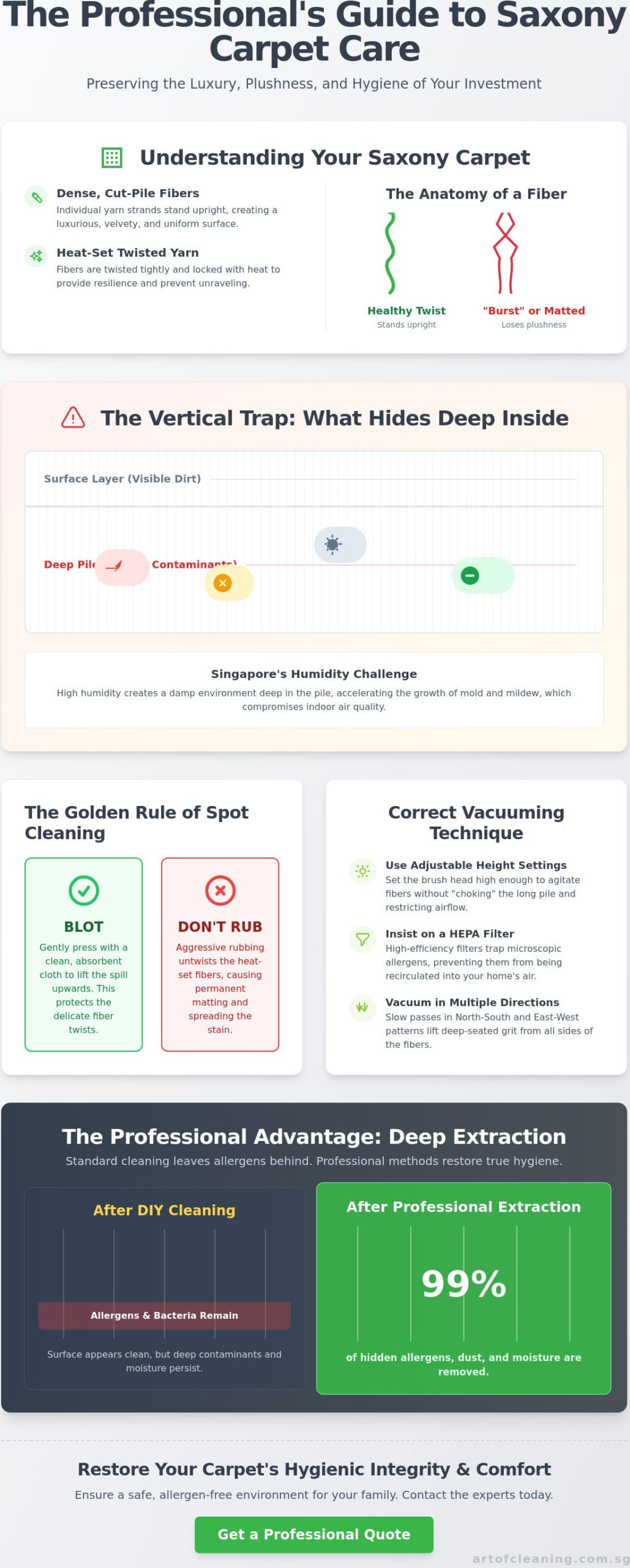
Saxony carpet represents the pinnacle of residential luxury, often characterized by its dense, velvet-like surface. It is a cut-pile carpet where individual yarn strands stand upright, creating a level and incredibly soft finish. To achieve this signature look, the yarn undergoes a high-twist, heat-set process. This technical treatment involves using thermal energy to lock the fibers into a tight spiral, ensuring they remain resilient against unraveling. When exploring carpet construction and materials, you’ll find that Saxony is typically divided into two categories: plush and textured. Plush Saxony offers a uniform, formal appearance, while textured Saxony uses alternating twist directions to help mask light and shadows.
The very depth that makes these carpets comfortable also creates a functional vulnerability. The long, upright fibers act as a vertical filter for your living space. They don’t merely sit on the floor; they actively trap household dust, microscopic skin cells, and environmental pollutants deep within the pile. Because these contaminants settle at the base of the fibers, they become difficult to reach with standard domestic equipment. This is why many homeowners eventually ask, “How to clean saxony carpet?” when they notice their once-vibrant flooring looking dull or feeling gritty underfoot.
The Anatomy of a Saxony Fiber
The durability of a Saxony carpet depends entirely on the integrity of its heat-set twists. These fibers are designed to stand vertically, which provides that classic soft feel. However, in high-traffic areas, the fibers are subject to “bursting.” This occurs when the yarn twist begins to loosen or untwist due to friction and weight. Once the twist is lost, the carpet loses its “bloom” and begins to look matted. Regular maintenance must focus on preserving these twists rather than just removing surface dirt. Without specialized care, the vertical orientation of the fibers can lead to permanent crushing, especially under heavy furniture or in frequently walked paths.
Saxony in the Singapore Home
In Singapore, Saxony is a popular choice for master bedrooms and low-traffic luxury zones where comfort is the primary goal. However, our tropical climate introduces a unique set of challenges. The deep pile that feels so luxurious also retains moisture from our high humidity. This creates an ideal environment for mold and mildew to develop within the sub-layers of the carpet. To maintain the hygienic integrity of your home, it’s vital to ensure these deep fibers are thoroughly dried and sanitized. Engaging a professional carpet cleaning service is often necessary to remove the 99% of invisible contaminants that hide at the base of the yarn. These experts use high-powered extraction to ensure that even the deepest part of the Saxony pile remains fresh and free from allergens.
Routine Maintenance: How to Vacuum and Groom Saxony Carpets
Maintaining the architectural integrity of a Saxony pile requires more than a casual sweep. Because these fibers are specifically designed to stand upright, they are susceptible to “tracking,” the visible footprints and vacuum marks that can make a room look untidy. If you are wondering how to clean saxony carpet? while preserving its signature height, the process begins with a rigorous, scientifically-backed vacuuming routine. Proper maintenance isn’t just about aesthetics; it’s about removing the abrasive grit that can saw through yarn twists over time.
- Step 1: Select a vacuum with adjustable height. If the brush head is set too low, it will “choke” the long fibers and restrict airflow, causing the motor to strain. If it’s too high, the beater bar won’t agitate the deep-seated grit effectively.
- Step 2: Use a vacuum with a HEPA filter. According to the Carpet and Rug Institute maintenance guide, high-efficiency filtration is essential to prevent microscopic allergens from being recirculated into your breathing zone.
- Step 3: Vacuum slowly in multiple directions. High-density Saxony piles require deliberate, slow passes. Moving the vacuum in a North-South and then East-West pattern ensures you’re lifting contaminants from every angle of the vertical fiber.
- Step 4: Rotate furniture periodically. Moving heavy items every six months prevents permanent indentations. Once a Saxony pile is crushed by weight for too long, the heat-set “memory” can be difficult to restore.
The Role of the Carpet Rake
The “carpet rake” is the professional’s secret to eliminating the matted look common in deep-pile flooring. Unlike a standard vacuum, a rake uses long, flexible tines to reach between the vertical fibers and reset their orientation. Grooming the carpet after vacuuming prevents the “matting and crushing” effect by ensuring the yarn twists stay upright and separated. Always rake in one consistent direction for a uniform, plush look. This simple step prevents fibers from tangling, which is a primary cause of premature wear in luxury carpets.
Vacuuming Frequency for Hygiene
In low-traffic zones like master bedrooms, vacuuming twice a week is usually sufficient to maintain hygiene. However, in high-traffic hallways, daily maintenance is required to prevent sand and dust from acting as an abrasive against the yarn. While routine grooming removes surface debris, it cannot reach the microscopic pollutants trapped at the very base of the pile. For a truly healthy living environment, we recommend scheduling a deep extraction through our carpet cleaning services every three to four months. This professional intervention ensures that your home remains a sanctuary, free from the deep-seated contaminants that domestic vacuums often leave behind.
Spot Cleaning Saxony: The Scientific Approach to Stains
When a spill occurs on a high-end Saxony surface, the initial sixty seconds are critical for the survival of the fiber. Because Saxony is a cut-pile carpet with vertical yarn twists, liquids don’t just sit on the surface; they gravitate toward the backing through capillary action. If you’re researching how to clean saxony carpet? after an accident, the most important rule is to maintain the architectural integrity of the yarn. Any aggressive friction will cause the heat-set twists to “burst,” leading to a permanently frayed and fuzzy appearance that no professional can fully reverse.
The “Blot, Don’t Rub” rule is a non-negotiable principle in carpet science. Rubbing creates heat and mechanical stress that untwists the fibers. Instead, use a clean, white microfiber cloth to apply firm downward pressure. This movement draws the liquid upward into the cloth without distorting the pile. To ensure you’re following industry-validated methods, we recommend reviewing the IICRC spot cleaning procedures, which emphasize using pH-neutral cleaning agents. Solutions with a high pH can cause “browning” in natural fibers or leave a sticky residue on synthetics that attracts dust faster than the surrounding area.
Material-Specific Stain Removal
Before applying any chemical, you must identify your carpet’s composition. Synthetic Saxony, such as Polypropylene, is exceptionally stain-resistant and can often handle slightly stronger detergents. However, Wool-blend Saxony is protein-based and highly sensitive to alkaline substances. Some competitors suggest using a 10% bleach solution for synthetics, but we advise against this for residential settings. Bleach can weaken the primary backing and cause irreversible discoloration if the fiber isn’t 100% solution-dyed. Stick to specialized, wool-safe detergents to preserve the natural lanolin and elasticity of the yarn.
Dealing with Common Spills
For organic spills like coffee or wine, the goal is to neutralize the pigments before they bond with the fiber. You can create a safe, mild solution using one part white vinegar to two parts water. This acidic mixture helps stabilize dyes and prevents the “wicking” effect where stains reappear during the drying process. Apply the solution sparingly to avoid over-wetting the sub-layers. For a comprehensive breakdown of chemical ratios and specific protocols for different substances, refer to our detailed how to remove stains from carpet guide. Taking an “encapsulation” mindset—where you focus on trapping and lifting the particles rather than spreading them—is the only way to keep your Saxony looking artisanal and pristine.
Deep Cleaning Challenges: Humidity and Moisture Control
Singapore’s tropical climate presents a formidable challenge for deep-pile maintenance. With average relative humidity levels often exceeding 80%, the dense backing of a Saxony carpet can act as a reservoir for trapped moisture. This leads to “wicking,” a frustrating phenomenon where sub-surface stains migrate to the tips of the fibers during an extended drying process. Understanding how to clean saxony carpet? requires a focus on moisture management to prevent the rapid colonization of mold and mildew within the pile. When moisture remains trapped for more than 24 to 48 hours, the risk of fungal growth increases exponentially, compromising your home’s air quality.
Why DIY Steam Cleaning Often Fails
DIY steam mops are frequently the primary culprits behind structural carpet damage. These consumer-grade machines lack the vacuum power to extract the high volume of water they inject into the dense Saxony pile. Over-wetting the backing can lead to delamination, where the secondary backing separates from the primary layer, causing permanent ripples in your flooring. Additionally, improper rinsing leaves behind a sticky surfactant residue. This film acts as a magnet for new dust and grit, causing the carpet to look soiled again within weeks of cleaning. High-heat DIY machines can also weaken the heat-set yarn twists, leading to a loss of the plush texture you originally invested in.
Professional Extraction Technology
Specialists utilize a “Flush and Extract” method that balances high-pressure rinsing with industrial-strength suction. This process removes 99% of hidden contaminants without saturating the sub-layers of the carpet. Because Saxony fibers are so dense, high-powered suction is the only way to reach the base of the pile where allergens and grit accumulate. We prioritize health-first outcomes by using high-velocity air movers to accelerate drying in the Singapore climate. This ensures the fibers are dry within a few hours, effectively neutralizing the risk of wicking and mold. We conclude our process with moisture-meter testing to verify that your flooring is safe and hygienic. If you want to ensure your home remains a healthy sanctuary, book a professional carpet cleaning session today.
While these techniques are essential in Singapore, the demand for such high-quality care is global. For readers in the UK, Carpet Cleaner In Manchester offers a similar standard of professional extraction and upholstery care to keep luxury carpets in peak condition.
The Art of Cleaning: Professional Hygiene for Saxony Carpets
Art of Cleaning stands as the premier specialist for high-end upholstery and carpet care in Singapore, a status earned through years of meticulous service. If you’re wondering how to clean saxony carpet? to the highest professional standards, our team provides the definitive solution. We approach every project with a technical mindset, viewing the deep pile as a complex ecosystem that requires specific environmental management. Our “Health-First” philosophy goes beyond surface aesthetics to achieve a deep-level sanitation that removes 99% of invisible contaminants. We prioritize the well-being of your family by using exclusively non-toxic, eco-friendly cleaning solutions that are safe for both children and pets. This artisanal level of labor doesn’t just refresh the appearance; it protects the heat-set twists of the yarn, ensuring your premium investment retains its value for years to come.
Eliminating the Invisible: Dust Mites and Allergens
Deep-pile carpets like Saxony are remarkably effective at trapping biological pollutants that can compromise residential health. In the humid Singapore environment, these long fibers often harbor high concentrations of dust mites, pollen, and microscopic fungal spores. These hidden contaminants are major triggers for asthma and other respiratory conditions. When you investigate how to clean saxony carpet?, it’s vital to recognize that our methodology is a rigorous decontamination rather than a simple surface wash. We use high-impact data to quantify our results, ensuring that the base of every fiber is free from the allergens that domestic vacuums inevitably overlook. This scientific approach transforms your living space into a truly hygienic environment, providing peace of mind for health-conscious homeowners.
Preserving the Luxury Feel
Maintaining the signature “new carpet” fluffiness of a Saxony pile is a delicate craft that requires professional-grade grooming tools. Our process begins with a detailed consultative phase where we assess the carpet’s material composition and fiber density. Whether your flooring is a delicate wool blend or a durable synthetic, we tailor our chemical profile to match its specific needs. After the extraction phase, we use specialized rakes to lift matted fibers and restore their vertical orientation. This attention to detail is why Art of Cleaning is recognized as a dependable specialist by major local media platforms. To explore our service tiers, feel free to check our carpet cleaning price list for transparent, honest pricing. We’re committed to providing a low-friction experience that prioritizes the health and comfort of your home.
Secure Your Home’s Long-Term Hygiene and Comfort
Preserving the luxurious texture of a deep-pile carpet requires a scientific approach that balances routine grooming with advanced moisture control. You’ve learned that understanding how to clean saxony carpet? involves more than just surface vacuuming; it necessitates protecting heat-set twists and eliminating the microscopic contaminants that thrive in Singapore’s humidity. By prioritizing pH-neutral agents and professional extraction, you safeguard your flooring investment while ensuring a healthier indoor environment for your family.
As specialists in high-humidity fabric care featured on major national broadcasting networks, we apply hospital-grade disinfection protocols to every home. We take pride in the meticulous precision of our labor, ensuring that your sanctuary remains free from deep-seated allergens. Restore the health and beauty of your Saxony carpet today; contact Art of Cleaning for a professional assessment. We look forward to helping you maintain a living space that is as hygienic as it is beautiful.
Frequently Asked Questions
Can I use a steam mop on my Saxony carpet?
No, you should avoid using a steam mop on Saxony flooring. These consumer-grade devices often inject excessive moisture into the dense pile without the industrial-strength suction required to extract it. This trapped water can lead to delamination, where the backing separates from the fibers, and creates a high-risk environment for mold growth within the sub-layers.
Why does my Saxony carpet look matted in certain areas?
Matting is typically the result of “fiber bursting,” where the heat-set yarn twists begin to unravel due to heavy foot traffic or the weight of furniture. When the vertical orientation of the pile is compromised, the fibers lay flat and lose their plush appearance. Regular use of a specialized carpet rake can help reset these fibers and prevent permanent crushing.
How often should I professionally clean my Saxony carpet in Singapore?
The Carpet and Rug Institute recommends a professional deep cleaning every 12 to 18 months to maintain your warranty. However, due to Singapore’s high humidity and the dense nature of the pile, we suggest a professional extraction every 6 months. This frequency ensures that deep-seated allergens and moisture are removed before they can impact your home’s air quality.
Is it safe to use bleach on a Saxony carpet?
Using bleach is a high-risk strategy that we generally advise against for most premium carpets. While it might be tolerated by some 100% solution-dyed synthetic fibers, it can cause irreversible discoloration in wool blends and weaken the structural integrity of the carpet backing. Stick to pH-neutral, non-toxic cleaning agents to preserve the lifespan of your investment.
How long does it take for a deep Saxony carpet to dry after cleaning?
A deep Saxony pile typically takes 6 to 12 hours to dry when professionals utilize high-velocity air movers to circulate the air. Without specialized equipment, the dense fibers can remain damp for over 24 hours in our humid climate. This extended drying time increases the risk of “wicking,” where sub-surface stains migrate back to the carpet’s surface.
Will professional cleaning remove the footprints and tracking marks?
Professional cleaning combined with a specialized grooming process can effectively minimize the appearance of footprints. When you learn how to clean saxony carpet?, you’ll find that industrial raking is essential to restore the vertical orientation of the yarn. This “resets” the pile, which helps the carpet better hide the tracking marks that are common in plush styles.
What is the best vacuum for Saxony carpets?
The ideal vacuum for a Saxony pile features adjustable height settings and a HEPA filter. Adjustable height is critical to prevent the vacuum from “choking” on the long fibers, which can damage the motor and the carpet. A HEPA filter ensures that 99.97% of microscopic particles are trapped rather than being exhausted back into your living environment.
Can Saxony carpets trigger allergies more than other types?
Yes, the long, upright fibers of a Saxony carpet act as a vertical trap for skin cells, dust mites, and environmental pollutants. While this helps keep particles out of the air initially, these contaminants accumulate at the base of the pile over time. This makes understanding how to clean saxony carpet? vital for maintaining a hygienic home and protecting your family’s respiratory health.