
The standard high-heat steam cleaning method used for synthetic carpets is structurally destructive to a hand-knotted heritage piece. If you are wondering how to clean oriental rugs? without triggering a permanent color run or damaging delicate wool fibers, your caution is scientifically justified. You likely invested in these textiles for their artistry. However, the fear of lingering musty smells or hidden dust affecting your family’s health often leads to cleaning paralysis.
We believe your home should be both beautiful and hygienic. This guide promises a professional look at maintaining your rug’s vibrancy using the pH-neutral and phosphate-free principles outlined in the ANSI/IICRC S100-2021 standards. We will detail how to remove deep-seated contaminants safely. You will gain the confidence to distinguish between a simple home refresh and the moments when a specialist’s precision is required to preserve your rug’s integrity and health.
Key Takeaways
- Understand why hand-knotted natural fibers require a specific chemical approach compared to synthetic carpets to prevent permanent structural failure.
- Learn the critical role of pH-neutral solutions in maintaining dye stability and preventing the common fear of color bleeding in heritage textiles.
- Discover a clear decision matrix on how to clean oriental rugs? through safe preventative maintenance versus when to call a specialist for deep-seated allergen removal.
- Identify the hidden health risks of lingering dust and musty odors, and how a systematic cleaning process creates a safer, sanitized home environment for your family.
- Explore the professional five-step restoration method—from meticulous dusting to centrifuge drying—that ensures your rug is both visually vibrant and hygienically fresh.
Understanding the Anatomy of Oriental Rugs: Why Standard Cleaning Fails
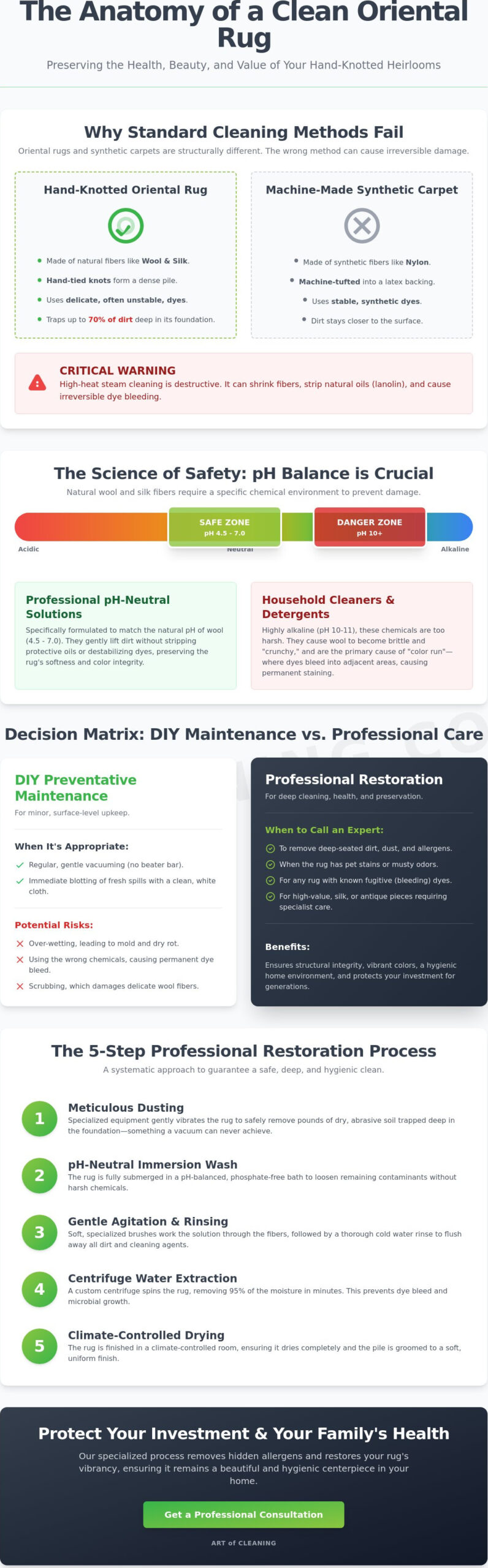
An Oriental rug is far more than a decorative floor covering; it’s a complex, hand-crafted textile traditionally made from wool, silk, or cotton. For a foundational Understanding Oriental Rugs, we must recognize that these pieces are held together by thousands of individual hand-tied knots. This construction differs fundamentally from synthetic wall-to-wall carpeting, which is typically machine-tufted into a latex backing. While standard carpet cleaning methods work for nylon, they are often destructive to natural fibers. Many homeowners ask how to clean oriental rugs? and mistakenly turn to high-heat, truck-mounted steam cleaning. This aggressive approach is the primary enemy of fine rugs because the intense heat can shrink fibers and cause unstable dyes to bleed. Beyond aesthetics, these rugs act as powerful air filters in your home. Their dense pile traps dust, pet dander, and dust mites, which can trigger respiratory issues for your family if contaminants aren’t properly extracted from the core.
The Structural Complexity of Hand-Knotted Foundations
The “skeleton” of an Oriental rug consists of the warp and the weft. These are the vertical and horizontal strings that form the structural grid. Dirt doesn’t just sit on the surface; it settles deep within this foundation through gravity and foot traffic. In fact, surface-level vacuuming or standard cleaning often leaves up to 70% of contaminants trapped inside the weave. When moisture remains trapped in these cotton foundations for too long, it leads to dry rot, which is the permanent structural weakening and eventual crumbling of the rug’s core fibers.
Natural Fibres vs. Synthetic Materials
Wool is a remarkable material because its fibers contain microscopic “scales” that excel at hiding dust. Unlike smooth, synthetic nylon, these scales require specialized agitation to release grit. Wool also contains lanolin, a natural oil that provides stain resistance and suppleness. Harsh, high-pH soaps used in standard cleaning strip this oil away, leaving the rug brittle and dull. Silk rugs represent the highest-risk category for DIY attempts, as their delicate protein structure can be permanently distorted by water or improper chemicals. For these heritage items, the rug cleaning services provided by specialists are necessary to ensure the textile’s longevity and your family’s health.
The Science of Natural Fibres: pH Balance and Dye Stability
True cleanliness for an heirloom textile is a chemical state, not just a visual one. While a rug might look refreshed after a quick scrub, the wrong chemical reaction can lead to permanent structural damage. Most hand-knotted rugs utilize vegetable or acid dyes that are bonded to the wool or silk fibers through specific ionic charges. When you ask how to clean oriental rugs?, you must first consider the stability of these dyes. High-alkaline cleaners disrupt this delicate balance, causing the dyes to “unzip” from the fibers and migrate into adjacent lighter areas. This phenomenon, known as bleeding or color run, is often irreversible once it occurs. In humid environments, this risk is amplified. High moisture levels in the air act as a catalyst, accelerating chemical reactions and encouraging mold growth within the damp fibers.
pH Levels and Their Impact on Wool Longevity
Wool is a protein-based fiber that thrives in a slightly acidic to neutral environment, typically between a pH of 4.5 and 7. Maintaining this range is vital for the fiber’s health. Common household cleaners, such as Tide or other laundry detergents, often have a pH level as high as 10 or 11. These are far too alkaline for natural fibers. Using them is similar to using harsh industrial degreasers on your own hair; they strip the protective lanolin and leave the wool feeling brittle and “crunchy.” Professional solutions are specifically buffered to stay within the safe zone, ensuring the rug remains soft and the fibers stay resilient over decades of use.
The Risk of “Colour Run” and Dye Migration
Before attempting any maintenance, you should perform a professional-grade bleed test. Dampen a clean white cotton cloth with room-temperature water and press it firmly onto different colored sections of the rug for 60 seconds. If any pigment transfers to the cloth, the dyes are unstable and require specialized stabilizing agents. Certain regional rug styles are notorious for using “fugitive” dyes that bleed at the first sign of moisture. This is why professional textile conservation experts never use hot water. Heat serves to unlock the dye bond, making a color disaster almost certain. If your home test shows even a hint of migration, it’s safer to consult with an expert in rug cleaning to prevent ruining your investment.
DIY Maintenance vs. Professional Restoration: Assessing the Risks
Deciding how to clean oriental rugs? often comes down to a choice between convenience and conservation. While many online forums suggest hose-washing in a driveway, this approach typically leads to UV fading or permanent warping from uneven tensioning. You must weigh the cost of professional maintenance against the high price of replacing a hand-knotted heritage piece. Professional restoration isn’t just about appearance; it’s a health-driven necessity. Standard household vacuums simply can’t reach the deep-seated bacteria and dust mites that thrive in the rug’s foundation. Removing these biological contaminants requires the specialized suction and controlled chemistry found in expert textile care guidelines.
DIY attempts often introduce “invisible” dangers that the average homeowner doesn’t anticipate. When you use store-bought detergents, the high pH levels leave a sticky soap residue. This residue acts as a magnet for new dirt, causing the rug to soil faster than before. Another frequent risk is “wicking.” This happens when deep-seated stains travel up the fibers as they dry, causing the original spot to reappear on the surface days after you thought it was gone. Specialists use specific drying techniques to prevent this capillary action from occurring.
When DIY is Safe (and When It Isn’t)
Maintaining your rug at home is possible if you stick to low-risk activities. Safe maintenance includes surface dusting and light vacuuming with the beater bar turned off to avoid snagging fibers. If you have a fresh spill, blotting with a clean cloth is effective. However, full immersion or using standard “carpet shampoo” machines is unsafe for natural fibers. These machines use excessive water and harsh chemicals that damage the structural integrity. Stains like pet urine or aged red wine represent the “Point of No Return” for DIY care. These substances chemically alter the fibers and require professional neutralization to prevent permanent odor and color damage.
The Hidden Danger of Incomplete Drying
In standard indoor conditions, a wet rug can take 24 to 48 hours to dry completely. This slow process is a major health risk. A lingering musty smell is a clear biological indicator of fungal growth and mildew. At Art of Cleaning, we mitigate this risk by using industrial air movers and controlled environments. This ensures moisture is removed rapidly from the core foundation, preventing the dry rot that destroys the rug’s skeleton. Rapid, professional drying is the only way to guarantee the piece is both sanitary and structurally sound for your family.
Step-by-Step: How to Safely Maintain Oriental Rugs at Home
Maintaining the integrity of a hand-knotted rug requires a fundamental shift in mindset. Instead of focusing on liquid washing, you should prioritize mechanical preventative maintenance. Dry soil is inherently abrasive; it acts like sandpaper against the delicate wool fibers every time someone walks across the room. When homeowners ask how to clean oriental rugs? at home, the answer usually starts with a high-quality vacuum rather than a bucket of water. Liquid cleaning should be a last resort. Saturating the backing often leads to the dry rot and fungal growth that compromises your family’s respiratory health.
Before any moisture touches the rug, you must address the dry grit trapped in the foundation. We recommend the “Flip and Beat” method twice a year. Turn the rug pile-side down on a clean floor and vacuum the back. This vibration shakes deep-seated dust and allergens out of the microscopic scales of the wool. You’ll often be surprised by the sheer volume of fine grey powder left on the floor afterward. This mechanical dusting is the most effective way to improve indoor air quality without risking the color migration issues discussed in previous sections.
The Correct Way to Vacuum a Fine Rug
Your vacuum is your most important tool, but it can also be the most destructive if used incorrectly. You must turn off the beater bar or power brush. The aggressive spinning of a beater bar pulls at the delicate wool fibers, causing “fuzzing” and permanent pile distortion. Pay special attention to the fringes. You should never vacuum the fringes, as they are the exposed ends of the rug’s structural warp threads. Sucking them into a vacuum head can cause the entire rug to begin unraveling. Instead, use a handheld brush to gently straighten them. Vacuuming the back of the rug is just as vital as the front to ensure no grit remains trapped in the weave foundation.
Emergency Spot Treatment Protocol
If a spill occurs, speed is essential, but friction is the enemy. You must blot the area with a clean, white cotton towel. Never scrub. Scrubbing silk or wool fibers permanently twists and breaks them, creating a “scar” in the pile that is visible even after the stain is gone. Always perform a white cloth test by pressing a damp towel onto the spot to check for dye transfer. For a safe, pH-neutral home solution, mix one part white vinegar with two parts cool water. This slightly acidic mixture helps stabilize the dyes while you gently blot the area. If a stain persists after two attempts, avoid further DIY efforts to prevent permanent fiber damage. For professional assistance with stubborn stains, contact Art of Cleaning to ensure your heritage piece is treated with artisanal care.
The Art of Cleaning Approach: Specialized Care for Heritage Rugs
When you entrust a hand-knotted textile to a specialist, you aren’t just paying for a surface wash; you’re investing in an artisanal restoration. At Art of Cleaning, we recognize that heritage rugs require a level of precision that standard domestic methods cannot provide. Our methodology focuses on the long-term health of both the rug and your home environment. By utilizing professional-grade, eco-friendly, and family-safe solutions, we effectively neutralize biological threats without introducing harsh chemical residues. Our systematic approach typically removes 99% of deep-seated allergens and bacteria, ensuring your living space is truly sanitized.
Our comprehensive 5-step professional process is designed to address every layer of the rug’s anatomy:
- Inspection: Identifying dye stability, structural weaknesses, and specific fiber types.
- Dusting: Extracting pounds of dry grit using specialized vibration technology.
- Washing: Controlled immersion using pH-neutral stabilizers to prevent color run.
- Centrifuge/Drying: Rapid moisture extraction to prevent dry rot and musty odors.
- Grooming: Combing the pile to restore natural sheen and texture.
Mechanical Dusting: Removing the Abrasive Grit
The most critical stage in professional care is mechanical dusting. While a household vacuum might remove surface dust, it cannot dislodge the abrasive grit trapped at the base of the knots. We use high-frequency vibration tools which gently vibrate the rug to release pounds of hidden soil. This step is impossible to replicate at home; it’s the only way to prevent the “sandpaper effect” that slowly severs wool fibers over time. For more information on how we maintain these high standards of hygiene, you can explore our Professional Carpet Cleaning Singapore guide, which details our commitment to home health.
Controlled Drying and Fibre Grooming
The final stages of our process focus on aesthetic restoration and structural stability. After washing, rugs are placed in a temperature-controlled drying environment with industrial air movers. This prevents the rug from becoming stiff, misshapen, or developing the fungal growth associated with slow drying. Once the moisture is removed, we perform meticulous fiber grooming. By combing the pile in its natural direction, we restore the rug’s original sheen and softness. This level of detail ensures your rug returns to you looking vibrant and smelling fresh. If you are still unsure about how to clean oriental rugs? or have concerns about a specific antique piece, book a specialized rug consultation with our experts today to preserve your investment for the next generation.
Preserving Your Textile Heritage and Home Health
Maintaining a hand-knotted rug is a commitment to both artistry and family hygiene. We’ve detailed the chemical necessity of pH-neutral solutions and the structural risks associated with improper drying or harsh detergents. You now recognize that knowing how to clean oriental rugs? involves much more than surface aesthetics. It requires deep-extraction technology capable of removing 99% of allergens and bacteria trapped deep within the foundation fibers.
While preventative home maintenance is vital for longevity, heritage pieces eventually require the precision of an expert. Art of Cleaning provides an artisanal level of care, utilizing specialized pH-neutral cleaning protocols for delicate wool and silk. Our meticulous processes have been featured on major national broadcasting networks, establishing our reputation as a trusted specialist in the region. Protect your investment and your indoor air quality by choosing a scientific approach to cleanliness.
Restore your rug’s beauty and hygiene with Art of Cleaning’s specialized services.
Your rugs deserve a cleaning process as meticulous and caring as the artisans who originally wove them.
Frequently Asked Questions
Is it safe to steam clean an Oriental rug?
No, standard steam cleaning is fundamentally destructive to hand-knotted natural fibers. High-temperature steam can cause the wool to shrink or lose its natural lanolin oils, leading to a brittle texture. Additionally, the excessive moisture and heat often trigger color bleeding in vegetable-based dyes. You should always opt for controlled-temperature washing methods that respect the rug’s delicate chemical balance and structural integrity.
How often should I professionally clean my Oriental rug?
Most experts recommend a professional deep cleaning every 12 to 18 months to maintain home hygiene. If the rug is in a high-traffic area or if your family suffers from allergies, you might require more frequent service. Regular maintenance prevents abrasive grit from severing the foundation fibers. It also ensures that 99% of allergens and bacteria are removed before they affect your indoor air quality.
Can I use baking soda to remove odours from my wool rug?
You should avoid using baking soda on wool rugs because it is an alkaline substance that can disrupt the fiber’s natural pH balance. While it might temporarily mask odors, the fine powder often settles deep into the rug’s foundation and is notoriously difficult to extract with a household vacuum. This trapped residue can eventually make the fibers feel abrasive and attract more dirt over time.
What should I do if my rug starts to smell musty?
A musty odor is a biological indicator of trapped moisture and potential fungal growth within the rug’s core. You must act quickly to prevent dry rot by ensuring the rug is completely dry. If the smell persists, it usually means bacteria have colonized the foundation. In such cases, professional sanitization and industrial-grade drying are necessary to protect your family’s health and the rug’s structural integrity.
How do I tell if my rug dyes will bleed before I clean it?
You can perform a “White Cloth Test” by pressing a damp, white cotton towel onto different colored sections of the rug for 60 seconds. If any pigment transfers to the towel, the dyes are unstable and will bleed during liquid cleaning. This is a critical step when researching how to clean oriental rugs? at home, as unstable dyes require specialized stabilizing agents that only a professional can safely apply.
Can professional cleaning remove pet urine stains and smells from Oriental rugs?
Yes, specialized professional cleaning can effectively neutralize pet urine and remove associated odors. Urine is particularly dangerous because it starts as an acid but turns alkaline as it dries, which can permanently damage wool fibers and dyes. Specialists use specific enzymes and deep-extraction technology to pull the contaminants from the rug’s foundation, ensuring the piece is hygienically fresh and safe for your home environment.
Is it okay to hang a wet rug in the sun to dry?
You should never hang a wet Oriental rug in direct sunlight to dry. Intense UV rays can cause significant color fading and make natural fibers brittle. Hanging a heavy, wet rug also causes uneven tension on the warp and weft threads, which often leads to permanent warping or stretching. Controlled, horizontal drying with high-volume air movers is the only safe method to preserve the rug’s shape.
What is the best way to clean the fringes on an Oriental rug?
The safest way to clean fringes is by hand using a soft-bristled brush and a pH-neutral solution. You must avoid using a vacuum with a beater bar on the fringes, as they are the exposed ends of the rug’s foundation and can easily unravel if caught. Gently blot them with a white cloth to remove surface soil, ensuring you don’t over-saturate the area, which can lead to browning.