
While most homeowners reach for a damp cloth at the first sign of a spill, applying water to a jute rug is often the primary cause of irreversible fiber browning and structural decay. You likely chose jute for its natural, earthy aesthetic, yet soon realized its coarse weave acts as a hidden reservoir for dust mites and allergens. It’s frustrating to watch a beautiful investment become a source of respiratory irritation or unsightly stains. Understanding exactly how to clean jute carpet requires a shift from traditional scrubbing to a specialized moisture-management strategy that respects the organic nature of the material.
In a high-humidity environment like Singapore, your rug faces a constant threat from mold and fiber degradation. This guide provides a professional framework for maintaining your carpet’s integrity while ensuring your living space remains a healthy sanctuary. You’ll master the science of dry-soil extraction, learn to neutralize odors without liquid saturation, and discover how to prevent the chemical reactions that lead to permanent discoloration. We will walk through the essential steps to achieve a pristine, odor-free rug that supports your family’s well-being for years to come.
Key Takeaways
- Understand the biological composition of jute and why its moisture-absorbing properties make standard wet cleaning a risk to your home’s hygiene.
- Master the “dry-first” methodology for how to clean jute carpet to remove hidden contaminants without triggering the chemical browning process.
- Learn the immediate response protocol for spills that prioritizes blotting over rubbing to prevent permanent fiber damage; avoid using heat which can set stains permanently.
- Discover how to manage Singapore’s high humidity to prevent your natural fiber rugs from acting as a sponge for mold and mildew growth.
- Identify the critical difference between dangerous steam cleaning and professional low-moisture extraction techniques that safely reach the rug backing.
Understanding Jute: The Science Behind This Delicate Natural Fiber
Jute is a complex vegetable fiber primarily composed of cellulose and lignin. Unlike synthetic fibers like nylon or polyester, which are essentially extruded plastic, this delicate natural fiber remains biologically active. It possesses a hyroscopic nature, meaning it actively absorbs moisture from the surrounding atmosphere. In environments with high humidity, a jute rug can increase its weight significantly just by pulling water vapor from the air. This physical property is the fundamental reason why learning how to clean jute carpet requires a specialized scientific approach rather than standard domestic methods. Because the fiber is organic, it reacts to environmental changes in ways that synthetic materials simply do not.
Why Jute is an “Allergen Magnet”
The very aesthetic that makes jute popular also makes it a primary reservoir for household contaminants. Its coarse, open-weave structure creates deep pockets where particulate matter settles and remains trapped. Microscopic skin scales, pet dander, and dust mites migrate deep into the fiber twists rather than sitting on the surface. Standard home vacuums often lack the specific airflow velocity required to reach the base of these thick weaves. Consequently, a rug that looks clean on the surface may actually hold a high concentration of allergens that compromise your home’s air quality. Removing these hidden triggers requires mechanical agitation that standard cleaning tools cannot provide.
The Chemical Reaction: Jute vs. Water
The interaction between jute and liquid is a chemical hazard for the material’s longevity. When water penetrates the fiber, it releases natural oils and tannins that are inherent to the plant’s biology. These substances migrate to the surface as the rug dries, creating dark, unsightly patches known as browning. Beyond the visual damage, prolonged dampness causes the lignin to lose its structural integrity, making the rug brittle and prone to shedding. Cellulosic browning is the oxidation of lignin when exposed to excessive moisture. This reaction is often permanent, which is why moisture control is the most critical factor in how to clean jute carpet safely. For homeowners in tropical climates, managing this moisture is a daily necessity to prevent the fiber from becoming a breeding ground for mold. Professional rug cleaning utilizes low-moisture techniques specifically designed to bypass this destructive chemical cycle.
Essential Routine Maintenance: Keeping Your Jute Rug Dust-Free
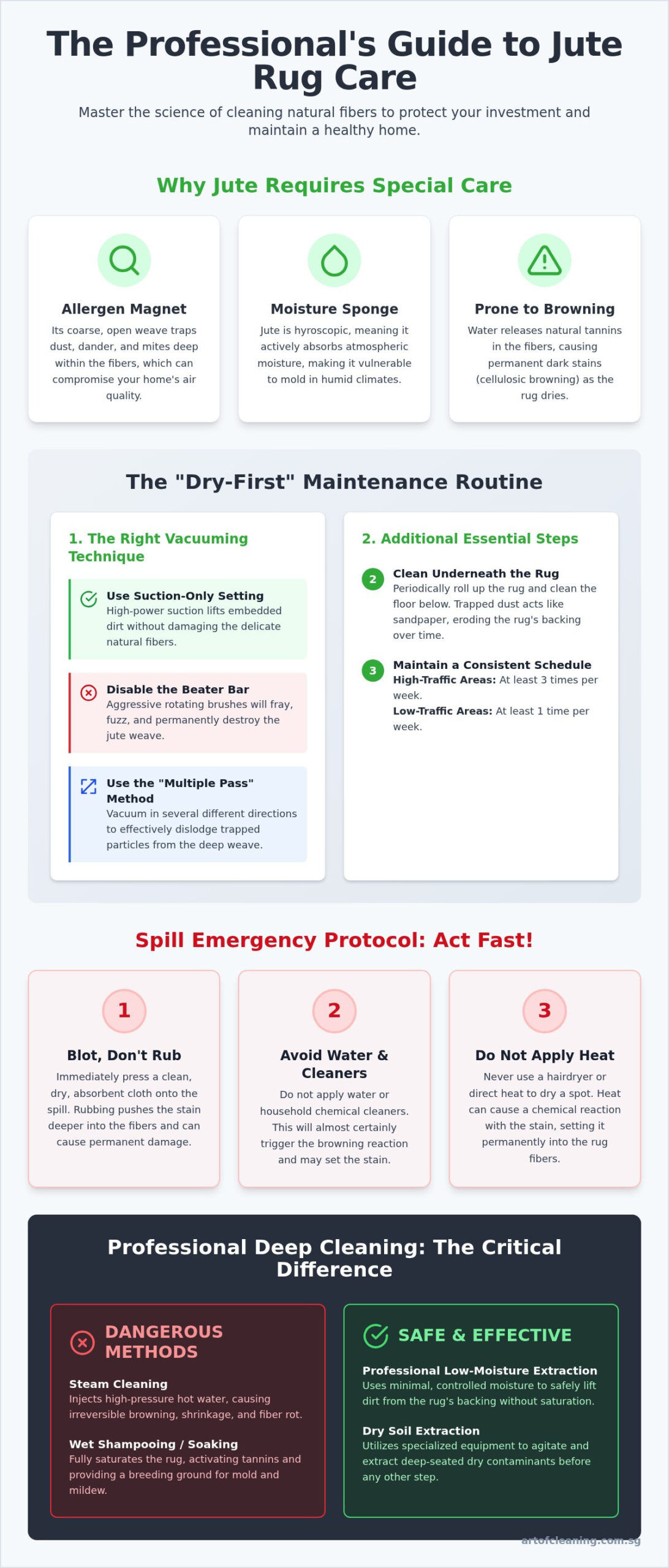
Effective care for natural fibers relies on a “Dry-First” philosophy. Since jute is highly sensitive to liquids, 90% of your maintenance strategy should be mechanical rather than chemical. This approach focuses on removing particulate matter before it can settle deep into the weave or react with atmospheric moisture. For high-traffic areas like entryways, you should perform these tasks at least three times a week. Low-traffic spaces like guest bedrooms may only require a weekly session. Consistent removal of dry soil prevents abrasive grit from grinding down the delicate plant fibers over time. Mastering how to clean jute carpet begins with this commitment to regular, non-invasive maintenance.
Many homeowners overlook the importance of cleaning the floor surface directly underneath the rug. Because jute has a porous, open-weave structure, fine dust and sand particles often sift through the rug and accumulate on the hard flooring below. If left undisturbed, this trapped debris acts like sandpaper, slowly eroding the rug’s backing every time someone walks across it. Periodically rolling up the carpet to sweep or mop the floor beneath is a vital step in preserving the rug’s structural integrity. During the first few months of ownership, you’ll likely notice significant shedding. This is a natural characteristic of the plant material, not a sign of poor quality. Regular suction-only cleaning will manage this “break-in” phase until the loose fibers stabilize.
The Right Vacuuming Technique
Your vacuum choice is critical. You must disable the beater bar or rotating brush before you begin. These mechanical brushes are designed for synthetic piles and will aggressively fray the natural jute twists, leading to a fuzzy, worn appearance. Use a high-power, suction-only setting instead. To be effective, employ the “Multiple Pass” method. This involves vacuuming in several different directions, north to south, then east to west, to dislodge grit trapped within the coarse fibers. For the delicate edges and hand-bound borders, use a soft-bristle suction attachment to prevent unravelling. While home tools are excellent for surface maintenance, occasionally expert extraction is necessary to remove the contaminants that standard suction cannot reach.
Managing Natural Shedding and Odors
Because jute is a biological material, it can occasionally trap household smells. To neutralize odors without risking moisture damage, sprinkle a thin layer of dry baking soda across the surface. Let it sit for at least thirty minutes to absorb molecules before vacuuming it out completely. Ensure your vacuum has a HEPA filter to prevent the fine powder from being exhausted back into your breathing air. If your rug has been exposed to significant spills or environmental pollutants, you may need a more intensive solution. Our Professional Carpet Cleaning Singapore guide details how we handle deep-seated allergens that domestic tools miss. For those seeking a comprehensive home environment reset, our team provides specialized rug cleaning that prioritizes both aesthetics and family health.
The Golden Rule of Stain Removal: Managing Spills Without Water Damage
Speed is the most critical variable when addressing spills on natural fibers. Because jute acts like a biological sponge, liquid travels horizontally and vertically through the weave within seconds. The absolute mandate for any spill is to blot, never rub. Rubbing forces the liquid deeper into the lignin structure and frays the delicate twists, causing permanent texture distortion. While it’s tempting to use a hair dryer to speed up the process, applying direct heat can actually set the stain into the plant fibers, making it impossible to remove later. Similarly, many off-the-shelf carpet cleaners have a high pH level that triggers immediate cellulosic browning. For long-term preservation, Essential Routine Maintenance should always prioritize pH-neutral solutions or dry-cleaning powders.
Step-by-Step Spot Cleaning for Liquid Spills
If you encounter a liquid spill, follow this protocol to minimize fiber saturation. First, use a clean, white microfiber cloth to blot the area. Avoid colored towels, as the dyes can transfer to the jute. Press firmly to absorb as much moisture as possible. Second, apply a specialized dry-cleaning powder or a “dry-damp” neutral solution specifically formulated for natural fibers. Third, use a floor fan directed at the spot to ensure the area dries in under 30 minutes. Rapid evaporation is the only way to prevent the oxidation that causes brown stains. Finally, once completely dry, gently brush the fibers with a soft-bristle brush to restore the rug’s natural texture and lift the pile. Learning how to clean jute carpet correctly often comes down to this balance of speed and moisture control.
Handling Solid Messes and Pet Accidents
Solid messes require a different mechanical approach. Use a blunt knife or a spoon to gently scrape away dried solids before they get crushed into the weave. If the mess is moist, lift it straight up rather than wiping across the surface. Pet accidents present a unique chemical challenge because urine is highly acidic when fresh and turns alkaline as it dries. This shift aggressively attacks the lignin in jute, leading to structural weakening and deep discoloration. To neutralize pet enzymes, use a specialized enzyme cleaner sparingly, ensuring you don’t over-saturate the rug backing. If a stain persists after two attempts, stop your DIY efforts. Continued wetting will only worsen the damage. At this stage, professional rug cleaning is the only safe way to extract deep-seated contaminants without ruining the material. Our team acts as the guardian of your home environment, using professional-grade equipment to restore hygiene where domestic methods fail.
The Humidity Challenge: Protecting Jute in Singapore’s Climate
In Singapore, the relative humidity often exceeds 80%. This environmental factor is the single greatest threat to natural fiber rugs. While previous sections detailed mechanical maintenance, understanding the environmental context is vital for anyone learning how to clean jute carpet in a tropical setting. Jute is fundamentally hyroscopic. It doesn’t just sit in your room; it actively drinks moisture from the air. When these fibers become saturated with atmospheric water, they create a perfect microclimate for fungal colonization. This process is accelerated when organic dust remains trapped in the coarse weave, providing a rich nutrient source for mold growth.
Microbial Prevention Strategies
Maintaining a healthy home environment requires active climate control. If you don’t run 24/7 air conditioning, you must employ other strategies to protect your investment. Use a hygrometer to ensure your indoor relative humidity stays below 60%. Dehumidifiers are essential tools for preventing the fiber saturation that leads to browning. During dry, sunny spells, move your rug to a well-ventilated area to help release trapped moisture. You should also regularly check the rug’s backing for musty odors or small black spots. These are early indicators of a microbial infestation that requires immediate attention. Consistency in these preventative steps is just as important as knowing how to clean jute carpet when a spill occurs.
The Health Implications of Damp Jute
The danger of a damp jute rug extends beyond aesthetics. The coarse, natural structure is an ideal habitat for microscopic pests. Research shows that high-humidity environments significantly increase dust mite allergy symptoms in residents. When jute remains moist, it doesn’t just trap these allergens; it facilitates their reproduction. Mold spores released from a neglected rug can also trigger chronic respiratory issues or skin irritation in sensitive individuals. You shouldn’t view rug maintenance as a mere chore. In Singapore, professional Rug Cleaning Singapore is a critical health intervention. Specialized extraction removes the deep-seated spores and mite waste that domestic vacuums simply leave behind.
If you suspect your rug has begun to harbor mold or deep-seated allergens, don’t wait for visible damage to occur. Our team utilizes scientific sanitation methods to restore your home’s safety and air quality. Contact us today for professional rug cleaning services that prioritize your family’s well-being.
Professional Jute Carpet Cleaning: Why Expert Extraction is Necessary
Standard steam cleaning methods used by many general services pose a significant risk to natural fiber rugs. High temperature steam and excessive water saturation trigger the chemical browning process discussed earlier, often leading to permanent fiber damage. At Art of Cleaning, we recognize that learning how to clean jute carpet at a professional level requires an entirely different methodology. We utilize low-moisture extraction techniques that prioritize fiber stability. This scientific approach ensures that the rug backing is thoroughly sanitized without the risks associated with traditional wet washing. By controlling moisture levels with precision, we act as the guardian of your home environment, preserving the aesthetic value of your carpet while eliminating hidden health hazards.
Our approach is fundamentally artisanal. Natural fibers like jute possess unique biological characteristics that demand a technician’s touch rather than a one-size-fits-all mechanical solution. We understand the tension between the material’s lignin structure and the surrounding humidity. This expertise allows our team to identify exactly how much agitation is required to dislodge grit without fraying the delicate plant twists. Our goal is to provide visual cleanliness that is backed by rigorous scientific sanitization, giving you a home space that feels as healthy as it looks.
Art of Cleaning’s Specialized Protocol
Our technicians utilize pH-neutral, fiber-safe cleaning agents specifically formulated for organic textiles. These solutions effectively break down contaminants without altering the natural chemical balance of the jute. Our high-powered suction technology is designed to reach deep into the coarse weave, removing a significant percentage of trapped allergens and particulate matter that domestic tools miss. The process concludes with a specialized post-cleaning drying protocol. By accelerating evaporation, we prevent the oxidation that leads to browning, ensuring your rug remains bright and structurally sound. This level of detail is critical for anyone researching how to clean jute carpet safely in a tropical climate.
When to Book a Professional Service
Maintaining a healthy home requires more than just surface-level tidiness. We recommend a professional deep clean every 6 to 12 months, depending on your household’s foot traffic and the local humidity levels. This frequency is essential for health maintenance, particularly for families with respiratory sensitivities or pets. If you experience a large spill or notice widespread browning, immediate intervention is necessary to prevent permanent fiber degradation. You can view our transparent service options and rates on the Art of Cleaning Pricelist. Our specialized rug cleaning ensures your natural fibers receive the expert care they deserve, providing a fresh, odor-free environment for your family.
Securing the Longevity and Hygiene of Your Jute Investment
Maintaining a natural fiber rug in a tropical climate requires a disciplined approach to moisture management. You now understand that knowing how to clean jute carpet effectively depends on a “dry-first” philosophy and proactive humidity control to prevent browning and mold. By prioritizing mechanical soil removal and immediate, non-liquid stain responses, you protect the structural integrity of your carpet while ensuring a healthier living environment for your family.
Domestic tools often fail to reach the deep contaminants trapped within coarse weaves. Art of Cleaning acts as the guardian of your home environment, utilizing specialized low-moisture extraction technology and expert technicians trained specifically in natural fiber care. Our artisanal approach has been featured on major national broadcasting networks, reflecting our commitment to professional-grade hygiene and safety. Don’t let hidden allergens or permanent stains compromise your home’s wellness. Protect Your Home Hygiene—Book Professional Rug Cleaning Today. Your investment deserves the meticulous care that only a specialist can provide and we look forward to helping you restore your space.
Frequently Asked Questions
Can I use a steam cleaner on my jute carpet?
No, you shouldn’t use a steam cleaner on a jute rug. The high temperature and excessive moisture trigger a chemical reaction in the plant fibers that leads to irreversible browning and brittleness. Because jute is highly hyroscopic, it absorbs steam deep into its core, creating a perfect environment for mold growth. For those wondering how to clean jute carpet safely, low-moisture professional extraction is the only recommended deep-cleaning method.
Why is my jute rug turning brown after I cleaned it?
Jute turns brown after cleaning because of a process called cellulosic browning. When water saturates the fiber, it releases natural lignin and oils that migrate to the surface as the rug dries. Once these substances are exposed to air, they oxidize and create dark, unsightly stains. This reaction is particularly aggressive if the rug remains damp for too long in high-humidity environments. Professional intervention is usually required to mitigate this oxidation damage.
How do I get the “earthy” smell out of a new jute rug?
The earthy odor is a natural characteristic of the plant fibers and usually dissipates over time. To accelerate this, place the rug in a well-ventilated room with a dehumidifier to help the fibers release trapped organic scents. You can also sprinkle dry baking soda across the surface to absorb the molecules. Let it sit for thirty minutes before vacuuming it out completely with a suction-only attachment to avoid damaging the weave.
Is it safe to use baking soda to clean jute?
Yes, dry baking soda is a safe and effective tool for neutralizing odors and managing light surface soil on natural fibers. It provides a non-invasive way to refresh the rug without the risks associated with liquid cleaners. However, you must ensure your vacuum has enough suction to remove every particle from the deep crevices of the weave. If powder remains trapped, it can act as an abrasive that weakens the fiber over time.
Can I use a pressure washer for a very dirty jute rug?
You should never use a pressure washer on a jute rug. The extreme force of the water will physically unravel the hand-twisted fibers and destroy the rug’s structural integrity. Additionally, the massive volume of water will lead to severe cellulosic browning and mold colonization that is almost impossible to reverse. If your rug is heavily soiled, professional low-moisture extraction is a far safer and more effective restorative solution for natural materials.
How long does it take for a jute rug to dry after professional cleaning?
After a professional session with Art of Cleaning, a jute rug typically dries within 2 to 4 hours. We use specialized low-moisture extraction technology that removes contaminants without saturating the core of the fiber. While the exact time depends on your home’s ventilation and the current humidity levels in Singapore, our scientific approach ensures the rug returns to a safe, dry state quickly to prevent any risk of browning or fungal growth.
What is the best way to remove pet urine from jute?
The most effective way to handle pet urine is immediate blotting with a clean, white microfiber cloth to absorb the liquid before it reaches the rug backing. You can then use a specialized enzyme cleaner sparingly to break down the proteins without over-saturating the fiber. Because urine is highly acidic and attacks the lignin in jute, lingering residues can cause permanent rot. Professional extraction is often necessary to fully neutralize these deep-seated contaminants.
Will professional cleaning stop my jute rug from shedding?
No, professional cleaning will not stop a jute rug from shedding, as this is a natural biological characteristic of the plant fiber. However, a deep clean will remove the loose, broken fibers that have already accumulated within the weave, providing a cleaner surface. While regular maintenance helps manage the debris, shedding will continue throughout the rug’s lifespan as the organic material gradually breaks down through daily foot traffic and environmental exposure.