
What if the glass of red wine you just spilled doesn’t mark the end of your S$10,000 Persian silk rug, but rather a test of your home’s hygiene science? For many Singaporean homeowners, the sight of liquid hitting a delicate weave triggers immediate anxiety over permanent “tide marks” or irreversible color bleeding. You’ve likely spent years curating a space that reflects your taste, and the fear of a single accident ruining a luxury investment is completely valid. It’s not just about the visual blemish; it’s about preserving the structural integrity of a natural fiber that’s notoriously sensitive to moisture.
This expert guide will teach you exactly how to remove wine stain from carpet surfaces made of genuine silk, ensuring you maintain that signature luster even in our local high-humidity environment. We’ll master the delicate chemistry required to lift pigments without damaging the protein fibers or inviting mould. You’ll gain a clear understanding of the professional techniques used to identify real silk versus artificial viscose, along with a systematic maintenance plan that prioritizes both the aesthetic beauty and the long-term health of your living environment.
Key Takeaways
- Silk’s protein-based structure requires specialized pH-neutral care to prevent fiber abrasion and preserve its natural light-reflecting properties.
- Master the immediate emergency steps for how to remove wine stain from carpet surfaces using the “Blot, Never Rub” rule to stop tannins from bonding.
- Recognize the hidden risks of Singapore’s high humidity, which can trigger mould growth and deep-seated “wicking” in damp organic fibers within 48 hours.
- Distinguish between genuine silk and fragile artificial alternatives like viscose to avoid permanent structural damage during liquid spill recovery.
- Learn why specialized professional extraction is essential for removing 99% of allergens while ensuring the rug’s base remains structurally sound.
The Science of Silk Fibres: Why Standard Cleaning Fails
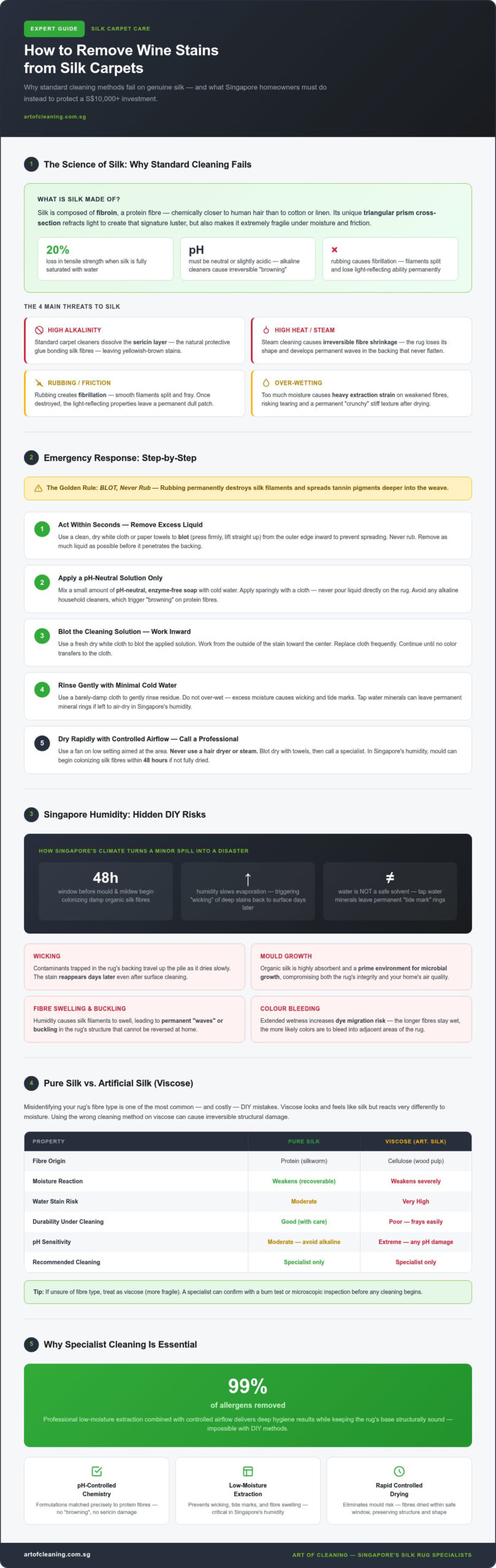
Silk isn’t just a luxury fabric; it’s a complex biological structure primarily composed of a protein called fibroin. Understanding The Science of Silk Fibres is essential for any homeowner attempting to figure out how to remove wine stain from carpet yarns without causing permanent damage. Chemically, silk is closer to human hair than to plant-based textiles like cotton or linen. This biological origin means it reacts to moisture and chemicals in highly specific, often volatile ways. The fibre’s unique triangular prism shape is what allows it to refract light at different angles, creating that prized luxury lustre. However, this same structure makes the pile incredibly sensitive to abrasion and chemical burns.
Standard cleaning methods often fail because they ignore these fundamental properties:
- Silk loses up to 20% of its tensile strength when saturated with water, making it prone to tearing during heavy extraction.
- The triangular prism structure is easily distorted, leading to a loss of the rug’s natural sheen.
- Standard alkaline detergents can dissolve the sericin layer, which acts as a natural protective glue for the fibres.
- Improper drying in humid environments leads to a permanent “crunchy” or stiff texture that ruins the hand-feel of the rug.
The Role of pH Balance in Fibre Integrity
Silk is a protein-based textile requiring specialized pH-balanced chemistry. Most off-the-shelf carpet cleaners are formulated with high alkalinity to break down grease, but these are disastrous for protein fibres. When a high-pH cleaner contacts natural silk, a chemical reaction called “browning” often occurs. This leaves behind yellowish-brown cellulosic stains that are nearly impossible to reverse. Maintaining a strictly pH-neutral or slightly acidic environment is the only way to preserve the fibre’s integrity while you’re learning how to remove wine stain from carpet placements.
Heat and Friction: The Enemies of Silk
Applying high heat, such as that found in standard steam cleaning, causes irreversible fibre shrinkage in natural silk. This often results in the rug losing its shape or developing “waves” in the backing that never flatten out. Friction is equally dangerous. Rubbing a spill creates “fibrillation”, where the smooth silk filaments split and fray at the ends. Once this happens, the light-reflecting properties are destroyed, leaving a dull patch that no amount of grooming can fix. Professionals utilize low-moisture extraction and controlled airflow to avoid these pitfalls while ensuring deep hygiene.
Risks of DIY Cleaning in High-Humidity Environments
Singapore’s tropical climate presents a unique challenge for delicate textiles. While you might be focused on how to remove wine stain from carpet fibres, the ambient humidity in our region can turn a minor spill into a structural disaster. When moisture levels are consistently high, evaporation slows down significantly. This creates a phenomenon known as “wicking,” where liquid and deep-seated contaminants trapped in the rug’s backing travel up the pile as it dries. Instead of a clean surface, you’re left with a recurring stain that seems to reappear days later.
The health risks are equally concerning. Organic silk fibres are highly absorbent and provide an ideal environment for microbial growth. If a silk rug remains damp for more than 48 hours, mildew and mould can begin to colonize the foundation. It doesn’t just ruin the rug’s aesthetic; it compromises your home’s air quality. High humidity also causes silk filaments to swell. This swelling can lead to permanent distortion, where the rug develops “waves” or “buckling” that cannot be easily flattened. The risk of dye migration, or colour bleeding, also increases the longer the fibres stay wet.
The Danger of Water Staining (Tide Marks)
Many homeowners assume that plain water is a safe solvent. On silk, this is a dangerous misconception. Tap water contains minerals that, when left to dry slowly in humid air, form permanent mineral rings known as “tide marks.” Attempting to “spot” a wine stain with water often creates a larger, more visible blemish than the original spill. Adhering to Professional Carpet Cleaning Singapore standards is the only way to ensure moisture is handled scientifically to prevent these rings.
Moisture Management Strategies
If you must attempt a home recovery, moisture control is your primary defense. You should always operate a dehumidifier or air conditioning on a “dry” setting during the process. Avoid the common myth of “sun-drying” your rug. Direct UV rays make silk fibres brittle and cause expensive dyes to fade prematurely. Rapid moisture extraction is vital. Because of these complex risks, Professional Specialized Cleaning is often the safest path for high-value investments. If you’re unsure about the moisture levels in your rug, consulting the experts at Art of Cleaning can prevent permanent water damage before it sets.
How to Remove Wine Stain from Carpet: Silk Emergency Steps
Red wine contains organic tannins that act as potent natural dyes. On a protein-based silk rug, these tannins bond almost instantly with the fibroin fibers. Speed is your only defense. The moment a spill occurs, you must act with precision to prevent a permanent blemish on your luxury investment. Understanding how to remove wine stain from carpet surfaces made of silk requires a shift away from standard scrubbing techniques.
The “Blot, Never Rub” rule is non-negotiable. As established, friction and heat destroy the silk’s light-reflecting properties and can lead to fibrillation. Rubbing also drives the wine deeper into the core of the yarn, making professional extraction much more difficult later. Always use a white, lint-free cloth or paper towel. Using a colored towel introduces the risk of dye transfer, which can create a secondary stain that’s often permanent. Always work from the outer perimeter of the spill toward the center to contain the liquid rather than spreading it.
Step-by-Step Blotting Technique
Follow this systematic sequence to maximize pigment recovery without damaging the textile:
- Step 1: Dry Absorption. Press a clean white towel firmly onto the spill. Hold for 10 seconds, then switch to a dry section of the towel. Repeat this process until no more red pigment transfers to the cloth.
- Step 2: Neutralization. Lightly mist the area with a 50/50 mixture of white vinegar and distilled water. The slight acidity of vinegar helps stabilize the silk dyes and counteracts the wine’s pigments. Don’t soak the fibers; excess moisture in Singapore’s humidity is a recipe for mould.
- Step 3: Pressure Extraction. Sandwich the damp area between two fresh, dry white towels. Place a heavy, non-bleeding object on top for 30 minutes to pull deep moisture out of the rug’s foundation.
Safe DIY Solutions vs. Dangerous Chemicals
You must avoid alkaline chemicals at all costs. Bleach, ammonia, and even popular enzyme-based “oxy” cleaners can dissolve the silk’s sericin layer, leading to a permanent “crunchy” texture. Before applying any solution, perform a 30-second colorfastness test on a hidden corner. Dampen a white cloth and press it firmly against the corner; if any rug dye transfers to the cloth, stop immediately. If the stain persists after two blotting cycles, it’s time to cease DIY efforts. Continuing beyond this point risks permanent fiber damage. For a professional assessment of your rug’s integrity, you can contact our specialists to prevent further degradation.
Pure Silk vs. Artificial Silk (Viscose): A Critical Distinction
Many homeowners in Singapore are surprised to learn that their “luxury silk” rug is actually made of regenerated cellulose. Terms like “bamboo silk,” “banana silk,” or “art silk” are marketing labels for viscose, a material fundamentally different from the natural protein fibers discussed earlier. Identifying your rug’s true composition is the most critical step before you even consider how to remove wine stain from carpet fibers. While pure silk is resilient and possesses high tensile strength, viscose is notoriously fragile. It can lose up to 50% of its structural integrity the moment it becomes saturated with liquid.
Pure silk is a natural protein (fibroin), whereas viscose is a plant-based material treated with harsh chemical solvents to mimic silk’s sheen. This chemical processing makes viscose highly susceptible to “yellowing” and permanent pile collapse when exposed to water-based cleaning agents. The methodology for how to remove wine stain from carpet fibers changes entirely when dealing with cellulose-based materials. Mistakes here often lead to the “shattering” of the yarn, where the fibers literally break apart under the weight of the liquid.
The “Burn Test” and Physical Identification
If you’re unsure of your rug’s DNA, a few simple tests can provide clarity. These diagnostic steps ensure you don’t apply a treatment that could cause irreversible damage.
- The Burn Test: Snip a tiny fiber from the back of the rug and light it with a match. Pure silk smells like burning hair and leaves a brittle black ash. Viscose smells like burning paper or wood and leaves a soft, gray ash.
- The Temperature Test: Real silk fibers stay cool to the touch even in our tropical heat. Synthetic or cellulose fibers warm up quickly when rubbed with your palm.
- The Fringe Check: In a genuine hand-knotted silk rug, the fringes are the ends of the warp threads. If the fringes are sewn onto the edge after weaving, you’re likely dealing with a machine-made viscose piece.
Cleaning Implications for Each Material
Understanding these differences determines the success of your recovery efforts. Water-based spotting is often a “death sentence” for viscose rugs, leading to permanent stiffness and fiber breakage. For these delicate items, professionals utilize specialized dry-solvent methods to lift contaminants without moisture. Even with real silk, professional grooming is necessary after a spill to restore the “hand” or soft feel of the pile. Our team provides Rug Cleaning Singapore services that are meticulously tailored to these specific fiber requirements. If you’ve discovered your rug is viscose, don’t attempt DIY liquid removal. Instead, consult the experts at Art of Cleaning to ensure your luxury piece is preserved using scientifically verified, moisture-controlled techniques.
Why Professional Specialized Cleaning is Essential for Silk
While mastering how to remove wine stain from carpet surfaces through immediate blotting is a vital first step, it’s rarely a complete solution for luxury textiles. Deep-seated pigments and organic tannins often migrate into the rug’s foundation, where household tools cannot reach. Professional extraction is scientifically designed to remove 99% of allergens, bacteria, and hidden contaminants without saturating the rug’s base. This level of precision is necessary because silk’s protein structure is highly sensitive to moisture. Standard domestic machines often leave the backing damp, which is a primary cause of fiber rot and structural failure.
Our specialized process utilizes controlled drying rooms to combat Singapore’s relentless humidity. These environments prevent “wicking,” the process where dirt and moisture rise to the surface during slow evaporation, causing wavelike distortion or permanent tide marks. We use pH-neutral detergents specifically formulated to preserve the sericin protein layer. This maintains the fiber’s natural strength and signature lustre. Once the cleaning is complete, professional “pile grooming” ensures that the silk filaments are aligned to reflect light correctly, restoring the visual depth that DIY methods often dull.
The Art of Cleaning Methodology
Our approach goes beyond surface aesthetics to prioritize your home’s environmental health. We employ a hygiene-focused methodology that removes microscopic pollutants trapped deep within the weave, ensuring a safe space for families and pets. This meticulous attention to detail is the same standard we apply to our Sofa Cleaning in Singapore services. After deep extraction, we can apply professional soil inhibitors. These specialized fabric protectors create a microscopic barrier on the fibers, making it much easier to blot away future liquid spills before they bond with the protein core.
Preserving Long-Term Asset Value
A high-quality silk rug is a significant financial and artistic investment. Regular professional maintenance can extend its lifespan by 20 years or more, preventing the brittle fiber degradation caused by accumulated dust and grit. Professional inspections also catch “invisible” damage, such as early-stage moth activity or dry rot, which often goes unnoticed in domestic settings until it’s too late to repair. Protecting your investment requires more than just knowing how to remove wine stain from carpet placements; it requires a partnership with experts who understand the artisanal nature of your rug. You can contact Art of Cleaning for a professional silk rug assessment to ensure your luxury textiles remain a healthy and beautiful centerpiece of your home.
Securing the Future of Your Luxury Textiles
Maintaining the pristine condition of a silk rug in Singapore requires more than just quick reflexes. You’ve learned that silk’s protein structure is highly sensitive to pH levels and that our local humidity can accelerate “wicking” or mould growth if spills aren’t managed scientifically. While knowing how to remove wine stain from carpet through immediate, pressure-based blotting is essential for damage control, it’s only the first step in a complete restoration. Proper care requires a deep understanding of the fibroin fiber to prevent permanent tide marks or structural failure.
True preservation involves specialized extraction and controlled drying to remove 99% of contaminants while protecting the fiber’s natural lustre. As a specialist featured on major local broadcasting networks, we take pride in our artisanal approach to high-value textile restoration. Our specialized hygiene-focused cleaning process ensures that your luxury investment remains a safe, beautiful centerpiece for your home. Don’t leave the health of your environment to chance after a significant spill.
Book a Professional Silk Rug Deep Clean with Art of Cleaning today to restore your rug’s natural sheen and structural integrity. Your luxury textiles deserve the precision of a dedicated expert who prioritizes both aesthetic beauty and household hygiene.
Frequently Asked Questions
Can I steam clean a silk carpet?
You should never steam clean a silk carpet because the extreme heat causes the natural protein fibers to shrink and lose their structural integrity. High temperatures also strip the sericin layer; this leads to a dull, brittle texture that ruins the rug’s value. Professionals use low-moisture or dry-solvent extraction methods to ensure deep hygiene without the risk of thermal damage that standard steam cleaners often cause in domestic settings.
How often should a silk rug be professionally cleaned?
We recommend professional deep cleaning every 12 to 18 months to maintain fiber health and remove microscopic allergens. In Singapore’s humid climate, organic fibers like silk trap dust mites and pollutants more effectively than synthetic materials. Regular maintenance prevents these contaminants from abrading the delicate pile. This proactive approach significantly extends the lifespan of your luxury investment while ensuring a hygienic environment for your family.
What is the best way to remove a red wine stain from silk?
The most effective method involves immediate blotting with a clean, white, lint-free cloth to absorb as much liquid as possible. While learning how to remove wine stain from carpet surfaces, you must avoid scrubbing; this permanently damages the light-reflecting pile. Once the excess is removed, professional extraction is necessary to pull the organic tannins out of the rug’s foundation before they bond permanently with the protein fibers.
Why does my silk rug feel crunchy after I cleaned it?
A “crunchy” texture usually indicates that alkaline detergent residue was left behind or that the sericin layer was dissolved by improper pH levels. High-pH cleaners react with silk proteins, causing the fibers to stiffen as they dry. This is particularly common in DIY attempts where rinsing is insufficient. Specialized restoration involves using pH-neutral conditioning agents to soften the fibers and restore the rug’s natural hand-feel and luster.
Is it safe to vacuum a silk carpet every day?
You can vacuum your silk carpet frequently, but you must use a suction-only setting without a rotating beater bar or brush. The aggressive friction of a beater bar can cause “fibrillation,” where the smooth silk filaments split and fray. Daily vacuuming with a gentle attachment removes surface grit that would otherwise settle into the base and cause abrasive damage to the delicate yarns over time.
How can I tell if my rug is real silk or viscose?
You can identify real silk by performing a burn test on a single loose fiber; real silk smells like burning hair, while viscose smells like burning paper. Additionally, real silk feels cool to the touch and has fringes that are an extension of the rug’s warp threads rather than being sewn on. Viscose is much more fragile when wet, making professional identification vital before you attempt any liquid treatment.
Will professional cleaning remove the smell from a silk rug?
Yes, our professional deep cleaning process effectively neutralizes odors by removing the organic bacteria and contaminants trapped deep within the weave. Odors in silk rugs are often caused by trapped moisture or spills that have begun to decay in Singapore’s high humidity. By utilizing specialized extraction equipment and controlled drying, we eliminate the source of the smell rather than just masking it with artificial fragrances.
Can sunlight damage a silk carpet?
Direct sunlight is highly damaging to silk carpets as UV rays cause the natural dyes to fade and the protein fibers to become brittle. Over time, prolonged exposure leads to irreversible fiber degradation and a significant loss of the rug’s resale value. We suggest using UV-filtering window films or keeping curtains drawn during peak daylight hours to protect your high-value textiles from the harsh tropical sun.