
For most Singapore homes, professional carpet cleaning every 6 to 12 months is a practical baseline; homes with babies, toddlers or pets should plan for cleaning every 6 months. This complete guide to professional carpet cleaning in Singapore explains how to adjust that schedule for foot traffic, spills and everyday family life.
Visible marks are only part of the picture. Carpets can also hold soil, loose fibres, pet dander and moisture. Regular vacuuming removes surface debris; periodic deep cleaning can reach dirt settled further into the pile.
This guide explains how often to clean different areas, what to expect from extraction cleaning and how to prepare a carpet for professional care. It also covers drying and ventilation, and practical ways to keep carpeted spaces comfortable for children and pets while cleaning is planned and completed.
Key Takeaways
- Before extraction cleaning, vacuum loose soil and consider the carpet’s fibre type, since delicate materials may need gentler, lower-moisture care.
- Good airflow supports drying after wet cleaning, so plan how the room can be ventilated before the work begins.
- Blot fresh spills instead of rubbing them, and test cleaning products on a hidden area to help prevent stains from spreading or colours from bleeding.
- Keep babies, toddlers and pets away from a damp carpet until it is fully dry, and follow the cleaning and drying guidance for the specific material.
1. How Often Should You Clean Your Carpet?
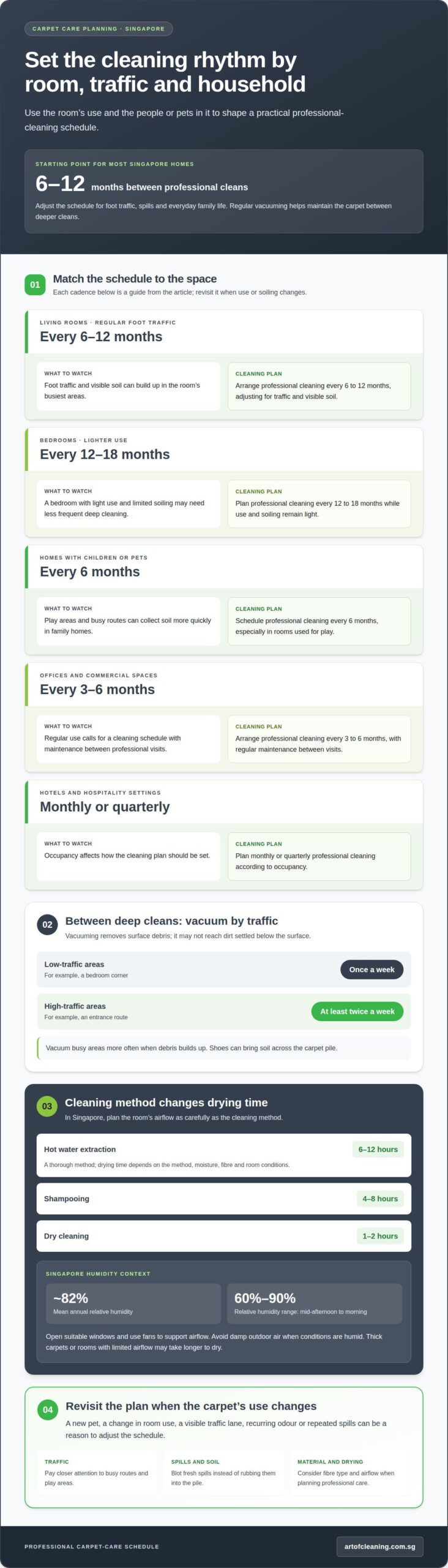
For most Singapore homes, schedule professional carpet cleaning every 6 to 12 months. Homes with children or pets benefit from cleaning every 6 months, especially where play and foot traffic concentrate soil. Vacuum carpets weekly, and vacuum busy areas more often when debris builds up. Singapore’s mean annual relative humidity is around 82%, according to Meteorological Service Singapore. Singapore’s relative humidity ranges from 60% in the mid-afternoon to about 90% in the morning, according to Meteorological Service Singapore. That moisture makes drying and airflow important parts of maintenance.
When choosing a carpet cleaning company, look for a clear explanation of its method, equipment, drying process and approach to your carpet’s fibres. A reliable service explains how it treats fresh stains and delicate materials, rather than claiming one method works for every carpet.
Hot water extraction is a thorough method, but its drying can take 6 to 12 hours in Singapore. Shampooing commonly takes 4 to 8 hours, while dry cleaning may leave carpets ready within one to two hours. The method, moisture level, fibre type and room conditions all affect how long drying takes. Plan longer for thick carpets or rooms with limited airflow.
Before cleaning, plan how air will circulate through the room. Open suitable windows and use fans, while avoiding damp outdoor air when conditions are humid. After a carpet is rinsed, extract as much water as possible and let it dry fully before use. Moisture left in the fibres can create conditions for mould.
Use a detergent suited to the carpet and follow its dosing instructions. Avoid applying excess solution, and collect and dispose of extracted wastewater responsibly. Carpet cleaning prices depend on factors such as size, material, method, soil level and stain treatment. Art of Cleaning provides a quote based on the job.
The wrong product, excessive water or inadequate drying can cause colour bleeding, shrinkage or mould. Test products on a hidden area first, and use moisture carefully on delicate materials. Blot spills instead of rubbing them, which can push stains deeper into the pile.
Onsite cleaning is suitable for fitted carpets, while movable rugs can be cleaned separately. Stain treatment and after-hours work are not automatic parts of every job, so clarify the scope when arranging service. In Singapore’s humid conditions, consider the drying plan as carefully as the cleaning method.
2. Preparing carpets and upholstery for extraction cleaning
Preparation helps extraction remove embedded soil while limiting excess moisture. First vacuum loose dirt from the surface and, where possible, treat visible stains while they are fresh. The carpet’s material and water resistance matter: jute and sisal need minimal moisture, while viscose and art silk require specialist low-moisture care. Test a hidden area before treatment to check for colour bleeding.
Professional cleaning generally begins with inspection and vacuuming, followed by a suitable detergent treatment. In spray extraction, the cleaning solution is applied to loosen soil, then equipment sprays and extracts water, detergent and dirt from the fibres. Hold the nozzle close to the surface while spraying. Detergent is measured according to the machine’s dosing instructions, not added by guesswork.
For connected carpet or upholstery, wet the whole connected area evenly. Treating only one patch can leave water marks as the material dries. Repeat extraction until no more dirt or detergent is removed. If needed, rinse once or twice with clear water, then extract again. This sequence helps limit residue and control moisture.
Hot water extraction is considered a thorough method for deep cleaning, while low-moisture approaches may suit water-sensitive materials. The right treatment depends on the fibres, the soil and the item’s condition. For a carpeted room, the process focuses on even coverage and strong moisture removal; for a sofa, seams and cushions need attention too. A professional cleaning service can assess the material and select an appropriate extraction approach.
Airflow supports drying, so move furniture and other obstacles where practical. Before extraction, the cleaning team assesses the surface, tests a hidden area and selects detergent and equipment suited to the material. This preparation helps protect the carpet or upholstery as the machine removes loosened soil.
3. Professional cleaning frequency
Use Carpet Cleaning Singapore: The Complete Guide to Professional Carpet Cleaning as a starting point, then set a schedule by room, household activity and carpet traffic. In Singapore, living rooms with regular foot traffic generally need professional cleaning every 6 to 12 months. A bedroom with lighter use can often follow a 12 to 18-month schedule. Revisit the plan when a room’s use changes, such as after a new pet joins the household.
- Living rooms: Arrange professional cleaning every 6 to 12 months, adjusting for foot traffic and visible soil.
- Bedrooms: Plan professional cleaning every 12 to 18 months when use and soiling remain light.
- Homes with children or pets: Schedule professional cleaning every 6 months, particularly in rooms used for play.
- Offices and commercial spaces: Arrange professional cleaning every 3 to 6 months, with regular maintenance between visits.
- Hotels and hospitality settings: Plan monthly or quarterly cleaning according to occupancy.
Vacuuming helps maintain a carpet between deeper cleans. Vacuum low-traffic areas once a week and high-traffic areas at least twice a week. For example, vacuum an entrance route more often than a bedroom corner if shoes bring soil across the pile. Regular vacuuming may not remove dirt that has settled below the surface.
Adjust your cleaning schedule to the carpet’s condition. A visible traffic lane, recurring odour or repeated spills can indicate that a room needs attention sooner. Address fresh stains promptly, then maintain a suitable schedule for professional cleaning. Extra machine passes or cleaning solution are no substitute for an interval that reflects how the room is used.
Dust mites thrive at humidity levels above 50%, so vacuuming and planned deep cleaning both matter for routine carpet care. Keep a room-by-room record of vacuuming and professional appointments. For a household-specific schedule, revisit Carpet Cleaning Singapore: The Complete Guide to Professional Carpet Cleaning and adjust the plan as room use changes.
4. Cleaning carpets around babies, toddlers, and pets
Babies crawl, toddlers play on the floor and pets rest close to carpet fibres. Before cleaning, move toys, feeding bowls and pet bedding. Tell the cleaning team about crawling areas, favourite play spots and pet accidents so it can focus on areas that get frequent contact. A thorough clean also covers carpet edges and areas beneath movable furniture.
Hot water extraction uses water and cleaning solution to loosen soil, then extraction equipment removes water, detergent and dirt. Residue can remain if too much detergent is used or extraction is incomplete, so the method and rinsing process matter. If young children or pets use the home, ask for a clear explanation of the products and steps, including how the carpet will dry.
Keep children and pets off the carpet during cleaning and drying. Follow the service’s instructions about when the room can be used again, and ventilate the space. Do not let a toddler crawl or a pet lie on damp fibres. If a pet has an accident, blot the area promptly rather than rubbing it and spreading the stain.
Between professional visits, vacuum regularly, especially near play mats, sofas and pet beds, where hair and dander can collect. Clean spills quickly with a suitable carpet product, testing it on a hidden area first. Do not pour cleaning solution directly onto the fibres: excess moisture can reach the backing and take longer to dry in a humid indoor environment.
For a family room or pet-used carpet, arrange a cleaning plan that accounts for material, soiling and drying needs. Arrange a thorough carpet clean for your home and plan the room’s return to use around complete drying.
Art of Cleaning: Carpet Cleaning
Art of Cleaning provides professional carpet cleaning for homes in Singapore when routine vacuuming no longer lifts embedded soil, traffic marks or persistent odours. The team also cleans rugs, sofas and mattresses, helping you plan care for the soft furnishings your household uses every day.
Consider professional cleaning when a carpet needs deeper treatment, after recurring spills or as part of household maintenance. Sharing the carpet’s material, affected areas and any concerns about children or pets helps the team plan suitable care and drying. For delicate rugs or heavily used family spaces, explain how the room is used so the cleaning approach can account for those needs.
For professional care of carpets and other household furnishings, contact Art of Cleaning to discuss your cleaning needs.
Make your next carpet-care step count
Use this complete guide to professional carpet cleaning in Singapore to plan care around the carpet’s material, room use and household routine. Before arranging a clean, note any delicate fibres, recurring marks and areas used by children or pets. This gives the cleaning team useful context and helps you plan how the room will be used while the carpet dries.
Soft furnishings often need care together. Art of Cleaning provides carpet cleaning, rug cleaning and sofa cleaning, so you can discuss the items that need attention as part of one household plan. Choose your next step based on what your home needs, whether that is addressing a carpet stain or arranging care for a frequently used rug.
Contact Art of Cleaning about carpet care and share what you’d like cleaned. A thoughtful plan can help keep your home’s soft furnishings comfortable and well cared for.
Frequently Asked Questions
How Often Should You Clean Your Carpet?
For most Singapore homes, professional cleaning every 6 to 12 months is a useful baseline; households with children or pets should plan for cleaning every 6 months. A living room used daily may need attention sooner than a rarely used bedroom. Reassess the schedule after repeated spills, a new pet, or a change in how the room is used.
Can dirty carpets and rugs really cause allergies?
Carpets and rugs can collect dust, pet dander and shed fibres, which may bother people sensitive to these particles. Dust mites thrive at humidity levels above 50%, so indoor conditions can also matter. Regular vacuuming and periodic deep cleaning help manage accumulated soil. If someone experiences persistent allergy symptoms, carpet cleaning alone should not be treated as a diagnosis or cure.
Can you clean a wool or viscose rug?
Yes, but wool and viscose need different care from standard synthetic carpet. Wool calls for a gentle, pH-balanced approach and controlled drying. Viscose, also called art silk, is highly sensitive to water, so specialist low-moisture care is appropriate. A hidden-corner patch test can reveal colour bleeding before treatment. Jute and sisal also need minimal moisture, as over-wetting can cause browning or warping.
Is it safe for babies, toddlers, and pets after cleaning?
Keep babies, toddlers and pets off the carpet until it is fully dry, and ventilate the room as it dries. Art of Cleaning uses eco-friendly and safe solutions for families and pets. Follow the cleaning and product instructions for the treated surface, and return toys, pet bedding and play mats only after the carpet is dry.
Will old or set-in stains fully come out?
Not always. Stubborn stains and spots may not be removed thoroughly. Results depend on the stain, carpet fibres, how long it has been there and any earlier cleaning products or treatments. Tell the cleaning team what caused the mark and what has already been applied. This context helps guide treatment and avoid using an unsuitable product.
What carpet cleaning methods are used by professional cleaners in Singapore?
Common carpet cleaning methods include hot water extraction, dry cleaning, bonnet cleaning, shampooing and encapsulation. Hot water extraction applies cleaning solution to the fibres, then extracts it with loosened soil. Dry and low-moisture methods use less water, while bonnet cleaning focuses on the carpet surface. The suitable method depends on the fibre type, soil and carpet care requirements.