
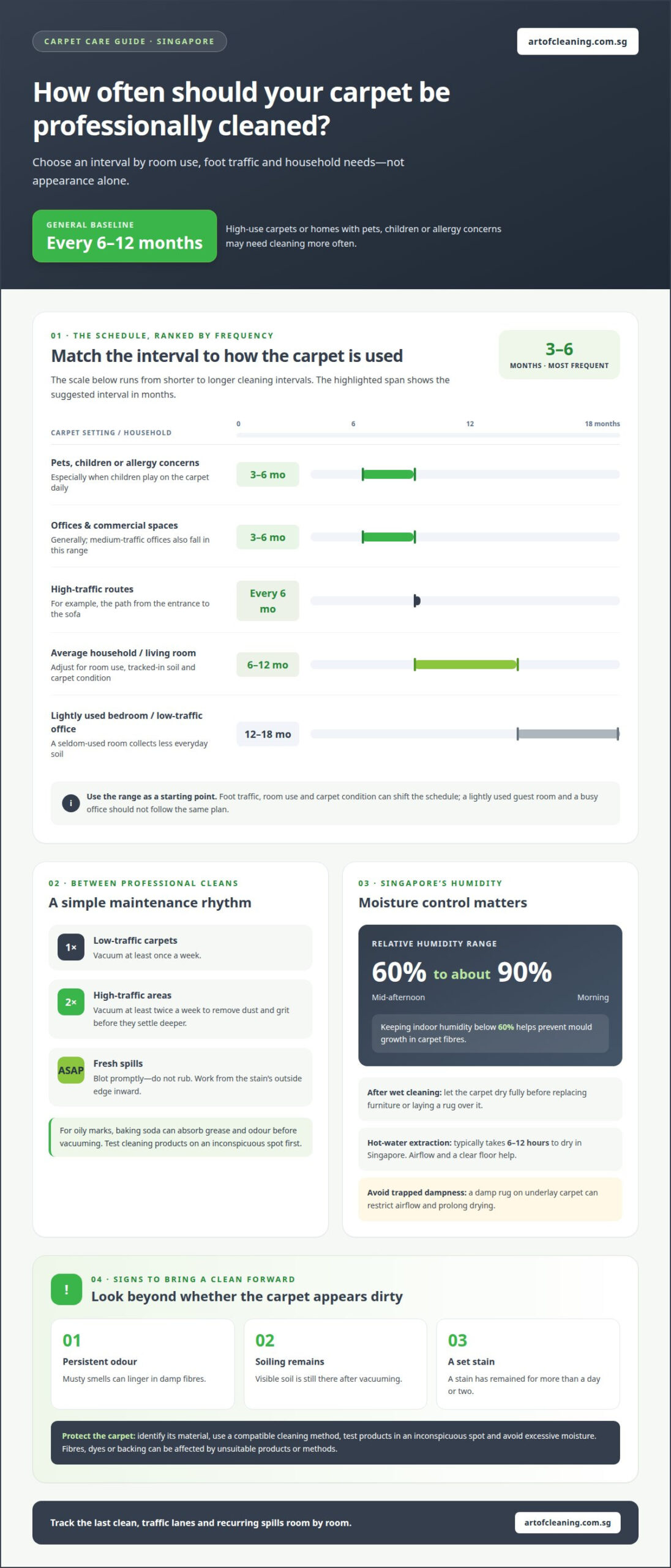
A carpet can need a professional clean before it looks dirty. If you’re asking how often you should professionally clean your carpet in Singapore, use 6 to 12 months as a general baseline. High-traffic carpets, or those in homes with pets, children or allergy concerns, may need cleaning every 3 to 6 months.
It makes sense to want a schedule that keeps carpets clean without arranging professional cleaning more often than necessary. How often you should professionally clean your carpet in Singapore depends on foot traffic, pets, children, allergies, and how each room is used. This guide explains how to adjust your routine, care for carpets between cleans, and decide why a rarely used bedroom carpet may need less attention than a busy living-room carpet.
Key Takeaways
- Use carpet location and daily foot traffic to set a suitable professional cleaning schedule, rather than relying on appearance alone.
- Pets, children and allergy concerns can call for more frequent deep cleaning; learn how to adjust the interval to your household.
- Build a simple between-clean routine with regular vacuuming and prompt spill care to help carpets stay fresher.
- Singapore’s humidity can affect carpet care, so consider how moisture and drying influence your maintenance habits.
1. More frequent cleaning for high-traffic areas, pets, children, or allergies
For an average Singapore household, plan professional carpet deep cleaning every 6 to 12 months. The right interval depends on use, household needs, and carpet condition. A carpet in a seldom-used room collects less everyday soil than one underfoot in a busy living area. Vacuuming helps manage surface dust, but it doesn’t replace periodic deep cleaning.
Adjust the schedule by room. A bedroom carpet used lightly may need professional cleaning every 12 to 18 months, while a living-room carpet may need it every 6 to 12 months. High-traffic areas, such as the route between the entrance and sofa, may benefit from cleaning every 6 months. Offices and commercial spaces generally need professional cleaning every 3 to 6 months, with maintenance cleaning between visits.
Children, pets, and allergy concerns can shorten the interval. Households with children may schedule deep cleaning every 3 to 6 months, particularly when children play on the carpet daily. Homes with pets or allergy-sensitive residents may also need cleaning every 3 to 6 months. In these settings, frequent vacuuming supports the routine, while professional cleaning addresses soil deeper in the carpet.
Signs a carpet may need attention sooner include a persistent odour, visible soiling that remains after vacuuming, or a stain that has set for more than a day or two. Blot fresh spills promptly rather than rubbing, which can spread the mark into a larger area.
Carpet fibres, dyes, or backing can be affected if the cleaning method or products are unsuitable. Reduce the risk by identifying the material, choosing a compatible method, and testing any product on an inconspicuous spot first. Avoid excessive moisture, which can affect the backing and leave the carpet damp for longer.
Use a calendar as a starting point, then adjust for foot traffic and carpet condition. A lightly used guest-room carpet and a busy office carpet should not follow the same cleaning schedule.
2. How Can You Maintain Carpets and Rugs for Long-Term Use?
Singapore’s humidity makes moisture control part of carpet care. According to Meteorological Service Singapore, Singapore’s relative humidity ranges from 60% in the mid-afternoon to about 90% in the morning. Damp fibres can hold musty odours, while lingering moisture can encourage mould. Keeping indoor humidity below 60 percent helps prevent mould growth in carpet fibres.
Vacuum regularly to remove dust, grit, and other particles before they settle deeper into the pile. Vacuum low-traffic carpets at least once a week and high-traffic areas at least twice a week. Move furniture occasionally so dust does not collect beneath sofa edges and wear does not remain concentrated in one spot.
Treat stains promptly. Blot fresh spills with a clean cloth instead of rubbing, which can push residue further into the fibres. Work from the stain’s outside edge inward to limit spreading. For an oily mark, baking soda can absorb grease and odour before you vacuum. Test any cleaning product on an inconspicuous area first.
After wet cleaning, allow the carpet to dry fully before replacing furniture or laying a rug over carpet. Professional hot-water extraction typically takes 6–12 hours to dry in Singapore, so airflow and a clear floor help prevent trapped moisture. Damp rugs shouldn’t sit on underlay carpet, where restricted airflow can prolong drying.
Humidity also matters for dust mites, which can persist in carpet fibres alongside dust and skin particles. Vacuum regularly, attend to spills quickly, and avoid leaving rugs damp after cleaning. These habits help limit the damp conditions that encourage mustiness and mould. If carpet soil or residue remains despite routine care, professional carpet cleaning can provide a deeper clean.
3. Adjusting cleaning schedules by carpet use and foot traffic
How often you should professionally clean your carpet in Singapore depends on where people walk and how each room is used. A study carpet used for quiet reading collects less tracked-in grit than a living-room rug beside the main walkway. Pay attention to areas where people walk, sit, eat, or enter from outdoors. These patterns help identify which sections need deeper cleaning first.
Foot traffic presses dust and grit against carpet fibres, especially near doorways and along routes between furniture. A visible traffic lane can appear before the rest of the carpet looks soiled. Note these high-use patches when planning a clean instead of treating every room as if it gets equal wear. Rotate movable rugs periodically to spread wear across the surface.
Use the carpet’s setting to refine the interval. A lightly used guest room differs from a shared office where staff and visitors cross the same carpet daily. Offices with medium traffic generally need professional cleaning every 3–6 months; low-traffic offices generally need it every 6–12 months. Regular maintenance between deeper cleans helps manage soil brought in during daily use.
Carpet material and construction also affect the cleaning plan. Dense pile, delicate fibres, and firmly attached backing can respond differently to moisture, machinery, or cleaning products. Choose a method to suit the material and soiling, not simply the room’s size. For example, a small, heavily used entrance area may need targeted attention before a larger room with little foot traffic.
Keep a simple room-by-room record of the last clean, visible traffic lanes, and recurring spills. Review it when household routines change, such as when a spare room becomes a play area or daily office visitors increase foot traffic. To decide how often you should professionally clean your carpet in Singapore, follow these changing patterns rather than relying only on a fixed calendar or surface appearance.
4. Carpet cleaning for homes with pets
Cats and dogs bring fur, tracked-in soil, and occasional accidents onto carpets. In homes with pets, plan professional deep cleaning every 3 to 6 months, adjusting for shedding, scratching, accidents, and carpet use. A pet that spends much of the day indoors can leave fur and residue in favourite resting spots, even when the carpet looks clean.
Keep up with frequent vacuuming between professional cleans. Homes with cats or dogs should vacuum carpets 2 to 3 times a week, paying particular attention to areas beside pet beds and common paths. Consistent removal of fur and loose soil helps stop them working deeper into carpet fibres. Clean food or water spills promptly, since residue can attract more dirt.
For urine spots, act promptly and blot rather than rub. The Carpet and Rug Institute advises against using a steam cleaner on urine spots because heat can set the stain and smell. Avoid adding more moisture while treating the area. Lingering dampness can make odours harder to clear and may affect the carpet backing.
Professional extraction can help address embedded soil and persistent pet odours that routine vacuuming does not remove. The appropriate method depends on the carpet material, the spot’s location, and how long residue has remained. Frequent accidents or strong odours are practical reasons to arrange cleaning sooner than usual, rather than waiting for an annual clean.
For a household with one shedding dog, for example, vacuum high-use areas several times weekly and note recurring accident spots. Then schedule a thorough clean within the 3 to 6 month interval, with earlier attention when soil or odours persist. Arrange professional carpet cleaning to address pet-related buildup and refresh the carpet fibres.
Art of Cleaning: Carpet Cleaning
Art of Cleaning provides Carpet Cleaning for households that need a deeper clean than regular vacuuming can provide. Consider professional cleaning when embedded soil, persistent odours, or recurring pet accidents remain despite everyday care, or when your carpet’s use calls for a scheduled refresh.
The appropriate approach depends on the carpet’s material, condition, and soiling. Art of Cleaning also provides Rug Cleaning, as well as Sofa Cleaning and Mattress Cleaning for other soft furnishings that need attention as part of your home care routine.
For a carpet or rug that needs professional care, contact Art of Cleaning.
Build a Carpet-Care Routine That Fits Your Home
Deciding how often you should professionally clean your carpet in Singapore becomes easier when your schedule reflects how each room is used. Make carpet care part of your home routine instead of waiting until visible dirt prompts action. As household needs change, review whether your existing approach still suits the spaces where family members spend time.
Before arranging a clean, note which carpet or rug needs attention, how it is used, and any persistent stains or odours. These details help focus the discussion on the condition and care needs of your soft furnishings. Art of Cleaning provides Carpet Cleaning and Rug Cleaning, as well as Sofa Cleaning for other upholstered surfaces.
When professional care is the right next step, contact Art of Cleaning to discuss your carpet or furnishings. A considered routine can make caring for your home feel more manageable, one surface at a time.
Frequently Asked Questions
How Often Should You Clean Your Carpet?
Most household carpets benefit from professional deep cleaning every 6 to 12 months, with the schedule adjusted for use and condition. A useful way to plan is to note the last clean on your household calendar, then review the carpet when seasons or routines change. For example, a room used more often after a home layout change may need attention sooner.
Can I remove stains myself, or should I call a professional?
You can try treating a fresh, small spill at home, but choose a method suited to the carpet rather than applying a strong cleaner immediately. Avoid scrubbing, which can roughen fibres and spread the mark. If the stain has set for more than a day or two, professional help is advisable. A persistent mark or odour can also signal residue below the visible surface.
How Can You Maintain Carpets and Rugs for Long-Term Use?
Protect carpets and rugs by reducing the dirt that reaches them and responding carefully to spills. Place a mat at an entry point, keep food and drinks away from carpeted areas where practical, and follow the care label for the material. For a rug, check that its backing and fringe remain in good condition during routine care, especially after cleaning.
How often should carpets be professionally cleaned in Singapore homes?
For many Singapore homes, professional cleaning every 6 to 12 months is a practical starting point. Bedrooms used occasionally may need less frequent attention than a carpet in a shared family space. Consider the household’s routines as well as visible condition: a carpet used for children’s play or daily indoor activities may require a shorter interval than one kept mainly for decoration.
How often should carpets be professionally cleaned in offices and commercial spaces in Singapore?
Office and commercial carpets generally need professional cleaning every 3 to 6 months, with routine maintenance between cleans. Reception areas, meeting rooms, and walkways can soil faster than private offices because more people cross them. A practical schedule can prioritise these shared zones and adjust the timing when visitor numbers or workplace use changes.
What factors affect carpet cleaning frequency, such as pets, children, allergies, and foot traffic?
Pets, children, allergy concerns, and regular foot traffic all increase the soil and debris carpets collect. Their combined effect matters: a carpet used daily by children and pets may need attention more often than one in a lightly used, pet-free room. Also consider shedding, accidents, and whether allergy-sensitive residents spend time close to the floor.