
The obvious choice isn’t always the better one. Carpet shampooing may suit heavily stained areas, while hot water extraction is generally suited to light or moderate soil. In carpet steam cleaning versus shampoo cleaning, the right option depends on the carpet fibres, the type of soiling and how thoroughly cleaning solution can be removed.
Both methods can improve a carpet’s appearance, but the cleaning solution and how it is removed matter too. Shampoo residue can cling to fibres and attract fresh dust and dirt, so a carpet may look dull again within a few weeks.
This guide explains how shampooing and steam-based methods work, why true steam cleaning differs from hot water extraction, and how carpet fibres and soil levels affect the choice. You’ll also learn what to consider when residue and re-soiling are concerns, so you can choose an approach that suits your carpet and home.
Key Takeaways
- Distinguish true vapor steam from hot water extraction: they use different amounts and forms of moisture, so the method name alone doesn’t tell you how a carpet is cleaned.
- Shampooing uses a cleaning solution and brush action to loosen soil; how thoroughly the solution is removed affects the finish.
- Identify the carpet fibre before choosing a method. Wool and other natural fibres may be vulnerable to shrinkage with shampoo and hot water.
- Match the cleaning approach to both the fibre and the soil level, rather than choosing by appearance or drying time alone.
Steam or Shampoo: Which Type of Carpet Cleaning is Best?
Choose based on carpet fibre, soil and drying needs, not the method’s name alone. “Steam cleaning” can mean true vapour steam or hot water extraction, which use moisture differently.
Drying Time and Ventilation
Drying time depends on the method, moisture left behind, airflow, and Singapore’s humidity. Professional hot water extraction typically dries in 2-6 hours. Shampooed carpets may take 4-8 hours, and drying can extend to 48 hours. True steam-cleaned carpets may remain damp for up to 24 hours, while some steam-cleaning estimates reach 48 hours.
Open windows where practical and run fans or air movers to circulate air across the carpet. Air movers help moisture evaporate, especially in rooms with limited airflow. Keep foot traffic off damp areas to avoid tracking dirt onto the fibres.
| Method | Typical drying time | Drying consideration |
|---|---|---|
| Hot water extraction | 2-6 hours | Airflow supports drying |
| Shampooing | 4-8 hours; can reach 48 hours | More moisture may remain |
| True vapor steam | Up to 24 hours damp | May take longer in humid rooms |
Choose a method based on fibre suitability and soil, then plan for ventilation and drying.
Preparing Carpets for Each Method
Preparation is similar for both methods, but sharing useful details helps shape the cleaning plan. Before the appointment, describe the carpet’s fibre type, visible stains and any persistent odours. Mention delicate edges or loose sections too. This helps the cleaning team assess moisture and agitation needs before treating the carpet.
Carpet cleaning prices in Singapore depend on the carpet’s size, condition, stain level, and cleaning method; the price is given after a quote request. For frequency, professional carpet cleaning at least once a year is a useful baseline, with household traffic and soil affecting the schedule.
How carpet shampooing works
Carpet shampooing uses a cleaning solution to loosen soil, then removes the dirty residue. A technician may apply the solution with a brush or use a shampooer with a spinning brush. The machine works foam through the carpet fibres to help break down grime near the surface. A vacuum or extraction step then lifts away loosened debris and solution.
The amount of agitation matters. A spinning brush reaches more of the pile than a quick surface pass, but forceful brushing may not suit delicate fibres. Shampooing can help with visible, heavily soiled areas, though solution left behind may affect how quickly dust returns. Hot water extraction is different: suction removes water and loosened soil.
- Apply: Spread the cleaning solution across the carpet, or allow a shampooer to dispense it.
- Agitate: Work the foam into the pile with a brush or rotating machine.
- Remove: Vacuum or extract the loosened soil and remaining solution.
True vapour steam cleaning works differently. It uses heated water vapour and very little water, rather than foaming detergent. The vapour may loosen surface soil, but a steam-only device may not lift that dirt away. A separate extraction or wiping step is needed to remove loosened material from the carpet.
Hot water extraction is often called steam cleaning, though it uses a different process. The machine sprays hot water into the fibres, then vacuums the water and suspended dirt back out. This combination of rinsing and suction is central: hot water helps loosen grime, while extraction carries it away. The distinction matters because shampooing relies on solution and brush action, while extraction relies on flushing and recovery.
For a fair comparison, identify what the machine actually does: applies foam, emits vapour, or sprays and extracts hot water. Those steps show how soil is loosened and removed, beyond the label used for the cleaning method.
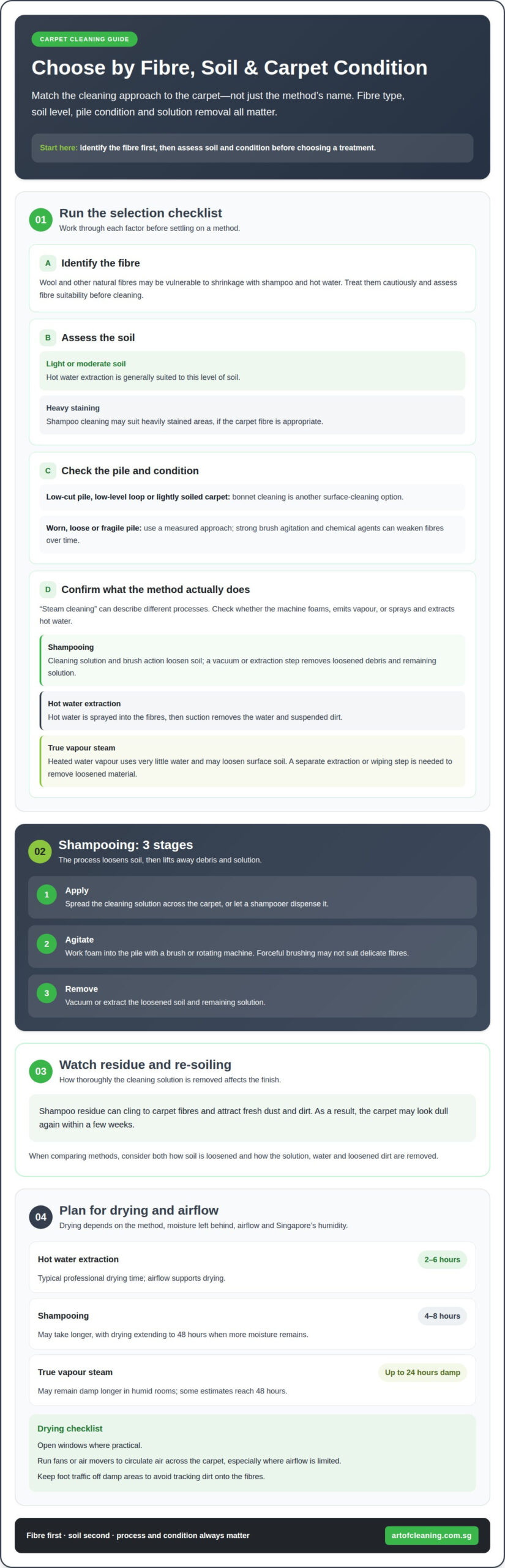
Choosing a method based on carpet fibers and soil level
Start with the carpet’s fibre, then consider its soil and condition. Hot water extraction suits light or moderate soil, while shampoo cleaning may suit heavily stained carpets. A method that works on one carpet may not suit another: natural fibres, including wool, may shrink with shampoo and hot water.
Match treatment to fibre, age, and soil
Wool needs particular care because heat and shampoo can cause shrinkage. Older carpets also deserve a measured approach if their pile is worn, loose or visibly fragile. Strong brush agitation and chemical agents can weaken fibres over time, so aggressive shampooing may add wear rather than solve the cleaning problem.
For light or moderate soil, hot water extraction flushes dirt from the pile and removes it with suction. Heavy staining may call for shampoo treatment, but the fibre still matters. Bonnet cleaning is another option for low-cut pile, low-level loop or lightly soiled carpet. It focuses on surface cleaning rather than deep treatment.
Choose a cleaner by the process
A suitable carpet cleaner identifies the fibre and soil level before selecting a treatment. The process should account for stains, pile construction and signs of wear, rather than applying the same brush pressure or solution to every carpet. For example, a wool carpet with a stain needs a different assessment from lightly soiled, low-cut pile.
Use this decision sequence:
- Identify the fibre: Treat wool and other natural fibres cautiously around shampoo and hot water.
- Assess the soil: Consider extraction for light or moderate soil, and shampoo for heavier stains when the fibre suits it.
- Check the pile: Reserve bonnet cleaning for low-cut, low-level loop, or lightly soiled carpet.
- Consider condition: Adjust treatment for a worn or fragile pile to limit unnecessary agitation.
The best choice balances the cleaning task with fibre safety. Soil level guides the method, while carpet age and condition help determine how gently to apply it.
Carpet cleaning residue and re-soiling
A carpet can look clean after shampooing, then turn dull and dingy again within a few weeks. One reason is residue: shampoo left on the fibres can attract dust and dirt, making the surface appear soiled sooner. The carpet may not have become dirty overnight. Instead, fresh particles cling to the remaining cleaning solution.
Residue can also affect how a carpet feels underfoot. For example, a patch that feels sticky after drying may have cleaning solution left in its pile. More shampoo isn’t automatically more effective: adding extra solution without removing it thoroughly can leave more residue behind. The removal step matters as much as loosening the soil.
Hot water extraction sprays water into the carpet, then vacuums the water and suspended dirt back out. This can remove loosened material, but the result depends on effective extraction. True vapour steam uses very little water and doesn’t use shampoo in the same way, so residue concerns vary with the method and cleaning products used.
- Before treatment: Identify whether the carpet was shampooed recently and point out any sticky or dull patches.
- During cleaning: Use only the cleaning solution needed for the soil, then remove loosened dirt and remaining solution.
- After cleaning: Let the carpet dry fully before judging the finish; damp fibres can feel different from dry ones.
For a fair comparison, look beyond the carpet’s appearance immediately after cleaning. Consider whether the method removes the loosened soil and solution, and whether dust begins sticking to the fibres again. If sticky patches or rapid re-soiling persist, get help addressing carpet residue with a cleaning approach suited to the carpet.
Art of Cleaning: Carpet Cleaning
Art of Cleaning provides carpet cleaning for carpets affected by embedded soil, visible stains or recurring residue. It’s a practical next step if you’re unsure which treatment suits your carpet’s fibres and condition, or if home cleaning hasn’t resolved the problem. Share the carpet type and areas of concern so the cleaning team can assess the job in context. A delicate fibre, for example, may need a different approach from a durable carpet with heavy staining. Art of Cleaning also offers rug cleaning, sofa cleaning and curtain steam cleaning for other soft furnishings.
For help with carpet cleaning, contact Art of Cleaning.
Choose a cleaning plan that fits your home
When choosing between carpet steam cleaning and shampoo cleaning, don’t rely on the method’s label alone. Consider the result you want and how the carpet is used. A living room carpet with regular foot traffic may have different needs from one in a quiet study. Sharing those priorities helps focus the cleaning plan on the outcome that matters to you.
Art of Cleaning offers carpet cleaning, rug cleaning and sofa cleaning, so you can consider care for the soft furnishings in the same space. Describe whether the concern affects one area or the whole carpet, and mention any specific spots or changes in appearance. That context helps the team recommend a relevant next step without assuming one treatment suits every home.
Share your carpet cleaning needs with Art of Cleaning and take the next step with confidence.
Frequently Asked Questions
Key Differences: Which Is Better?
Neither method is best for every carpet. The better choice depends on its fibre, soil and cleaning goal. Light or moderate soil may suit hot water extraction, while heavier staining may call for shampoo treatment if the fibres tolerate it. If avoiding detergent residue is a priority, consider how thoroughly each process removes the cleaning solution, not just how clean the carpet looks immediately afterward.
What About Dry Times?
Drying depends on the cleaning process, carpet construction, moisture recovery, room airflow and Singapore’s humidity. Keep foot traffic and furniture off damp areas until the carpet is dry. Open windows where practical and use fans or air movers to circulate air. A room with limited ventilation may take longer to dry than one with steady airflow.
What Is the Difference Between Carpet Steam Cleaning and Shampoo Cleaning?
The main difference is how each method loosens soil and handles cleaning products. Shampooing uses a solution and brush agitation; “steam cleaning” may refer to true vapour steam or hot water extraction. These are not interchangeable processes. Before choosing, identify whether the equipment emits vapour or sprays and extracts water. That distinction clarifies how much moisture is used and how soil is removed.
How Does Hot Water Extraction Carpet Cleaning Work?
Hot water extraction sprays heated water into carpet fibres, then uses suction to recover the water and loosened soil. The spray helps dislodge particles, while vacuum recovery carries them away. This paired action distinguishes extraction from a steam-only device, which may loosen soil without collecting it. Consumer rental machines generally have weaker extraction power than professional systems, affecting moisture recovery.
How Does Carpet Shampoo Cleaning Work?
Shampoo cleaning works the solution into the pile, either by hand brushing or with a machine’s spinning brush. The action creates foam that loosens soil; the next step is removing that foam and debris. If the carpet has sticky patches after cleaning, leftover solution may be part of the problem. More detergent isn’t automatically better, because residue can attract new dust and dirt.
Which Carpet Cleaning Method Removes Stains, Dirt and Allergens More Effectively?
Effectiveness depends on the stain, carpet fibre, and where the soil sits. The Carpet and Rug Institute states that hot water extraction removes up to 90% of deep-down particles. A surface treatment may not reach pet urine that has travelled into backing or padding. Some stains can remain after cleaning, so results depend on the stain and how deeply it has penetrated.