
For most Singapore households, professional mattress cleaning every 6 to 12 months is a sensible interval, with more frequent cleaning for allergy sufferers and other higher-risk households. If you’re wondering how often to clean your mattress in Singapore when allergies are a concern, aim for every 4 to 6 months.
It’s understandable to focus on sheets and visible stains, but sweat, skin flakes and humidity can also affect what builds up inside a mattress. Singapore’s mean annual relative humidity is around 82%, according to Meteorological Service Singapore, so getting a mattress thoroughly clean without leaving it damp matters. This guide explains how often to vacuum and arrange professional cleaning, what to do when allergies or stains are a concern, and why repeatedly soaking a mattress at home can create moisture risks.
Key Takeaways
- Vacuum the mattress surface regularly and rotate it to help manage dust and distribute wear.
- Adjust cleaning frequency for allergies, asthma, children or pets, and keep bedding freshly washed between cleans.
- After spills or illness, deal with mattress soiling promptly rather than letting it settle.
- Avoid repeatedly soaking a mattress at home: trapped moisture in Singapore’s humid conditions can encourage mould.
How often should I clean my mattress if I have allergies?
If you have allergies or asthma, arrange professional mattress cleaning every 4 to 6 months. More frequent cleaning may suit households with several risk factors, while regular bedding care helps between cleans.
Adjusting Cleaning for Sensitive Sleepers
Cleaning frequency should reflect who sleeps on the mattress and what affects their comfort. For allergy or asthma sufferers, plan a professional clean every 4 to 6 months; children’s mattresses generally need cleaning every 6 months. In Singapore, households with pets sleeping on the bed are also advised to clean every 6 months.
Sensitive skin alone doesn’t show that dust mites are causing irritation, but it can make a clean sleep surface a priority. Notice whether sneezing or irritation worsens after time in bed, and consider household needs together: a child with allergies, for example, may need closer attention than an adult without symptoms. Keep washable bedding clean between mattress cleans.
Mattress Allergens and Sleep Quality
Dust mites are tiny organisms that feed on shed skin, while their droppings can contribute to allergens in bedding. A used mattress may contain between 100,000 and 10 million dust mites, so a clean-looking surface doesn’t show what lies within the mattress itself.
For someone with allergies or asthma, exposure may coincide with sneezing, congestion or disrupted sleep. That doesn’t prove the mattress is the cause, but regular vacuuming and professional cleaning can address accumulated dust and debris. Vacuuming removes loose material from the surface; professional Mattress Cleaning targets dust mites and allergens. Clean bedding also helps limit what transfers back onto the mattress.
Signs of Mites, Mould, or Mildew
You usually can’t confirm dust mites just by looking at a mattress. Sneezing or congestion after bed may suggest an allergy trigger, but it isn’t proof. Musty odours, visible spots or damp patches are more noticeable warning signs of possible mould or mildew.
Inspect the mattress surface and seams after a spill or if an odour persists. A stain alone doesn’t reveal its cause, and allergy symptoms can have other triggers. If there’s visible growth or lingering dampness, avoid adding more water, as trapped moisture can worsen the problem. Note the affected area and what happened, such as a spill, when deciding what cleaning is needed.
Monthly or bi-monthly mattress vacuuming and rotation
Vacuum the mattress surface and rotate it every month or two to manage loose dust and uneven wear. Vacuuming removes surface debris, while professional Mattress Cleaning targets dust mites and allergens within the mattress.
Vacuuming and Rotating the Mattress
Regular vacuuming lifts loose particles from the fabric before they settle further into the mattress. Use an upholstery attachment and move slowly over the surface, seams and edges. A HEPA-filtered vacuum is a useful choice for capturing fine particles.
Rotate the mattress every month or two, following its care instructions. Rotation changes where the body’s weight rests and helps spread wear. If the mattress is designed to be flipped, turn it a few times a year; don’t flip a one-sided model.
Vacuuming, Protectors, and Allergen Removal
A mattress protector creates a washable barrier between sleepers and the mattress, but it doesn’t replace vacuuming. Remove and launder the protector according to its care label, then vacuum the exposed surface before replacing it. This is especially useful in a bedroom shared with young children, where spills and everyday dust can accumulate.
Vacuuming can pick up loose dust and debris, but it doesn’t reach every particle embedded in the mattress. Professional extraction is a deeper cleaning method. It can remove embedded soil, while UV-C light is used during mattress sanitisation to treat bacteria, mould and viruses. Cleaning helps reduce accumulated material, but no single step addresses every possible allergen.
For DIY care, vacuum the mattress when you change the bedding, then rotate it on the same schedule. Baking soda may help with surface odours, but it doesn’t replace deeper cleaning; remove its residue thoroughly with a vacuum. Sunlight can air a mattress, but don’t leave it outdoors where moisture or weather may affect it.
If itchy eyes or other symptoms continue despite regular care, note whether they occur in the bedroom or elsewhere. That pattern can help you distinguish a possible mattress concern from other indoor triggers.
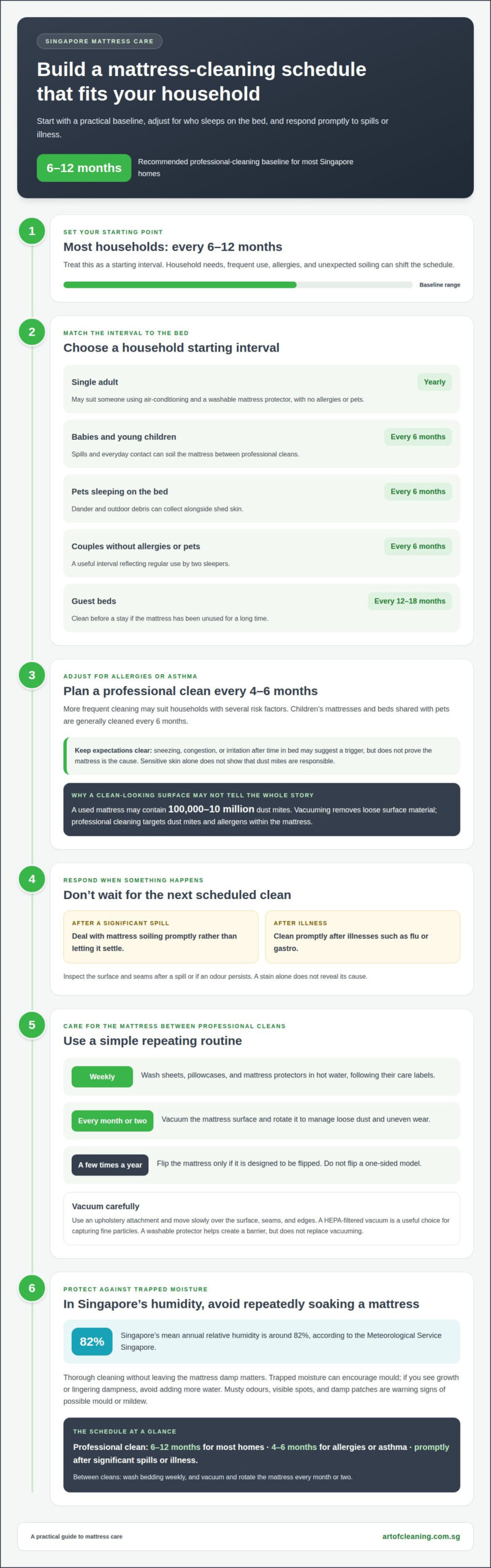
Recommended professional mattress-cleaning frequency
For most Singapore homes, professional mattress cleaning every 6 to 12 months is a practical baseline. If you’re deciding how often to clean your mattress in Singapore, consider who uses it and how often. Household needs can shift the schedule, especially when children, pets or frequent bed use add more soil.
- Single adult: A yearly clean may suit someone using air-conditioning and a washable mattress protector, with no allergies or pets.
- Babies and children: Arrange cleaning every 6 months for a baby’s or young child’s mattress. Spills and everyday contact can soil the fabric between cleans.
- Pets: If a pet sleeps on the bed, plan professional cleaning every 6 months. Dander and outdoor debris can collect alongside shed skin.
- Couples: Every 6 months is a useful interval for couples without allergies or pets, reflecting regular use by two sleepers.
- Guest beds: Clean a spare-room mattress every 12 to 18 months, and before a stay if it has been unused for a long time.
These intervals are starting points, not substitutes for responding to a spill or illness. Clean promptly after a significant spill or illness such as flu or gastro, rather than waiting for the next scheduled appointment. A washable protector helps shield the mattress, but it doesn’t prevent every contaminant from reaching the fabric.
Between professional cleans, wash sheets, pillowcases and mattress protectors weekly in hot water, following their care labels. This removes sweat, skin flakes and dander from bedding before they accumulate on the mattress. A clean protector also makes routine vacuuming easier.
For a household with children and a pet sleeping on the bed, twice-yearly cleaning offers a clear routine. A single adult with a washable protector may choose an annual schedule instead. If you’re weighing how often to clean a mattress in Singapore with dust mites, sweat and stains in mind, record the last clean and note spills or illness. That makes it easier to set the next date based on routine use and specific events.
Risks of soaking a mattress in a humid climate
In Singapore’s hot, humid climate, schedule professional mattress cleaning every 6 to 12 months, choosing the shorter interval for higher-risk households. Meteorological Service Singapore reports mean annual relative humidity around 82%; dry sanitisation has no drying time, and the mattress is usable the same day.
Humidity and Mattress Moisture Risks
Soaking a mattress at home can leave moisture trapped inside its layers, where Singapore’s humidity may slow evaporation. That dampness can create conditions for mould or mildew, especially if the mattress is made before it has dried fully.
For a spill, blot the surface rather than saturating the fabric, then let the mattress air thoroughly. Avoid repeating wet treatments to tackle odours or stains. Professional Mattress Cleaning targets dust mites and allergens without requiring you to soak the mattress at home.
Tropical Humidity and Dust Mites
Singapore’s warm, humid climate supports dust mites, which can live in mattress fabric and feed on shed skin. Dust mites need relative humidity above 50% to survive, so household moisture makes routine mattress care relevant even when the bed looks clean.
Humidity also affects drying after cleaning. A mattress that stays damp can develop musty odours, while its warm interior may retain moisture beyond the surface. Keep bedding pulled back after waking to release overnight dampness, and avoid covering a wet mattress with sheets.
Choose a professional method that removes accumulated soil without repeatedly soaking the mattress. Dry sanitisation avoids added water and lets you use the mattress the same day. For a wet-cleaning method, allow the mattress to dry completely before remaking the bed; airflow and room conditions affect drying.
If moisture, stains or persistent odours have built up, arrange professional mattress cleaning instead of applying more water at home. Prompt attention helps limit dampness settling into the mattress layers.
Art of Cleaning: Mattress Cleaning
Art of Cleaning provides Mattress Cleaning for Singapore households that need more than routine vacuuming, such as after a spill, a lingering odour or regular use by someone with allergies. Mattress Cleaning targets dust mites and allergens for a healthier sleeping environment, while household vacuuming and clean bedding help maintain the mattress between appointments.
Consider arranging Mattress Cleaning when your mattress is due under your household’s routine, or when visible soiling makes earlier attention sensible. Avoid soaking it at home: Singapore’s humidity can make trapped moisture difficult to clear. If other upholstered surfaces also need attention, Art of Cleaning provides Carpet Cleaning, Rug Cleaning and Sofa Cleaning.
For a mattress that needs professional attention, contact Art of Cleaning.
Make mattress care part of a healthier home routine
Knowing how often you should clean your mattress in Singapore, and how dust mites, sweat and stains affect that decision, gives you a useful starting point. Next, consider the condition of your own bed: note any new spill, persistent odour or visible soiling, then choose care that suits the issue rather than adding water without a plan.
Professional Mattress Cleaning can help when routine vacuuming no longer feels sufficient or you want a deeper clean. Art of Cleaning also offers Carpet Cleaning, Rug Cleaning and Sofa Cleaning, helping you care for other soft furnishings in your home.
Take a practical next step for your sleeping space and contact Art of Cleaning today. A considered routine can make mattress care feel manageable and support a fresher-feeling bedroom.
Frequently Asked Questions
Is once a year enough for a mattress?
Once a year may be enough for a single adult without allergies or pets, particularly with a washable protector and an air-conditioned bedroom. If you’re asking how often you should clean your mattress in Singapore, adjust the interval to your household’s needs: allergy or asthma symptoms, young children, and pets sleeping on the bed can call for more frequent cleaning. Clean sooner after a significant spill or illness.
Is vacuuming enough?
No. Vacuuming is useful for loose dust and debris on the mattress surface, but it doesn’t replace deeper cleaning when soil is embedded, a stain persists or an odour remains. Remove the bedding and vacuum slowly over the fabric and seams. If the mattress still looks or smells soiled afterward, surface vacuuming alone hasn’t addressed the issue.
How often should you vacuum a mattress to reduce dust mites?
Vacuum the mattress surface monthly, ideally with a HEPA-filtered vacuum. Remove the protector and bedding first, then use an upholstery attachment with slow passes over seams and edges. When considering how often to clean a mattress in Singapore, remember that vacuuming is routine surface care, not a substitute for deeper cleaning when soil or odours remain.
How often should you deep-clean or steam-clean a mattress?
For general household use, professional mattress cleaning every 6 to 12 months is a practical guide; allergy sufferers may need a shorter interval. Steam cleaning doesn’t suit every mattress or fabric. Check the mattress care instructions before applying heat or moisture, and avoid saturating the material, since trapped dampness can be difficult to dry in Singapore’s humidity.
How often should you clean mattress stains from sweat, urine or spills?
Clean stains and accident messes within 1 to 2 weeks, and address a major spill promptly rather than waiting for the next routine clean. Blot fresh liquid with a clean cloth instead of rubbing it deeper into the fabric. Avoid soaking the mattress to remove urine or sweat; excess moisture can remain trapped beneath the surface.
How do you clean a mattress at home step by step without damaging it?
Start by checking the care label and removing the sheets and protector. Vacuum the surface, seams and edges with an upholstery attachment. For a fresh spill, blot gently with a clean cloth; don’t pour cleaner or water directly onto the mattress. Let the treated area dry fully before remaking the bed, and vacuum away any baking soda residue.