
A part-time maid can handle routine cleaning without living in your home. This complete guide to what a part-time maid does in Singapore homes explains the usual scope: scheduled cleaning tasks, rather than the ongoing household support associated with employing a foreign domestic worker (FDW).
If you’re choosing between occasional cleaning and a live-in arrangement, consider more than how often your home needs cleaning. The tasks, working arrangement and kind of support your household needs all matter.
Here, you’ll learn which cleaning jobs are commonly included, how part-time cleaning differs from an FDW arrangement, and what live-out cleaning means in practice. Use this to decide whether scheduled cleaning suits your household or whether you need broader, day-to-day support.
Key Takeaways
- Choose between scheduled cleaning and an FDW based on whether your household needs specific cleaning visits or broader, ongoing household support.
- Set priorities for each session so routine cleaning focuses on the areas that matter most to your home.
- Understand how a live-out arrangement keeps cleaning support separate from living in your household.
- Plan visit frequency and session length around your home’s cleaning needs and the tasks you want covered.
1. Choosing between part-time cleaning and an FDW
Choose scheduled part-time cleaning when your main need is help with cleaning during agreed visits. An FDW arrangement suits households seeking broader, ongoing support at home—families considering this route can explore domestic helper placement platforms such as Phluid Match. For example, a cleaner may focus on floors, bathrooms and kitchen surfaces during a session. A live-in arrangement involves a different employment relationship and household routine. Consider which tasks you need done, how often they arise, and whether you need help beyond cleaning.
Singapore citizens and permanent residents can be hired as part-time helpers. Companies operating under the Ministry of Manpower’s Household Services Scheme can also provide domestic services. A migrant domestic worker employed on a Work Permit must live at the residential address stated on that permit. Singapore Statutes Online, Attorney-General’s Chambers states that employing a foreign worker without a valid work pass can result in a fine of S$5,000 to S$30,000 and imprisonment for up to 12 months.
Before booking, distinguish a company-arranged cleaner from a freelancer you engage directly. With a company arrangement, you have a business as your service contact; with direct engagement, you deal with the individual. Record the visit schedule, cleaning priorities, access arrangements and payment terms in writing. For insurance, establish who employs the cleaner and what coverage applies. Don’t assume a cleaner’s immigration status or work authorisation based on a personal recommendation.
For the first visit, prepare a short task list and identify priority rooms. Note surfaces or belongings that need careful handling, and put away personal items. Agree on how the cleaner will enter the home and where supplies are kept. When booking through a company, share your home’s layout and expected tasks before the appointment. These steps help focus the visit and clarify the agreed scope.
2. Cleaning tasks covered by part-time cleaners
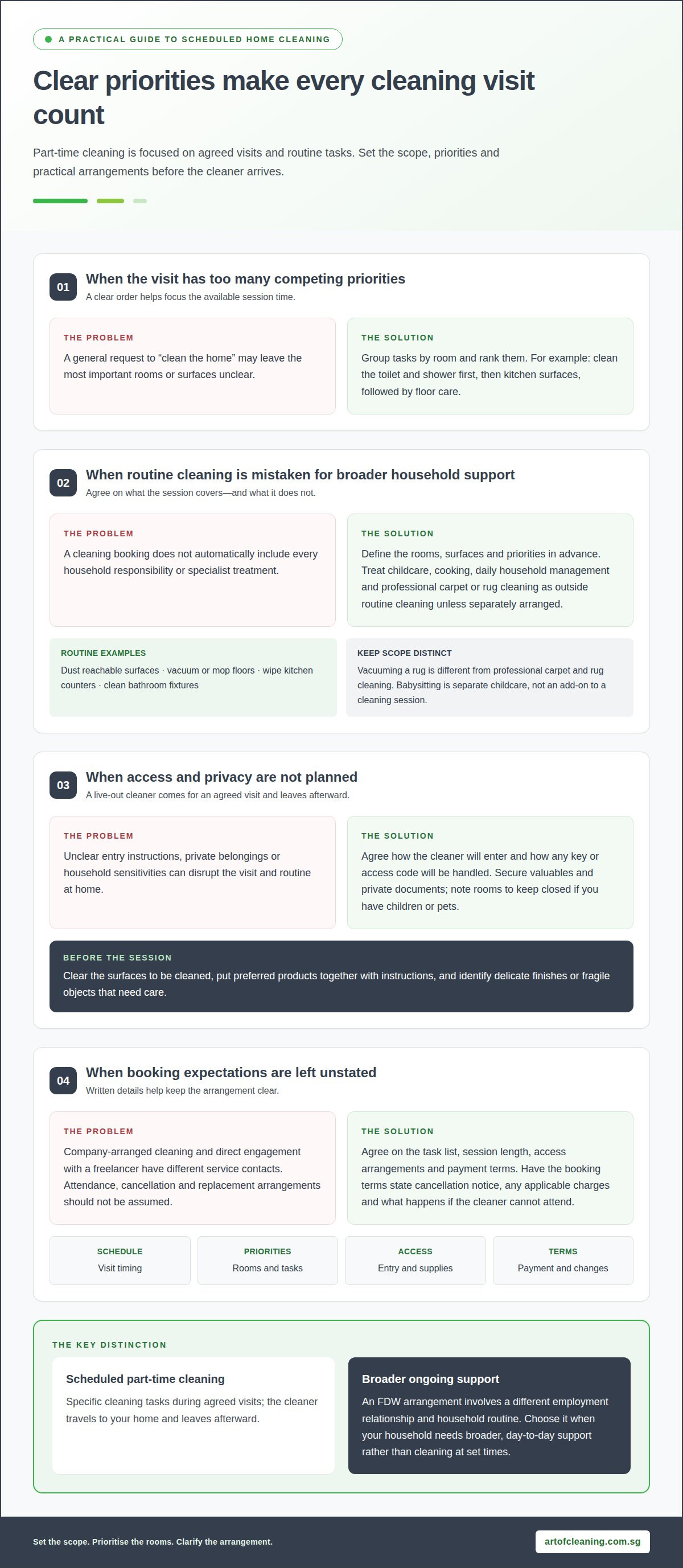
A scheduled cleaner generally focuses on routine household cleaning, not every household responsibility. Typical tasks include dusting reachable surfaces, vacuuming or mopping floors, wiping kitchen counters, and cleaning bathroom fixtures. The agreed scope matters: one visit might prioritise bathrooms and floors, while another focuses on the kitchen and living areas.
Before a session, group tasks by room and priority. For example, list toilet and shower cleaning first, followed by kitchen surfaces and floor care. Mention delicate finishes, fragile objects or areas needing particular attention. This helps the cleaner focus the available time on what matters most to you. Don’t assume deep cleaning, childcare, cooking or daily household management is part of a routine cleaning visit.
Costs depend on the service arrangement and frequency. An ongoing household arrangement differs from paying for scheduled cleaning visits. Treat babysitting as separate childcare, not an add-on to a cleaning session; the service scope and cost are distinct.
Whether you book through a company or engage a freelancer, agree on the task list, session length, access arrangements and payment terms. A company provides a business contact for the booking, while a freelancer is engaged directly. Have the booking terms state the cancellation notice, any applicable charges, and what happens if the cleaner can’t attend. Replacement arrangements depend on those terms, so don’t assume a replacement is guaranteed.
To keep expectations clear, distinguish routine upkeep from specialist treatment. Vacuuming a rug differs from professional carpet and rug cleaning, which focuses on those textiles. A cleaning booking also doesn’t provide childcare. Define the rooms, surfaces and priorities in advance, then choose a service scope that matches the work required.
3. Live-out arrangements
A live-out cleaner travels to your home for agreed cleaning visits and leaves afterward. The arrangement doesn’t involve a bedroom or an ongoing presence in the household. For example, a cleaner may arrive for a scheduled session, clean the kitchen and bathroom, then depart. This differs from a live-in arrangement, where the worker resides in the household. The practical choice depends on whether you need cleaning at set times or support throughout the day.
Plan each visit around access and privacy. Decide whether someone will open the door or arrange another suitable way to enter. If you provide a key or access code, agree how it will be handled and stored. Secure valuables and private documents before the session. If you have children or pets, note which rooms should remain closed. These details help the cleaner work through the home without disrupting household routines.
Prepare the space for the tasks you want completed. Put away dishes if kitchen counters need wiping, and clear bathroom surfaces before cleaning. If you prefer particular products, leave them together with clear instructions. Identify delicate materials, such as a polished tabletop or fragile ornament. A short written list can set priorities: clean the bathroom, wipe kitchen surfaces, then vacuum the living room. This gives the visit a defined scope.
Live-out cleaning suits specific cleaning needs, not continuous household supervision. A scheduled cleaner isn’t automatically available for cooking, childcare, laundry or errands between visits. If your priority is a clean bathroom before guests arrive, state that when arranging the session. If your household needs ongoing assistance throughout the day, occasional visits may not meet that need. Define what’s included, what’s outside the scope, and how schedule changes will be communicated.
For a smooth first visit, share the address, entry instructions, priority rooms and any household sensitivities beforehand. Focus communication on practical details, such as where supplies are kept and which surfaces need special care. After the visit, note any unfinished priority task and adjust the plan for the next session. Clear arrangements make live-out cleaning predictable without turning an appointment into a broader domestic role.
4. How many hours and visits per week should Singapore households book?
Choose visit frequency based on how quickly cleaning needs return. A weekly visit suits households looking for a regular reset, while fortnightly cleaning spaces visits farther apart. The right schedule depends on room use, household routines and assigned tasks. A kitchen used daily may need attention more often than a guest room. List priority rooms first, then choose a frequency that suits the upkeep they need.
Session length determines how much work fits into each visit. Three-hour and four-hour sessions are both listed options in Singapore’s part-time cleaning market. Use a shorter session for focused tasks, such as bathroom cleaning, kitchen surfaces and floors. Allow more time when several rooms need attention or the priorities include detail work. The task list matters as much as the hours booked.
For a weekly routine, one three-hour visit each week amounts to four sessions across a month. A fortnightly pattern gives two three-hour sessions across a month. These examples show how frequency changes total cleaning time, not what every home should choose. Match the schedule to how quickly dust, spills and bathroom use create visible work.
To choose a starting point, make a room-by-room list and mark essential tasks. Put bathrooms and kitchen surfaces first if hygiene is your priority. Add floors or living areas if time allows. If the list regularly exceeds the booked session, increase the duration or divide tasks between visits. If the cleaner finishes early, refine the priorities rather than adding unrelated duties.
Review the plan after the first few visits. Note which tasks were completed and which were repeatedly left outstanding. A weekly schedule may suit homes where high-use areas need frequent upkeep; fortnightly cleaning may fit a home that stays manageable between visits. Keep priorities clear and adjust session length when the workload changes. For a straightforward plan, group tasks by room and state which matter most.
Art of Cleaning: Part-time home cleaning
Art of Cleaning provides part-time home cleaning for Singapore households seeking scheduled help with routine upkeep. It suits households that want cleaning at agreed visits rather than a live-in arrangement. Share your priorities, such as floors, kitchen surfaces or bathroom cleaning, so the session can focus on the work that matters most.
Some cleaning needs call for more than routine upkeep. For embedded dirt in soft furnishings, Carpet Cleaning, Rug Cleaning or Sofa Cleaning addresses those specific items separately from general home cleaning. Keeping these tasks distinct helps you match the service to the surface and the result you need.
If scheduled home cleaning or specialist care for carpets, rugs, or sofas suits your household, contact Art of Cleaning to discuss your cleaning needs.
Make your next cleaning decision with confidence
Understanding what a part-time maid does in Singapore homes helps you decide which tasks to schedule regularly and which need focused attention. Use “What Does a Part-Time Maid Do? Complete Guide for Singapore Homes” as a prompt to set your priorities: identify the areas that matter most, note delicate furnishings, and decide whether routine upkeep or specialist care comes first.
The title “What Does a Part-Time Maid Do? Complete Guide for Singapore Homes” points to a practical next step: make a clear plan for your household. For carpets, rugs and sofas that need dedicated care, Art of Cleaning offers services tailored to those surfaces. Discuss how these needs fit alongside scheduled home cleaning.
Contact Art of Cleaning to discuss your needs, and take the next step toward a cleaner, more comfortable home.
Frequently Asked Questions
What household tasks does a part-time maid in Singapore typically do?
Part-time cleaners generally handle routine cleaning, with the agreed task list defining each visit. For example, you might prioritise wiping frequently used surfaces, tidying shared spaces and cleaning a bathroom. Mention high-use areas, such as a family dining space, so the session reflects your household routine. Specialist treatment for upholstery or carpets is a separate cleaning need, not automatically part of standard housekeeping.
What tasks are usually excluded from part-time maid services in Singapore?
Don’t assume childcare, cooking or ongoing supervision of household members is part of cleaning duties. A visit focused on bathroom and floor cleaning doesn’t automatically include preparing a meal or caring for a child. Deep treatment for a sofa or rug may also require a separate specialist service. Set the scope around cleaning tasks and keep other household responsibilities distinct.
What are the hourly rates and minimum booking hours for part-time maids in Singapore in 2026?
Rates and minimum booking hours depend on the provider, session length, visit frequency and requested tasks. No single booking duration suits every household or service arrangement. Before committing, compare the stated session scope with your priorities, such as bathroom cleaning and kitchen surfaces. The price depends on the job and is provided after a quote request; duration, frequency and task scope affect it.
How do agency-employed and freelance part-time maids compare in Singapore?
An agency booking is arranged through a business, while a freelancer is engaged directly. This affects how you handle scheduling, payment and communication if plans change. With either arrangement, record the visit date, access instructions and agreed tasks in writing. Keep booking details and payment records together so you can refer to the same terms if a misunderstanding arises.
How can households find and verify a reliable part-time maid in Singapore?
Start by confirming who will attend, what the visit covers and how the booking is recorded. Before the appointment, make sure the agreed tasks, access arrangements, payment terms and cancellation conditions are clear. If engaging a foreign worker directly, work-pass rules matter: don’t treat a personal recommendation as proof of authorisation. A written record helps both sides share clear expectations.
How does a part-time maid differ from a live-in migrant domestic worker in Singapore?
A part-time cleaner visits for agreed cleaning work and doesn’t reside in your home. A migrant domestic worker on a Singapore Work Permit must live at the residential address stated on her permit. These arrangements differ in residence and scope, so choose according to whether your household needs scheduled cleaning or ongoing domestic support. Cleaning visits aren’t a substitute for continuous assistance.
Pingback: Why Hire a Regular Part-Time Cleaner in Singapore – Art of Cleaning Pte Ltd