
A carpet can look tidy after vacuuming and still hold soil below its surface. For carpet deep cleaning in Singapore, the right schedule depends on where the carpet is used: bedroom carpets typically need professional cleaning every 12-18 months, while living-room carpets generally need it every 6-12 months, depending on foot traffic. Homes with children or pets are advised to clean carpets every 6 months.
Regular vacuuming helps maintain a carpet, but it may not remove soil embedded beneath the surface. This guide explains what professional deep cleaning can include, how vacuuming fits into the process and what affects cleaning and drying time. You’ll also learn how often to clean carpets in different spaces, so you can plan care for your home or workplace.
Key Takeaways
- Set a cleaning schedule around the carpet’s location, foot traffic and household needs rather than relying on one routine for every room.
- Understand why shampooing and extraction may be separate from a standard deep clean, and how the chosen method affects drying time.
- See where vacuuming fits into professional carpet and rug care, and why it may not remove soil embedded below the surface.
- Follow the main stages of a professional cleaning service, from assessing the carpet to finishing the clean.
How Often Should You Have Your Carpet Professionally Cleaned?
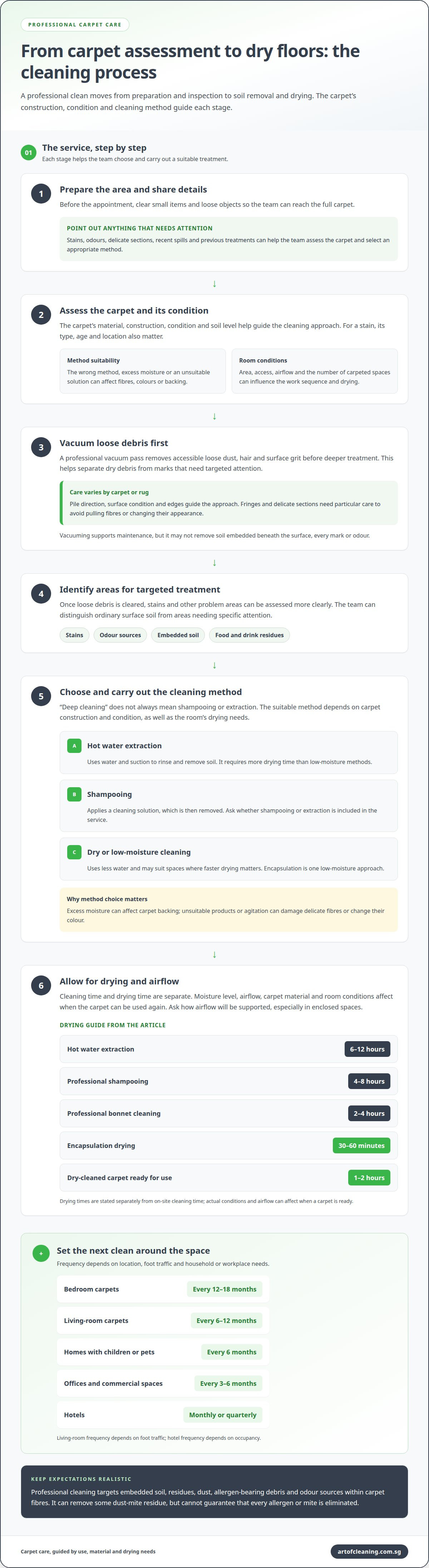
In Singapore, cleaning frequency depends on the room and its daily use. Bedroom carpets typically need professional cleaning every 12-18 months, while living-room carpets generally need it every 6-12 months, depending on foot traffic. Homes with children or pets are advised to clean carpets every 6 months. Offices and commercial spaces often need cleaning every 3-6 months; hotels may need monthly or quarterly service, depending on occupancy.
The method matters because “deep cleaning” doesn’t always mean shampooing or extraction. Ask what treatment the service includes: wet extraction uses water and suction to rinse and remove soil, while shampooing applies a cleaning solution that is then removed. Dry or low-moisture cleaning uses less water and may suit spaces where faster drying matters.
Hot water extraction requires more drying time than low-moisture methods. In Singapore, extraction typically takes 6-12 hours to dry; professional shampooing typically takes 4-8 hours. Encapsulation may dry in 30 to 60 minutes. The carpet’s material, moisture level, airflow and room conditions affect drying. Before the appointment, ask how the team will support airflow during drying, especially in enclosed spaces.
Professional cleaning targets embedded soil, food and drink residues, dust, allergen-bearing debris and odour sources within carpet fibres. It can also remove some dust-mite residue, but cleaning cannot guarantee that every allergen or mite is eliminated. A stain’s type, age and location help determine the suitable treatment.
The wrong method, too much moisture or an unsuitable cleaning solution can affect carpet fibres, colours or backing. For example, excess moisture can affect the backing, while unsuitable products or agitation can damage delicate fibres or change their colour. Carpet construction and condition guide the choice of method.
Before the appointment, clear small items and loose objects from the carpet so the team can reach the full area. Point out stains, odours and delicate sections, and mention recent spills or previous treatments. This information helps the team assess the carpet and choose an appropriate cleaning method.
Service duration and factors affecting it
Cleaning time and drying time are separate parts of a carpet appointment. The on-site work depends on the carpet’s area, construction, soil level and chosen method. A large, heavily soiled carpet usually needs more treatment than a small, lightly used one. Furniture, room access and the number of carpeted spaces also affect the work sequence. For dry cleaning using encapsulation, carpets can be ready for use within one to two hours. Professional bonnet cleaning typically takes 2-4 hours to dry.
Moisture and airflow influence when a carpet can be used again. A method that uses less moisture may suit a busy room where returning furniture quickly matters. With bonnet cleaning, the carpet may feel damp after the machine has lifted surface soil, so allow time for it to dry. Residue left from cleaning solution can affect the feel of fibres, making careful application and removal important. Singapore’s indoor conditions and airflow also affect drying.
The cost depends on the job’s scope, not just the room name. Carpet dimensions determine the area treated, while fibre type, condition, stains and cleaning method affect the work required. A delicate carpet or concentrated marks may call for a different approach from routine soil removal. Extra rooms or rugs increase the area, and add-on treatments should be understood as separate scope items, not assumed parts of every deep clean.
The price depends on the case and is given after a quote request; carpet size, material, condition, cleaning method, access and requested treatments shape the scope. Sharing the number of spaces, carpet type and visible problem areas helps describe the job accurately. For a clearer view of the available cleaning service information, consider how the carpet’s condition and drying needs fit your schedule.
Carpet and rug vacuuming in a deep-cleaning service
Vacuuming removes loose dust, hair and surface grit before deeper treatment begins. That preparation helps distinguish dry debris from marks that need separate stain treatment. In Singapore homes, vacuuming high-traffic carpet areas at least twice a week helps maintain them; low-traffic areas need vacuuming once a week. These routines support maintenance between professional appointments, but they don’t replace periodic deep cleaning.
Weekly vacuuming may not remove soil embedded beneath the carpet’s surface. Before applying a wet or low-moisture method, a professional vacuum pass can collect accessible loose particles. For example, a living-room carpet with crumbs near a sofa should have surface debris removed before the cleaner addresses embedded soil or drink stains. Vacuuming alone won’t remove every mark or odour.
Carpet construction guides the vacuuming approach. A dense, short pile and a loose, textured rug may need different machine settings. A professional considers pile direction, surface condition and the rug’s edges, then works methodically across the area. Fringes and delicate sections need particular care, as aggressive contact can pull fibres or distort their appearance.
Vacuuming can also reveal details that loose debris hides. A stain near a doorway, flattened pile under a chair or dust along a skirting board may be easier to assess once the surface is clear. The cleaning team can distinguish ordinary surface soil from areas needing targeted attention, rather than treating every part of the carpet the same way.
For rugs, vacuum both the central pile and accessible edges, where dust and everyday debris collect. A thorough pass prepares the rug for the next cleaning stage, but won’t remove deeply embedded soil by itself. Vacuuming is one part of carpet and rug care, alongside a suitable deeper method and regular maintenance between appointments.
What are the steps in a professional carpet cleaning process?
A professional clean follows an ordered sequence, from assessing the carpet to managing its drying. Each stage helps match the treatment to the carpet’s condition. A coffee spill, for example, calls for a different assessment from general soil across a room. The selected method also determines whether the process uses moisture, cleaning solution or extraction equipment.
- Inspect the carpet. The technician considers its material, pile, backing and overall condition. Loose edges, fading or delicate fibres can affect which treatment is appropriate.
- Identify problem areas. Stains, odours and heavily used pathways are noted separately. A dried drink mark near a doorway may need targeted attention before the wider clean.
- Prepare the surface. Loose debris is removed so it won’t interfere with the cleaning stage. Furniture and other obstructions are addressed to provide access to the carpeted area.
- Treat specific marks. The cleaning solution and application are matched to the stain and carpet. A greasy mark and a water-based spill may need different treatment, rather than identical application.
- Clean the carpet. The chosen method is applied across the area in a systematic pattern. Depending on the treatment, this may involve shampooing, low-moisture cleaning or hot water extraction.
- Finish and assess. The technician checks the treated surface for missed areas and manages moisture according to the method used. The carpet then needs suitable airflow while drying.
These stages work together: skipping assessment can lead to a method that doesn’t suit the fibres, while uneven application can leave sections looking different. The carpet’s material, marks and condition guide the sequence, not a single routine used for every space. For a professional assessment and cleaning, arrange carpet cleaning.
Art of Cleaning: Carpet Cleaning
Art of Cleaning provides carpet cleaning for households that need professional care beyond routine vacuuming, including attention to accumulated soil and visible stains. Turn to the service when your carpet needs a deeper clean or you want professional help caring for a rug. The team also offers sofa cleaning and disinfection service, which may suit homes planning to address several cleaning needs together. Choose the service that matches the surfaces and concerns you want addressed, such as a carpet, rug or upholstered sofa. For a professional next step, contact Art of Cleaning.
Plan Your Next Carpet-Care Step
Knowing what professional carpet deep cleaning in Singapore includes helps you choose care that suits the room instead of defaulting to a familiar method. Before arranging service, decide whether you need cleaning for a carpet, a rug or several furnishings in the same space. This gives the conversation a clear focus and helps define the service around the surfaces you want cleaned.
Art of Cleaning offers carpet cleaning, rug cleaning and sofa cleaning. A carpet, decorative rug and upholstered sofa each have different materials and conditions, so describe what needs attention to help shape a suitable approach. Consider which items you want cleaned and what you hope to achieve, then use that as your starting point.
When you’re ready to discuss your carpet-care needs, contact Art of Cleaning for carpet care. A clear starting point can make planning the next step easier and help you move towards a cleaner, more comfortable space.
Frequently Asked Questions
What Is Deep Cleaning?
Deep cleaning addresses soil and residues that routine surface care may leave behind. For carpets, that means choosing a suitable method for the fibres and treating areas such as compacted dirt near entrances or marks beneath a dining table. Vacuuming mainly collects loose debris. The specific treatment depends on the carpet’s construction, condition and the problem being addressed.
What does professional carpet deep cleaning in Singapore include?
A professional carpet clean may involve assessing the material and condition, removing loose debris, treating specific marks, and applying a suitable cleaning method. The exact scope varies: shampooing or extraction may be separate from a standard deep-cleaning service. For example, a carpet with a food spill may need targeted stain treatment, while a rug may require attention suited to its construction.
Which carpet cleaning methods do Singapore companies use, such as steam cleaning and dry cleaning?
Common methods include hot water extraction, shampooing, bonnet cleaning and low-moisture encapsulation. “Steam cleaning” is often used informally to describe hot water extraction, which rinses the fibres and removes moisture with extraction equipment. Dry or low-moisture cleaning uses less water and may suit a room that needs to return to use sooner. Carpet material and soil type help determine the appropriate method.
How much does carpet deep cleaning cost in Singapore per room or square metre?
There isn’t one rate for every room or square metre, so don’t assume a specific price for your carpet. The scope depends on its dimensions, material, condition, access and requested treatment. Art of Cleaning offers free quotes for carpet cleaning. Describe the carpet and the concern, such as a stain or a high-traffic area, to help establish the work involved.
What factors affect carpet cleaning prices in Singapore?
Carpet size is one factor, but material, fibre condition, soil level and cleaning method also affect the work required. A carpet with delicate fibres or concentrated staining may need a different approach from one with general surface soil. Extra rooms, rugs or separately requested treatments can change the service scope. Clear details about each carpet help the quote reflect the job, rather than a generic room estimate.
How long does carpet deep cleaning take and how long does a carpet take to dry?
On-site cleaning time depends on the carpet’s area, condition, access and treatment. Drying time depends largely on the method: hot water extraction generally leaves more moisture than low-moisture encapsulation. Airflow and room conditions also affect when the carpet is ready to use. Plan around drying, especially if furniture needs to return or people need to walk across the carpet.