
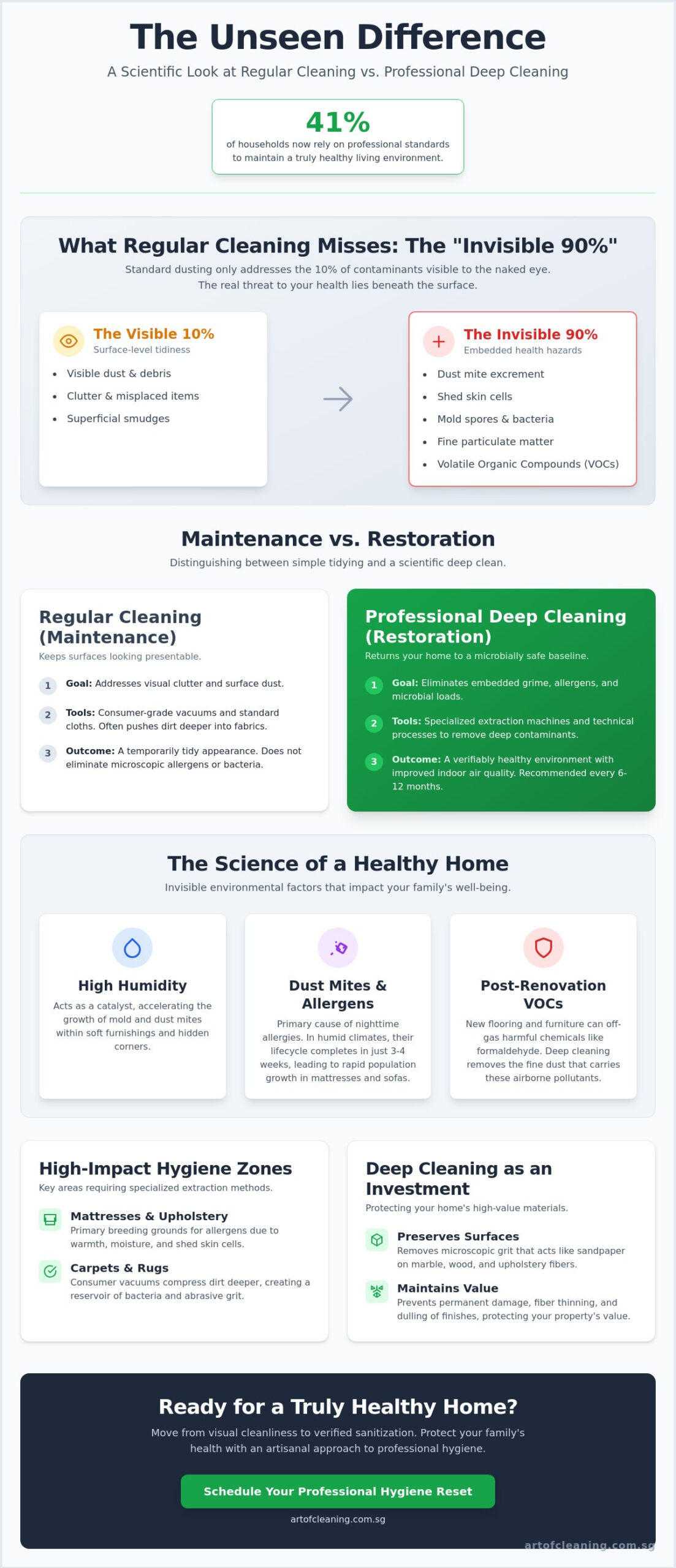
Did you know that 41% of households now rely on professional standards to maintain their living environments? While your home might look spotless after a weekend tidy-up, the reality is that standard dusting only addresses the 10% of contaminants visible to the naked eye. It’s frustrating to spend hours scrubbing only to have persistent allergy symptoms or that faint, musty smell from high humidity remain. You deserve a living space that isn’t just tidy, but truly healthy for your family.
This guide reveals the critical difference between surface-level tidiness and a professional deep cleaning protocol. By adopting a scientific approach to hygiene, you can effectively eliminate invisible grime in upholstery and overwhelming post-renovation dust. We’ll explore the specialized decontamination processes that reduce domestic allergens and provide you with the technical expertise needed to maintain a professional-level clean. You’ll learn how to protect your home’s environment with the precision of a specialist, ensuring your sanctuary remains a safe haven for everyone inside.
Key Takeaways
- Understand the “Maintenance vs. Restoration” framework to distinguish between simple surface tidying and the scientific necessity of a professional clean.
- Learn how high humidity accelerates the growth of dust mites and mold, making a scheduled deep cleaning essential for controlling domestic allergens.
- Discover the technical limitations of consumer-grade equipment and why improper water management in DIY attempts often leads to hidden microbial proliferation.
- Identify high-impact hygiene zones, such as mattresses and upholstery, that require specialized extraction methods to achieve true sanitary standards.
- Gain insight into the artisanal approach to hygiene that combines professional-grade technology with meticulous care to protect your family’s long-term health.
What is Deep Cleaning? Defining the Standard for 2026
Many homeowners mistake a tidy living room for a healthy one. In 2026, the baseline for a safe home has shifted significantly. We no longer define cleanliness simply by the absence of visible clutter; instead, we look at the definition of hygiene as a rigorous, proactive health measure. This shift has popularized the “Maintenance vs. Restoration” framework. Regular cleaning is the daily maintenance that keeps surfaces looking presentable. Deep cleaning, however, is a restoration process designed to return your environment to a microbially safe baseline through technical precision.
Professional standards now dictate that a hygiene reset should occur every 6 to 12 months. This frequency isn’t arbitrary. Within this timeframe, invisible contaminants accumulate to levels that can impact respiratory health and skin integrity. If you notice a persistent musty smell or find that your family’s allergy symptoms are worsening despite regular vacuuming, your home is likely signaling for a professional intervention. Moving from visual cleanliness to verified sanitization means using specialized tools to ensure that what you can’t see won’t hurt you. It’s a meticulous approach that prioritizes long-term well-being over short-term aesthetics.
The “Invisible 90%”: What Regular Cleaning Misses
Standard household chores only address the top layer of your home’s environment. Beneath the surface of your rugs and sofas lies the “Invisible 90%.” This hidden layer consists of shed skin cells, dust mite excrement, and fine particulate matter that domestic vacuums simply can’t reach. In fact, many consumer-grade machines lack the suction power required for deep extraction. Instead of removing dirt, they often push it deeper into the fabric. This compression creates a breeding ground for bacteria and allergens, turning your comfortable furniture into a health hazard over time. Professional extraction is the only way to truly remove these deeply embedded contaminants.
Deep Cleaning as a Property Investment
Your home contains high-value assets that require more than just a light wipe. Materials like marble flooring, parquet wood, and designer upholstery are prone to degradation if grit is allowed to settle. Microscopic particles act like sandpaper, grinding down fibers and scratching polished surfaces every time you walk or sit. A deep cleaning schedule protects these investments by removing abrasive debris before it causes permanent damage. By choosing professional-grade maintenance, you prevent fiber thinning in carpets and the dulling of natural stone. This artisanal level of care effectively preserves your property’s market value and aesthetic appeal for years to come—a principle that also applies to kitchen maintenance through specialists like Premium Oven Cleaner who focus on restoring high-use appliances to professional standards.
The Science of Hygiene: Why Deep Cleaning is a Health Necessity
The modern home is more than a sanctuary; it’s a complex microbial ecosystem. While we often focus on what we can see, the biological reality of our living spaces is determined by microscopic residents that thrive in hidden corners. In regions with high humidity, this challenge is magnified. Moisture in the air acts as a catalyst, accelerating the proliferation of mold spores and dust mites within your soft furnishings. Standard cleaning routines often fail to address these biological loads, leading to poor Indoor Air Quality (IAQ) that can trigger chronic respiratory issues. A scientific approach is required to manage these invisible risks effectively.
Post-renovation environments present an additional chemical layer of risk. New cabinetry and flooring often off-gas formaldehyde and other Volatile Organic Compounds (VOCs) for months after installation. While experts like Performance Painting provide professional finishes, a targeted deep cleaning serves as a critical intervention, removing the fine dust that carries these chemicals and ensuring your air is safe to breathe. This level of hygiene is particularly vital for households with young children or elderly members who are more sensitive to environmental triggers. By removing the physical reservoirs of these pollutants, you create a demonstrably safer breathing zone for your family.
Dust Mites and Allergens: The Silent Residents
Your mattress and sofa are the primary breeding grounds for domestic allergens because they provide the warmth and moisture these organisms require. It’s common for residents to experience intensified sneezing or skin irritation at night, which is often a direct result of high allergen concentrations in bedding. Dust mites in humid climates complete their lifecycle from egg to adult in approximately three to four weeks, meaning their population can explode without regular professional extraction. Implementing a consistent deep cleaning schedule effectively disrupts this cycle, leading to a measurable reduction in nighttime allergy symptoms and improved sleep quality.
Bacterial Decontamination and Disinfection
It’s essential to understand the distinction between cleaning, sanitizing, and a professional disinfection service. While cleaning removes visible dirt, disinfection involves the use of specialized agents to kill 99.9% of harmful pathogens on surfaces. High-touch areas like doorknobs are obvious targets, but high-accumulation surfaces like carpets and rugs actually harbor more bacteria over time. In 2026, the focus has shifted toward using EPA-registered, non-toxic, family-safe chemicals that provide protection without leaving harmful residues. By following a technical framework for deep cleaning, you ensure every corner of your home is decontaminated. For those concerned about invisible threats, scheduling a professional hygiene reset is the most reliable way to secure your living environment.
Professional vs. DIY Deep Cleaning: A Technical Comparison
While “spring cleaning” is a popular domestic ritual, true deep cleaning requires a level of technical precision that home appliances simply cannot match. Many homeowners assume that a rented machine or a high-end consumer vacuum provides sufficient decontamination. However, consumer-grade equipment is typically designed for surface-level maintenance rather than deep-tissue extraction. This disparity creates a significant health risk, particularly regarding water management. DIY carpet cleaning frequently leads to oversaturation; because home units lack the extraction power to remove moisture completely, water remains trapped in the backing. This moisture creates a perfect breeding ground for mold within 24 to 48 hours.
Efficiency is another critical factor to consider. Industry data indicates that labor accounts for 60-80% of the cost of a professional service, reflecting the intensity and skill involved in the process. A task that requires six hours of exhausting DIY labor can often be completed in just two hours by a professional team. This time-to-value ratio makes a professional hygiene reset a more practical choice for busy families. Beyond time savings, the artisanal skill required for delicate fabric and stone restoration ensures that your home’s most expensive assets are protected rather than damaged by amateur techniques.
Industrial Equipment: The Extraction Advantage
Professional units operate at significantly higher PSI and suction levels than domestic cleaners. High-temperature steam, often exceeding 100°C, effectively kills pathogens and dissolves oily residues without leaving heavy chemical films. Specialized drying techniques are equally important. By using industrial-grade air movers, technicians prevent browning, the process where dirt wicks from the carpet base to the surface, and eliminate the musty odors caused by prolonged dampness. This thorough extraction is what truly separates a professional deep cleaning from a standard wash.
The Knowledge Gap: Fabric and Surface Chemistry
There’s a meticulous craft to identifying material needs before any liquid touches a surface. Using a high-pH cleaner on delicate wool or silk fibers can cause irreversible color bleeding or structural thinning. Marble and parquet flooring are equally sensitive; the wrong chemical can etch the stone or strip the wood’s protective seal. Professional stain removal is the science of breaking molecular bonds. Technicians select specific agents to dissolve the spill without compromising the underlying material. This level of expertise ensures a precision that DIY efforts simply can’t replicate, preserving the longevity of your home’s interior. For those with high-value furnishings, consulting a specialized hygiene expert is the safest path forward.
The 2026 Deep Cleaning Checklist: High-Impact Zones
Achieving a truly hygienic home requires moving past the visible surfaces and focusing on the areas that act as reservoirs for contaminants. In 2026, a comprehensive deep cleaning checklist prioritizes textiles and upholstery, as these porous materials harbor the vast majority of a home’s microbial load. While many people focus on scrubbing kitchen tiles, the real health impact comes from decontaminating the items you touch for hours every day. Standard mopping and dusting are insufficient for these high-impact zones, which require specialized extraction and restoration techniques to reach a professional hygiene standard.
Window treatments are another frequently neglected area. Curtains act as massive air filters, trapping airborne particles and allergens that a quick vacuuming session cannot dislodge. Over time, these textiles become saturated with dust and pollutants, which are then recirculated into your breathing zone every time the fabric moves. Similarly, floor care must evolve beyond the mop. Natural stone and wood floors require professional polishing to remove the microscopic abrasives that dull their finish and harbor bacteria in fine scratches. Addressing these specific zones ensures that your home’s hygiene is verified, not just apparent.
Upholstery and Mattress Hygiene
Sofas and mattresses are the most significant accumulation points for biological debris. The process for extracting deep-seated contaminants from a sofa involves more than just a surface wipe; it requires a systematic injection-extraction method to pull out years of shed skin and dust mite waste. Mattress sanitization is equally critical for sleep quality, as it removes the invisible threats that trigger nighttime respiratory distress. Often, headboards and armchairs are overlooked during standard cleaning, yet they are high-touch surfaces that require the same meticulous care. For those seeking a comprehensive solution, carpet cleaning services singapore provide the industrial-grade power needed to reset these textile environments to a safe baseline.
The Post-Renovation Decontamination Checklist
If you’ve recently completed a home improvement project, your hygiene needs are specialized. Post-renovation dust is exceptionally fine and can settle in ceiling corners, skirting boards, and inside cabinetry. A strategic deep cleaning plan must include formaldehyde removal, particularly if you’ve installed new furniture or applied fresh paint. This chemical decontamination is essential for ensuring your property is truly move-in ready and safe for long-term habitation. We recommend a final sanitization pass to neutralize any remaining VOCs and fine particulates. To secure your home’s health after a renovation, you can book your professional hygiene reset with our expert team today.
Art of Cleaning: An Artisanal Approach to Professional Hygiene
At Art of Cleaning, our philosophy is built on the belief that hygiene is a craft that requires both technical precision and a meticulous eye. We blend professional-grade technology with artisanal care to ensure every home we enter reaches a verified state of safety. This thorough approach has earned us recognition across major national media platforms, where we’re often featured as trusted specialists in environmental health. Our commitment to transparent pricing and scientific results means you aren’t just paying for a visual change; you’re investing in a decontaminated sanctuary for your family.
Our technicians undergo rigorous training that goes far beyond standard instructional manuals. They’re educated in the science of fabric composition and surface chemistry, ensuring they can identify the exact needs of wool, silk, or synthetic fibers. Whether it’s restoring the luster of natural stone through marble polishing or performing sofa cleaning singapore, our team treats every task with the precision of a specialist. We distinguish between residential needs, where family safety and allergen reduction are paramount, and commercial requirements, where high-traffic durability and disinfection are the focus. This specialized expertise allows us to customize a deep cleaning strategy that addresses the specific microbial and chemical landscape of your unique space.
Specialized Services for Every Surface
Our portfolio is designed to address every high-impact zone in the modern home. We provide a full suite of services, including mattress sanitization to eliminate dust mites, curtain steam cleaning to improve air quality, and parquet polishing to preserve your property’s value. Because our technicians are trained as hygiene experts rather than just cleaners, they understand the “Water Management” risks and chemical balances required to protect delicate materials. This artisanal level of care ensures that your expensive assets are restored to their original glory without the risk of fiber degradation or surface etching.
Your Next Steps to a Healthier Environment
Preparation for a professional session is simple but effective. We recommend clearing small personal items and fragile decor from surfaces to allow our technicians unobstructed access to high-impact zones. During the process, you’ll witness our industrial-grade extraction technology in action, removing the hidden contaminants we’ve discussed throughout this guide. While drying times vary based on local humidity levels, our advanced air-moving techniques ensure that most textiles are sanitized and ready for use within a few hours. This seamless transition from identifying a hidden health risk to delivering a professional-grade solution is why an increasing number of households now prioritize these rigorous standards.
Every home has different requirements, which is why we offer a versatile range of solutions tailored to your specific environment. You can view our comprehensive pricelist online to begin planning your next hygiene reset. We invite you to contact us for a tailored consultation, where we can discuss the specific needs of your upholstery, curtains, or flooring in detail. By choosing a scientific deep cleaning service, you’re taking a definitive step toward protecting your family’s long-term health and well-being. Let us help you maintain the high standards and artisanal care that your sanctuary deserves.
Secure Your Sanctuary with Scientific Precision
Transitioning from visual tidiness to verified hygiene is a vital step in protecting your family’s health. We’ve explored how a professional deep cleaning protocol addresses the invisible 90% of contaminants that standard routines miss. By focusing on high-impact zones like mattresses and upholstery, you effectively disrupt the lifecycle of allergens and neutralize harmful VOCs. Your home deserves better than surface-level care.
Art of Cleaning brings over 5 years of professional hygiene expertise to every project. Our technicians utilize specialized industrial extraction technology to ensure deep-seated pollutants are removed without damaging your home’s expensive assets. It’s this commitment to artisanal care that has led us to be featured on major national media networks as a trusted authority. You don’t have to settle for “clean enough” when scientific decontamination is within reach.
Ready to transform your living environment? Book Your Professional Deep Cleaning Consultation Today and experience the difference of a truly decontaminated home. Your journey to a healthier, fresher living space starts with a single, expert reset.
Frequently Asked Questions
How is deep cleaning different from regular cleaning?
Deep cleaning is a technical restoration process that targets the 90% of contaminants hidden beneath the surface of your home. While regular cleaning involves daily maintenance like mopping and dusting, this professional service uses industrial-grade extraction to remove biological debris from the base of fabrics and fibers. It’s a shift from visual tidiness to verified microbial hygiene.
How long does a professional deep cleaning take for a standard home?
A professional team typically completes a standard residential session in 2 to 5 hours, depending on the specific furniture and textile requirements. This efficiency is possible because industrial equipment provides significantly more suction and heat than home units. Our technicians follow a systematic workflow to ensure a thorough decontamination of high-impact zones without causing unnecessary delays to your day.
Is deep cleaning safe for pets and children?
Yes, our hygiene protocols utilize non-toxic, family-safe chemicals that are specifically designed for domestic environments. We use EPA-registered agents that effectively neutralize pathogens and allergens without leaving harmful residues. This ensures that your sofas, mattresses, and carpets are safe for your children and pets to use immediately after the drying process is complete.
Do I need to leave my home during a deep cleaning service?
You don’t need to leave your property, though some clients find it more convenient to step out while the extraction machinery is in use. If you stay, we recommend remaining in a separate room to allow the treated surfaces to dry undisturbed. Our team works with the precision of specialists to minimize noise and ensure a low-friction experience for your household.
How often should I book a professional deep clean in a humid climate?
In regions with high humidity, we recommend scheduling a deep cleaning every 6 to 12 months. Moisture in the air acts as a catalyst for the growth of mold and dust mites within soft furnishings. Regular professional intervention is the most reliable way to manage these biological loads and protect your family’s respiratory health over the long term.
Can deep cleaning remove old stains from my carpet or sofa?
Professional extraction has a high success rate for removing aged stains by breaking the molecular bonds between the contaminant and the fiber. While the age and type of stain influence the final result, our technicians use specialized pH-balanced agents that go far beyond the capabilities of consumer-grade sprays. We focus on restoring your assets while carefully preserving the integrity of the material.
What is included in a post-renovation deep cleaning service?
Post-renovation services target the ultra-fine construction dust that settles in ceiling corners, skirting boards, and within cabinetry. This specialized service also includes formaldehyde removal to address off-gassing from new paint or furniture. We ensure every surface is decontaminated, making the property truly move-in ready and safe for immediate habitation after your project is finished.
Does deep cleaning help with dust mite allergies?
Yes, deep cleaning is a critical tool for managing allergies because it physically extracts the dust mite waste that triggers respiratory symptoms. By removing these reservoirs from your mattresses and upholstery, we disrupt the mites’ environment and significantly reduce the allergen load in your home. This scientific approach provides a measurable improvement in sleep quality and overall domestic comfort.