
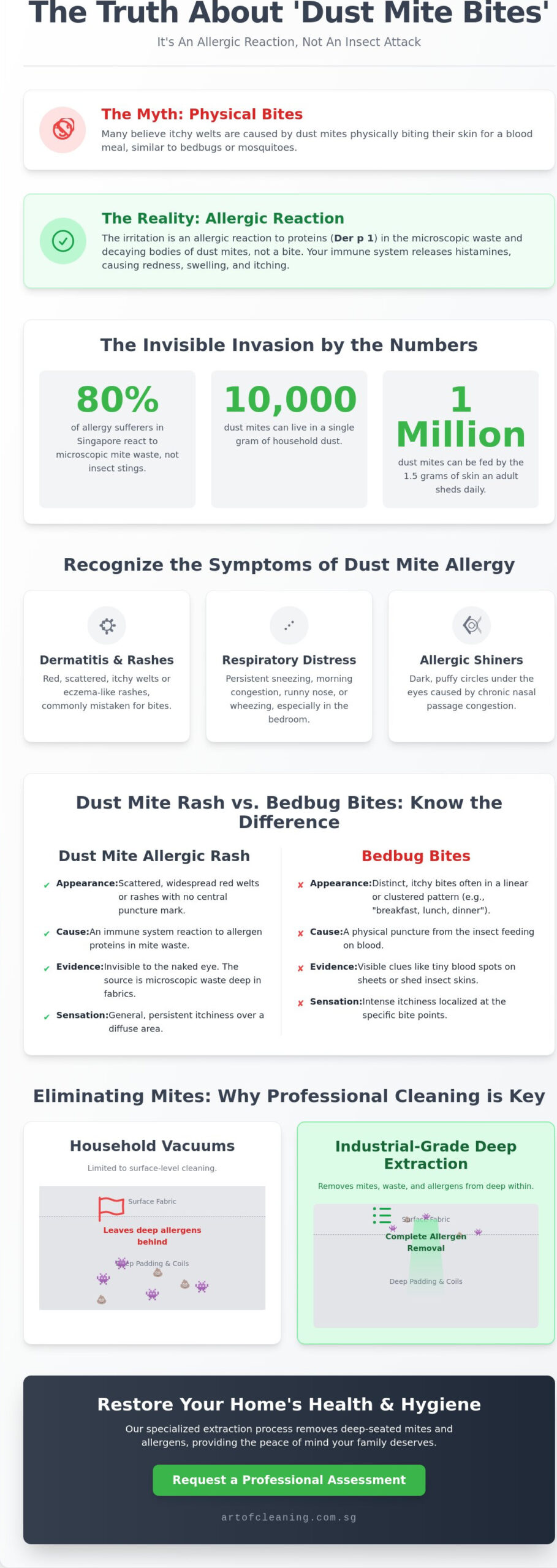
Did you know that 80% of allergy sufferers in Singapore are actually reacting to microscopic waste rather than actual insect stings? If you wake up with red, itchy welts, it’s natural to search for dust mite bites. You’re likely exhausted by persistent morning itchiness and the worsening asthma or sinus issues that make your bedroom feel like a health hazard. It’s confusing when you can’t tell the difference between a skin allergy and a bedbug infestation.
We believe your home should be a sanctuary of health and hygiene. This guide will reveal the scientific truth about these “bites” and help you identify your symptoms with confidence. You’ll learn practical steps to reduce allergens and discover why professional extraction is the most effective way to eliminate these microscopic triggers from your upholstery. We’ll preview the specialized cleaning processes that restore your living space, providing the peace of mind your family deserves.
Key Takeaways
- Learn why the itchy welts commonly called dust mite bites are actually biological reactions to microscopic waste rather than physical insect stings.
- Identify the difference between skin-based dermatitis and respiratory triggers like persistent sneezing to better manage your indoor environment.
- Discover why Singapore’s high humidity makes mattresses and carpets a breeding paradise for allergens and how to break the cycle.
- Master the 60°C washing rule for linens and the importance of using allergen-proof covers to protect your family’s health.
- Understand the necessity of industrial-grade deep extraction to remove both live mites and the deep-seated waste that household vacuums leave behind.
Understanding “Dust Mite Bites”: The Myth vs. Reality of Microscopic Allergens
A single gram of household dust can contain anywhere from 1,000 to 10,000 individual mites. For many families in Singapore, this invisible population is the hidden cause behind persistent skin irritation and respiratory distress. While you might wake up with itchy welts and search for ways to treat dust mite bites, it’s important to understand the biological reality. These microscopic arachnids, scientifically known as the House dust mite, don’t actually possess the mouthparts or stingers required to bite humans. They aren’t seeking a blood meal like bedbugs or mosquitoes.
Instead, these organisms are scavengers. They thrive on the dead human skin cells, or dander, that we naturally shed every day. An average adult sheds roughly 1.5 grams of skin daily, which is enough to feed a colony of one million mites. The “bites” you see on your arms or legs are actually a localized allergic reaction. You aren’t reacting to a physical wound, but to the potent proteins found in mite feces and their decaying body fragments that have settled into your mattress and upholstery. This waste is so small it easily becomes airborne, landing on your skin or being inhaled while you sleep.
The Biology of a Dust Mite Reaction
The primary trigger for your symptoms is a specific enzyme known as the Der p 1 protein found in mite excrement. When these microscopic particles touch your skin, they break down the bonds between your skin cells, allowing allergens to penetrate. This often leads to symptoms that peak at night or during the early morning because you’ve spent hours in direct contact with contaminated bedding. A dust mite allergy is a hypersensitivity to microscopic waste products and skeletal remains trapped within home fabrics.
Why We Mistake Allergies for Bites
The confusion stems from the body’s inflammatory response. When the immune system detects these proteins, it releases histamines, which cause the skin to become red, swollen, and itchy. This creates raised bumps that look remarkably similar to traditional insect stings. This irritation often triggers a persistent itch-scratch cycle, damaging the skin further. Unlike bedbug bites, which often follow a linear pattern with a visible puncture, dust mite reactions are usually more scattered and lack a central bite mark.
Identifying the Symptoms: How to Tell if You Have a Dust Mite Allergy
Waking up with a stuffy nose or itchy skin in Singapore is often dismissed as a minor inconvenience or a sign of “sleeping late.” However, these are clear biological indicators of your body’s struggle against microscopic invaders. Dust mite allergy symptoms often manifest most strongly in the bedroom, where the concentration of allergens is highest. The most common hallmark is “morning congestion.” This is that specific feeling of a heavy head or blocked nose that miraculously clears up within an hour of leaving the house.
Chronic exposure leads to several recognizable physical signs, including:
- Allergic Shiners: These are dark, puffy circles under the eyes caused by restricted blood flow in the nasal passages.
- Respiratory Distress: Persistent sneezing, a runny nose, and wheezing are signs that your lungs are filtering contaminated air.
- Dermatitis: Red, raised welts or eczema-like rashes often appear on the arms, neck, or back.
Many residents mistake these skin reactions for dust mite bites, but they are actually localized inflammatory responses. When your skin spends eight hours pressed against a mattress filled with mite waste, your immune system triggers a defensive flare-up. If you suspect your home environment is affecting your health, you can request a professional assessment to identify hidden allergen hotspots.
Dust Mite Rashes vs. Bedbug Bites
Differentiating between these two issues is vital for effective treatment. Bedbugs are notorious for their “breakfast, lunch, and dinner” feeding pattern, often leaving three or four distinct, itchy bites in a straight line. They also leave behind physical clues like tiny blood spots on sheets or translucent shells. In contrast, mite-related rashes are diffuse, scattered, and lack a central puncture point. If you notice these reactions specifically after relaxing in the living room, it might be time to consider professional sofa cleaning in Singapore to eliminate the invisible triggers trapped in the upholstery fibers.
Long-term Health Impact of Untreated Allergens
Ignoring these symptoms can lead to severe respiratory complications. In Singapore, close to 15% of adults suffer from asthma, a condition that is frequently exacerbated or even triggered by dust mite allergens. Constant immune system activation doesn’t just cause physical discomfort; it ruins sleep quality. When your body is fighting allergens all night, you don’t reach the deep REM cycles needed for recovery. This leads to a significant drop in daily productivity and focus in many Singaporean households. Maintaining a hygienic home isn’t just about aesthetics; it’s a critical investment in your family’s long-term health.
Why Singapore’s Climate Makes Dust Mite Control a Persistent Challenge
Dust mites aren’t just a nuisance; they’re a biological inevitability in tropical climates. While you might be searching for a cure for dust mite bites, the real battle is against the environment itself. These microscopic pests thrive in temperatures between 20-25°C, which is precisely the range maintained in most air-conditioned Singaporean homes. Combined with our high ambient moisture, it creates a “breeding paradise” that allows mite populations to explode within weeks. Unlike countries with four seasons, Singapore offers a consistent, year-round growth cycle that never forces these pests into dormancy.
Many homeowners rely on air-conditioning to cool their spaces, but this can inadvertently worsen dust mite allergy symptoms. If air-con filters aren’t professionally maintained, they trap and recirculate the very allergens you’re trying to avoid. Instead of removing the microscopic waste, the cooling system pushes it deeper into your fabric sofas and heavy curtains. Without regular professional servicing, these units become a distribution network for mite feces and body fragments, ensuring that the air you breathe is never truly clean.
The Role of Humidity in Mite Proliferation
These organisms are unique because they don’t drink water. Instead, they absorb moisture directly from the air through their shells. Singapore’s average humidity of 84% exceeds the mite-survival threshold year-round, which is why they’re so difficult to eradicate with standard household tools. While dehumidifiers can help lower the moisture in a room’s center, they often fail to penetrate the dense layers of a mattress or upholstered headboard. These deep-seated areas remain humid enough for colonies to thrive even when the surface air feels dry.
Common Infestation Sites in Singaporean Homes
Our local preference for a “fabric-heavy” lifestyle contributes to the problem. Plush mattresses, upholstered headboards, and thick curtains serve as perfect reservoirs for dead skin cells and moisture. Upholstered headboards are often overlooked during routine cleaning, yet they sit inches away from your face for eight hours every night. This proximity makes them a primary source of inhalation-based reactions and skin symptoms mistaken for dust mite bites.
Rugs and carpets are particularly problematic because gravity pulls allergens deep into the pile where standard vacuums can’t reach. If you’ve noticed your respiratory issues flare up in specific rooms, it’s likely due to these hidden hotspots. For those dealing with persistent reactions, seeking professional carpet cleaning singapore is a necessary step to extract the allergens that household tools simply leave behind.
How to Eliminate Dust Mite Habitats in Your Home Effectively
Managing your home environment is the first line of defense against the allergic reactions often called dust mite bites. While you can’t change Singapore’s ambient humidity, you can control the reservoirs where these microscopic pests thrive. The most critical step is the 60°C washing rule. Standard laundry cycles at 30 or 40 degrees might remove surface dirt, but they don’t kill the mites themselves. You must wash all bed linens, pillowcases, and bolster covers in water that is at least 60°C once a week to effectively neutralize the population. This temperature is high enough to kill the mites and denature the proteins in their waste.
Once your linens are sanitized, invest in high-quality, allergen-proof covers for your mattresses and pillows. These specialized encasements feature a pore size smaller than 10 microns, which prevents mites from entering or escaping the fabric. Reducing clutter is equally important. Remove non-essential fabric items like decorative cushions, heavy rugs, or soft toys from the bedroom. If your child has a favorite plush toy, placing it in the freezer for 24 hours can kill the mites, though it won’t remove the allergen waste. HEPA-filter vacuums are also non-negotiable for surface management. Unlike standard vacuums that often blow microscopic allergens back into the room through the exhaust, HEPA filters trap 99.97% of particles as small as 0.3 microns.
The Limitation of DIY Cleaning Methods
Domestic vacuum cleaners, even those marketed as “high power,” often lack the industrial-grade suction needed to reach mites burrowed 10cm deep into a mattress. Surface-level cleaning only removes a fraction of the problem. While you might be searching for relief from dust mite bites, surface-level vacuuming is rarely enough. Additionally, many homeowners attempt DIY steam cleaning, which can be counterproductive. Without professional-grade moisture extraction, home steam cleaners leave the interior of your furniture damp, creating an even more ideal breeding ground for survivors. For a truly hygienic environment, consider deep cleaning services singapore to ensure deep-seated allergens are fully extracted.
Environmental Control Strategies
Air purifiers equipped with HEPA filters are essential for capturing airborne waste particles that regular filters miss. These devices should be placed in high-traffic areas and bedrooms to filter out microscopic triggers. Additionally, take advantage of the tropical sun by regular sunning of cushions and rugs. While UV light can help kill mites, it’s a supplementary measure that works best when combined with mechanical extraction. To ensure your home is free from hidden health triggers, book a professional mattress sanitization today to restore your home’s hygiene.
Professional Deep Cleaning: The Ultimate Defense Against Dust Mite Infestations
While DIY methods provide a baseline of cleanliness, they often fail to address the core of the problem. The microscopic waste responsible for what many call dust mite bites is often embedded several inches deep into upholstery fibers. Standard household vacuums lack the industrial-grade suction necessary to pull these particles through dense mattress foam or heavy sofa padding. At Art of Cleaning, we specialize in a deep-extraction process that doesn’t just clean the surface; it sanitizes the very foundation of your home’s furniture. Our professional-grade equipment is designed to remove both live mite populations and the accumulated biological waste that triggers chronic allergies.
Our approach prioritizes workmanship and meticulous attention to detail. We pay special attention to high-risk areas that are frequently overlooked, such as upholstered headboards and the crevices of dining chairs. These spots are prime real estate for mite colonies due to their proximity to human warmth and dander. To ensure a truly hygienic environment, our deep cleaning is often complemented by professional disinfection services. This dual-action strategy ensures that your living space isn’t just visually tidy, but scientifically safe for your family.
The Art of Cleaning Methodology
We utilize a high-suction extraction technique that penetrates deep into mattress and sofa fibers to lift out microscopic debris. This process is paired with professional-grade cleaning agents that are strictly family and pet-friendly, ensuring no harsh chemical residues are left behind. Our commitment to quality and transparency is why Art of Cleaning was featured on Mediacorp Channel 8, serving as a hallmark of the trusted service we provide to households across Singapore. We believe in delivering cleanliness you can see and hygiene you can trust, providing a “safe pair of hands” for your home environment.
Frequency of Professional Maintenance
For a healthy home, we recommend a professional deep clean every 6 to 12 months. This interval prevents the buildup of allergens from reaching critical levels that trigger dust mite bites and respiratory distress. Maintenance is especially critical during post-renovation cleaning. Construction dust provides an ideal hiding spot and transport medium for mites, making a thorough sanitization essential before you move back into your space. Whether you’re managing a persistent allergy or simply want to ensure your upholstery remains fresher for longer, we encourage you to get a Free Quote tailored to your property’s specific needs.
Secure Your Family’s Health and Home Hygiene
Understanding the science behind dust mite bites is the first step toward a healthier living environment. While DIY maintenance like 60°C washing and HEPA vacuuming provides a foundation, it often fails to reach the deep-seated allergens trapped within mattresses and upholstery. Singapore’s persistent 84% humidity means these microscopic triggers are constantly replenishing. Surface cleaning isn’t enough. Relying on it alone leaves your family vulnerable to chronic respiratory and skin issues.
Art of Cleaning has served as a trusted Singaporean specialist since 2018, bringing professional-grade equipment and meticulous workmanship to every home. Our featured appearance on Mediacorp Channel 8 reflects our commitment to verified hygiene standards. We don’t just clean for aesthetics; we sanitize to ensure the well-being of your loved ones. Protect your family with Art of Cleaning’s professional deep cleaning, Get a Free Quote today! You deserve a sanctuary where every breath is fresh and every night’s sleep is truly restorative.
Frequently Asked Questions
Do dust mites actually bite humans at night?
No, dust mites don’t have the biological mouthparts required to bite or sting humans. What people often refer to as dust mite bites are actually localized skin inflammations caused by contact with mite excrement and body fragments. These reactions typically flare up at night because that’s when you’re in closest contact with your mattress and pillows. The immune system reacts to proteins in the waste, creating red, itchy bumps that look like stings.
How can I tell the difference between bedbug bites and dust mite allergies?
Bedbug bites usually appear in a linear pattern with a visible puncture mark in the center of each welt. In contrast, dust mite reactions are diffuse, scattered, and resemble an eczema flare-up or heat rash. Bedbugs also leave behind physical evidence like dark fecal spots or blood stains on sheets. If you see rashes but no physical signs of insects, you’re likely dealing with an allergen buildup rather than a pest infestation.
Can you see dust mites with the naked eye?
No, individual dust mites are microscopic organisms measuring only 0.2 to 0.3 millimeters in length. They are translucent and impossible to detect without at least 10x magnification. While you can’t see the mites themselves, you can certainly see the dust and dander they feed on. If a mattress or sofa hasn’t been professionally deep cleaned in over 12 months, it’s statistically certain that a significant colony exists within the fibers.
How do I get rid of dust mites in my mattress in Singapore?
Effective removal in Singapore’s humid climate requires a combination of heat and industrial extraction. You should wash all removable linens in 60°C water weekly and use anti-dust mite encasements for the mattress. However, these steps only manage the surface. To remove deep-seated mites and waste from the interior foam, you need professional mattress cleaning that uses high-suction equipment. This process ensures the allergens are physically removed from your home environment rather than just shifted around.
What is the best temperature to wash bedding to kill dust mites?
You must wash your bedding at a temperature of at least 60°C to effectively kill dust mites. Lower temperatures might remove some surface dirt, but they won’t neutralize the mites or the proteins in their waste. If your washing machine doesn’t have a 60°C setting, you can use a professional laundry service or supplement your routine with high-heat tumble drying for at least 15 minutes to ensure the heat penetrates all fabric layers.
Are dust mite “bites” dangerous for children or pets?
While dust mite bites aren’t venomous, the allergic reactions they cause can be dangerous for children with asthma or eczema. Constant scratching of itchy welts can lead to skin breakage and secondary bacterial infections. In pets, these allergens often cause atopic dermatitis, leading to excessive licking, hair loss, and skin redness. Maintaining a hygienic home environment is critical for protecting the respiratory health and skin integrity of your most vulnerable family members.
Can professional carpet cleaning really eliminate dust mites?
Yes, professional carpet cleaning is one of the most effective ways to eliminate these allergens. Standard domestic vacuums often lack the power to pull debris from the base of the carpet pile, leaving behind the waste that triggers reactions. Industrial-grade extraction equipment uses high-pressure steam and specialized suction to lift both live mites and their microscopic waste. This process restores the hygiene of your flooring, making it safe for children and pets to play on.
How often should I engage a professional cleaning service for dust mite control?
Most healthy households in Singapore should schedule a professional deep clean every 6 to 12 months. If a family member suffers from chronic allergies, asthma, or eczema, increasing this frequency to every 3 or 4 months is recommended to keep allergen levels low. Regular maintenance ensures that mite populations don’t have the chance to explode in our humid climate, providing a consistent level of protection for your indoor air quality and skin health.