
That persistent musty smell clinging to your upholstery isn’t just a nuisance; it’s a biological sign that your sofa has become a reservoir for allergens in Singapore’s relentless humidity. You likely feel the frustration of visible stains that won’t budge and the anxiety of hidden dust mites affecting your family’s skin health. It’s common to assume a quick vacuum is enough, but the debate of fabric sofa cleaning at home vs professional results often ignores the microscopic contaminants trapped deep within the fibers.
We’re here to provide scientific clarity on how to maintain a truly hygienic living environment. This 2026 guide explains the critical differences between routine DIY care and professional-grade extraction to help you protect your investment and your loved ones. You’ll discover the limitations of household chemicals, the importance of the latest industry hygiene standards, and the exact moments when professional intervention becomes a necessity for a restored, allergen-free home.
Key Takeaways
- Learn how your sofa acts as a “sink,” trapping up to 90% of sweat, oils, and allergens deep within its fibers where standard vacuums cannot reach.
- Understand the critical technical gap in fabric sofa cleaning at home vs professional services, specifically regarding industrial suction power and deep-particle extraction.
- Discover why 60°C+ industrial steam is the scientific requirement for killing dust mites and neutralizing persistent musty odors caused by Singapore’s humidity.
- Identify the “health triggers,” such as unexplained skin rashes or respiratory issues, that indicate your furniture requires a professional hygiene reset.
- Gain insight into the artisanal cleaning methods featured on Mediacorp Channel 8 that prioritize meticulous detail and medical-grade sanitation for your home.
The Invisible Reality: What’s Trapped in Your Fabric Sofa?
Your fabric sofa is more than a piece of comfortable furniture; it functions as an active air filter within your living room. This “Sofa Sink” effect occurs because upholstery fibers are porous, trapping airborne pollutants every time you sit down or stand up. While the surface may appear tidy, data suggests that 85% to 90% of the actual contaminants, including sweat, body oils, and microscopic debris, are lodged deep within the internal foam and fabric layers. When evaluating fabric sofa cleaning at home vs professional results, the core distinction lies in the ability to reach this hidden reservoir of organic waste.
Dust mites are the primary concern for Singaporean families, as these microscopic organisms thrive on the skin cells shed by humans and pets. They are a leading cause of indoor allergies, often triggering unexplained sneezing or skin irritation. Without deep extraction, these contaminants accumulate over time, turning your seating area into a biological hazard that compromises your home’s air quality.
The Anatomy of Upholstery Contamination
To understand the necessity of deep cleaning, you must look at what resides beneath the surface. Upholstery acts as a magnet for a variety of pollutants that regular maintenance often misses:
- Skin Cells and Sebum: Humans shed millions of skin cells daily, which settle into the weave and provide food for microbes.
- Pet Dander: Microscopic proteins from pet saliva and skin can linger for months, even if the pet is no longer on the sofa.
- Atmospheric Dust: Fine particles from construction, traffic, and cooking settle into the fabric and act like sandpaper, wearing down the fibers.
- Food Particles: Micro-crumbs fall into crevices, providing a nutrient source for bacterial colonies.
Many homeowners rely on standard fabric fresheners to manage odors, but these products don’t solve the problem; they simply coat the fibers in synthetic fragrance while the underlying organic matter continues to decay. Professionals utilize various upholstery cleaning methods to physically remove these pollutants rather than just masking them. Bio-burden in upholstery represents the cumulative load of organic matter and microorganisms that compromise the hygiene and safety of your immediate living environment.
Singapore’s Climate: A Catalyst for Microbes
The local environment plays a significant role in how quickly your furniture degrades. Singapore’s high humidity levels, which average around 84%, create an ideal breeding ground for mold and mildew. When moisture from the air combines with the sweat and oils trapped in the sofa, it accelerates the growth of bacteria that produce that distinct, musty “old sofa” smell. This moisture doesn’t just affect the smell; it can also weaken the structural integrity of the sofa foam and the lifespan of the fabric itself.
Maintaining a healthy home in the tropics requires a proactive approach to sanitation. Adhering to the standards outlined in the Sofa Cleaning in Singapore Guide ensures your furniture isn’t just visually clean, but biologically safe for your family. Understanding the technical gap in fabric sofa cleaning at home vs professional care is the first step in protecting your investment and your health from the invisible reality of upholstery contamination.
Fabric Sofa Cleaning at Home: What DIY Can and Cannot Do
Weekly maintenance is your first line of defense against the accumulation of household pollutants. Maintaining your furniture through consistent DIY care helps extend the life of the fabric and manages surface-level debris before it migrates deeper into the upholstery. However, there’s a significant technical gap in fabric sofa cleaning at home vs professional results. While a standard household vacuum is excellent for removing loose crumbs and hair, it lacks the high-performance suction required to extract the microscopic particles lodged in the foam. House Dust Mites and other allergens often find a permanent refuge in these lower layers, remaining untouched by consumer-grade equipment.
The most dangerous trap for homeowners is the “Over-Wetting” mistake. Attempting to scrub out a stain with excessive water and detergent often pushes the liquid deep into the padding. Without industrial-strength extraction, this moisture remains trapped, creating a stagnant environment. You also risk setting a stain permanently by using harsh household chemicals like bleach or high-alkaline dish soaps. These substances can strip the protective coatings from fabric fibers, making them more susceptible to future soiling and causing irreversible color fading.
Safe Home Maintenance Techniques
Effective home care relies on precision rather than force. When vacuuming, use a dedicated upholstery nozzle with a lint strip to agitate the fibers gently. You should perform this task at least once a week to prevent “traffic lane” graying. If a spill occurs, follow the “blot, don’t rub” rule immediately. Rubbing a liquid spill forces the pigment deeper into the yarn and can cause “pilling” or permanent texture damage. Always use a pH-neutral cleaner specifically formulated for upholstery to maintain the chemical balance of the material. For those dealing with persistent issues, reviewing a professional sofa cleaning pricelist can help you decide when it’s time to move beyond DIY efforts.
The Dangers of Improper DIY Drying
Singapore’s environmental conditions make DIY deep cleaning particularly risky. With humidity levels frequently exceeding 80%, moisture does not evaporate quickly from dense sofa foam. If your furniture remains damp for more than 12 to 24 hours, it will likely develop a “sour” smell. This odor is actually the byproduct of bacterial gases and fungal spores colonizing the interior wooden frame and padding.
Professional technicians utilize high-velocity air movers that circulate thousands of cubic feet of air per minute to ensure rapid evaporation. Household fans simply cannot provide the necessary static pressure to pull moisture out from the sofa’s core. This lingering internal dampness is a primary cause of mold growth, which can eventually lead to structural rot and respiratory issues for the inhabitants of the home. Understanding these limitations is essential for any family prioritizing long-term hygiene and furniture preservation.
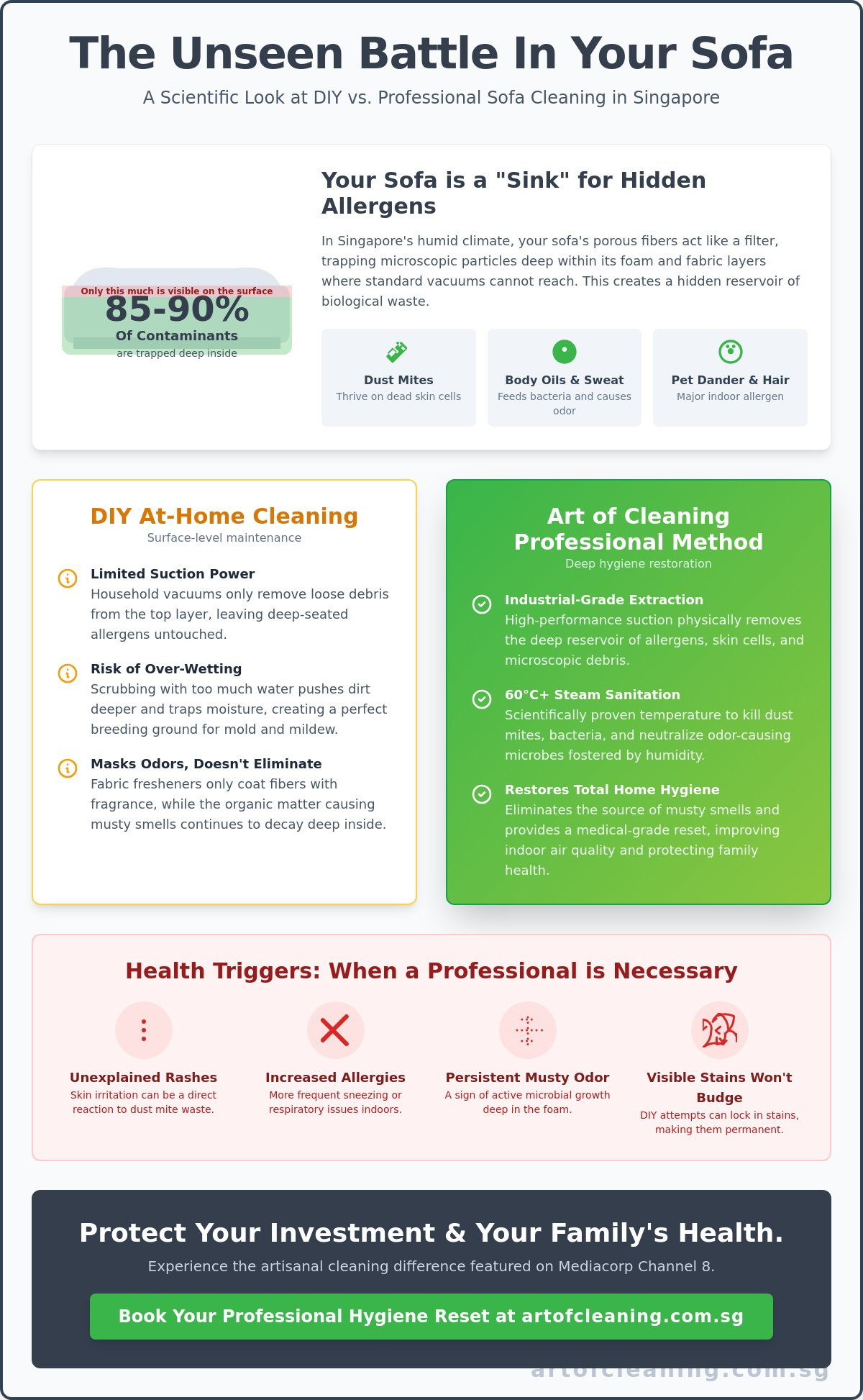
Home vs. Professional Sofa Cleaning: A Technical Comparison
The technical gap in fabric sofa cleaning at home vs professional service is best understood through the lens of physics and chemistry. While a premium household vacuum might provide 20 to 25 kPa (kilopascals) of suction, industrial-grade spray extraction units often double this power. This higher pressure doesn’t just pull dust from the surface; it creates a vacuum seal that draws contaminants out from the very core of the upholstery. Professional systems achieve an allergen removal rate of up to 99%, a figure supported by research on cleaning effectiveness for allergen removal which highlights the necessity of intensive physical extraction to reduce indoor triggers.
Industrial methods also utilize “extraction” technology rather than simple “encapsulation.” Encapsulation involves chemicals that surround dirt particles so they can be vacuumed later, whereas extraction uses high-pressure water to flush the fibers before instantly pulling the liquid back out. This process ensures that no chemical residue remains to attract more dirt, a common issue with supermarket detergents. These consumer-grade cleaners often leave a sticky film that actually accelerates the re-soiling process, defeating the purpose of the clean.
Suction Power and Depth of Clean
The primary reason home methods fail to reach the “Sofa Sink” mentioned earlier is the lack of lift. A typical household machine lacks the motor capacity to maintain high airflow through dense foam. In contrast, professional equipment is designed to remove approximately 90% to 95% of the water used during the process. This efficiency prevents the internal dampness discussed in previous sections. By comparing the technical specs, it’s clear that the choice between fabric sofa cleaning at home vs professional intervention isn’t just about convenience; it’s about the physical capability to restore the furniture’s hygiene.
Sanitization Beyond the Surface
Heat serves as a non-toxic disinfectant that household tools cannot replicate. To effectively neutralize dust mites and bacteria, the cleaning solution must maintain a temperature of at least 60°C throughout the contact period. This thermal disinfection kills pathogens without the need for harsh bleaches that can damage delicate fabric. Professional agitation tools, such as counter-rotating brushes, are also used to break the bond between oils and fibers before extraction begins. For families looking to understand the investment required for this level of care, the Art of Cleaning Pricelist offers a transparent breakdown of services that utilize these specialized industrial technologies. This artisanal approach ensures that your furniture isn’t just visually refreshed but deep-cleaned to a medical-grade standard.
When to Hire a Professional Sofa Cleaning Service
Determining the right time for a professional intervention involves looking beyond surface-level stains. While weekly vacuuming manages the top layer of debris, every household requires an “Annual Hygiene Reset” to eliminate the deep-seated bio-burden mentioned in previous sections. For most Singaporean homes, a professional deep clean every 6 to 12 months is the baseline for maintaining a healthy environment. If you have pets, young children, or family members with sensitive respiratory systems, increasing this frequency to every 6 months is a proactive step in allergen management.
Health triggers are often the most urgent indicators that your furniture has reached its capacity as a pollutant filter. Unexplained sneezing, skin rashes, or persistent respiratory irritation when lounging are clear signs that the sofa’s internal “sink” is overflowing with dust mites and bacteria. Additionally, “Stubborn Offenders” like urine, deep-set grease, and protein-based stains require specialized chemical breakdown. Attempting to treat these at home often results in the “Over-Wetting” trap discussed earlier, which can lead to permanent mold growth within the frame.
In the Singapore rental market, professional upholstery cleaning is frequently a mandatory requirement for move-in and move-out inspections. Property managers and landlords typically look for a verified service receipt to ensure the living space meets hygiene standards for the next occupant. This ensures that any biological traces from previous tenants are fully neutralized.
The Decision Matrix for Homeowners
Not every mark requires an expert, but knowing the difference prevents permanent damage. Use this checklist to evaluate your situation:
- Stain Type: Water-based spills (like coffee) are often manageable via DIY if caught early. Oil-based stains (like skin oils or food grease) bond to fibers and usually require industrial solvents.
- Fabric Sensitivity: If your sofa is made of silk, velvet, linen, or high-percentage wool, the risk of “water spotting” or fiber shrinkage is extremely high. These delicate materials should never be subjected to DIY wet cleaning.
- Furniture Age: If a sofa is structurally sound but looks dull, a professional restoration is significantly more cost-effective than replacement.
Protecting Your Investment
Professional maintenance is a financial strategy as much as a hygiene one. Microscopic grit and dust act like tiny blades, cutting into fabric fibers every time someone sits down. By removing this abrasive material through industrial extraction, you physically extend the lifespan of the upholstery. When performing a cost-benefit analysis, the price of periodic maintenance is a fraction of the cost of purchasing a new high-quality sofa set. For a comprehensive approach to household health, you can refer to our Deep Cleaning Services Guide to see how sofa care integrates into total home sanitation.
If your furniture is showing signs of heavy soilage or you’re noticing an increase in household allergies, it’s time to move from maintenance to restoration. You can contact our specialist team today to schedule a professional hygiene assessment for your home.
Art of Cleaning: The Artisanal Approach to Upholstery
Trust in professional sanitation is earned through transparency and a commitment to high standards. Our feature on Mediacorp Channel 8 stands as a powerful regional endorsement of our verified identity and artisanal approach to home hygiene. When you weigh the options of fabric sofa cleaning at home vs professional intervention, the “Art of Cleaning” signature represents a level of precision that goes beyond surface-level aesthetics. We position ourselves as the guardian of your home environment, prioritizing the health of your family by utilizing scientific methods to eliminate the invisible dangers residing in your furniture.
Our systematic 3-step process is engineered to combat the accumulation of contaminants effectively. We begin with industrial-grade deep vacuuming to remove the abrasive grit that standard household units leave behind. This is followed by a specialized spray extraction phase, where we flush out the deep-seated oils and sweat trapped within the foam. Finally, we perform a comprehensive sanitization using family-safe, eco-friendly solutions. This process ensures that your living space remains free from the sticky chemical residues often found in supermarket detergents, which can irritate sensitive skin and attract new dirt faster.
Why Singapore Families Trust Us
Precision is the cornerstone of our labor. Our specialized teams are trained to achieve a 99% removal rate for common indoor contaminants, providing a level of safety that is essential for households with children, the elderly, or pets. Our technicians undergo rigorous training to identify specific fabric needs, ensuring that delicate textiles like silk or linen are treated with the correct pH-balanced agents to prevent shrinkage or color bleeding. We offer islandwide service across Singapore, bringing our meticulous standards to both residential homes and commercial offices to ensure every space we touch is biologically refreshed.
Beyond Just Sofas: Comprehensive Upholstery Care
A truly healthy home requires a holistic approach to hygiene. The allergens and dust mites that settle in your sofa often migrate to your mattresses and curtains, creating a continuous cycle of respiratory triggers. By synchronizing your sofa maintenance with our mattress and curtain steam cleaning services, you create a comprehensive barrier against indoor pollutants. This total hygiene integration is the most effective way to maintain an allergy-free environment in Singapore’s humid climate.
We invite you to Contact Us for a Free Quote to experience the professional difference firsthand. Maintaining a healthy home is an art that requires the right tools, training, and a genuine concern for the well-being of the inhabitants. Let our experts restore the hygiene and comfort of your living space with the care and precision your family deserves.
Secure Your Home’s Long-Term Hygiene
Effective furniture care requires a balance between consistent weekly maintenance and periodic industrial restoration. While surface-level vacuuming is necessary, it cannot address the deep-seated bio-burden and allergens that thrive in Singapore’s high humidity. Choosing between fabric sofa cleaning at home vs professional intervention is ultimately a decision about your family’s respiratory health and the longevity of your investment. Our specialized extraction methods achieve a 99% removal rate of dust mites and contaminants, ensuring your living space is biologically safe.
Trusted by thousands of Singaporean households since 2018 and featured on Mediacorp Channel 8, we bring an artisanal level of care to every upholstery project. We prioritize your well-being by using non-toxic, eco-friendly solutions that protect both your fabric and your indoor air quality. Don’t let hidden pollutants compromise your comfort. Restore your sofa’s hygiene today; View our Professional Cleaning Services. Take the first step toward a fresher, healthier home environment for your loved ones.
Frequently Asked Questions
Is it worth getting a fabric sofa professionally cleaned?
Yes, professional cleaning is worth the investment because it removes the deep-seated contaminants that household vacuums cannot reach. While DIY care manages surface debris, the industrial extraction used by experts eliminates up to 99% of dust mites and allergens. This process extends the life of your furniture and ensures a healthier indoor environment for your family.
How long does it take for a sofa to dry after professional cleaning in Singapore?
A sofa typically takes between 4 to 8 hours to dry completely in Singapore, depending on the ventilation and humidity levels of the room. Professional technicians use high-velocity air movers to accelerate this process, preventing the “sour” smell associated with slow DIY drying. Keeping windows open or using an air conditioner on “dry” mode can further reduce this timeframe.
Can professional cleaning remove all stains from my fabric sofa?
While professional cleaning can remove the vast majority of organic and oil-based stains, some substances may cause permanent fiber damage if they have already set. Success often depends on the type of fabric and whether the stain was previously treated with harsh household chemicals. A professional assessment can determine if a stain is removable or if the pigment has permanently bonded with the textile.
Will professional steam cleaning shrink or damage my sofa fabric?
Professional steam cleaning will not damage your sofa if performed by trained technicians who identify the fabric’s specific heat tolerance. Experts use pH-balanced solutions and controlled temperatures to ensure the structural integrity of materials like linen or wool. This is a key advantage in the debate of fabric sofa cleaning at home vs professional care, as DIY attempts often use incorrect temperatures that lead to shrinkage.
How often should I professionally clean my sofa if I have pets?
Households with pets should schedule a professional deep clean every 6 months to manage the higher accumulation of dander and organic oils. Frequent professional intervention prevents pet odors from becoming embedded in the internal foam layers. Regular maintenance helps maintain a sanitary environment and prevents the buildup of allergens that can affect both humans and animals.
What is the difference between steam cleaning and spray extraction?
Steam cleaning uses high-temperature vapor to sanitize surfaces, while spray extraction involves injecting a cleaning solution into the fabric and immediately vacuuming it out. Spray extraction is generally more effective for deep-seated dirt removal because it flushes the fibers with liquid. Both methods are often used in tandem during a professional service to achieve both visual cleanliness and biological sanitization.
Can I use a hair dryer to speed up DIY sofa drying?
You should avoid using a hair dryer to dry your sofa as the concentrated heat can damage delicate fibers or cause uneven “water rings.” Instead, use a standing fan or a dehumidifier to encourage natural evaporation across the entire surface. Rapid, localized heating from a hair dryer often fails to reach the moisture trapped deep within the padding, which is where mold growth typically begins.
Are the chemicals used by professional cleaners safe for babies and pets?
Yes, reputable professional services use eco-friendly, non-toxic cleaning solutions that are specifically formulated to be safe for babies and pets. These industrial-grade agents are designed to break down contaminants without leaving behind the volatile organic compounds (VOCs) found in many supermarket cleaners. When considering fabric sofa cleaning at home vs professional options, the professional choice often provides a higher safety profile due to the thorough extraction of all chemical residues.