
Did you know that a high-quality handwoven rug can trap up to eight pounds of abrasive soil and microscopic allergens within its foundation before it even begins to look dirty? For many homeowners, the question of how to clean handwoven carpets? is fraught with legitimate anxiety regarding color bleeding or irreversible fiber damage. You recognize that these pieces are significant artisanal investments that anchor your home’s aesthetic, but the hidden accumulation of dust mites and pollutants poses a silent threat to your family’s health and indoor air quality.
It’s natural to feel protective of such a delicate asset, yet standard household cleaning often fails to reach the deep-seated contaminants that degrade the rug’s foundation. This professional guide will teach you how to safeguard your investment and maintain a sterile home environment through a scientific, health-first approach to fiber care. We’ll examine the specific requirements for different materials, explain why certain DIY methods are hazardous, and preview the specialized processes that extend the lifespan of your carpet. You’ll gain the expertise needed to preserve your rug’s beauty while ensuring a truly allergen-free living space for your loved ones.
Key Takeaways
- Understand why handwoven rugs require a specialized approach and how hidden abrasive grit acts like tiny saws on delicate fibers.
- Discover the essential suction-only vacuuming techniques and maintenance rules for those wondering how to clean handwoven carpets? without risking fiber damage.
- Learn the critical care differences between resilient wool and delicate silk to prevent permanent water-spotting or structural shrinkage.
- Explore the professional restoration sequence, including rigorous color-fastness testing and mechanical dusting to protect your artisanal investment.
- Find out how a scientific cleaning methodology can remove up to 99% of trapped bacteria and allergens to ensure a healthy home environment.
Why Handwoven Carpets Require a Specialized Cleaning Approach
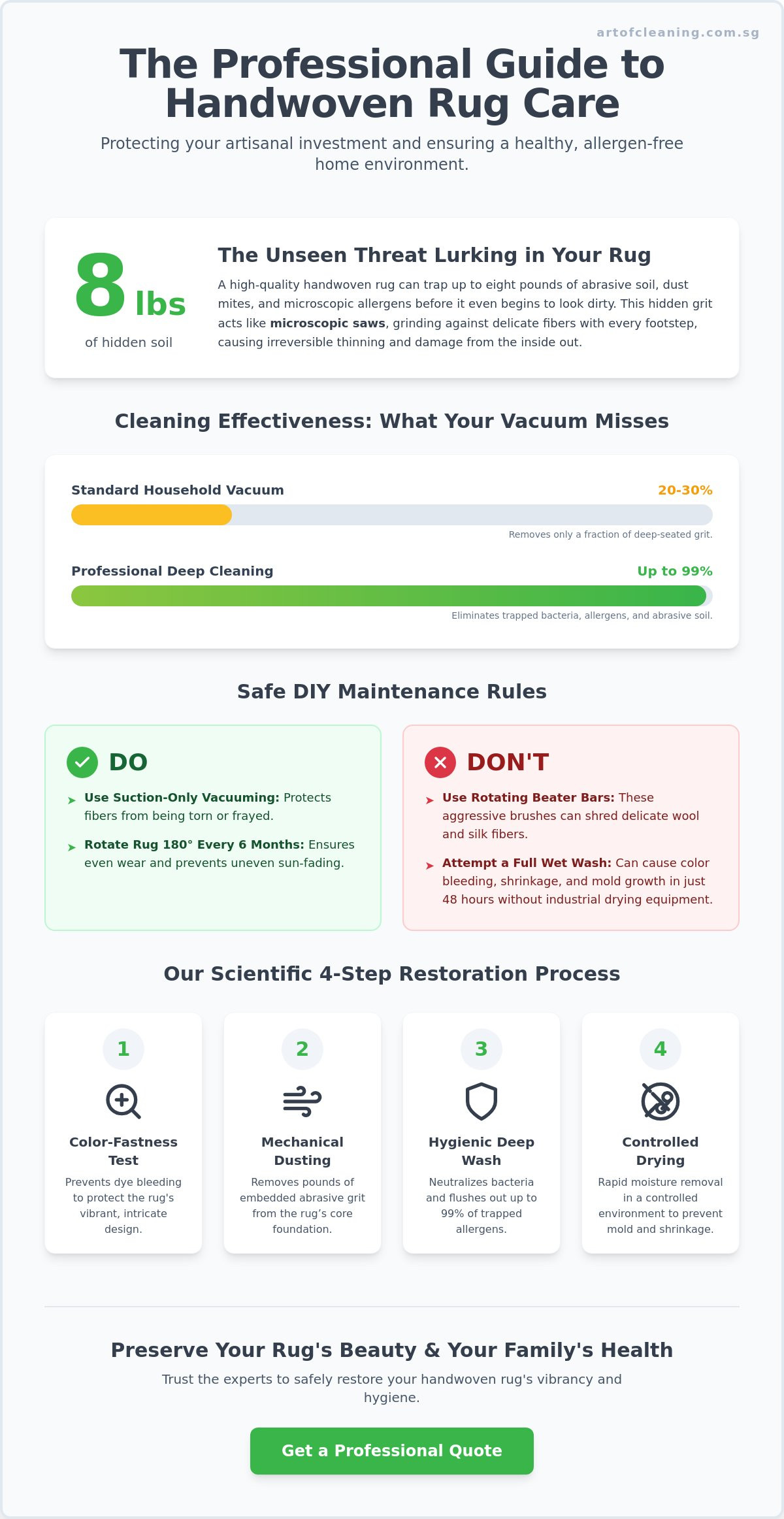
The primary threat to your rug isn’t actually visible stains. It’s the “hidden danger” of abrasive dirt particles. These tiny grains of sand and grit settle deep into the base of the rug, where they act like microscopic saws against the delicate fibers. Every time you walk across the carpet, these particles grind against the threads, slowly severing them from the inside out. Standard domestic vacuum cleaners typically struggle to extract more than 20-30% of the debris lodged within a rug’s core, leaving the most damaging contaminants behind to continue their destructive work.
Environmental factors also play a critical role in fiber health. Natural materials like wool and silk are highly hygroscopic, meaning they actively absorb moisture from the air. In regions with high humidity, this trapped moisture can settle into the dense knots of a handwoven piece, creating a breeding ground for mold or dry rot. Without a scientific approach to moisture control and deep sanitation, the very fibers that give the rug its value can become structurally compromised.
The Anatomy of a Handwoven Rug
To provide proper care, you must understand the relationship between the pile and the foundation. The foundation consists of the warp (vertical threads) and the weft (horizontal threads), which provide the structural “bones” of the piece. By understanding the construction of handwoven rugs, it becomes clear that dust doesn’t just sit on the surface; it falls through the vertical pile and wedges itself against these foundation threads. Fiber abrasion is the primary cause of rug thinning, occurring when sharp grit creates friction against the delicate threads. Over time, this mechanical stress leads to the “bald spots” often seen in poorly maintained antique pieces.
Health Implications of Trapped Contaminants
Your handwoven carpet functions as a massive air filter for your home, trapping airborne allergens, pet dander, and dust mites. While this keeps these particles out of your breathing zone temporarily, a saturated “filter” eventually begins releasing these contaminants back into the air with every footstep. Surface-level cleaning fails to address these hygienic needs because it doesn’t reach the biological matter trapped at the knot level. For a deeper look at maintaining a sterile home environment, you can refer to our guide on Professional Carpet Cleaning Singapore: The Ultimate Health & Hygiene Guide (2026). True hygiene requires a process that neutralizes bacteria and removes 99% of trapped allergens without compromising the rug’s structural integrity.
Safe DIY Maintenance: Preserving Your Carpet Between Deep Cleans
The primary objective of home care is preservation, not intensive restoration. When considering how to clean handwoven carpets? at home, the golden rule is to prioritize consistent maintenance over aggressive washing. Attempting a full “wet wash” in a domestic setting often leads to disaster, particularly in regions with high humidity. In tropical climates, natural fibers like wool act as sponges for atmospheric moisture. If a carpet isn’t dried rapidly using industrial equipment, that moisture settles into the foundation, triggering mold growth and unpleasant odors within 48 hours.
Routine care should focus on removing surface contaminants before they have the chance to descend into the rug’s foundation. Beyond cleaning, structural preservation requires a rotation strategy. You should rotate your handwoven rugs 180 degrees every six months. This simple action prevents uneven wear patterns in high-traffic zones and ensures that sun-fading from window exposure remains uniform across the entire piece rather than concentrated on one edge.
The Correct Way to Vacuum a Handwoven Rug
Standard vacuum cleaners with rotating beater bars are the most common cause of avoidable rug damage. These aggressive brushes are designed for synthetic wall-to-wall carpeting, not delicate hand-tied knots. On a handwoven piece, they can snag individual fibers and shred the protective fringe. Following professional standards for properly vacuuming your carpet ensures you remove surface dust without fraying the pile. Use a suction-only attachment and move in the direction of the rug’s “lay” or nap.
- High-traffic areas: Vacuum twice weekly to prevent grit from settling.
- Low-traffic areas: Weekly vacuuming is sufficient to manage dust accumulation.
- Underside care: Once a month, vacuum the back of the rug to dislodge deeply embedded grit that has worked its way through the foundation.
Managing Spills and Stains Safely
When a spill occurs, your immediate reaction determines whether the mark is temporary or permanent. The “Blot, Don’t Rub” methodology is non-negotiable. Rubbing a liquid spill creates friction that heat-sets the stain and distorts the fiber structure. Use a clean, white cotton towel to press firmly onto the spill, absorbing as much liquid as possible from the outside in. Avoid chemical-heavy “carpet shampoos” found in supermarkets. These products often have a high pH level that can strip the natural lanolin oils from wool fibers, leaving them brittle and prone to breakage.
If a stain persists after basic blotting with lukewarm water, it’s time to stop. Over-treating a spot with household cleaners can cause permanent color bleeding or “bleaching” of natural dyes. For stubborn marks that threaten the health of your home environment, seeking professional rug cleaning services is the safest way to ensure a hygienic result without risking your investment. Our specialists use pH-balanced solutions that respect the delicate chemistry of natural dyes.
Material-Specific Care: Wool, Silk, and Natural Fibers
Understanding the specific fiber composition of your rug is the most critical step in determining how to clean handwoven carpets? safely. Every material has a unique chemical and physical profile that dictates how it reacts to moisture, heat, and cleaning agents. A one-size-fits-all approach doesn’t just fail to clean; it can cause irreversible structural damage. Professional care relies on identifying these protein and cellulose-based fibers to select the correct pH-balanced solutions that protect the rug’s integrity while ensuring deep-level sanitation.
Natural plant fibers like jute and sisal present a different set of challenges. These materials are highly hygroscopic and sensitive to humidity. In tropical environments, excessive moisture can cause “cellulosic browning,” where the fibers release brown lignin that stains the surface. Similarly, modern blended fibers, such as wool-and-silk or wool-and-viscose hybrids, require a sophisticated balancing act. The cleaning process must be gentle enough for the most delicate fiber in the blend while remaining effective enough to reach the foundation knots.
Wool Rugs: Managing the Natural Lanolin
Wool is a resilient, protein-based fiber protected by a natural coating of lanolin. This wax-like substance provides a built-in defense against spills and keeps the fibers supple. If you use aggressive, alkaline detergents, you strip this lanolin away, leaving the wool brittle, dull, and prone to “shedding.” Our specialized processes focus on preserving this protective layer while removing 99% of trapped contaminants.
- Avoid High Heat: Wool fibers shrink and lose their structural elasticity when exposed to high temperatures during the drying phase.
- Preventing Dry Rot: In humid climates, improper drying leads to dry rot. This is a fungal degradation of the cotton foundation that makes the rug stiff and prone to cracking.
- Moisture Control: Professional extraction ensures that moisture doesn’t sit in the dense knots for more than a few hours.
Silk and Fine Textiles: The Artisanal Challenge
Silk is an investment in luxury that requires extreme caution. It’s exceptionally sensitive to high pH levels and can suffer from “color migration” if the dyes aren’t stabilized before cleaning. Incorrect methods often result in the loss of the rug’s characteristic “shimmer,” as the delicate protein fibers become distorted. While some sources suggest silk should never get wet, we employ a “controlled moisture” technique that provides deep sanitation without the risks of traditional soaking.
Ensuring the longevity of these masterpieces requires a level of craft that goes beyond standard domestic capability. For those with high-value pieces, seeking Rug Cleaning Singapore: Specialized Care for Fine Rugs is the only way to guarantee the removal of allergens while maintaining the rug’s natural luster. We use pH-neutral, silk-safe solutions that respect the artisanal nature of every hand-tied knot, protecting both the aesthetic value and the health of your home environment.
The Professional Deep Cleaning Process for Handwoven Rugs
While DIY maintenance is essential for preservation, a professional deep clean is a systematic architectural restoration of the rug’s fibers. Many homeowners often wonder how to clean handwoven carpets? without causing damage, and the answer lies in a rigorous five-step protocol. This scientific sequence is designed to eliminate invisible health hazards without compromising the delicate hand-tied knots. Every professional treatment begins with a meticulous pre-inspection and color-fastness testing to stabilize the dyes, ensuring the aesthetic value of your investment remains intact throughout the sanitation cycle.
Why Industrial Dusting Surpasses Home Vacuuming
The most critical stage of professional care is the mechanical removal of dry soil. While a domestic vacuum only cleans the surface, industrial dusting utilizes the physics of harmonic vibration to dislodge grit trapped deep within the foundation knots. This is vital for home hygiene, as these layers often harbor years of accumulated dust mites and skin cells. Professional dusting can remove up to 5kg of dirt from a large rug, even if the piece appears clean to the naked eye. By extracting this abrasive material, we eliminate the friction that leads to fiber thinning and premature wear.
The Science of Controlled Immersion
Many homeowners mistakenly believe that steam cleaning is the standard for deep sanitation. However, the high heat and pressure of steam are often too aggressive for natural fibers and hand-knotted foundations, potentially causing shrinkage or structural warping. Instead, we utilize controlled immersion washing with cold water and specialized, pH-neutral detergents. This method ensures a thorough flush of contaminants while preventing color run. Following the wash, precision rinsing and pH balancing restore the fibers to their natural, resilient state.
The final stage addresses the specific challenges of a tropical environment. We use climate-controlled drying rooms that manage humidity levels with surgical precision. This rapid, thorough drying prevents the development of mold, mildew, and those unpleasant musty odors that often plague rugs dried in domestic settings. This scientific approach ensures your rug returns to you not just visually refreshed, but biologically sterile. To experience this meticulous level of care for your own home, you can book our professional rug cleaning service today.
Protecting Your Investment with Art of Cleaning
Every handwoven rug is a masterwork of human labor and cultural history. When homeowners ask how to clean handwoven carpets?, they aren’t merely seeking a cosmetic refresh; they’re looking for a preservation strategy that respects the artisanal nature of their investment. At Art of Cleaning, we adopt a scientific, health-first approach that goes beyond surface-level tidiness. Our specialized methodology is designed to remove 99% of trapped bacteria and allergens, transforming your carpet from a source of hidden contaminants into a clean, safe filter for your home’s air.
We believe that trust is built through transparency and technical precision. This is why our process includes expert consultations to identify the specific needs of your rug’s fibers before any treatment begins. Our guarantee is simple: we provide a level of visual brilliance that restores the rug’s original luster while achieving a standard of scientific hygiene that protects your family’s well-being. By choosing a professional guardian for your home environment, you ensure that your delicate textiles remain both beautiful and biologically safe for years to come.
Expertise You Can Trust
Our meticulous labor has earned us a reputation as a dependable specialist for the most challenging textiles. Whether you own a centuries-old antique Persian rug, a delicate silk masterpiece, or a contemporary hand-knotted wool blend, our technicians possess the specialized training required to handle them with care. This level of craft is why our services are recognized by major local broadcasting networks, serving as a regional hallmark of our verified identity and prestige. We don’t believe in hidden fees or vague estimates. You can view our Carpet Cleaning Price List for transparent service options that match your specific maintenance needs.
Schedule Your Professional Assessment
To maintain peak hygiene and structural integrity, we recommend a professional deep clean every 12 to 18 months. This frequency prevents the accumulation of abrasive grit that, as previously discussed, acts as a mechanical threat to the rug’s foundation. Beyond individual rug care, our facility maintenance solutions are designed to protect your entire living space, from the air you breathe to the surfaces your children touch. Regular professional intervention is the only way to ensure that your home remains a sanctuary of health rather than a trap for invisible pollutants. Don’t wait for visible stains to appear before taking action. Contact Art of Cleaning today for a professional rug evaluation and take the first step toward a cleaner, healthier home environment.
Preserving Your Home’s Handwoven Masterpieces
Maintaining the structural integrity and aesthetic brilliance of your artisanal rugs requires a balance of diligent home care and periodic professional intervention. You’ve learned that abrasive grit is a silent threat to the rug’s foundation and that natural fibers like wool and silk demand specific pH-neutral solutions to prevent permanent damage. Understanding how to clean handwoven carpets? is the first step in extending the life of your precious textiles while ensuring a sterile environment for your family.
Art of Cleaning brings a scientific, health-centric approach to every piece we handle. As a specialist featured on major national broadcasting networks, we take pride in our artisanal precision and 100% transparent pricing with no hidden costs. Our specialized pH-neutral processes effectively remove 99% of trapped allergens without risking your investment. Protect your investment—Book a Professional Rug Assessment with Art of Cleaning today. Your home deserves a level of hygiene that matches the beauty of your decor, and we’re here to help you achieve that standard with confidence.
Frequently Asked Questions
Can I use a steam cleaner on my handwoven wool rug?
No, you should avoid using domestic steam cleaners on hand-knotted textiles. The high temperature and pressurized steam can cause natural wool fibers to shrink or lose their structural elasticity. Additionally, excessive heat often strips the protective lanolin from the wool, leaving the pile brittle and more susceptible to future staining and fiber breakage.
How often should a handwoven carpet be professionally cleaned?
Most industry professionals recommend a deep professional clean every 12 to 18 months to maintain a healthy home environment. If the rug is located in a high-traffic area, such as a foyer or living room, an annual cleaning is preferable. This frequency prevents abrasive grit from settling deep into the foundation where it can cause irreversible mechanical damage to the knots.
Is it normal for a new handwoven rug to shed fibers?
Yes, shedding is a common characteristic of new, high-quality wool rugs. This occurs when small, loose fibers from the shearing process work their way to the surface of the pile. You can manage this by vacuuming regularly with a suction-only attachment. Most shedding will subside within three to six months as the rug settles into its new environment.
What should I do if my handwoven carpet has a ‘musty’ smell?
A musty odor typically indicates that moisture is trapped within the dense knots of the rug’s foundation. This is a serious hygiene concern that often leads to mold growth or dry rot if left unaddressed. You should seek professional assistance immediately to have the rug sanitized and dried in a climate-controlled facility where humidity levels are strictly managed.
Will professional cleaning cause the colors in my Oriental rug to bleed?
Our scientific approach eliminates the risk of color migration through rigorous pre-cleaning protocols. We perform a color-fastness test on every individual dye used in the rug before the washing process begins. If we identify unstable dyes, we apply specialized stabilizers to lock the colors in place, ensuring the visual brilliance of your investment remains intact.
How can I tell if my rug is handwoven or machine-made?
The easiest way to identify a handwoven rug is to inspect the underside. On a hand-knotted piece, the design will be almost as clear on the back as it is on the front, and you’ll see slightly irregular knots. Machine-made rugs often have a uniform mesh backing, and the fringe is usually sewn onto the edge rather than being a continuation of the foundation threads.
Are the cleaning chemicals used safe for children and pets?
We prioritize family safety by using biodegradable, pH-neutral solutions that are specifically formulated for natural fibers. These technical formulas are non-toxic and leave no harmful residues behind. It is a reassuring way to address how to clean handwoven carpets? while ensuring your living space remains a healthy, allergen-free sanctuary for both children and pets.
How long does the professional cleaning process take?
The professional restoration cycle typically requires 7 to 10 days to complete. This timeframe is necessary to allow for thorough mechanical dusting, controlled immersion washing, and precision drying. Rushing the drying phase is never an option, as natural fibers must be dried slowly in a climate-controlled room to prevent structural warping or the development of odors.