
Did you know that a single square meter of floor covering can harbor up to 100,000 dust mites and hidden allergens? For homeowners with natural fibers, the stakes are high because standard maintenance often fails to reach these microscopic triggers. You likely invested in wool for its luxurious texture and natural resilience; however, the fear of shrinking or browning your investment is a valid concern. Learning how to clean wool carpet requires more than a generic supermarket spray. It demands a scientific understanding of protein-based fibers and moisture control to prevent the lingering odors that often plague DIY attempts.
We promise to help you master a professional hygiene approach that preserves your carpet’s structural integrity while ensuring a truly sanitized living space. This guide follows the latest ANSI/IICRC S100 standards to remove 99% of hidden contaminants. We will examine the essential pH-balanced solutions and advanced extraction techniques used by specialists featured on major national media platforms. By the end, you’ll have a clear roadmap to a pristine, allergen-free home environment that prioritizes your family’s health and well-being through meticulous, artisanal care.
Key Takeaways
- Understand why wool’s keratin-based structure and microscopic scales trap allergens deep within the pile, necessitating specialized extraction.
- Learn how to clean wool carpet using precise pH-balanced solutions between 4.5 and 5.5 to protect natural protein fibers from chemical damage.
- Identify the risks of high-alkaline cleaners and aggressive scrubbing, which often lead to irreversible browning and texture distortion.
- Discover the role of HEPA filtration and low-moisture professional techniques in maintaining a hygienic and allergen-free home environment.
- Establish a scientific maintenance schedule that prioritizes fiber preservation and long-term investment protection.
Understanding the Biological Nature of Wool Carpets
To maintain a truly hygienic home, you must first understand the biological nature of wool. Unlike synthetic nylon or polyester, wool is a complex protein fiber composed primarily of keratin. This is the same biological building block found in human hair and skin; it gives the fiber its natural elasticity and resilience. However, this protein structure makes the material highly sensitive to chemical exposure. When you research how to clean wool carpet, you’re not just looking for a way to remove dirt; you’re looking for a way to sanitize a biological surface without destroying its foundation.
The physical architecture of each fiber features microscopic, overlapping scales. While these scales provide a natural shield against surface soil, they also act as tiny reservoirs for biological contaminants. Dead skin cells, pet dander, and fine dust particles become lodged deep within these scales, far beyond the reach of standard domestic vacuums. These trapped particles are more than just debris; they are a primary food source for microorganisms. Without specialized extraction, these contaminants remain embedded, compromising the hygiene of your living space.
Wool is also exceptionally hygroscopic. It can absorb up to 30% of its own weight in moisture without feeling damp to the touch. In humid climates, this characteristic poses a significant risk to your home’s air quality. If moisture levels aren’t professionally managed, the interior of the carpet pile becomes a damp, dark breeding ground for dust mites and fungal spores. This hidden microbial activity is often the root cause of the lingering, musty odors that homeowners struggle to eliminate with generic supermarket deodorizers.
Why Wool Carpets Require Specialized Care
Most generic cleaning agents are formulated with high alkalinity to strip oils from synthetic plastics. On a wool carpet, these harsh chemicals dissolve the natural lanolin coating that protects the fiber’s luster and stain resistance. This chemical reaction often leads to “bleeding” dyes or permanent fiber browning that cannot be reversed. Wool is a living fiber that reacts to its environment, so it requires pH-balanced care to remain stable and soft. Art of Cleaning focuses on this artisanal level of care, using professional-grade extraction to ensure the keratin structure remains intact while removing deep-seated allergens.
Wool and Indoor Air Quality
Wool acts as a high-performance natural air filter by trapping airborne pollutants and volatile organic compounds (VOCs). This benefit has a critical tipping point. Once the fiber scales are saturated with pollutants, the carpet stops being a filter and starts being a source of indoor contamination. For those with respiratory sensitivities, this buildup can trigger significant health issues. Our specialized extraction technology is designed to “reset” this natural filter. By removing 99% of hidden contaminants, we ensure your flooring supports, rather than hinders, your family’s respiratory health and overall well-being.
The Physics of pH and Moisture in Wool Fiber Care
Wool fibers are chemically stable only within a narrow window. On the pH scale, wool thrives in a slightly acidic environment, typically between 4.5 and 5.5. Most supermarket cleaners are highly alkaline, often reaching a pH of 10 or higher. This alkalinity is designed to break down grease on synthetic fibers, but on wool, it literally dissolves the protein structure. This structural breakdown leads to a loss of elasticity and the permanent dulling of natural colors. Understanding this chemical balance is the first step in learning how to clean wool carpet without causing irreversible damage.
In high-humidity environments, moisture management is the greatest challenge when determining how to clean wool carpet effectively. Because wool is hygroscopic, it holds onto water long after the surface feels dry. If the core of the fiber remains damp for more than 24 hours, mold spores can activate. This often leads to “wicking,” a phenomenon where deep-seated soil travels up the damp fiber and reappears as a ghost stain once the carpet finally dries. Managing this “Singapore Factor” requires high-airflow drying techniques that domestic setups simply cannot provide.
Temperature Sensitivity: Why Heat is the Enemy
High heat is a common mistake. Water temperatures exceeding 60 degrees Celsius can “cook” the protein, causing the fibers to shrink or lose their shape permanently. While steam mops are popular for hard floors, they are far too aggressive for natural wool piles. Professional extraction uses controlled, lukewarm water to ensure hygiene without structural damage. This precision ensures the pile remains soft rather than becoming brittle or distorted after the cleaning process is complete.
Chemical Compatibility for Natural Fibers
Avoid oxygen-based bleaches or “Oxi” products at all costs. These oxidizers can permanently strip the dyes from wool and weaken the keratin bonds. It’s best to follow the Carpet and Rug Institute’s maintenance guide by selecting WoolSafe-approved solutions. These professional-grade formulas are specifically engineered to protect the lanolin coating while still achieving a deep clean. If you’re unsure about your carpet’s reaction to humidity, consider a professional rug cleaning assessment to prevent mold growth and ensure long-term fiber health.
Evaluating DIY Methods vs. Professional Wool Extraction
Most homeowners rely on standard upright vacuums for weekly maintenance, yet these machines only reach the top 20% of the carpet pile. While the surface may appear tidy, the remaining 80% of debris remains trapped at the base of the fibers. This creates a dense layer of abrasive grit that acts like sandpaper, grinding against the foundation every time you walk across the room. Understanding how to clean wool carpet effectively requires moving beyond surface suction to deep-fiber extraction. Without professional-grade equipment, you’re merely managing visible dust while allowing biological contaminants to accumulate in the backing.
Manual scrubbing is perhaps the most destructive DIY habit. When you apply vigorous friction to a wet wool fiber, you cause the microscopic scales to interlock permanently. This results in “pilling” or “felting,” a texture distortion that no amount of professional grooming can reverse. Specialized extraction technology removes 99% of deep-seated contaminants by using controlled pressure and high-velocity airflow rather than mechanical agitation. This artisanal approach preserves the fiber’s natural “crimp” and softness. While a professional service fee is a planned maintenance cost, it’s significantly lower than the thousands of dollars required for full carpet replacement due to DIY-induced structural damage.
The Baking Soda Myth
Internet forums often suggest using baking soda to neutralize odors, but this is a dangerous practice for natural protein fibers. Baking soda is highly alkaline, which clashes with wool’s required acidic balance of pH 4.5 to 5.5. Over time, these alkaline salts can cause the fibers to become yellow and brittle. The jagged structure of baking soda particles is also abrasive. These crystals lodge within the fiber scales and cause microscopic tears during regular foot traffic. For a safer home alternative, focus on frequent HEPA vacuuming to remove dry soil before it becomes embedded.
When DIY is Dangerous
Certain spills represent a “point of no return” for untrained homeowners. Stains from red wine, coffee, or pet accidents contain natural dyes and proteins that bond quickly to the keratin in wool. Attempting to flush these with excessive water at home often leads to permanent color-run or the musty odors associated with trapped moisture. If you encounter a complex spill, it’s safer to consult a Professional Carpet Cleaning Singapore expert. We utilize specialized, low-moisture extraction methods that stabilize dyes while ensuring the core of the carpet dries rapidly, preventing the mold risks common in our humid climate.
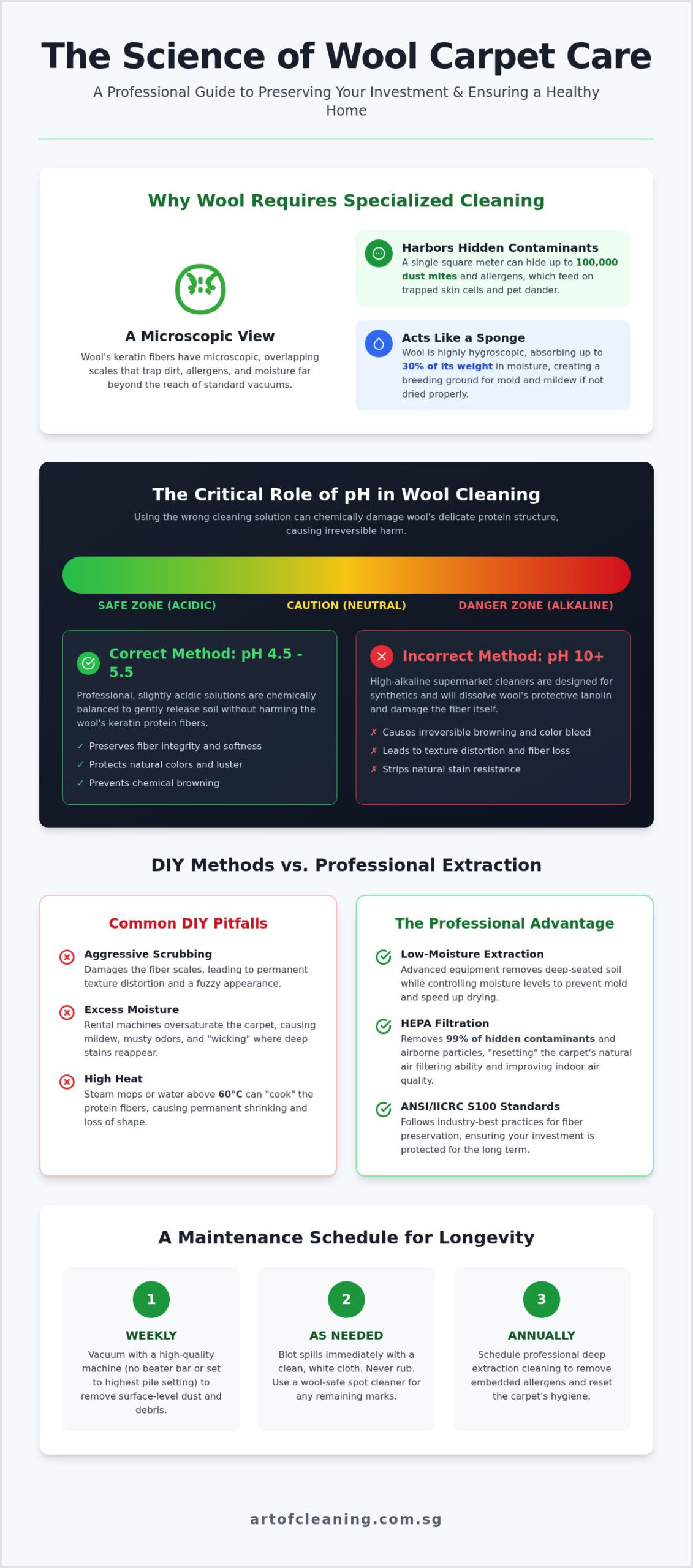
Maintaining Wool Hygiene: A Step-by-Step Preservation Guide
A hygienic home environment relies on a structured maintenance schedule that prioritizes fiber health. For national households, the frequency of care should mirror the foot traffic in each room. High-traffic zones like hallways require daily attention, while formal living areas may only need care twice per week. Understanding how to clean wool carpet on a routine basis is the most effective way to prevent the accumulation of skin dander and allergens that settle deep within the pile. By establishing a consistent rhythm, you stop dry soil from becoming permanent contamination before it can trigger health issues.
High-Efficiency Particulate Air (HEPA) filtration is a critical component of this hygiene framework. Standard vacuums without HEPA filters often exhaust fine dust and allergens back into the air, effectively redistributing pollutants throughout your home. A HEPA-certified system traps 99.97% of particles as small as 0.3 microns. This ensures that microscopic triggers for respiratory issues stay trapped in the machine. This scientific approach to filtration is essential for maintaining the air quality benefits that natural wool provides while protecting your family’s well-being.
The Correct Vacuuming Technique
Suction-only vacuuming is the gold standard for preserving wool. You should avoid using rotating beater bars or aggressive power heads, as these mechanical brushes can fray the natural yarn twist and lead to “fuzzing.” Instead, employ the “slow pass” method. Move the vacuum head at a steady rate of approximately one foot per second. This deliberate movement allows sufficient airflow to penetrate the dense scales of the fiber, lifting the heavy grit that settles at the foundation of the carpet. This technique ensures the pile remains soft and the “crimp” of the wool is preserved.
Spot Cleaning the Professional Way
When liquid spills occur, the “Blot, Don’t Rub” rule is your primary defense. Rubbing generates heat and friction, which can lead to permanent felting of the wool. For a safe, home-based solution, create a 1:1 mixture of white vinegar and cool water. This solution respects the fiber’s natural acidic balance while breaking down common household spills. Follow these steps for the best results:
- Blot the spill with a clean, white paper towel to remove excess liquid.
- Apply the vinegar solution sparingly to a clean cloth, not directly to the carpet.
- Blot from the outside of the stain toward the center to prevent spreading.
- Perform a final rinse by blotting with plain, cool water to remove all residue.
Residual cleaning agents left in the fiber will attract new soil almost immediately. If you’ve encountered a stubborn stain that persists after these steps, don’t risk damaging the pile with harsher chemicals. You can book a professional hygiene assessment to have your wool restored by experts who specialize in artisanal fiber care and advanced allergen removal.
Investing in Longevity: Professional Restoration for High-Value Wool
Wool is a high-value investment that requires more than just surface-level care to maintain its value. Professional restoration is the only way to ensure your flooring reaches its full potential lifespan. Periodic deep cleaning by specialists can extend the life of your wool carpets by up to 50%. This is because professional extraction removes the microscopic, abrasive particulates that act like tiny saws, cutting through the base of the fibers during regular foot traffic. While you may know how to clean wool carpet on a weekly basis, only a deep-fiber “reset” can prevent this long-term structural degradation.
Beyond the visual appeal, professional intervention is a health necessity for modern households. We specialize in the complete eradication of dust mites and allergens that thrive in the dense protein environment of natural textiles. Our advanced extraction technology removes 99% of hidden contaminants, creating a baseline of hygiene that home equipment simply cannot replicate. This scientific approach transforms your carpet from a potential allergen reservoir back into the high-performance air filter it was designed to be.
The Art of Cleaning Process
We adopt an artisanal approach to every rug and carpet we treat. Our methodology centers on a multi-stage specialized deep cleaning process. This begins with a meticulous inspection and high-filtration dry soil removal to clear the fiber scales. We then apply pH-balanced pre-treatments specifically formulated for protein fibers. We utilize low-moisture extraction to lift deep-seated contaminants without over-wetting the backing. This technique is critical for wool because it prevents the saturation that leads to shrinkage and browning. We use only non-toxic, family-safe sanitizers that effectively neutralize biological threats without leaving hazardous chemical residues. For those planning their home maintenance budget, we maintain a transparent pricelist for all our specialized services.
Securing Your Home Environment
The final stage of our process is the most vital for the Singapore climate. We employ professional-grade drying equipment to ensure that no residual moisture remains trapped in the hygroscopic core of the wool. This rapid-dry approach prevents the microbial growth and musty odors that often follow DIY attempts. By stabilizing the environment around the fiber, we lock in the freshness and structural integrity of the pile. Learning how to clean wool carpet at home is an essential skill, but periodic professional restoration is what secures the long-term health of your living space.
Your home should be a sanctuary of health and comfort. Don’t leave the hygiene of your natural fibers to chance or generic cleaning methods. Book your professional wool carpet assessment today and experience the meticulous care that has made us a trusted name on major national media platforms.
Securing the Health of Your Natural Home Environment
Wool carpets are essential air filters that protect your family’s respiratory health. You’ve learned that mastering how to clean wool carpet involves managing delicate keratin structures and maintaining strict pH boundaries to prevent irreversible fiber damage. By moving away from aggressive DIY scrubbing and adopting a scientific maintenance schedule, you preserve the artisanal beauty of your investment while ensuring a hygienic sanctuary. This balance between aesthetic care and biological sanitation is the key to a lasting home foundation.
Art of Cleaning is recognized by major national media platforms for our meticulous approach to home sanitation. We combine specialized allergen extraction technology with deep expertise in high-value natural fiber care to remove 99% of hidden contaminants. Whether you’re battling the high humidity of the local climate or seeking to eradicate dust mites from deep within the pile, our professional-grade processes provide the restoration your flooring deserves. We take pride in the precision of our labor to ensure your home remains safe.
Restore your wool carpet’s health and beauty with Art of Cleaning today. We’re ready to help you maintain a pristine and healthy living space for your loved ones.
Frequently Asked Questions
Can I use a steam cleaner on my wool carpet?
You should avoid using standard home steam cleaners because they often exceed the safe temperature threshold of 60 degrees Celsius. Excessive heat causes the protein fibers to shrink and lose their natural elasticity permanently. While professional extraction uses lukewarm water and high-velocity airflow, home machines often over-saturate the pile. This trapped moisture leads to mold growth and musty odors, especially in humid climates where evaporation is significantly slower.
How often should wool carpets be professionally cleaned in Singapore?
Most industry standards recommend professional deep cleaning every 12 to 18 months to maintain warranties and fiber health. In a humid national environment, high-traffic households should consider a professional assessment every 6 to 12 months. Regular extraction is the only way to remove the deep-seated grit that home vacuums miss. This schedule prevents the accumulation of allergens and ensures your investment remains structurally sound for its full lifespan.
Is it safe to use baking soda on a wool rug?
It is not safe to use baking soda on a wool rug because its high alkalinity disrupts the fiber’s natural acidic balance. Wool thrives in a pH environment of 4.5 to 5.5, while baking soda is significantly more alkaline. These salts can cause yellowing and brittleness over time. Additionally, the abrasive crystals lodge within the microscopic fiber scales, causing physical damage during regular foot traffic that is difficult to reverse at home.
How do I remove a red wine stain from wool without ruining it?
To remove red wine, you must blot the spill immediately with a clean white cloth; never rub the area. Rubbing generates friction that permanently felts the delicate wool fibers. Apply a solution of one part white vinegar to one part cool water to a cloth and blot from the outside in. This pH-neutral approach stabilizes the dyes. If the stain persists, contact a specialist to avoid using harsh chemicals that cause permanent browning.
Why does my wool carpet smell worse after I tried to clean it?
Lingering odors usually occur because the wool’s hygroscopic fibers have trapped excessive moisture deep within the pile. Wool can absorb 30% of its weight in water, making it difficult to dry without professional-grade airflow equipment. When the core stays damp for over 24 hours, it triggers microbial growth and “wicking,” where deep soil travels to the surface. Professional extraction is necessary to remove this moisture and neutralize the biological source of the smell.
Can professional cleaning remove dust mites from wool?
Yes, professional extraction technology is designed to remove 99% of dust mites and microscopic allergens from deep within the carpet pile. Unlike standard home vacuums that only reach the surface, specialized deep cleaning utilizes high-velocity suction and HEPA filtration to capture these biological triggers. This scientific approach is essential for maintaining a hygienic home environment and protecting family members who suffer from respiratory sensitivities or indoor allergies across the country.
What is the best pH-neutral cleaner for wool carpets?
The best option for home maintenance is a WoolSafe-approved solution or a simple mixture of one part white vinegar to one part water. These options respect the fiber’s requirement for a slightly acidic environment. When learning how to clean wool carpet, you must avoid “Oxi” cleaners or oxygen-based bleaches. These harsh oxidizers permanently damage the keratin bonds and strip the natural lanolin coating that gives wool its characteristic luster and resilience.
How long does it take for a wool carpet to dry after professional cleaning?
A wool carpet typically takes between 4 and 8 hours to dry completely when cleaned with professional low-moisture extraction and high-airflow equipment. Without specialized drying tools, the process can take up to 24 hours, which increases the risk of mold development in humid climates. Our technicians prioritize rapid-dry techniques to ensure your living space is move-in ready and hygienic as quickly as possible, preventing any potential structural or microbial issues.