
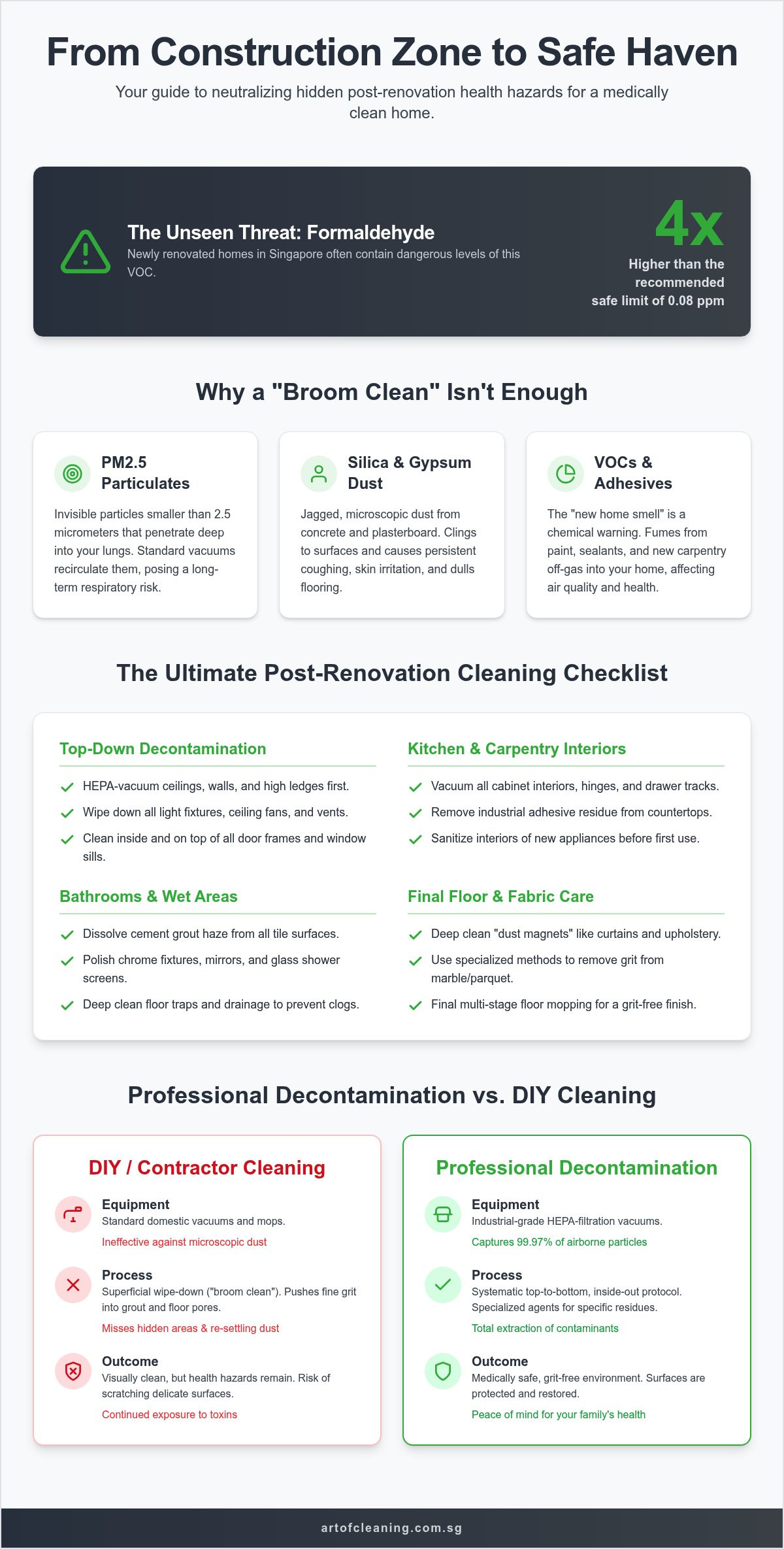
Did you know that newly renovated homes in Singapore often contain formaldehyde levels nearly four times the recommended limit of 0.08 ppm? While the National Environment Agency prohibited formaldehyde-containing interior paints in January 2026, toxic residues from new carpentry and industrial adhesives still persist in the air you breathe. It’s exhausting to watch fine white dust settle on your surfaces just minutes after mopping, or to feel the constant grit beneath your feet. You want your new space to be a sanctuary, yet the sharp chemical smells and the fear of respiratory issues for your children make it feel unsafe.
We understand that a visual clean isn’t enough when your family’s health is at stake. This post renovation cleaning checklist singapore guide provides a professional-grade roadmap to transition your home from a construction zone to a medically safe environment. You’ll learn how to systematically neutralize harmful VOCs, extract microscopic silica dust with precision, and achieve a truly grit-free finish. We detail the essential steps to ensure every upholstery fiber and curtain fold is move-in ready, giving you the peace of mind that comes with a scientifically sanitized living space.
Key Takeaways
- Understand why microscopic PM2.5 particulates and silica dust require specialized decontamination instead of a standard domestic wash to ensure long-term respiratory health.
- Master a systematic, top-to-bottom post renovation cleaning checklist singapore to ensure no surface—from high ceilings to hidden cabinetry—retains toxic construction residues.
- Identify the specialized floor restoration methods required to eliminate persistent grit and safeguard delicate marble or parquet from abrasive construction scratches.
- Learn how to effectively decontaminate “dust magnets” like curtains and upholstery to prevent them from trapping airborne toxins and degrading your indoor air quality.
- Compare the health benefits and efficiency of professional hygiene solutions against the hidden costs and potential surface damage associated with DIY cleaning.
The Science of Construction Dust: Why a General Wash is Never Enough
Construction dust is a complex cocktail of microscopic irritants that a simple wipe-down cannot eliminate. When we examine The Science of Construction Dust, we’re dealing with PM2.5 particulates. These are particles less than 2.5 micrometers in diameter. They’re invisible. Standard domestic vacuums often lack the specialized filtration required to trap these toxins. Instead of removing them, home units often exhaust these contaminants back into your living space. This is why a professional post renovation cleaning checklist singapore focuses on total decontamination rather than just surface aesthetics.
Silica and gypsum dust are particularly stubborn. They possess a jagged molecular structure that clings to porous surfaces. You’ve likely noticed that dust reappears 48 hours after you’ve cleaned. This is the “re-settling” phenomenon. Fine particles remain suspended in the air for days. Without high-efficiency particulate air (HEPA) extraction, these toxins eventually land on your newly polished floors and carpentry. Prolonged exposure can lead to persistent coughing, skin irritation, and long-term respiratory issues for children. It’s a medical concern that requires a scientific solution.
The Limitations of Contractor General Washing
Most renovation contracts include a “broom clean” clause. This is a visual baseline. It doesn’t mean your home is hygienic. Contractors often use traditional mops that push fine grit deep into the pores of your flooring. This creates a permanent dullness on marble or parquet. High-touch areas like the tops of door frames, internal cabinetry tracks, and light fixtures are frequently ignored. This level of precision is the Art of Cleaning signature, ensuring your home meets a medically clean standard that goes beyond the capabilities of a general contractor.
Hidden Contaminants: VOCs and Formaldehyde
The “new home smell” isn’t a sign of freshness; it’s a chemical warning. Volatile Organic Compounds (VOCs) off-gas from fresh paint, sealants, and finishes. Since January 2026, the National Environment Agency has prohibited formaldehyde-containing interior paints. Despite this, formaldehyde levels in newly renovated Singaporean homes often reach nearly four times the recommended limit of 0.08 ppm. This gas leaches from new carpentry adhesives and laminates. Our specialized formaldehyde removal services neutralize these invisible threats, ensuring your home is both beautiful and medically safe for move-in day.
The Ultimate Post Renovation Cleaning Checklist for Singapore Homes
A successful move-in requires a systematic top-to-bottom, inside-out protocol. This isn’t just about a quick sweep. It’s about a post renovation cleaning checklist singapore homeowners can rely on to eliminate microscopic hazards. We utilize industrial-grade HEPA-filtration equipment to ensure that once dust is captured, it stays captured. This meticulous approach defines the Art of Cleaning signature, where we target the invisible contaminants that general contractors often overlook. Understanding the health risks of renovation dust is the first step in realizing why every drawer, hinge, and vent requires precision sanitization before your family moves in.
Kitchen and Carpentry Interiors
Sawdust often migrates into the smallest crevices, including cabinet hinges and the deep recesses of drawer tracks. Our protocol involves vacuuming every internal corner using HEPA technology before a detailed damp-wipe to ensure no grit remains. We also focus on degreasing backsplashes and countertops to remove industrial adhesive residues left behind during the installation of laminates. Finally, we sanitize the interior of new appliances, ensuring they’re chemically safe and ready for your first home-cooked meal.
Bathrooms and Wet Areas
Cement grout haze is a persistent post-reno eyesore that standard household detergents simply can’t touch. We use specialized cleaning agents to dissolve this haze from wall and floor tiles without compromising the grout’s integrity. Chrome fixtures and mirrors are polished to remove hard water spots and dried construction splashes. Crucially, we deep clean floor traps and drainage systems to ensure no heavy construction debris or plaster is left to cause future blockages in your new home.
Living Areas, Bedrooms, and High-Reach Zones
Dust doesn’t just settle on the floor; it clings to vertical walls and high-reach fixtures. Our team wipes down ceiling fans, light fixtures, and aircon vents where particulates hide. Window tracks and frames are cleared using specialized crevice tools to remove trapped sand and plaster that can jam sliding mechanisms. We perform a detailed wall dusting to capture fine particles before they have a chance to settle on your new furniture. For a truly medically clean result, consider our specialized hygiene services to ensure every surface is safe for your loved ones.
Floor Restoration: Eliminating the Post-Reno Gritty Feeling
The most common complaint after a home makeover is the persistent grit that remains on floors, even after half a dozen rounds of mopping. This sensation occurs because construction dust is fundamentally different from household dust. It consists of abrasive silica, plaster particulates, and cement fragments that settle deep into the microscopic pores of your flooring. Traditional mopping often just relocates these particles or creates a slurry that dries back onto the surface. Adhering to EPA guidelines for post-remodeling air quality requires the total removal of these dust reservoirs to prevent them from becoming airborne again. A professional post renovation cleaning checklist singapore must prioritize floor restoration to achieve a truly smooth, medically clean finish.
Every flooring material reacts differently to construction debris. Sand and plaster act like sandpaper underfoot, potentially causing permanent micro-scratches if not handled with precision. Whether you have natural stone or modern synthetics, the goal is to lift the contaminants without damaging the material’s integrity. Professional floor restoration serves as the vital final step of your renovation, sealing the surface against future dust penetration and restoring the tactile comfort of your home. This artisanal level of care ensures your floors are not just visually clean but physically transformed.
Marble and Stone Polishing
Natural stone is exceptionally vulnerable during a renovation. Spilled liquids, acidic cleaning agents, or even traces of grout can leave behind “etch marks” that appear as dull spots on the surface. These are not simple stains; they are areas where the stone has been chemically altered. A standard wash cannot fix this damage. Our specialized Marble Polishing services involve a meticulous process of honing and buffing to remove the damaged layer. This restores the factory-grade shine and closes the pores of the stone, making it much harder for future construction dust to embed itself deep within the material.
Parquet and Vinyl Maintenance
Timber floors require a delicate balance. Excessive water from DIY mopping can cause parquet to warp or swell, leading to expensive repairs. We utilize moisture-controlled, pH-neutral methods to extract fine dust from wood grains without saturating the timber. For modern SPC and luxury vinyl tiles, we focus on creating a protective hygiene barrier. Professional vinyl floor polishing adds a micro-shield to the wear layer, preventing the “sandpaper effect” from dulling your new floors. This systematic approach ensures that your bedrooms and living areas remain grit-free and safe for your family to walk on barefoot.
The Fabric Trap: Deep Cleaning Upholstery and Curtains
Soft furnishings are often the most overlooked element in a post renovation cleaning checklist singapore. While hard surfaces like marble or vinyl show dust clearly, fabrics act as invisible reservoirs for microscopic construction debris. These porous materials absorb PM2.5 particulates and silica dust through static attraction and fiber entrapment. Bringing uncleaned furniture into a newly renovated space is a common oversight. It triggers immediate re-contamination of the air you’ve just filtered. Every time you sit on a sofa or draw a curtain, you release a cloud of hidden toxins back into your living environment.
The Art of Cleaning approach treats upholstery as a health-critical component. Our process goes beyond surface lint removal to target the deep-seated particulates that cause long-term respiratory irritation. To ensure your home remains a sanctuary, follow this soft furnishing hygiene checklist during your move-in phase:
- HEPA-filter vacuuming of all seams, crevices, and underside linings.
- High-temperature steam treatment to neutralize microbial growth and industrial odors.
- Deep extraction of padding to remove embedded gypsum and cement dust.
- Detailed inspection of fabric folds where fine white dust tends to accumulate.
Mattress and Sofa Sanitisation
Standard home vacuums lack the specialized filtration and suction power required to extract dust from deep within padding. Construction residue doesn’t just sit on the surface; it migrates into the foam every time someone sits down. This creates a “bellows effect,” puffing out invisible toxins into the room during daily use. For a comprehensive breakdown of these health risks, consult our Sofa Cleaning Singapore guide. Deep sanitization is the only way to ensure your resting spaces are truly grit-free and medically safe.
Curtain Steam and Dry Cleaning
Curtains are frequently installed during the final stages of a renovation, often while airborne dust is still settling. Because they occupy a large vertical surface area, they act as massive filters for floating particulates. We provide specialized curtain steam cleaning for total sanitization and dry cleaning for more delicate fabrics like silk or velvet. To protect both your investment and your family’s health, follow our Premium Curtain Cleaning guide for expert care. If you’re ready to secure a medically clean home, book your professional hygiene session with our specialists today.
Professional Post Renovation Cleaning vs. DIY
Attempting to execute a post renovation cleaning checklist singapore on your own often results in a cycle of exhaustion and frustration. While a professional team typically completes a full-scale decontamination in a single day, DIY efforts frequently stretch across 3 to 5 days. This discrepancy exists because domestic equipment lacks the particulate capture rate of industrial HEPA systems. You’ll likely find yourself mopping the same floor five times, only to feel the return of grit the following morning as suspended particles settle. Professional cleaning isn’t just a convenience; it’s a specialized extraction process that domestic tools can’t replicate.
Beyond the time investment, the hidden costs of DIY are substantial. Renting industrial-grade machinery and sourcing specialized, pH-neutral chemicals for marble or parquet adds up quickly. There’s also the significant risk of surface damage. Using the wrong abrasive or chemical on a newly installed vinyl or stone floor can cause permanent etching or warping. The Art of Cleaning signature guarantee provides a move-in ready home without the physical toll on your body. It’s an investment in the longevity of your renovation, ensuring your high-end materials are preserved through artisanal care and precision.
When to Bring in the Specialists
Professional intervention is non-negotiable when your project involves extensive floor hacking or wall-to-wall carpentry. These activities generate high volumes of silica dust that domestic vacuums often exhaust back into the room. For families with young children or elderly members, specialized formaldehyde removal is essential to neutralize the chemical off-gassing from new adhesives and laminates. We recommend scheduling your professional hygiene session 48 to 72 hours after your contractor has officially vacated. This window allows airborne particulates to settle, ensuring our HEPA extraction is 100% effective during the final pass.
Your Move-In Ready Transformation
Finalizing your home’s hygiene requires a few simple preparatory steps. Ensure your contractor has removed all heavy debris, protective floor sheets, and leftover materials before the cleaning team arrives. During the final walkthrough with your cleaning partner, pay close attention to the “Art of Cleaning” markers: the absence of grit in window tracks, dust-free cabinet hinges, and the restoration of your floor’s natural luster. This meticulous inspection ensures your sanctuary is medically safe. We invite you to Contact Art of Cleaning for a personalized hygiene strategy tailored to your home’s specific layout and materials.
Step into Your Medically Safe Sanctuary
Securing your family’s health in a newly renovated home requires a transition from visual tidiness to scientific decontamination. We’ve explored how microscopic silica dust and lingering formaldehyde can compromise your indoor air quality if not addressed with precision. By following a systematic post renovation cleaning checklist singapore, you ensure that every porous surface and hidden crevice is free from industrial toxins. This artisanal approach to hygiene is what transforms a construction site into a truly restorative living space.
Since 2018, thousands of Singaporean homeowners have trusted us to safeguard their environments. As a specialist featured on MediaCorp and Channel NewsAsia, we utilize advanced HEPA-filtration and formaldehyde removal technology to deliver a level of cleanliness that domestic tools simply cannot reach. Your renovation is a significant investment; don’t let construction residues diminish its value or your well-being. Get a Professional Post-Renovation Cleaning Quote Today and move into a home that is as healthy as it is beautiful. You deserve the peace of mind that comes with a scientifically verified clean. Enjoy your new space with total confidence.
Frequently Asked Questions
Is post-renovation cleaning different from deep cleaning?
Yes, post-renovation cleaning is a specialized decontamination process. While deep cleaning addresses general organic grime in lived-in homes, our checklist specifically targets construction-specific debris like silica dust, gypsum particulates, and industrial adhesives. These microscopic hazards require high-efficiency HEPA extraction rather than standard domestic tools. We focus on removing the abrasive grit that settles during hacking and carpentry to ensure your home meets a medically clean standard.
How long should I wait after renovation before cleaning?
You should ideally wait 48 to 72 hours after all construction work has officially ceased. This crucial window allows fine airborne particulates to settle onto surfaces where they can be effectively captured. If you initiate cleaning too early, dust still suspended in the air will simply re-settle on your freshly sanitized surfaces. This waiting period ensures our professional-grade equipment achieves maximum decontamination for your move-in ready home.
Can I stay in the house while post-renovation cleaning is being done?
It’s generally recommended that you vacate the premises while the cleaning is in progress. The agitation of settled construction dust and the use of specialized cleaning agents can temporarily compromise indoor air quality before the final extraction is complete. Vacating allows our specialists to work efficiently through your post renovation cleaning checklist singapore without exposing your family to displaced particulates or chemical odors from industrial-grade sanitizers.
Does post-renovation cleaning include the removal of construction debris?
No, professional cleaning services do not typically include the disposal of heavy construction waste like timber offcuts, discarded tiles, or protective floor sheets. Your main contractor is responsible for clearing these bulky items and ensuring the site is “broom clean.” Our specialized service begins after the heavy debris is gone, focusing on the microscopic decontamination of cabinetry interiors, floor pores, and soft furnishings to ensure a safe environment.
How much does professional post-renovation cleaning cost in Singapore?
Pricing for professional cleaning in Singapore varies significantly based on your property type and the total floor area. Rates are typically influenced by the complexity of the renovation, such as the amount of built-in carpentry or the need for specialized floor polishing. Because every home layout is unique, we recommend requesting a personalized assessment. This ensures the service scope perfectly aligns with your specific hygiene needs and property dimensions.
Will professional cleaning remove the “new house” chemical smell?
Yes, a thorough cleaning process significantly reduces the intensity of industrial odors. These smells often stem from Volatile Organic Compounds (VOCs) trapped in fine dust or off-gassing from new laminates. By extracting microscopic particulates from walls, curtains, and upholstery, we remove the primary carriers of these odors. For a complete solution, our specialized formaldehyde removal services target the root cause of chemical leaching from carpentry and adhesives.
Do I need to clean my aircon after home renovation?
Cleaning your aircon is essential after any renovation project. Fine construction dust is easily drawn into the return air vents, clogging filters and coating internal cooling coils. If left unaddressed, turning on the unit will circulate silica dust throughout your freshly sanitized rooms. We include aircon vent wiping in our post renovation cleaning checklist singapore, but a full professional service is often necessary to ensure total system hygiene and air quality.
Is formaldehyde removal included in standard post-renovation cleaning?
Formaldehyde removal is typically offered as a specialized add-on service rather than a standard inclusion. While a general clean removes the dust that carries chemical residues, it doesn’t neutralize the gases leaching from new carpentry glues. Our targeted treatment uses specialized technology to break down these toxic compounds at the source. This ensures your home meets the safety standards required for long-term respiratory health and family safety.