
Did you know the global market for upholstered furniture is projected to reach nearly S$100 billion by the end of 2026? This massive investment reflects how much we value our home comforts, yet in Singapore’s high humidity, your favorite sofa often becomes a magnet for dust mites and musty odors rather than a sanctuary. It’s frustrating to watch a high quality piece of upholstery lose its luster to stains or trigger family allergy flare ups. You likely feel that keeping a pristine, healthy home shouldn’t require the constant, high cost of replacing furniture.
We understand that your furniture is more than just a seat; it’s a critical health filter for your indoor environment. Discover how to extend the life of your furniture and safeguard your home’s health with our comprehensive upholstery care framework. This guide provides a professional roadmap for maintenance, hygiene, and restoration. We’ll explore the science of deep cleaning, the rise of sustainable performance fabrics, and the precise steps you can take to combat tropical decay and keep your living space truly fresh.
Key Takeaways
- Learn how Singapore’s high humidity transforms your furniture into a “sink” for allergens and accelerates the growth of mold within the internal foam layers.
- Use our professional decision matrix to evaluate the cost-to-value ratio of cleaning, reupholstering, or replacing your upholstery in 2026.
- Master a systematic maintenance routine that utilizes HEPA-filter vacuuming and proactive spill management to stop fabric decay before it starts.
- Identify why deep extraction technology is superior to standard shampooing for removing 99.9% of bacteria and deep-seated contaminants from your home.
- Gain the expert knowledge needed to extend the lifespan of your furniture investment while ensuring a sanitized, safe environment for your family.
What is Upholstery? Understanding Your Furniture’s Health Filter
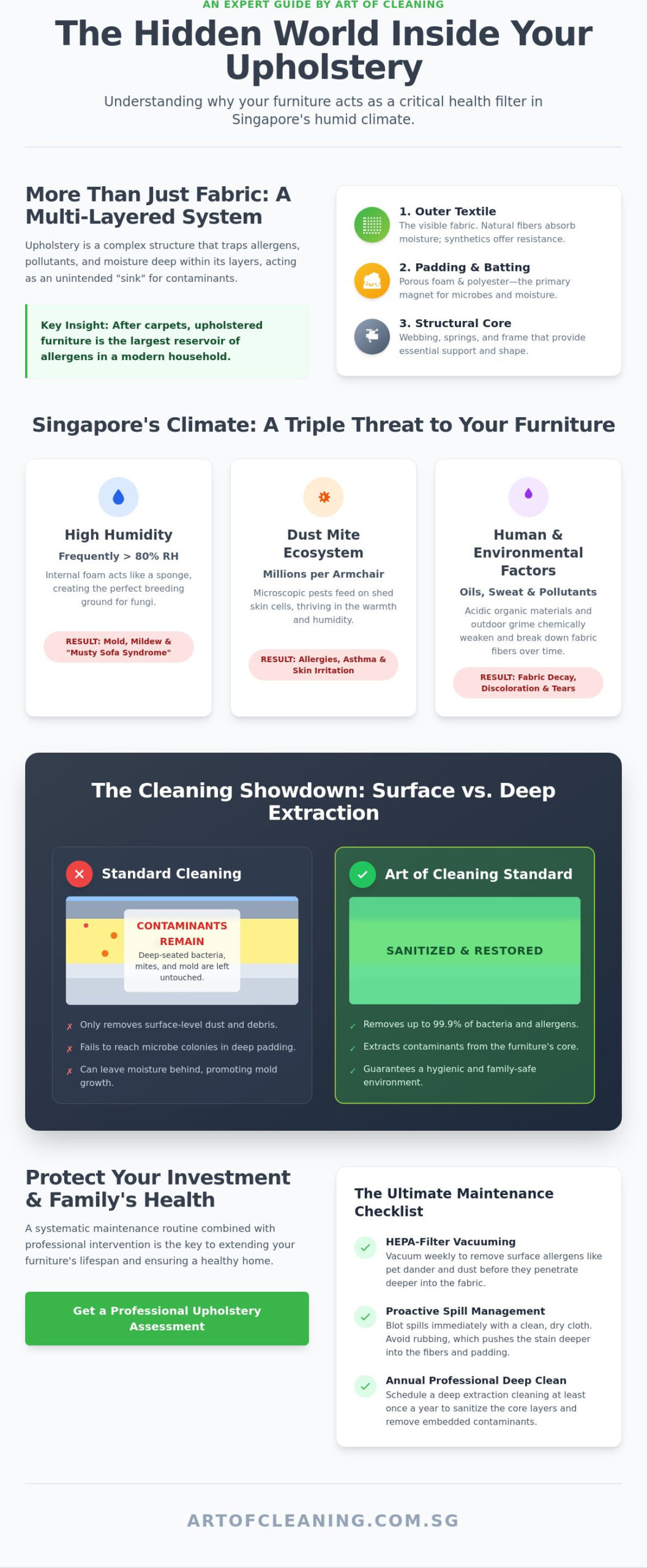
To truly understand how to maintain your home, you must first ask, What is Upholstery? Most people see a simple fabric covering, but it’s actually a sophisticated, multi-layered system consisting of the outer textile, internal padding, webbing, and a structural core of springs and frames. In Singapore’s dense urban environment, your upholstery doesn’t just provide comfort; it functions as an accidental “sink” for the microscopic debris of daily life. This includes dead skin cells, pet dander, and outdoor pollutants that drift through open windows. Research into indoor air quality suggests that after carpets, upholstered furniture is the largest reservoir of allergens in the modern household.
The Anatomy of Upholstered Furniture
The outer layer determines the aesthetic, but its primary function is to withstand friction and spills. Natural fibers like cotton and linen offer breathability but are highly absorbent, making them prone to deep staining in high humidity. In contrast, synthetic performance fabrics like polyester or nylon are engineered for durability and moisture resistance. Beneath this surface lies the hidden layers of polyurethane foam and polyester batting. These materials provide the “loft” and comfort we enjoy, yet their porous structure makes them ideal magnets for microbes. Without regular intervention, these layers can harbor colonies of bacteria that surface cleaning simply cannot reach. The structural core, made of hardwood or metal springs, ensures the piece maintains its shape, but it’s the internal padding that dictates the health profile of the item.
Why Upholstery Hygiene Matters in 2026
Modern homes in Singapore increasingly feature “soft surfaces” to create a cozy atmosphere, but these materials have a significant impact on respiratory health. Unmaintained fabric can trap several grams of dust per square meter, which is then released back into the air every time someone sits down. This “plume effect” directly contributes to asthma and allergy flare ups. In a climate where relative humidity frequently exceeds 80%, these trapped organic materials provide the perfect food source for dust mites and fungal spores. Upholstery is a multi-layered system that requires deep-core sanitation, not just surface wiping. Maintaining this system isn’t just about preserving the look of your armchair; it’s about managing a critical component of your family’s environmental safety.
The Science of Fabric Decay in Tropical Humidity
Singapore’s tropical climate creates a unique set of challenges for upholstery maintenance. With relative humidity levels frequently peaking above 80%, the internal foam layers of your chairs act like a sponge for moisture. This creates a perfect environment for mold and mildew to take root. These fungi don’t just sit on the surface; they penetrate the padding and batting, leading to “Musty Sofa Syndrome.” This condition is characterized by the release of microbial volatile organic compounds (mVOCs), which are the gases produced by active mold colonies. According to standards recognized by the National Upholstery Association, professional intervention is often the only way to arrest this decay once it begins.
Beyond moisture, human contact introduces sweat and skin oils into the upholstery. These organic fluids are acidic. Over time, they chemically react with fabric fibers, weakening the structural bonds and causing the material to become brittle or discolored. This breakdown is often invisible until the fabric suddenly tears or frays under normal use. Regular cleaning prevents these acids from setting and permanently damaging the textile’s integrity.
The Dust Mite Ecosystem
Your favorite armchair might be home to millions of dust mites. These microscopic arachnids thrive in Singapore’s warmth, where they feed on the thousands of skin cells we shed daily. In high-humidity zones, their population growth is explosive. Standard household vacuuming is unfortunately insufficient; it only removes surface dust and fails to reach the colony source located deep within the furniture’s batting. This can lead to persistent skin irritation and respiratory issues. If you suspect your furniture is causing health problems, it’s helpful to start by identifying dust mite bites to see if an infestation is present. The same humid conditions that accelerate dust mite growth in upholstery also affect other soft furnishings throughout your home, which is why homeowners dealing with allergen issues should also consider professional rug cleaning in Singapore as part of a comprehensive indoor hygiene strategy.
Chemical Off-gassing and Formaldehyde
Chemical safety is another critical concern for modern households. New furniture often contains residues from the manufacturing process, while older pieces can trap legacy pollutants. High humidity triggers a faster release of these chemicals, a process known as off-gassing. For those moving into a new space, professional formaldehyde removal is a necessary step to ensure the air remains safe. These trapped pollutants don’t disappear on their own; they require specialized extraction to be fully eliminated. For a truly healthy living space, a professional sofa cleaning service can provide the deep-core decontamination your home needs.
Upholstery Decision Matrix: Clean, Reupholster, or Replace?
Choosing whether to restore or replace your furniture requires a calculated assessment of the piece’s structural and hygienic condition. In 2026, the financial incentive to maintain existing upholstery has never been higher. With global furniture costs increasing due to rising material expenses and import tariffs, a professional deep clean often provides the highest return on investment. This decision matrix helps you determine if your armchair is a candidate for restoration or if it has reached the end of its functional life. Restoration isn’t just a financial choice; it’s a commitment to sustainability. Extending the life of a single sofa prevents significant waste from entering Singapore’s landfills, reducing the carbon footprint associated with manufacturing and international shipping.
- Green Light for Cleaning: Visible surface staining, “graying” from dust accumulation, or persistent odors that haven’t yet compromised the deep foam layers.
- Red Flag for Replacement: Audible cracking in the frame, springs that have lost tension, or pervasive mold that has migrated from the fabric into the structural timber.
When Deep Cleaning is the Solution
If your furniture is less than five years old and the frame remains sturdy, professional intervention is almost always the superior choice. Most “dullness” in fabric is caused by microscopic dust accumulation and skin oils rather than actual pigment loss. A systematic deep clean can effectively remove these contaminants, restoring the original color and texture. For homeowners dealing with the aftermath of a spill or a general musty smell, a targeted sofa cleaning singapore service can extract deep-set allergens that household tools simply cannot reach. This proactive maintenance prevents fibers from becoming brittle and extends the textile’s lifespan by several years.
The Case for Reupholstery
Reupholstery is a viable path when the “bones” of the furniture are of superior quality. You should evaluate whether the frame is made of solid wood, such as teak or oak, or cheaper particle board. High-quality frames are designed to last decades, making them worthy of the investment required to replace the fabric and padding. This is particularly relevant for heirloom pieces or custom-designed furniture that fits perfectly in your living space. Reupholstering allows you to update the aesthetic to match modern trends while retaining the comfort of a well-broken-in seat. It’s a precise craft that bridges the gap between buying new and simple maintenance, though it requires a higher upfront cost than a deep clean.
The Ultimate Upholstery Maintenance Checklist
Maintaining your furniture isn’t just about appearances; it’s a systematic approach to indoor health. A structured maintenance schedule prevents the accumulation of the biological contaminants discussed earlier. By following a consistent protocol, you protect the structural integrity of your upholstery while ensuring the air your family breathes remains clean. This proactive care identifies potential issues like mold or fiber thinning before they require expensive restoration or replacement.
- Daily: Address spills the moment they occur. Fluff and rotate cushions to prevent “dead spots” in the foam where moisture and dust can easily pool.
- Weekly: Use a high-power vacuum equipped with a HEPA filter. These filters are essential because they trap 99.97% of particles as small as 0.3 microns, preventing allergens from being recirculated into your living room.
- Monthly: Conduct a thorough inspection of crevices and the underside of the piece. Perform a “sniff test” to detect the faint, earthy scent of microbial volatile organic compounds (mVOCs) which indicate early-stage fungal growth.
- Bi-Annually: Schedule a professional deep-core extraction to remove the embedded skin oils and fine particulates that household vacuums cannot reach.
Spill Management Protocol
The golden rule for any fabric is to blot, never rub. Rubbing creates heat and friction that bonds the liquid to the fiber and pushes it deeper into the batting. Many homeowners mistakenly reach for consumer-grade steam cleaners. These devices often lack the suction power required for Singapore’s climate, leaving the internal padding damp for 48 hours or more. This moisture trap almost guarantees a mold outbreak within the core. Stick to pH-neutral cleaners and avoid harsh chemicals like bleach, which can permanently dissolve natural fibers and strip the protective coatings from synthetic performance fabrics.
Environmental Controls
Singapore’s ambient humidity is often the primary cause of premature fabric failure. Keeping your home environment between 50% and 60% relative humidity using a dehumidifier can significantly extend the lifespan of your furniture. You should also be strategic with furniture placement. Avoid placing armchairs in direct path of afternoon sunlight, as UV rays degrade both the dye and the structural strength of the textile. To maintain a truly clinical level of hygiene and fabric health, we recommend scheduling professional deep cleaning services singapore every 6 to 12 months. Homeowners who also have rugs and carpets in their living spaces should extend this same hygiene discipline to those surfaces by engaging a specialist in rug cleaning singapore to eliminate the mold spores and dust mites that migrate between floor coverings and upholstered furniture.
If you’ve noticed persistent odors or visible graying that your household tools can’t resolve, it’s time to engage a professional sofa cleaning service to restore your home’s sanctuary status.
Professional Upholstery Intervention: The Art of Cleaning Standard
Professional intervention is the definitive line between surface cleanliness and biological safety. While domestic tools manage daily dust, the Art of Cleaning standard utilizes deep extraction technology to reach the contaminants trapped within the core layers of your upholstery. Unlike standard surface shampooing, which often leaves behind a sticky residue and excess moisture, our methodology ensures that 99.9% of bacteria and allergens are neutralized and removed. This scientific approach is why major local broadcasting networks have featured our services as a benchmark for home hygiene in Singapore. We’ve established a verified identity as a dependable specialist, valuing precision over speed.
Handling delicate textiles like velvet, silk, or suede requires an artisanal level of care. These fabrics are easily damaged by high heat or improper pH levels. Our specialists use calibrated equipment to ensure that the structural integrity of the fibers remains intact while achieving a clinical level of sanitation. We treat every piece with the meticulous attention it deserves, recognizing that your furniture is a significant financial and emotional investment. Our process ensures that delicate textures are preserved without compromising on the depth of the clean.
Our Multi-Stage Cleaning Process
Our systematic approach follows a rigorous three-step framework designed for maximum efficacy. This organized flow leads to a low friction experience that prioritizes your home’s safety.
- Step 1: Industrial-grade dry vacuuming. We begin by removing the loose debris and fine particulates that have settled into the fabric’s weave. This stage alone removes up to 80% of dry soil before moisture is introduced.
- Step 2: Targeted stain treatment. We apply eco-friendly, non-toxic agents to break down organic matter without bleaching the material. These agents are formulated to be safe for children and pets.
- Step 3: Deep steam extraction and pH-balanced rinsing. We use a high-pressure extraction process to pull out the dissolved contaminants, leaving the piece fresh and residue-free. This ensures no chemical traces remain in the padding.
Why 2026 Homes Require Specialist Care
The landscape of home textiles is changing. Modern upholstery often utilizes advanced synthetic blends that require specific chemical knowledge to clean without causing fiber melt or color migration. Protecting your investment goes beyond the initial cleaning; we offer specialized fabric guarding treatments that create a molecular barrier against future spills and UV damage. The Art of Cleaning promise is simple: we merge aesthetic perfection with verified biological safety. We don’t just make your furniture look new; we ensure it’s a safe foundation for your family’s health. By choosing a specialist featured on national media, you’re opting for a service that prioritizes the well-being of the client over mere surface-level tidiness.
Secure Your Home’s Environmental Safety for the Future
Your furniture serves as a primary defense against indoor pollutants, but it requires a systematic approach to remain effective. We’ve explored how upholstery functions as a multi-layered health filter that traps allergens and mold spores in Singapore’s humid climate. By implementing a consistent maintenance checklist and recognizing the “Green Light” signs for restoration, you can avoid the high cost of replacement while ensuring your living space remains safe and sanitized. Professional care is no longer just about removing a visible stain; it’s about maintaining the biological integrity of your home.
Our scientific methodology goes beyond surface aesthetics to provide a clinical level of hygiene for your sanctuary. Featured on MediaCorp and Channel NewsAsia, Art of Cleaning provides a 99.9% bacteria and dust mite removal guarantee across all fabric types, from delicate silk to modern performance synthetics. We combine industrial-grade extraction with specialized treatments to protect your investment and your family’s respiratory health. You’re choosing a standard of craft that prioritizes well-being and precision.
Restore your furniture’s hygiene today with Art of Cleaning’s specialized upholstery services. It’s time to take pride in a home environment that is as healthy as it is beautiful.
Frequently Asked Questions
Is it worth reupholstering a 10-year-old sofa?
Reupholstering is a worthwhile investment if the furniture features a high-quality solid wood frame. Solid timber structures can last for decades, making them far superior to modern particle board alternatives found in cheaper retail options. If the frame remains structurally sound, replacing the fabric and padding allows you to retain a piece with proven durability while updating its aesthetic to match your current interior design.
How often should professional upholstery cleaning be done in Singapore?
You should schedule a professional deep clean every 6 to 12 months to maintain a healthy home environment. Singapore’s consistent 80% relative humidity creates an ideal breeding ground for dust mites and fungal spores within the internal padding. Regular intervention prevents these contaminants from reaching levels that can trigger respiratory issues or persistent skin irritations for your family.
Can professional cleaning remove deep-seated mold smells from upholstery?
Yes, our deep extraction method combined with medical-grade sanitizers can effectively neutralize the microbial volatile organic compounds that cause musty odors. This process targets the mold colonies residing deep within the foam layers rather than just treating the surface fabric. If the mold has not yet compromised the structural integrity of the timber frame, professional decontamination can fully restore the piece’s hygiene.
What is the difference between steam cleaning and dry cleaning for upholstery?
Steam cleaning utilizes high-temperature vapor and pressure to sanitize deep into the furniture’s core, while dry cleaning uses specialized solvents for moisture-sensitive textiles. We determine the appropriate method by analyzing your fabric’s fiber content to prevent shrinkage or color bleeding. Both techniques are designed to restore the health of your upholstery without causing structural damage to delicate materials.
Is professional upholstery cleaning safe for pets and infants?
Our professional cleaning processes are entirely safe for both infants and pets because we utilize non-toxic, eco-friendly agents. These pH-balanced solutions effectively break down organic stains and bacteria without leaving behind hazardous chemical residues. We follow every treatment with a thorough rinse to ensure the fabric is completely safe for direct skin contact once dry.
How long does it take for a sofa to dry after deep cleaning?
Most sofas require between 4 and 6 hours to dry completely following an industrial-grade deep clean. We use high-powered extraction equipment to remove over 90% of the moisture during the cleaning process. You can accelerate this timeline by maintaining good air circulation or using a dehumidifier to combat Singapore’s ambient moisture levels.
Can all stains be removed from fabric upholstery?
While we successfully remove a high percentage of organic and protein-based stains, some chemical dyes or “set” heat-stains may be permanent. The success rate depends heavily on the fabric type and whether the stain was previously treated with incorrect DIY chemicals. Professional intervention offers the best probability of restoration by using calibrated agents that lift pigments without dissolving the underlying fibers.
Does reupholstery include fixing the foam and springs inside?
Standard reupholstery involves stripping the piece down to its structural core and replacing the worn foam, batting, and springs. This comprehensive approach ensures the furniture provides the same level of support and comfort as a new piece. It’s an artisanal process that addresses both the visible fabric and the internal components that dictate the furniture’s longevity and health profile.