
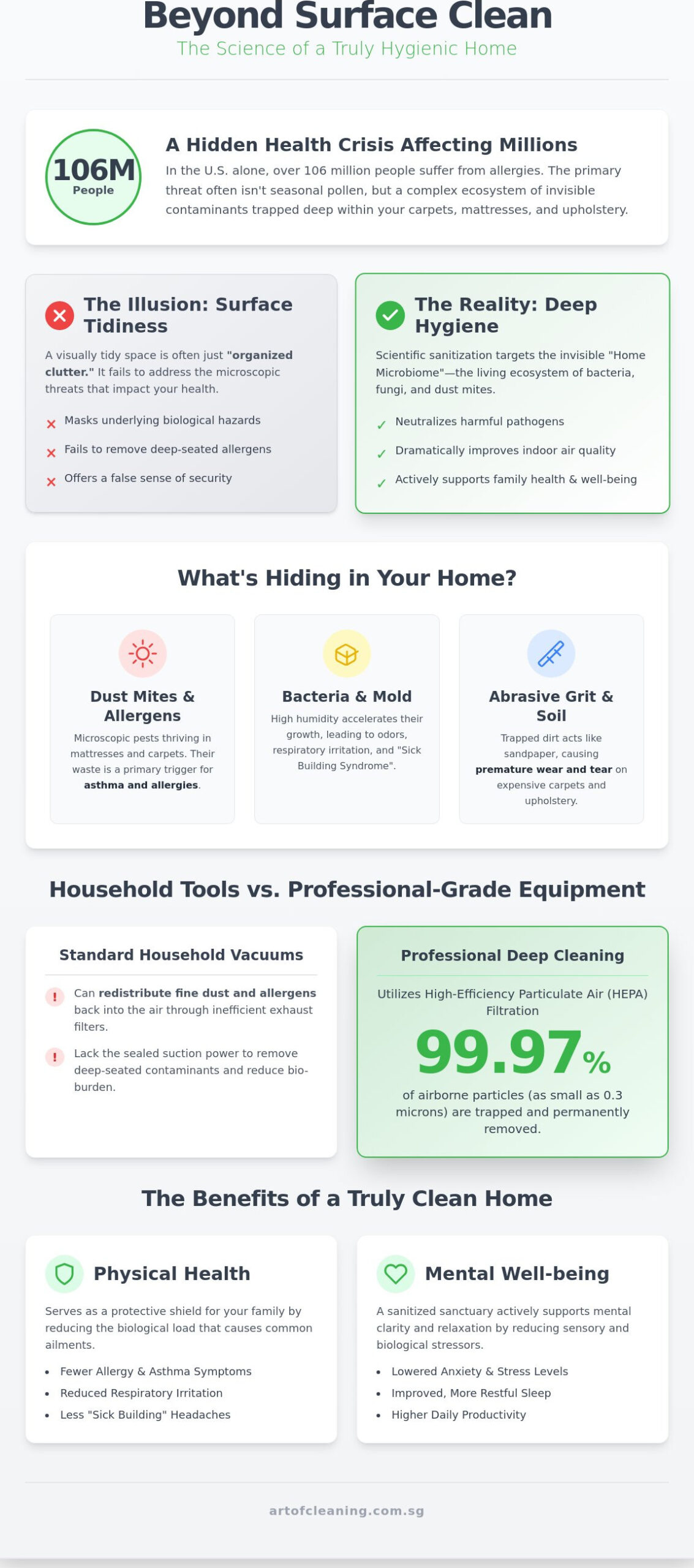
Did you know that over 106 million people in the United States are currently battling allergies? While many blame the changing seasons, the primary threat often resides in the invisible contaminants trapped within your carpets and upholstery. It’s common to feel anxious about recurring respiratory symptoms or persistent odors that standard tidying just can’t reach. Understanding why is regular cleaning important for every home is the first step in moving beyond surface-level aesthetics toward a scientifically backed standard of hygiene.
You deserve a living space that actively supports your health rather than compromising it. We promise to demonstrate how a professional-grade cleaning routine serves as a protective shield for your family, neutralizing environmental threats before they cause harm. This article explores the direct link between consistent sanitation and improved air quality, while providing practical insights into preserving the integrity of your household investments for years to come.
Key Takeaways
- Understand why is regular cleaning important for every home by identifying the critical difference between visual organization and deep biological sanitization.
- Learn how to neutralize the “Home Microbiome” by effectively targeting dust mites and bacteria that compromise indoor air quality and family health.
- Protect your financial investments by discovering how a consistent cleaning schedule prevents abrasive grit from causing premature wear on carpets and upholstery.
- Recognize how high-humidity environments accelerate mold proliferation and why proactive hygiene is the only effective defense against environmental threats.
- Evaluate the scientific advantages of industrial-grade deep cleaning equipment over standard DIY methods for achieving a truly hygienic living environment.
The Invisible Home: Why Surface Tidiness is Not True Hygiene
Most homeowners assume their living space is clean when the cushions are straight and the floors are clear of clutter. This is a common misconception. Visual tidiness is merely organized clutter; biological cleanliness, or sanitization, requires a much deeper intervention. Every residence hosts a complex “Home Microbiome,” a living ecosystem of bacteria, fungi, and dust mites that evolves constantly based on occupancy, pets, and ventilation. Without regular, thorough intervention, this microbiome can become dominated by harmful pathogens that thrive in soft furnishings and hidden corners. A quick 20-minute daily tidy might remove visible debris, but it fails to address microscopic threats like volatile organic compounds (VOCs) and deep-seated bacteria trapped in carpet fibers. This reality explains why is regular cleaning important for every home; it isn’t just about the aesthetic view, it’s about the invisible air quality you breathe every hour.
The Psychology of a Clean Space
Living in an environment filled with hidden dust and microscopic contaminants contributes significantly to mental fatigue and persistent stress. When your brain perceives “clutter,” even at a microscopic level, it can trigger low-level anxiety responses that prevent total relaxation. Transitioning from a “cleaning for guests” mindset to a “cleaning for health” mindset fundamentally changes how you interact with your space. Research shows that maintaining high standards of home and everyday hygiene directly correlates with improved sleep quality and higher daily productivity. A truly sanitized room feels lighter and more restorative because the biological load on your senses is significantly reduced. When you prioritize deep hygiene, you’re creating a sanctuary that actively supports your mental well-being.
The Limitations of Standard Household Equipment
Your standard retail-grade vacuum might actually be making your indoor air quality worse. Many consumer models lack the sealed suction power or specialized filtration necessary to trap fine particles, often redistributing allergens back into the room through their exhaust. High-efficiency particulate air (HEPA) filters are essential because they trap 99.97% of particles as small as 0.3 microns, including many bacteria and mold spores. Without this level of precision, you’re simply moving dust around rather than removing it. Bio-burden is the total number of microorganisms living on a surface. Reducing this burden requires more than a damp cloth or a quick wipe; it necessitates a systematic approach to deep hygiene that standard domestic tools cannot provide. This is a primary reason why is regular cleaning important for every home, as professional-grade equipment reaches the contaminants your upright vacuum leaves behind.
Protecting Family Health: Combatting Hidden Allergens and Bacteria
Your home environment is more than just a physical shelter; it’s a biological system that requires constant maintenance to remain safe. The primary adversary in this space is the dust mite, scientifically known as Dermatophagoides. These microscopic arachnids thrive in warm, humid environments, feeding on shed human skin cells. While they don’t bite, their fecal matter contains proteins that are potent triggers for asthma and allergic rhinitis. This is a central reason why is regular cleaning important for every home, as a consistent schedule physically removes the food source and disrupts the reproductive cycle of these pests. By implementing high-standard hygiene practices, you can effectively prevent the spread of germs and reduce the biological load that leads to “Sick Building Syndrome.” This condition, often characterized by headaches and respiratory irritation, is frequently caused by poor indoor air quality resulting from neglected soft surfaces.
The Mattress: A Reservoir for Microscopic Threats
The average person spends about one-third of their life in bed, making the mattress the most heavily used piece of furniture in the residence. Over time, it becomes a massive reservoir for dead skin cells, perspiration, and dust mite colonies. Standard bedding changes only address the surface level. Deep-seated contaminants remain trapped within the layers of foam and fabric. Professional mattress cleaning utilizes specialized extraction techniques to remove these invisible threats. This process is essential for nocturnal allergy relief, ensuring that your sleep environment isn’t a source of respiratory distress. Removing these microscopic threats requires precision and specialized equipment that goes beyond standard household vacuuming.
Upholstery and Soft Furnishings as Dust Traps
Sofas, armchairs, and curtains act as giant air filters within your living room. They trap airborne pollutants, pet dander, and bacteria brought in on outdoor clothing. While chemical wipes might provide a temporary sense of cleanliness, they often fail to penetrate the porous fibers where bacteria hide. High-temperature steam cleaning is superior for deep sanitization because the heat neutralizes pathogens and dissolves oily residues without leaving toxic chemical films behind. Regular maintenance of these high-contact surfaces ensures that cross-contamination from pets or guests doesn’t compromise your family’s health. It’s a meticulous process that requires an expert eye for detail. For those concerned about the cumulative effect of these hidden pollutants, exploring a professional disinfection service can provide the scientific assurance your home deserves.
Preserving Your Assets: The Economic Value of Regular Maintenance
Beyond the immediate health benefits, a disciplined hygiene schedule is a critical financial strategy. Many homeowners fail to realize that everyday grit and microscopic dust particles act as abrasive agents. When walked upon, these sharp particles grind against the delicate fibers of your carpets and sofas, causing them to fray and thin prematurely. This is a fundamental reason why is regular cleaning important for every home; it transitions your cleaning routine from a reactive chore to a proactive form of asset management. By removing these abrasives, you’re effectively deferring the massive capital expenditure required for full furniture replacement. Annual spending on home maintenance is projected to reach $518 billion by the end of 2026, and a significant portion of this involves preserving existing surfaces rather than buying new ones.
Extending the Lifespan of Carpets and Rugs
Carpets are often the largest filter in your home, catching everything from outdoor soot to skin cells. When these contaminants settle deep into the pile, they become impossible to remove with a standard vacuum. Professional carpet cleaning singapore utilizes deep-soil extraction to pull these destructive elements out before they can sever the carpet yarns. This level of care is essential to Control indoor allergens while simultaneously maintaining the aesthetic and structural integrity of the weave. Regular deep cleaning prevents the “traffic lane” effect where fibers become permanently crushed and discolored, ensuring your flooring retains its plush feel and vibrant color for years longer than neglected surfaces.
Floor Care and Material Integrity
Hard surfaces require just as much vigilance as soft furnishings. High-value materials like marble and parquet are susceptible to chemical etching and physical scratches if left unprotected. Consistent marble polishing creates a sacrificial barrier that takes the brunt of daily wear, while parquet maintenance prevents the wood from drying out and splintering. For those with synthetic options, vinyl floor maintenance is vital to prevent moisture from seeping into the seams, which can lead to bubbling or structural rot. Maintaining these surfaces doesn’t just keep the home looking fresh; it directly impacts the resale value of your property. A well-maintained floor is a hallmark of a cared-for home, often leading to higher appraisals and faster sales when it’s time to move on.
The Humidity Factor: Why Our Climate Demands Regular Vigilance
In Singapore, humidity levels often exceed 80%, creating a perfect incubator for mold and mildew. Unlike drier climates where dust remains inert, humid air allows spores to bond with surfaces and proliferate at an alarming rate. This environmental pressure is a critical reason why is regular cleaning important for every home; waiting for a visible stain is often a dangerous strategy. By the time a patch of mold appears on a curtain or sofa, the colony has likely been releasing airborne spores for days. These microscopic particles circulate through your air-conditioning system, settling into porous materials and compromising the health of everyone in the residence. Maintaining a sterile environment requires more than surface wipes; it demands a systematic approach to moisture management and deep sanitization.
Secondary pollutants also thrive in these conditions. Volatile Organic Compounds (VOCs) and formaldehyde, often found in household adhesives and paints, become more volatile as temperatures and humidity rise. High ambient humidity levels accelerate the off-gassing process of household chemicals, increasing the concentration of toxins in the air. This makes regular sanitization an essential health intervention rather than a cosmetic choice. Professional aircon cleaning and curtain maintenance are necessary to disrupt the cycle of recirculation, ensuring that your cooling systems don’t become delivery mechanisms for biological contaminants.
Managing Mold and Mildew in Soft Surfaces
Dense upholstery and heavy curtains act as moisture traps, especially in rooms with poor ventilation. When moisture becomes locked within these fibers, it creates a breeding ground for fungi that can trigger persistent respiratory issues. In a closed, air-conditioned environment, these concentrations can reach levels that cause chronic fatigue or skin irritation. Effective moisture control must be paired with deep extraction techniques to ensure that the internal structure of your furniture remains dry and sterile. It’s about protecting the core of your home assets from internal rot that standard cleaning can’t reach.
Formaldehyde and Post-Renovation Hygiene
Moving into a newly renovated space brings a unique set of environmental challenges. New cabinetry, flooring, and fresh paint are significant sources of formaldehyde, a known carcinogen that persists long after the “new house smell” fades. A specialized post-renovation cleaning is essential to neutralize these chemical residues before they settle into your soft furnishings. This process involves more than just dusting; it requires industrial-grade air purification and surface treatments to make the environment safe for move-in. Professional intervention ensures that your new beginning isn’t marred by invisible health threats. To secure your home’s air quality, consider booking a professional formaldehyde removal service today.
Elevating Home Hygiene: The Role of Professional Deep Cleaning
While daily maintenance serves as your first line of defense, it cannot replace the restorative power of industrial-grade equipment. Standard household tools often lack the suction and heat necessary to reach the base of carpet piles or the core of a sofa. This gap in capability is a primary reason why is regular cleaning important for every home; it ensures that the “invisible” layer of contaminants is periodically flushed out. Professional intervention utilizes specialized extraction methods that remove the vast majority of allergens and bacteria, providing a level of sanitization that retail products simply can’t match. For those seeking these standards in the Washington area, Smart Cleaning Service House Cleaning Seattle and Eastside provides expert solutions that ensure the total removal of pollutants rather than just moving dust around.
The “Art of Cleaning” philosophy moves beyond surface-level tidiness to prioritize scientific hygiene. We view every home as a unique environment that requires a tailored maintenance strategy. A sustainable annual cleaning calendar typically involves a professional deep clean every six to twelve months, depending on factors like pet ownership and local humidity levels. Identifying when your home needs more than a standard wipe-down often involves checking for dulling fabric colors, lingering odors that won’t dissipate, or a noticeable spike in household allergy symptoms. When these signs appear, it’s an indication that the bio-burden in your home has exceeded the capacity of DIY methods.
The Specialist Advantage
Professional steam cleaning is a powerful hygienic tool because high-temperature vapor effectively neutralizes 99.9% of common household bacteria and pathogens without the need for harsh chemicals. This process is vital for families with young children or elderly members who are more susceptible to environmental irritants. Specialized extraction is also necessary for deep-seated allergens trapped in sofas, where standard vacuuming fails to penetrate. By engaging certified hygiene specialists, you gain the peace of mind that comes from knowing your living space has been meticulously sanitized to an industrial standard. It’s an artisanal level of care that prioritizes your family’s long-term well-being over a quick visual fix.
Next Steps for a Healthier Home
Taking control of your home’s environment starts with a simple “Hygiene Audit” of your most-used spaces, specifically the bedrooms and living areas. Look for signs of dust accumulation in curtain folds or slight discoloration in high-traffic carpet zones. Scheduling a professional deep clean is a straightforward process that transforms your home into a certified health sanctuary. Check out our full price list to plan your home’s maintenance strategy and ensure your living space remains a safe, vibrant, and healthy environment for everyone.
Transform Your Home Into a Health Sanctuary
Transitioning from a mindset of visual organization to one of deep biological hygiene is essential for the long-term well-being of your family. We’ve explored how consistent maintenance disrupts the reproductive cycles of microscopic threats and preserves the structural integrity of your expensive carpets and upholstery. Understanding why is regular cleaning important for every home allows you to proactively protect your household from the unique mold and bacterial challenges posed by our high-humidity climate. It’s about shifting from reactive stain removal to a proactive strategy of environmental health that supports your family’s respiratory safety.
As a dependable specialist featured on major national broadcasting networks, Art of Cleaning merges technical expertise with a meticulous commitment to family safety. We utilize specialized scientific allergen removal processes designed specifically for the regional domestic market and its unique environmental pressures. You can secure your home’s hygiene with a professional deep clean today and enjoy the quiet confidence that comes from a truly sanitized living space. Your home deserves the precision of professional care to remain a safe and restorative haven for years to come.
Frequently Asked Questions
Is regular cleaning really necessary if my house looks clean?
Yes, because visual tidiness does not equate to biological hygiene. Microscopic contaminants such as bacteria, skin cells, and dust mite excrement accumulate deep within upholstery and carpet fibers where they remain invisible to the naked eye. This is a primary reason why is regular cleaning important for every home; it targets the hidden bio-burden that simple tidying fails to address, ensuring your living space is truly sanitized rather than just organized.
How often should I professionally deep clean my sofa and mattress?
We recommend a professional deep hygiene treatment every six to twelve months for most households. This frequency is necessary to disrupt the reproductive cycles of dust mites and remove the cumulative buildup of perspiration and dead skin cells. If you have pets, young children, or family members with respiratory sensitivities, increasing this frequency to every four months can help maintain a sterile and safe environment.
Can regular cleaning reduce my indoor allergy symptoms?
Consistent cleaning significantly reduces allergy symptoms by physically removing triggers like pet dander, pollen, and dust mite proteins. When these allergens are extracted from your mattresses and soft furnishings, they can no longer become airborne. This leads to a measurable improvement in indoor air quality, which helps mitigate common issues like nighttime coughing, itchy eyes, and persistent sneezing during sleep.
What is the difference between general cleaning and deep cleaning?
General cleaning focuses on surface-level aesthetics like mopping floors and wiping counters to maintain a neat appearance. In contrast, deep cleaning utilizes industrial-grade extraction and high-temperature steam to neutralize pathogens buried deep within porous materials. While general cleaning handles what you see, deep cleaning addresses the “Invisible Home” by removing microscopic threats that standard domestic equipment cannot reach.
How does humidity affect the cleanliness of my home?
High humidity acts as a catalyst for mold growth and dust mite proliferation within soft surfaces. In tropical climates, moisture becomes trapped in the dense fibers of sofas and curtains, creating an ideal incubator for fungi and bacteria. Regular vigilance and professional extraction are required to remove this trapped moisture and prevent biological contaminants from circulating through your air-conditioning systems.
Is professional cleaning safe for homes with infants and pets?
Professional steam cleaning is one of the safest sanitization methods available because it relies on high-temperature vapor rather than harsh chemicals. This process effectively neutralizes 99.9% of germs and bacteria while leaving no toxic residues behind. It’s an ideal solution for maintaining a hygienic environment that is safe for developing immune systems and pets that spend significant time on floor surfaces.
Why is vacuuming alone not enough for carpets and rugs?
Standard vacuuming only removes loose debris from the surface of the pile. Over time, fine dust and sharp grit settle at the base of the carpet fibers where suction cannot reach them. These buried particles act as abrasives that sever yarns during daily foot traffic. Professional deep-soil extraction is required to pull these destructive elements out, preserving both the hygiene and the structural integrity of the material.
What are the most important areas of the home to clean regularly for health?
Prioritize high-contact soft surfaces such as mattresses, sofas, and curtains, as these act as the primary biological reservoirs in your residence. These items trap the highest concentration of skin cells and airborne pollutants, directly affecting the air you breathe while resting. Focusing on these zones illustrates why is regular cleaning important for every home, as it targets the areas with the highest potential for bacterial cross-contamination.