
Did you know that the average mattress can harbor up to 10 million dust mites, and in Singapore’s 80% average humidity, these microscopic pests thrive at an alarming rate? It’s frustrating to wake up with unexplained morning sinus issues or itchy skin, especially when you maintain a tidy bedroom. You likely realize that standard sheet changes aren’t enough to reach the biological buildup hidden deep within the fibers. To truly protect your family’s respiratory health, you must deep clean mattress layers using methods that target the root cause of odors and allergens.
We’ll show you how to achieve a clinically hygienic sleeping surface by eliminating 99.9% of bacteria, viruses, and dust mites. This guide explores professional-grade 170°C steam sanitization, hot water extraction, and the specific steps needed to remove stubborn sweat or urine stains. You’ll learn the exact methodology used to restore your mattress to a factory-fresh state, ensuring a safer environment for your loved ones between professional visits. By the end, you’ll have the practical knowledge to transform your bed from a hidden hazard into a sanctuary of health and hygiene.
Key Takeaways
- Understand why surface cleaning fails to address the “bio-accumulation” of skin cells and sweat that fuels hidden dust mite infestations.
- Learn the essential 5-step protocol to deep clean mattress surfaces at home, including high-temperature laundering and HEPA-filter dry extraction.
- Discover why industrial-grade suction and 95% moisture extraction are critical for preventing mold growth in Singapore’s high-humidity climate.
- Implement a professional hygiene checklist using natural UV rays and regular sanitization schedules to maintain a healthier sleeping environment.
- Gain peace of mind by understanding the meticulous workmanship and specialized equipment required to eliminate 99.9% of deep-seated pathogens.
Why You Must Deep Clean Your Mattress: The Invisible Threats
A mattress is more than just a sleep surface; it’s a biological sponge that absorbs organic matter every night. Many homeowners assume that changing bedsheets is enough to maintain a healthy bedroom. However, true hygiene requires reaching the core of the mattress to remove pathogens and allergens that accumulate over time. To deep clean mattress fibers effectively, you must address the “Bio-Accumulation” effect. This occurs when years of dead skin cells, sweat, and body oils seep through linens and settle deep within the foam. Humans shed approximately 10,000 million skin cells every day, and a significant portion of this ends up in your bed, providing a constant food source for dust mites.
Living in Singapore presents unique challenges for understanding mattress hygiene. Our local climate maintains a relative humidity that frequently exceeds 80%. This moisture acts as a catalyst for mold and fungal spore germination within the mattress core. When combined with your body heat, your bed becomes a “micro-incubator” for bacteria. This isn’t just a cleanliness issue; it’s a significant health risk. Scientific studies link poor mattress hygiene to chronic conditions like eczema, asthma, and allergic rhinitis. If these invisible threats aren’t neutralized, your sanctuary for rest becomes a primary source of respiratory distress.
The Anatomy of a Contaminated Mattress
Beneath the surface fabric, a neglected mattress contains high concentrations of dust mite excrement. This waste contains the protein Der p 1, a potent allergen that triggers severe reactions in sensitive individuals. While mattress protectors act as a basic barrier, they aren’t airtight. Microscopic threats still bypass these shields over time. Fungal colonies can grow undetected in the lower layers, releasing spores every time you move during sleep. This creates a cycle of contamination that standard cleaning methods can’t break.
Signs Your Mattress Needs Immediate Deep Cleaning
Don’t wait for visible dirt to take action. If you wake up with morning congestion, itchy eyes, or unexplained skin irritation, your mattress is likely the culprit. Persistent musty odors, even after you’ve laundered your sheets, indicate deep-seated bacterial growth. Look for “tide marks” or faint yellowing on the surface. These are clear indicators that perspiration and body oils have saturated the upper foam layers. If you want to deep clean mattress components at home, you’ll need to recognize these warning signs before they escalate into serious health problems.
How to Deep Clean a Mattress at Home: A 5-Step DIY Protocol
Maintaining a hygienic sleep environment starts with a systematic approach to surface decontamination. Before you attempt to deep clean mattress layers, you must strip the bed entirely and launder all linens, including mattress protectors, in water heated to at least 60°C. This temperature is necessary to neutralize active dust mite populations. Once the surface is clear, the “Dry Extraction” phase begins. You should use a vacuum cleaner equipped with a certified HEPA filter to prevent microscopic particles from being exhausted back into your room. This step removes loose skin cells and surface debris that contribute to the health risks of dust mites, providing a cleaner foundation for the deeper treatments that follow.
The next phase involves moisture absorption and pH neutralization. Applying sodium bicarbonate (baking soda) helps draw out deep-seated oils and neutralizes the acidic nature of human perspiration. In Singapore’s humid climate, moisture is the primary enemy of mattress longevity. After deodorizing, you must address organic stains using enzyme-based cleaners that break down proteins without saturating the internal foam. Finally, the drying phase is non-negotiable. You need maximum air circulation from fans or dehumidifiers to ensure no residual moisture remains, as even slight dampness can trigger mold growth within 24 to 48 hours. While these steps are effective for maintenance, a professional mattress cleaning service is often required to reach the pathogens that DIY tools simply cannot extract.
The Baking Soda Method for Odor Neutralization
To effectively neutralize odors, sift a generous layer of baking soda over the entire mattress surface. You can mix in 5 to 10 drops of eucalyptus or tea tree oil for additional microbial control. Let the powder dwell for a minimum of 2 to 4 hours; this duration allows the soda to bond with moisture and oils trapped in the fabric. When removing the powder, use a high-suction vacuum tool. Be careful not to press too hard, as you want to lift the particles out rather than pushing them deeper into the quilting.
Removing Stubborn Organic Stains Safely
Treating sweat or urine stains requires a “Blot, Don’t Rub” technique to preserve the integrity of the mattress fibers. Rubbing spreads the organic matter and damages the delicate ticking fabric. Use a pH-balanced enzyme cleaner and apply it to a microfibre cloth first, rather than spraying the mattress directly. This prevents over-wetting the foam core, which is difficult to dry. Commercial enzyme cleaners are generally more effective than home-made vinegar solutions because they specifically target the biological bonds in protein-based stains, leaving your sleeping surface truly hygienic and safe for sensitive skin.
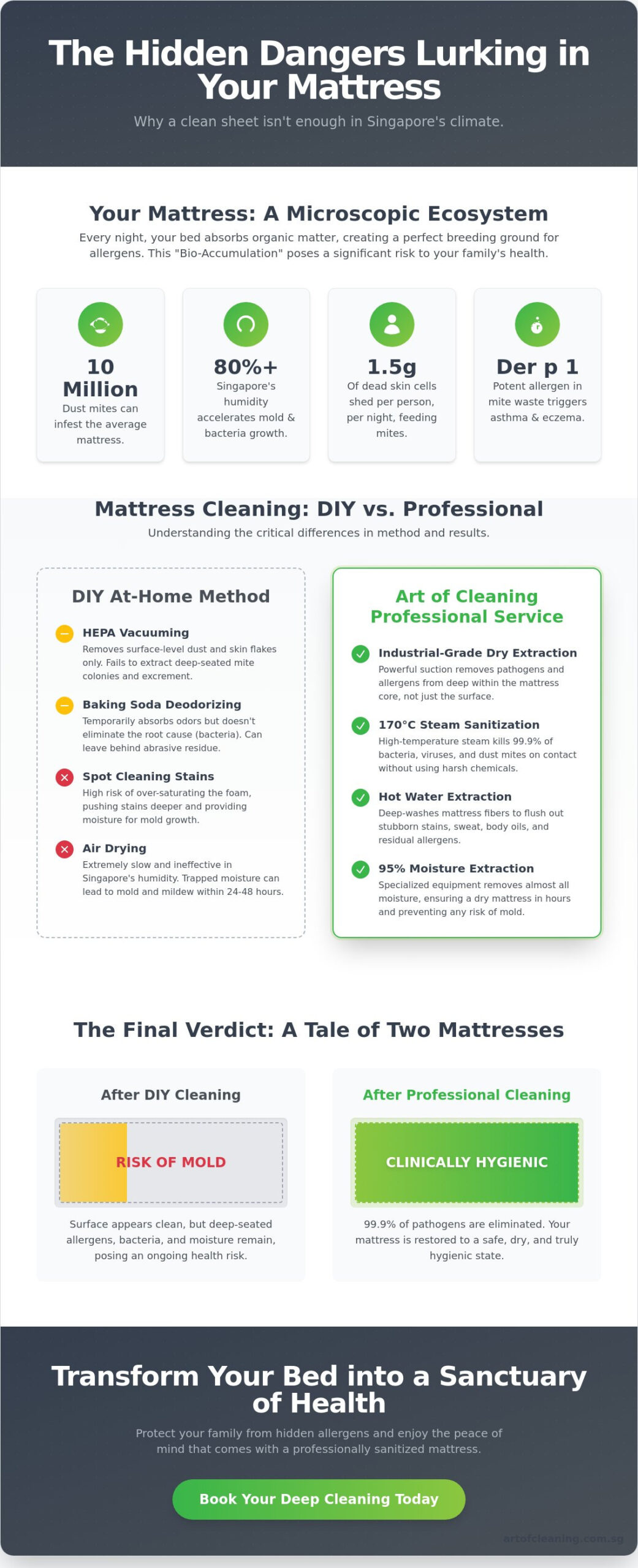
Professional Mattress Cleaning vs. DIY: Understanding the Difference
While the DIY protocol shared earlier provides a solid foundation for weekly maintenance, the mechanical limits of household equipment create a “sanitization ceiling.” To truly deep clean mattress interiors, you need industrial-grade suction power. Most home vacuums operate at a low Cubic Feet per Minute (CFM) rate, which only extracts debris from the top 1 to 2mm of the fabric. In contrast, professional industrial extractors generate enough airflow to pull dust mite excrement and dead skin from up to 10cm deep within the padding. This difference in depth determines whether you’re merely cleaning the cover or sanitizing the entire sleep system.
Moisture management is another critical factor where professional services excel. Our industrial equipment is designed to remove approximately 95% of the water used during the cleaning process. This high extraction rate is vital in Singapore, where ambient humidity makes natural evaporation slow and difficult. If a mattress remains damp for too long, it becomes a breeding ground for mold. Professional services ensure the core is dry and safe within 30 to 60 minutes, a feat nearly impossible to achieve with DIY carpet cleaners or wet-dry vacuums that lack sufficient water lift.
Steam Cleaning vs. Deep Extraction Methods
Steam cleaning is an effective tool for surface sanitization, as high temperatures neutralize bacteria on contact. However, “over-steaming” is a common mistake in Singaporean households. Excessive heat without proper extraction traps moisture in the foam, which can lead to internal rot. Art of Cleaning utilizes a balanced hygiene protocol that combines controlled steam with high-power extraction. This ensures that we eliminate pathogens without compromising the structural integrity of your mattress or leaving it overly saturated.
The Role of Medical-Grade Sanitizers
Standard household sprays often mask odors rather than eliminating the source. Professional treatments include medical-grade sanitizers that kill 99.9% of bacteria and viruses, providing a layer of protection that lasts for months. These solutions are non-toxic and VOC-free, making them safe for children and pets. By using these specialized agents, we ensure your mattress isn’t just visually clean, but clinically hygienic. This level of workmanship is why our methods have been featured on platforms like Mediacorp Channel 8, establishing a standard of trust that DIY efforts can’t match when you need to deep clean mattress surfaces thoroughly.
Maintaining a Hygienic Bed: A Singapore Homeowner’s Checklist
Establishing a consistent maintenance schedule is the only way to prevent the rapid bio-accumulation discussed earlier. While a professional deep clean mattress service addresses the core, your daily and weekly habits determine how quickly pathogens return. Start by washing your bed linens every seven days in water heated to 60°C to kill active dust mites. Monthly, you should use a HEPA-filter vacuum on the mattress surface and base to remove accumulated skin cells. Just as you maintain your bed, consistent Sofa Cleaning in Singapore ensures your entire living space remains free from allergens and organic debris.
Natural disinfection is an often overlooked tool for local homeowners. If your bedroom layout allows, expose your mattress to direct sunlight for at least two hours every month. The natural UV rays act as a mild disinfectant, though this only affects the surface layers. To protect the interior, invest in a high-quality mattress protector. Look for a “breathable waterproof” rating; this prevents sweat from seeping into the foam while allowing air to circulate, which is vital for preventing the “micro-incubator” effect. Avoid cheap plastic covers that trap heat, as these actually increase perspiration and fuel bacterial growth.
The 6-Month Professional Maintenance Rule
In Singapore’s 80% average humidity, we recommend a professional extraction every six months. This frequency is necessary to remove the microscopic waste that bypasses even the best protectors. Regular maintenance is particularly critical for high-end latex and memory foam mattresses, which often cost between S$2,000 and S$5,000. Professional care can extend the lifespan of these investments by up to 30% by preventing the structural breakdown caused by accumulated body oils. You can easily integrate this into your broader Professional Deep Cleaning Services Singapore routine to ensure a holistically healthy home environment.
Humidity Control in the Bedroom
Controlling the air quality in your bedroom is just as important as cleaning the fabric. Use a dehumidifier to keep room humidity levels below 60%, as dust mites struggle to breed in drier conditions. Practice the “Air-Out” technique: don’t make your bed immediately after waking up. Instead, pull the covers back for 30 to 60 minutes to allow body heat and moisture to evaporate. Additionally, ensure your aircon filters are cleaned every 14 days. Clogged filters circulate dust and fungal spores directly onto your sleeping surface, undoing your hygiene efforts. To ensure your home is truly a sanctuary, schedule a professional mattress sanitization and breathe easier tonight.
Art of Cleaning: Singapore’s Expert in Mattress Sanitization
At Art of Cleaning, we believe that restoring a healthy sleep environment is a precise craft. The “Art” in our name represents a commitment to meticulous workmanship that goes beyond surface-level tidiness. While previous sections highlighted the biological threats lurking in your bed, our role is to provide the professional remedy. We utilize a systematic three-stage process to deep clean mattress units: high-efficiency HEPA vacuuming, deep industrial extraction, and medical-grade sanitization. This methodology isn’t just about removing visible stains; it’s about eliminating the microscopic pathogens that compromise your family’s health.
Our expertise is recognized across the island, having been featured on Mediacorp Channel 8 as a trusted authority in home hygiene. We take pride in our status as a guardian of the home environment, ensuring that every service meets rigorous safety standards. We exclusively use family-safe, non-toxic cleaning agents that are VOC-free and safe for infants and pets. This scientific approach builds trust, positioning us as the reliable choice for families who prioritize long-term well-being over a quick fix.
Why Singaporean Families Trust Our Hygiene Standards
Our signature promise is simple: we deliver “cleanliness you can see, and hygiene you can trust.” This commitment has earned us thousands of positive testimonials from allergy sufferers who have found relief through our specialized services. We understand that premium sleep systems require specialized care. Whether you own a memory foam or high-density latex mattress, our technicians are trained to handle these delicate materials without compromising their structural integrity. We don’t just clean; we preserve your investment by removing the body oils and salts that cause foam degradation over time.
Book Your Professional Mattress Deep Clean Today
Taking the first step toward a healthier home shouldn’t be a complex process. We maintain a policy of transparent pricing, ensuring you know exactly what to expect before our team arrives. Whether you require service for a single residential unit or a large-scale commercial facility, we provide comprehensive support across Singapore. Our efficient booking system is designed to provide a low-friction experience, allowing you to focus on your family’s health while we handle the technical details. Don’t let invisible allergens dictate your quality of life. Get your free mattress cleaning quote from Art of Cleaning and experience the difference that professional-grade workmanship makes for your sleep hygiene.
Take Control of Your Sleep Hygiene Today
Maintaining a pristine bedroom is a fundamental pillar of home health. While weekly DIY maintenance helps manage surface debris, you now understand that a true deep clean mattress process requires industrial-grade extraction to reach the pathogens buried 10cm deep. Eliminating these invisible threats is essential to stop the cycle of morning sinus issues and skin irritation caused by bio-accumulation in Singapore’s humid climate. You can’t achieve this level of medical-grade sanitization with standard household vacuums alone.
As a trusted expert featured on Mediacorp Channel 8, Art of Cleaning uses professional-grade industrial extraction equipment to ensure 99.9% allergen and bacteria removal. We take the guesswork out of hygiene by providing a clinically safe surface for your loved ones. Our meticulous workmanship ensures your mattress is dry and ready for use within 60 minutes. Restore Your Sleep Hygiene with Art of Cleaning’s Mattress Deep Cleaning Services today and enjoy the peace of mind that comes with a verified clean. You deserve a sanctuary that supports your well-being and provides the restorative sleep your body needs every night.
Frequently Asked Questions
How long does it take for a mattress to dry after a professional deep clean?
Professional hot water extraction and steam methods typically require only 30 to 60 minutes of drying time. Our industrial-grade equipment removes 95% of the moisture used during the process, ensuring the core doesn’t remain damp. This rapid evaporation is crucial in Singapore’s humid climate to prevent mold germination. You won’t need to wait for hours or leave your mattress propped up against a wall before replacing your linens.
Can deep cleaning remove old yellow sweat stains from my mattress?
Yes, professional enzyme-based treatments effectively break down and remove old yellow sweat stains that DIY methods can’t touch. These stains are organic protein deposits that require specific pH-balanced cleaners to dissolve the biological bonds. Once dissolved, our high-power extraction pulls the organic matter out of the fibers. This process restores both the visual appearance and the hygienic state of the fabric surface.
Is it safe to sleep on a mattress immediately after it has been deep cleaned?
You can sleep on your mattress as soon as the 30 to 60-minute drying period is complete. Because we use non-toxic, chemical-free sanitization methods, there are no harmful fumes or volatile organic compounds (VOCs) to worry about. It’s perfectly safe for sensitive individuals, infants, and pets. We ensure the surface is touch-dry and clinically sanitized before our technicians leave your home.
How often should I deep clean my mattress in Singapore’s humid climate?
We recommend that you deep clean mattress units every 6 months to combat the rapid bio-accumulation caused by Singapore’s 80% average humidity. Regular biannual cleaning prevents dust mite populations from reaching levels that trigger chronic respiratory issues. If you have pets or suffer from severe asthma, increasing this frequency to once every 4 months provides a necessary layer of protection for your sleep hygiene.
Will professional mattress cleaning help with my child’s nighttime allergies?
Professional cleaning is highly effective for reducing nighttime allergies by eliminating 99.9% of dust mites and their waste. Since children spend up to 10 hours a day on their mattress, removing these microscopic triggers significantly improves air quality in the bedroom. This process reduces the morning congestion and itchy eyes often associated with dust mite infestations, creating a safer environment for your child’s rest.
What is the difference between steam cleaning and deep extraction for mattresses?
Steam cleaning uses high heat to sanitize and kill bacteria, while deep extraction uses suction to physically remove dirt and allergens. To truly deep clean mattress layers, we combine both methods for a comprehensive result. Steam neutralizes pathogens on contact at 170°C, and extraction ensures that the dead mites and skin cells are removed from the padding. Using steam alone without extraction can trap moisture and debris inside.
Do I need to move my mattress or will the cleaners handle the heavy lifting?
Our professional team handles all the necessary movement; you don’t need to lift the mattress yourself. We clean the top surface and all four sides while the mattress remains on the bed frame. If you require the bottom surface to be cleaned or the mattress flipped, our technicians will safely handle the lifting for you. This ensures a comprehensive sanitization of the entire unit without any physical strain on the homeowner.
Does deep cleaning get rid of bed bugs or just dust mites?
Deep cleaning effectively removes dust mites and surface allergens, but it isn’t a standalone solution for an active bed bug infestation. While 170°C steam can kill bed bugs on contact, these pests often hide in bed frames, headboards, and electrical outlets. We recommend a dedicated pest control treatment for bed bugs first, followed by our professional sanitization to remove the biological waste and eggs left behind.