
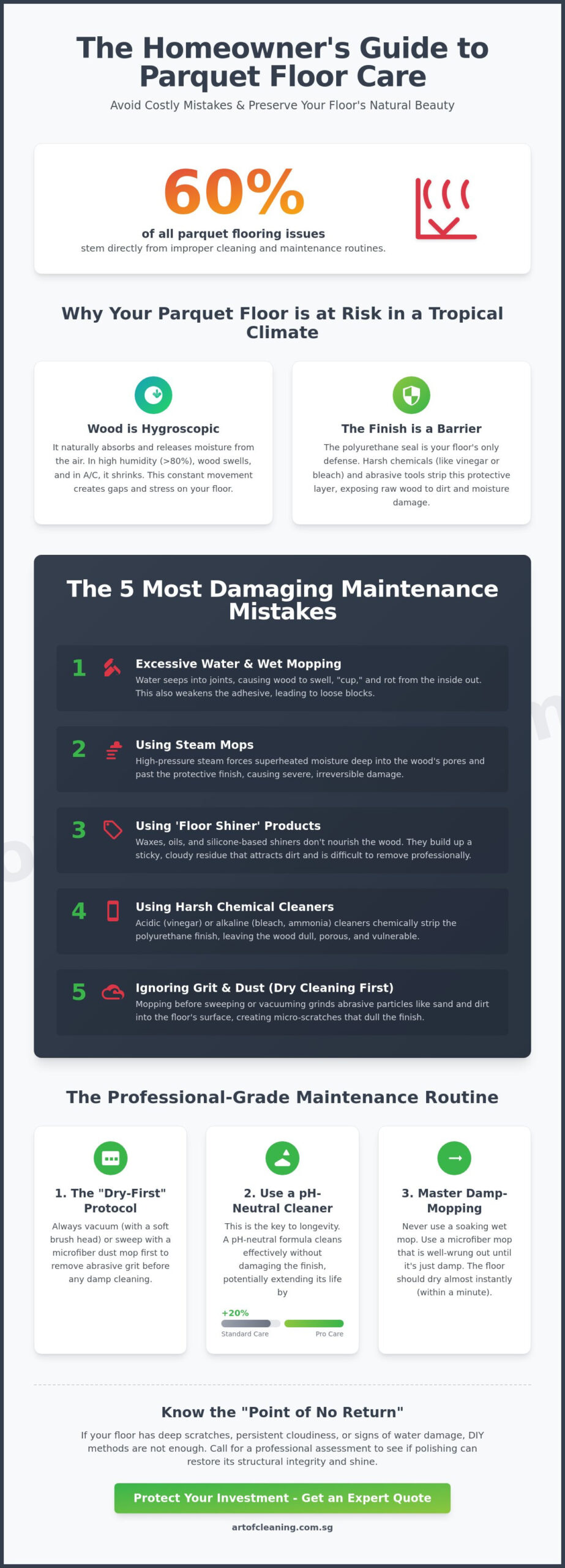
Did you know that up to 60% of all parquet flooring issues stem directly from improper cleaning and maintenance? It’s a frustrating reality for many homeowners who invest in high-quality wood only to watch the finish turn cloudy or develop mysterious scratches after just a few months. You likely chose parquet for its timeless elegance and warmth, but seeing that luster fade despite your best efforts is disheartening. Understanding the common mistakes in parquet floor care is the first step toward reclaiming your home’s aesthetic health. Many people inadvertently use harsh chemicals or excessive moisture that strip away protective layers, leaving the natural wood vulnerable to permanent water damage.
You don’t have to settle for dull surfaces or fear an expensive floor replacement. This guide provides a scientific approach to wood preservation, showing you exactly how to implement a professional-grade maintenance routine. We’ll explore why traditional floor shiners might be ruining your finish and how switching to a pH-neutral cleaner can extend your floor’s life by 20%. By the end of this article, you’ll have the technical knowledge to restore your floor’s original shine and establish a safe, moisture-balanced cleaning protocol that protects your family’s living environment for years to come.
Key Takeaways
- Identify why the hygroscopic nature of wood makes excessive moisture and steam mops the most dangerous common mistakes in parquet floor care.
- Learn why “floor shiner” products create a sticky, cloudy residue and how to select pH-neutral alternatives that protect your finish.
- Master the “dry-first” protocol and specialized damp-mopping techniques to remove abrasive grit without damaging delicate wood fibers.
- Recognize the “point of no return” for DIY maintenance to determine when your floors require professional polishing to restore their structural integrity.
- Establish a long-term preventative strategy that prioritizes both the visual luster of your parquet and the health of your indoor environment.
The Science of Parquet: Why Traditional Cleaning Fails in Tropical Climates
To preserve the health of your home, you must first understand that your floor is a living, breathing component of your environment. What is Parquet Flooring? At its core, it’s a sophisticated multi-piece wood system where individual blocks are arranged in geometric patterns. Unlike a single slab of stone, these wooden blocks are hygroscopic; they constantly absorb and release moisture to remain in equilibrium with the surrounding air. In a high-humidity environment like Singapore, where relative humidity often exceeds 80%, this biological process is hyper-active. When homeowners apply standard cleaning methods designed for tile or vinyl, they often commit the most common mistakes in parquet floor care, leading to structural instability and hidden hygiene issues.
The primary shield protecting your investment is the finish layer. This isn’t just a cosmetic coating; it’s a scientific barrier. However, many residents treat this surface as indestructible. They don’t realize that the tropical heat accelerates chemical reactions, meaning the wrong cleaning agent doesn’t just sit on the surface; it actively degrades the molecular bond of your floor’s protection. This degradation allows moisture to bypass the shield and attack the organic wood fibers directly.
Wood Expansion and Contraction
In Singapore, your parquet is caught in a relentless cycle of physical stress. During the day, high humidity causes wood cells to swell as they drink in water vapor. When you turn on the air conditioning at night, the air dries out rapidly, forcing the wood to contract. This “breathing” creates microscopic gaps between the parquet blocks. If you use a soaking wet mop, water seeps into these crevices and becomes trapped. This leads to “cupping,” where the edges of the wood rise higher than the center, and eventually causes the adhesive to fail. Wet mopping is the absolute enemy of wood stability in the tropics because it introduces liquid water into a system already struggling with vapor saturation.
The Anatomy of a Wood Floor Finish
Most modern parquet is sealed with polyurethane, though some older or artisanal floors use oil or wax finishes. Polyurethane acts as a hard plastic shell, while oil penetrates the grain to provide internal protection. A wood finish is the sacrificial layer that prevents rot by absorbing daily friction and blocking liquid penetration. Using acidic cleaners like vinegar or alkaline solutions like bleach is one of the common mistakes in parquet floor care that chemically strips this seal. Once this sacrificial layer is compromised, the wood becomes porous, attracting dirt and bacteria that can’t be removed through surface cleaning alone. For those concerned about maintaining a healthy home, preserving this chemical bond is a professional necessity. You can learn more about specialized maintenance standards at Art of Cleaning.
The 5 Most Damaging Mistakes in Daily Parquet Maintenance
Data suggests that up to 60% of structural failures in residential wood flooring result from improper maintenance rather than age. While homeowners often act with the best intentions for hygiene, several common mistakes in parquet floor care can lead to irreversible damage. The most frequent error involves the use of excessive water. When a soaking-wet mop is used, liquid seeps into the expansion joints between the wooden blocks. This moisture becomes trapped, fostering an environment for fungal growth and internal rot that remains invisible until the wood begins to soften or discolor.
To understand why this is so destructive, one must look at The Science of Wood and Moisture. Wood reacts to liquid on a cellular level. Beyond water damage, the following five errors represent the highest risk to your floor’s longevity:
- Excessive Water Saturation: Introducing liquid that seeps into joints and causes internal rot.
- High-Pressure Steam: Injecting heat that forces moisture deep into wood fibers.
- Abrasive Cleaning Tools: Using steel wool or stiff brushes that destroy the finish.
- Neglecting Grit Removal: Allowing dust to act as sandpaper under daily foot traffic.
- Incompatible Chemicals: Applying acidic or alkaline cleaners that strip the protective seal.
Using “all-purpose” cleaners is a major risk factor. Research shows that using a pH-neutral cleaner can extend the life of your parquet’s finish by 20% compared to using harsher household chemicals. These specialized formulas maintain the chemical bond of the finish, ensuring it remains an effective barrier against contaminants.
The Steam Mop Fallacy
Steam mops are often marketed as the ultimate tool for a sanitized home, yet they are a primary cause of finish delamination. The device injects high-pressure heat directly into the wood. This thermal energy forces the wood pores to open, allowing moisture to penetrate deeper than it ever would during a standard cleaning. Over time, this heat-driven moisture weakens the bond between the wood and its protective coating, causing the finish to peel or turn white. For safe deep cleaning, professionals recommend specialized disinfection services that use moisture-controlled methods to eliminate contaminants without risking the floor’s integrity.
Mechanical Scratches and Grit
Neglecting daily dusting is another critical error. In a high-traffic home, fine grit and sand act like sandpaper under your feet. Every step grinds these particles into the finish, creating micro-abrasions that destroy the floor’s natural luster. Many people attempt to solve this by vacuuming, but using a vacuum with a rotating beater bar is harmful. These bars are designed to agitate carpet fibers and can easily dent or scratch parquet. Instead, utilize a high-quality microfiber dust mop or a vacuum specifically set to a “hard floor” mode with soft bristles to safely remove debris.
The Hidden Danger of “Floor Shiners”: Why Waxes and Oils Often Backfire
Many homeowners reach for “quick-fix” floor polishers when they notice their parquet losing its original luster. It’s a natural reaction, yet applying store-bought “glow” products is one of the most insidious common mistakes in parquet floor care. These products typically contain waxes, oils, or silicones designed to create an immediate, artificial shine. Unlike professional-grade finishes that bond to the wood, these substances merely sit on the surface, creating a soft, sticky residue that never truly cures. Within days, this layer begins to act as a magnet for microscopic contaminants, including dust, pet dander, and skin cells.
This accumulation leads to the “Cloudy Floor” effect. You might notice that your floors look duller or hazier immediately after cleaning. This happens because you aren’t actually cleaning the wood; you’re simply moving dirt around on top of a gummy wax build-up. Beyond the aesthetic frustration, this residue creates a genuine hygiene hazard. The sticky surface traps bacteria and allergens deep within its layers, making it nearly impossible to achieve a truly sanitary environment for your family. Understanding the Dangers of Wood Floor Finishes is vital, as many of these “shiners” also introduce unnecessary volatile organic compounds (VOCs) into your indoor air.
Contamination and Future Restoration
The technical conflict between modern polyurethane finishes and traditional waxes is a significant hurdle for future maintenance. Polyurethane is a non-porous, hard-shell protection. When you apply a wax-based “shiner” over it, you create a contaminated surface that prevents new finishes from adhering. If you eventually decide to restore your floors, a professional team must perform an intensive “wax stripping” process before any polishing can begin. This adds unnecessary complexity and cost to your home maintenance. Avoiding silicone-based cleaners is equally critical, as silicone penetrates the wood grain and can permanently prevent new finish coats from bonding, often leading to “fish-eye” defects during restoration.
Identifying pH-Neutral Solutions
The chemistry of wood preservation relies on the “Golden Rule” of pH 7. Wood fibers and their protective seals are chemically sensitive to pH extremes. Ammonia and bleach are highly alkaline, while vinegar is highly acidic; both will eventually turn your finish brittle and yellow. When shopping for supplies, check labels carefully for additives that compromise the wood’s structural health. pH-neutral cleaners are the only safe choice for long-term care. For families seeking a balance between visual beauty and environmental safety, choosing a specialized parquet polishing strategy that avoids these build-up issues is the most reliable path forward. By maintaining a neutral chemical environment, you ensure your floor remains both beautiful and easy to sanitize.
Professional-Grade Parquet Care: A Preventative Strategy for Longevity
Establishing a professional-grade routine is about more than just aesthetics; it’s a commitment to the structural health of your home. By shifting your focus from reactive cleaning to a preventative system, you can effectively bypass the common mistakes in parquet floor care that plague most households. A successful strategy relies on a “dry-first” protocol. This means prioritizing the removal of abrasive grit before any liquid touches the surface. When you combine this with strict moisture control, you create a defensive barrier that protects the wood’s organic integrity against the harsh tropical climate.
The Daily and Weekly Routine
- Step 1: Daily Microfiber Dusting. Use a high-quality microfiber dust mop every evening. This removes the fine sand and grit that act like sandpaper, preventing the micro-abrasions that dull your finish over time.
- Step 2: Weekly Damp Mopping. Once a week, use a specialized mop that is barely damp to the touch. Mix a pH-neutral wood cleaner with water to break down oils without stripping the protective polyurethane seal.
- Step 3: Immediate Spill Management. Liquid is the primary cause of parquet rot. Use a soft, dry cloth to blot spills the moment they happen, ensuring no moisture seeps into the expansion joints.
Health and Hygiene in Floor Care
There’s a critical link between your floor’s condition and your family’s respiratory health. When parquet develops gaps due to poor moisture management, these crevices become microscopic habitats for dust mites and bacteria. Traditional cleaning often pushes allergens deeper into these voids rather than removing them. Maintaining a smooth, sealed surface ensures that contaminants stay on the surface where they can be effectively eradicated. For a truly healthy home environment, this floor-level hygiene should be paired with other professional services, such as specialized carpet cleaning singapore, to ensure that every textile and surface in your living space is free from hidden pollutants. If you’re unsure about the current state of your wood’s seal, you should schedule a professional consultation with the Art of Cleaning team to assess your floor’s health.
When to Call the Experts: Restoring Dull Parquet with Professional Polishing
Even the most meticulous homeowners eventually reach a stage where standard cleaning protocols no longer suffice. While a daily routine prevents premature wear, the cumulative impact of environmental stress and previous common mistakes in parquet floor care can compromise the wood’s structural integrity. At this junction, it’s vital to distinguish between a dirty floor and a damaged one. Surface cleaning only addresses the contaminants sitting on top of the finish. However, when the finish itself has been eroded, your wood is essentially “naked” and vulnerable to the elements. Professional intervention is the only way to re-establish this critical biological shield.
Signs You Need Professional Parquet Polishing
Identifying the “Point of No Return” requires a careful inspection of the wood’s surface. You should look for these specific indicators of structural degradation:
- Visible Graying: This occurs when the protective finish has completely worn away, allowing moisture and dirt to oxidize the raw wood fibers.
- Deep Penetrating Scratches: If a scratch has bypassed the finish and entered the wood grain, it becomes a conduit for moisture and rot.
- Persistent Haze: If your floors remain dull despite using pH-neutral cleaners, it often indicates that the finish is too scratched or contaminated to reflect light.
Professional restoration isn’t just about aesthetics; it’s a vital health measure for your home. When the protective barrier fails, wood fibers absorb allergens and moisture more readily, creating hidden pockets for bacteria. Choosing professional restoration over a complete floor replacement offers a significant return on investment. According to a 2022 National Association of Realtors report, refinishing existing hardwood floors can yield an ROI of approximately 147% at resale. This makes professional maintenance a scientifically sound financial decision for any property owner.
The Art of Cleaning Restoration Process
Our restoration methodology goes beyond simple buffing. We employ a systematic approach that includes precision sanding to remove damaged layers without compromising the floor’s thickness. This process eliminates the deep-seated contaminants and residues left behind by years of common mistakes in parquet floor care, such as the wax build-up discussed in previous sections. By applying professional-grade varnishes, we restore the sacrificial layer that protects your wood from rot and daily friction. Our artisanal attention to detail ensures a smoother, healthier finish that standard DIY equipment simply cannot replicate. Schedule a professional parquet polishing assessment today to verify the health of your home’s surfaces and prevent the need for an expensive full-floor replacement.
Protect Your Investment with Scientific Maintenance
Your parquet floor is a dynamic component of your home’s environment that requires precise care to survive the tropical climate. We’ve explored how common mistakes in parquet floor care, such as using high-heat steam mops or excessive moisture, can lead to structural rot and finish delamination. By shifting to a “dry-first” protocol and avoiding the sticky residue of store-bought shiners, you preserve both the wood’s organic integrity and your family’s indoor air quality.
When preventative measures aren’t enough to overcome deep scratches or visible graying, specialized intervention is the only path to restoration. As experts featured on MediaCorp and Channel 5, Art of Cleaning provides a meticulous, hygiene-focused approach to floor preservation. Our specialized polishing techniques remove years of contaminants while restoring the sacrificial layer that keeps your wood healthy. Restore your floors with Art of Cleaning’s Professional Parquet Polishing and reclaim the timeless beauty of your living space today. Your home deserves the artisanal care that only a dedicated specialist can provide.
Frequently Asked Questions
Can I use vinegar and water to clean my parquet floors?
No, you should not use vinegar and water on parquet flooring. Vinegar is highly acidic, typically possessing a pH level between 2 and 3, which chemically degrades the polyurethane finish over time. This is one of the most frequent common mistakes in parquet floor care because it turns the protective seal brittle and yellow, eventually exposing the raw wood fibers to moisture and rot.
How often should I professionally polish my parquet floors in Singapore?
In Singapore’s tropical climate, you should consider professional parquet polishing every 3 to 5 years. This timeline varies based on foot traffic and how strictly you maintain a “dry-first” cleaning protocol. Regular professional assessments help identify if the sacrificial finish layer has worn thin before the organic wood itself suffers permanent oxidation or structural graying.
Is it safe to use a robot vacuum on parquet flooring?
Robot vacuums are generally safe for parquet if they use soft rubber brushes rather than stiff, rotating beater bars. However, you should disable the mopping function or use a barely damp pad setting. Standard robot mops often release uncontrolled amounts of water that can seep into expansion joints, fostering an environment for fungal growth and internal wood decay.
What should I do if my parquet floor starts to gap or swell?
If your parquet begins to gap or swell, you must immediately stabilize your indoor humidity levels using air conditioning or a dehumidifier. Wood is a hygroscopic material that reacts to moisture vapor in the air. Avoid using DIY wood fillers during these shifts, as the wood’s natural movement will likely eject the filler once the environment changes again.
How do I remove black water stains from my parquet floor?
Black water stains indicate that moisture has bypassed the finish and reacted with the tannins in the wood, causing a deep chemical change. These stains cannot be removed with surface cleaners or household chemicals. You will require professional sanding to remove the damaged wood fibers and a fresh application of high-grade varnish to restore the protective barrier.
Are “quick-shine” products safe for modern parquet finishes?
No, “quick-shine” products are not safe because they create a non-breathable wax or silicone buildup. This residue traps bacteria and allergens, creating a hygiene hazard for your family. This layer eventually turns cloudy and prevents professional restoration coats from bonding to the wood, which is another of the common mistakes in parquet floor care that leads to higher long-term costs.
Does high humidity affect the lifespan of my parquet floor?
High humidity significantly shortens the lifespan of parquet by causing constant physical stress through expansion and contraction cycles. In Singapore, where relative humidity often exceeds 80%, this can lead to “cupping” or adhesive failure. Maintaining a stable indoor environment is a scientific necessity to ensure the wood remains structurally sound and visually beautiful for decades.
Can I use a steam cleaner if I use the lowest heat setting?
Even on the lowest setting, a steam cleaner is never safe for parquet flooring. The device uses thermal energy to force moisture deep into the wood’s pores, which causes the finish to peel or delaminate. Stick to a lightly damp microfiber mop to maintain hygiene without risking the heat-induced structural damage that steam cleaners inevitably cause.