
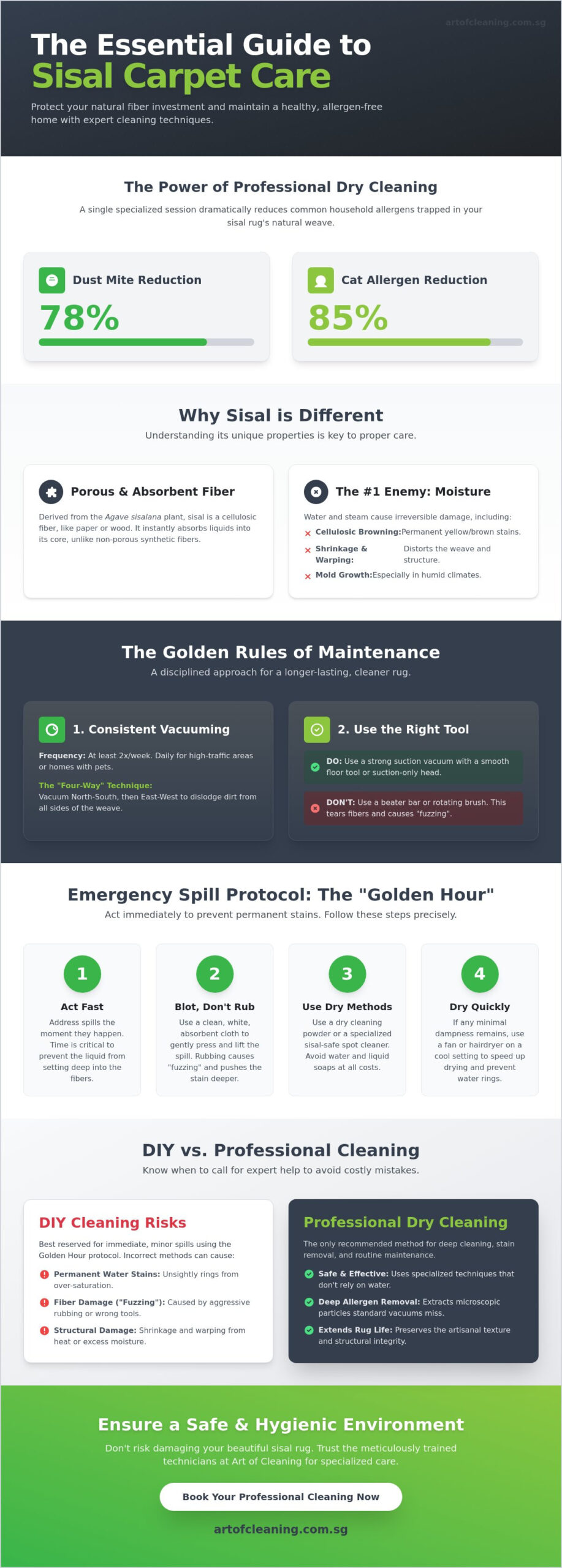
Did you know that a single specialized dry-cleaning session can reduce dust mites in your home by 78% and cat allergens by 85%? While sisal is naturally resistant to bacteria, its intricate weave acts as a filter, trapping microscopic particles that standard vacuums often miss. If you’re wondering how to clean sisal carpet without causing permanent water stains or shrinkage, you’re not alone. Most homeowners feel a sense of dread when a liquid spill hits these delicate vegetable fibers, fearing the absorbent material will be ruined forever.
We understand that maintaining a healthy, allergen-free home is your top priority. You’ll master the specialized techniques required to maintain and clean sisal carpets without damaging their delicate natural fibres. We’ll examine the scientific reasons why moisture is the enemy of sisal, provide a step-by-step framework for immediate spill management, and explain how professional dry-cleaning methods can restore your rug’s hygiene. This guide provides the expert knowledge you need to ensure your home remains a safe, pristine environment for your family while extending the life of your investment.
Key Takeaways
- Learn why a strong suction vacuum is essential for removing deep-seated allergens without damaging the delicate natural weave of your rug.
- Master the “Golden Hour” protocol to understand how to clean sisal carpet immediately after a spill to prevent permanent fiber browning.
- Discover why traditional wet cleaning methods and even plain water can leave unsightly, irreversible rings on cellulosic fibers.
- Understand the scientific risks of “fuzzing” caused by rubbing stains and how to preserve the artisanal texture of your carpet.
- Identify when to engage a meticulously trained technician to ensure your home remains a safe and hygienic environment for your family.
Understanding Sisal: Why This Natural Fibre Requires Specialized Cleaning
Sisal isn’t just a standard floor covering; it’s a complex organic material. Derived from the Agave sisalana plant, these fibres are celebrated for their incredible tensile strength and durability in high-traffic areas. However, Understanding Sisal requires recognizing its primary vulnerability: extreme absorbency. Because it’s a “cellulosic” fibre, it behaves more like wood or paper than traditional fabric. When you ask how to clean sisal carpet?, you must start with the knowledge that water is often the enemy. Over-saturation triggers a chemical reaction known as “cellulosic browning,” where tannins rise to the surface and leave permanent, unsightly yellow or brown stains that are nearly impossible to remove once they set.
Standard steam cleaning, or hot water extraction, is usually catastrophic for these rugs. The high-pressure water and heat cause the fibres to swell, distorting the weave and leading to irreversible shrinkage. This isn’t just an aesthetic issue; it’s a structural failure that can ruin an expensive investment in minutes. From a health perspective, sisal’s deep, textured weave acts as a natural filter for your home. It effectively traps dust, dander, and other indoor allergens, preventing them from circulating in the air your family breathes. While this improves immediate air quality, it also creates a reservoir of contaminants that requires a scientific approach to extract without using liquid-based methods.
Sisal vs. Synthetic Carpets: Key Structural Differences
Synthetic carpets like nylon or polyester are non-porous. Spills typically sit on the surface, making them easier to blot. Sisal is the opposite. Its porous nature means liquids are instantly pulled into the core of the fibre. This creates a “dust reservoir” effect where soil becomes deeply embedded in the traditional weave. Unlike synthetics, sisal can lose its shape entirely if it becomes too wet, as the natural fibres contract unevenly during the drying process, causing the rug to ripple or pull away from its backing.
The Impact of Humidity on Natural Fibres
In regions with high relative humidity, sisal requires even more attention. These fibres are hygroscopic, meaning they absorb moisture directly from the air. This constant expansion and contraction can weaken the rug’s structure over time. High moisture levels also increase the risk of mould growth in the natural fibre backings, which can trigger respiratory issues for sensitive family members. Maintaining a stable indoor environment with air conditioning or dehumidifiers isn’t just about comfort; it’s a critical part of the cleaning and preservation process for natural materials.
The Golden Rule of Sisal Maintenance: Dry Cleaning and Vacuuming
Maintaining a sisal rug in a tropical climate like Singapore’s requires a disciplined approach to moisture management. High humidity levels can trap dampness within the weave, making the “dust reservoir” effect even more dangerous for indoor air quality. Regular vacuuming is the most critical step in your maintenance routine. For residential spaces, you should vacuum at least twice a week; high-traffic areas or homes with pets require daily attention to prevent soil from becoming permanently embedded. When you’re deciding how to clean sisal carpet?, the technique is just as important as the frequency.
We recommend the “Four-Way” vacuuming technique. This involves making passes in North, South, East, and West directions. Because sisal has a deep, chunky weave, a single pass only cleans one side of the fibre. By approaching the rug from all four angles, you ensure that hidden contaminants are physically dislodged from the crevices. This mechanical action is the first line of defense in preserving the rug’s artisanal texture and preventing the buildup of allergens that can affect your family’s health.
Choosing the Right Vacuum for Sisal
A common mistake is using a vacuum with a stiff beater-bar or rotating brush. These mechanical brushes are too aggressive for natural plant fibres; they cause “fuzzing” by tearing the delicate outer layer of the sisal. Instead, use a vacuum with strong suction power and a smooth floor tool. High-filtration HEPA vacuums are essential here. They don’t just pick up visible dirt; they capture microscopic allergens that the sisal weave has filtered from your air. Using the right attachments for edges and corners ensures that dust doesn’t accumulate where the rug meets the wall, which is a common breeding ground for mould in humid environments.
Dry Extraction Powders: The Safe Deep-Clean
When a standard vacuum isn’t enough, dry extraction powders offer a scientific solution for how to clean sisal carpet? without the risks of browning or shrinkage. These powders act like millions of tiny micro-sponges. You spread them over the rug, allow them to “dwell” for about 30 minutes, and then extract them with a vacuum. During this time, the powder absorbs oily soils and trapped dust without wetting the cellulosic fibres. One thorough dry extraction session has been shown to reduce dust mites by 78% and cat allergens by 85%.
This method is so effective that Martha Stewart’s method for cleaning sisal highlights the use of dry-cleaning kits to handle accidents without ruining the rug’s structural dimensions. For those who want to ensure their home remains a sanctuary of hygiene, a professional rug cleaning service can provide a deeper, more thorough extraction than domestic machines. This level of care preserves the rug’s aesthetic while maximizing its lifespan.
Removing Stains from Sisal: A Step-by-Step Emergency Protocol
When a spill occurs, the clock starts ticking immediately. We refer to the first sixty minutes as the “Golden Hour” of sisal care. Because these fibres are 100% plant-based and exceptionally porous, liquids travel deep into the cellulosic core within minutes. If you’re currently searching for how to clean sisal carpet? during an active emergency, the first rule is absolute: never rub the stain. Rubbing creates aggressive friction that physically shears the plant fibres, leading to permanent “fuzzing” and a distorted texture that professional restoration can rarely fix. Instead, focus on extraction through gentle, vertical pressure.
Successful stain removal also depends on chemical balance. You must use pH-neutral detergents specifically formulated for natural fibres. Acidic or highly alkaline cleaners can trigger the “browning” reaction we discussed previously, effectively dyeing the rug a darker shade. Beyond aesthetics, rapid drying is a health necessity. Moisture trapped in the dense weave of a natural rug provides a perfect breeding ground for mould and bacteria. Ensuring the rug dries quickly isn’t just about the rug’s life; it’s about maintaining the hygiene of your living space.
Liquids and Spills: The Blotting Technique
The first step for any liquid spill is to reach for un-dyed, white paper towels. Avoid patterned towels at all costs, as the moisture can cause the ink to transfer directly into the thirsty sisal fibres. We recommend the “Pressure Blot” method. Place a thick stack of towels over the spill and apply significant weight, such as a heavy book or even standing on the stack. This uses downward pressure to force the liquid upward into the absorbent paper. Once you’ve removed as much moisture as possible, use a hair dryer on a cool or low-heat setting to finish the job. This prevents the moisture from lingering long enough to cause fibre expansion.
Solid Debris and Dried Stains
For solid debris like mud or food, wait for the material to dry slightly if it isn’t purely liquid. Use a dull knife or a spoon to carefully scrape the material toward the centre of the spot. This prevents the stain from spreading into clean areas of the weave. For dried soot or mud, the “Dry-Brush” method is most effective. Use a soft-bristle brush to gently loosen the particles from the chunky weave before using a high-suction vacuum to extract them. If a stain remains visible after these steps, it has likely “set” into the fibre’s cellular structure. At this point, further DIY attempts often do more harm than good. You can reach out to our specialists to discuss professional dry-extraction options that can safely address deep-set pigments without ruining the rug.
DIY vs. Professional Sisal Cleaning: Avoiding Permanent Fibre Damage
The boundary between effective maintenance and accidental destruction is incredibly thin when dealing with natural plant fibres. Many homeowners attempt to solve the mystery of how to clean sisal carpet? by using standard retail carpet shampoos or rented steam cleaners. This is a critical error. Because sisal is highly sensitive to pH levels and moisture, DIY attempts often result in “cellulosic browning.” This chemical reaction occurs when the fibres remain damp for too long, causing lignin to migrate to the surface and create permanent, dark yellow rings. Even “clean” water can leave watermarks; it dissolves microscopic minerals within the fibre and redeposits them as unsightly stains upon drying.
There is also a significant hygiene gap to consider. While regular vacuuming is vital for surface debris, domestic methods typically only reach 10% to 20% of the deeply embedded dirt and allergens trapped within the thick weave. In Singapore’s high-humidity environment, this trapped organic matter becomes a primary food source for dust mites and mould. Art of Cleaning adopts an artisanal approach to these delicate materials, treating each rug with the scientific precision required to achieve deep sanitation without compromising the structural integrity of the agave fibres.
The Professional Advantage: Low-Moisture Extraction
Our specialized process utilizes advanced equipment that controls moisture levels to the exact millilitre. Unlike home machines that soak the backing, our industrial-grade systems apply dry extraction compounds and minimal moisture to dislodge contaminants. We also incorporate sanitisation protocols that kill dust mites and bacteria on contact without over-saturating the rug. In our specialized facilities, we utilize high-volume air movers and professional drying racks. This ensures the rug returns to its original dimensions quickly, preventing the shrinkage and rippling common with DIY attempts.
When to Call Art of Cleaning
While you can manage minor maintenance yourself, certain scenarios require professional intervention to prevent permanent loss of your investment. You should contact a specialist immediately for large-scale spills involving wine, coffee, or pet accidents, as these require immediate pH balancing. If you notice musty odours or visible dark spots, it often indicates deep-seated moisture and mould growth that standard vacuums cannot address. We recommend an annual deep cleaning to maintain your home’s indoor air quality and ensure your living space remains a healthy sanctuary for your family. For a professional assessment, you can book our expert rug cleaning service today.
Art of Cleaning: Specialized Carpet and Rug Hygiene in Singapore
At Art of Cleaning, we view our role as more than just a service provider; we’re the guardians of your home’s environmental health. While many focus solely on the visual beauty of a natural rug, our scientific approach prioritizes the hygiene and safety of your family. Our technicians aren’t just cleaners. They’re meticulously trained specialists who understand the complex chemistry of natural fibres. When homeowners ask how to clean sisal carpet?, they’re often looking for a solution that balances cleanliness with fibre preservation. We provide that through a methodology that respects the delicate cellulosic nature of the agave plant while ruthlessly targeting hidden contaminants.
Our reputation for reliability isn’t just a claim we make; it’s a standard verified by major national media platforms. Being featured on prominent local broadcasting networks serves as a hallmark of our high standards and verified identity. This regional endorsement reflects our commitment to artisanal care, ensuring every rug is treated with the precision required for high-value natural materials. We don’t believe in surface-level tidiness. We believe in deep, health-focused results that you can trust. Our Artisanal Care promise means we treat every rug with precision, focusing on the microscopic details that impact your home’s air quality.
Our Multi-Stage Sisal Cleaning Process
We’ve developed a systematic journey to restore your rug’s hygiene without the risks associated with traditional wet methods. Our process includes:
- Deep HEPA Vacuuming: We use industrial-grade filtration to extract 99% of dry particulates, including the microscopic allergens trapped in the deep weave of the sisal.
- Targeted Spot Treatment: Using pH-balanced, fibre-safe solutions, we address specific stains to prevent chemical browning and fibre distortion.
- Controlled Low-Moisture Sanitisation: We apply specialized compounds that kill bacteria and dust mites while maintaining the rug’s structural dimensions.
Book Your Professional Consultation
Whether you’re managing a residential living space or a high-traffic commercial office, our scheduling process is designed for your convenience. We offer transparent pricing based on the specific material type and the size of your installation, ensuring there are no surprises. If you’ve been struggling with the question of how to clean sisal carpet? without causing damage, it’s time to let the experts handle it. Our team is ready to provide the meticulous care your investment deserves. You can protect your investment with Art of Cleaning’s specialized services to ensure a healthier, fresher home environment today.
Ensure a Healthier Home Environment Today
Sisal’s durability is matched only by its extreme sensitivity to moisture. Protecting these natural fibres requires a disciplined focus on dry maintenance and immediate action during the “Golden Hour” of a spill. Mastering how to clean sisal carpet? means moving away from aggressive wet methods toward a scientific, low-moisture approach that prevents permanent browning and structural shrinkage. By maintaining a strict four-way vacuuming schedule, you ensure your rug continues to act as a high-performance filter for indoor allergens rather than a reservoir for dust.
When DIY methods reach their limit, Art of Cleaning provides the artisanal expertise needed to restore your rug’s hygiene. Our featured status on MediaCorp and Channel 5 reflects our commitment to excellence and our specialized knowledge of natural fibres. We achieve a 99% contaminant removal rate, ensuring your home remains a sanctuary of health and freshness for your family. Get a Professional Quote for Specialized Carpet Cleaning and let our meticulously trained technicians handle the precision work for you. Your beautiful natural flooring can last for years with the right professional care.
Frequently Asked Questions
Can I steam clean my sisal carpet?
You should never use a steam cleaner on sisal. The high-heat moisture causes the agave fibres to swell and contract unevenly, leading to permanent shrinkage and unsightly ripples. Because sisal is a cellulosic material, saturation triggers chemical browning reactions that effectively dye the rug a dark yellow. Stick to specialized dry extraction methods to preserve the rug’s structural integrity and its artisanal aesthetic.
How do I get dog urine out of a sisal rug?
Immediate blotting is the only way to manage urine spills before they soak into the cellular core. Use white, un-dyed paper towels and apply heavy pressure to draw the liquid upward. Since urine is a biological contaminant, it can cause rapid bacterial growth in the deep weave. If the odor persists, a professional how to clean sisal carpet? consultation is necessary to ensure these deep-seated contaminants are removed safely.
Is sisal carpet good for people with allergies?
Sisal is an excellent choice for allergy sufferers because it’s naturally non-toxic and doesn’t harbor static electricity. However, its textured weave acts as a microscopic filter for dander and pollen. Without regular HEPA vacuuming, these particles remain trapped near the floor. Professional dry cleaning has been shown to reduce dust mite allergens by 75%, making it a vital part of a health-conscious home maintenance routine.
Why did my sisal rug turn brown after I cleaned it?
Your rug turned brown because of a chemical reaction called cellulosic browning. This occurs when the fibres remain damp for an extended period or when you use high-pH alkaline detergents. The moisture causes natural tannins and lignin to migrate to the surface as the rug dries, leaving dark rings. Once these brown stains set, they are extremely difficult to remove without professional-grade pH-balancing treatments and specialized equipment.
How often should I professionally clean my sisal carpet?
We recommend a professional deep clean once every twelve months for standard residential use. If you live in a high-humidity environment or have pets, increasing this frequency to every six months is better for family hygiene. Since domestic vacuums only remove a small fraction of deeply embedded soil, an annual professional extraction is essential to maintain indoor air quality and preserve the long-term health of the fibres.
Can I use baking soda to clean a sisal rug?
Baking soda is a safe, dry alternative for neutralizing odors on natural fibres without the risk of water damage. It doesn’t involve moisture, which is the primary risk factor for sisal browning. Sprinkle a light layer over the rug, let it dwell for 20 minutes, and vacuum thoroughly. This is a helpful DIY tip for how to clean sisal carpet? maintenance between professional sessions, provided you use a high-suction vacuum.
Does sisal carpet shed fibres?
Sisal shouldn’t shed excessively, though new rugs may release small amounts of “fuzz” from the weaving process initially. If you notice significant fibre loss, it’s often caused by using a vacuum with a rotating beater-bar. These stiff brushes are too aggressive and physically tear the delicate plant fibres. Switching to a suction-only floor tool will prevent this structural breakdown and keep the rug’s artisanal weave intact.
What is the best way to remove coffee stains from sisal?
The best way to handle coffee is the “Pressure Blot” method using un-dyed paper towels. Coffee is highly acidic and will quickly bond with the cellulosic fibres if not extracted within the “Golden Hour.” Avoid using standard water-based soaps, which can worsen the stain. If the pigment remains after blotting, specialized dry-cleaning powders are the safest way to absorb the remaining oils without triggering a browning reaction.