
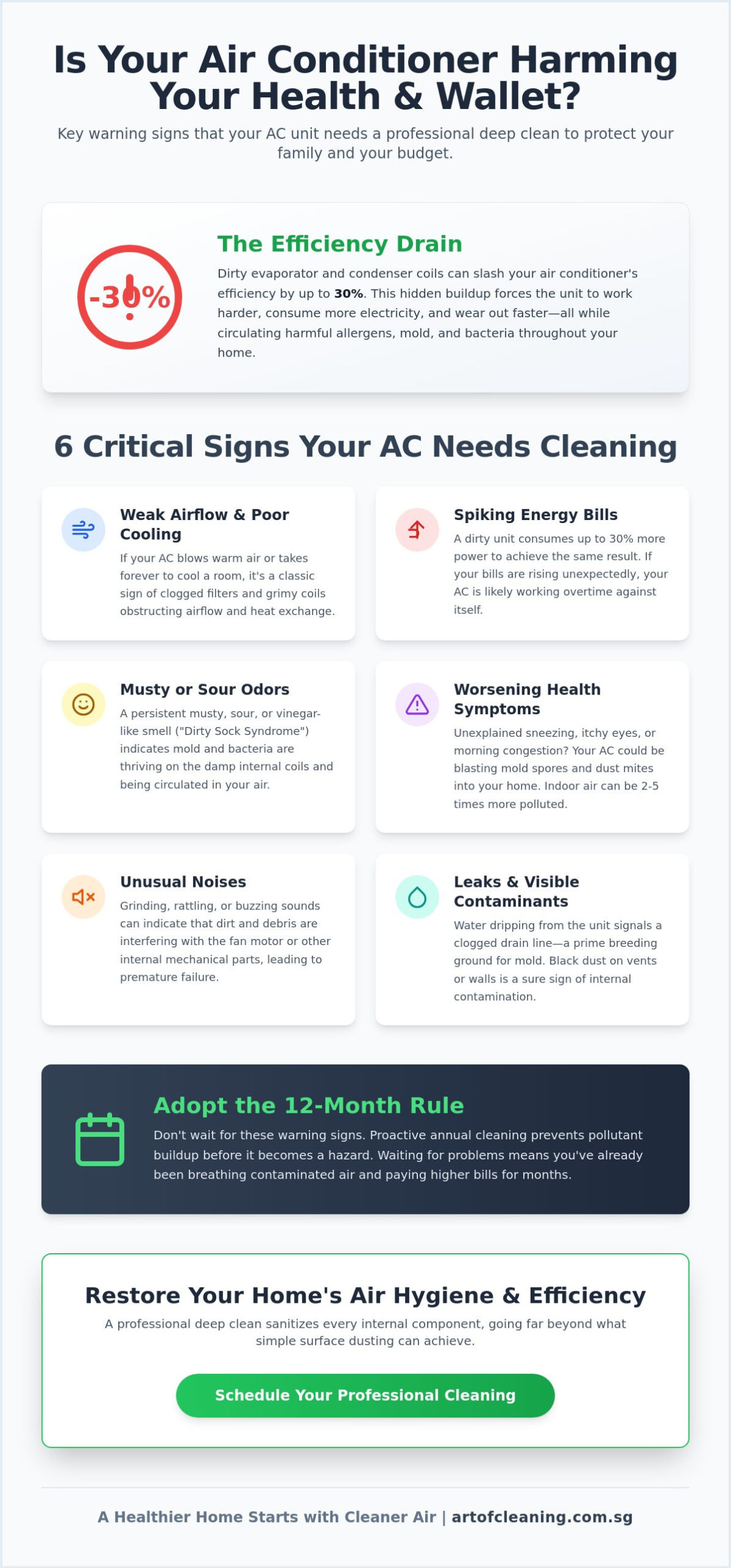
Did you know that dirty evaporator and condenser coils can reduce your air conditioning system’s efficiency by up to 30%? This hidden buildup doesn’t just inflate your monthly utility bills; it forces your unit to work harder, significantly shortening its functional lifespan. You likely view your aircon as a sanctuary from the heat, but without regular maintenance, it often becomes a silent reservoir for mold spores and allergens. If you’ve noticed a sudden spike in electricity costs or persistent respiratory irritation while indoors, you’re already witnessing the subtle signs you need aircon cleaning to safeguard your home’s hygiene.
We believe that a truly clean home is one where the air is as pure as the surfaces. It’s frustrating when your environment works against your health. This article will show you exactly how to spot the red flags of a contaminated system before they lead to expensive repairs. We’ll explore seven critical indicators that your unit requires professional attention, helping you restore peak performance and ensure your family breathes easier every day.
Key Takeaways
- Learn how to identify “Dirty Sock Syndrome” and other sensory signals that indicate your cooling system is circulating harmful bacteria or mold.
- Discover the physical signs you need aircon cleaning, such as black dust particles on your walls or water leaks that signal a blockage in your drainage system.
- Understand why a visual check of the unit’s exterior is often misleading and how hidden mechanical debris compromises your system’s internal hygiene.
- Shift from a reactive to a proactive mindset by applying the “12-Month Rule” to prevent the cumulative buildup of indoor pollutants in sealed spaces.
- Explore the difference between basic surface dusting and the meticulous, hygiene-first deep sanitisation required to truly protect your home environment.
What are the most common signs you need aircon cleaning?
Your air conditioning unit acts as the literal lungs of your living space. It’s constantly inhaling room air, filtering it, and exhaling it back to you. Genuine aircon cleaning is the meticulous removal of accumulated biological and mechanical debris, such as shed skin cells, pet dander, and fungal spores. Many homeowners rely on visual checks of the external plastic casing, but this is often misleading. The most critical contamination occurs deep within the internal components, where you can’t see it. In high-humidity environments, a thin layer of dust quickly transforms into a damp, dangerous breeding ground for bacteria. Recognizing the signs you need aircon cleaning is the first step in restoring the hygiene of your home environment.
Modern Heating, ventilation, and air conditioning (HVAC) systems are precision-engineered machines. When they’re clogged, they don’t just work poorly; they actively degrade your quality of life. Understanding these indicators helps you intervene before a minor hygiene issue becomes a major mechanical failure.
Weak airflow and poor cooling performance
One of the most obvious signs you need aircon cleaning is a noticeable drop in airflow. When evaporator coils are layered in grime, they can’t facilitate efficient heat exchange. This leads to the frustrating “warm air” phenomenon, where the unit blows air that feels humid or lukewarm even when the thermostat is set low. You’ll likely find that the system takes significantly longer to cool the room than it did when it was new. This sluggishness is a direct result of the system struggling to pull air through obstructed filters and fins.
Spiking energy bills without changes in usage
If your monthly utility costs are rising despite your usage habits staying the same, your aircon is likely the culprit. A dirty aircon can consume up to 30% more power to achieve the same cooling effect. This happens because the compressor is forced into a relentless “overwork” cycle to compensate for the lack of airflow and thermal efficiency. This extra strain doesn’t just cost you money every month; it accelerates mechanical wear and tear. Components that should last a decade may fail in half that time because they’re constantly fighting against internal resistance caused by dirt and debris.
Sensory indicators: Smells and health-related symptoms
Your nose is often the most sensitive diagnostic tool you own. When your unit begins emitting a pungent, vinegar-like aroma, it’s often a case of “Dirty Sock Syndrome.” This occurs when specific bacteria and mold colonize the damp surfaces of the evaporator coils. These aren’t just unpleasant smells; they’re airborne biological signatures. According to the U.S. Department of Energy maintenance guide, neglecting these internal components leads to more than just efficiency loss. It compromises the fundamental safety of your living space. These pathogens don’t stay contained within the machine. They settle on your soft furnishings, meaning you might eventually require professional sanitisation for your sofas or carpets as well. This cross-contamination creates a cycle of pollution that simple surface dusting cannot break.
Beyond biological growth, neglected systems become traps for Volatile Organic Compounds (VOCs) and fine particulate matter. As moisture remains trapped in the unit, it creates a sticky residue that captures every bit of dust and chemical residue circulating in your home. This mixture becomes a concentrated source of indoor environmental pollution. If you’ve been noticing these changes, they are definitive signs you need aircon cleaning to restore a healthy baseline for your family.
Persistent respiratory issues and allergies
Indoor air can be 2 to 5 times more polluted than outdoor air when HVAC systems are neglected. If you or your children experience unexplained sneezing, itchy eyes, or morning congestion, the culprit is likely your aircon’s fan blower. As it spins, it blasts microscopic mold spores and dust mites directly into your breathing zone. These irritants are often invisible, but their impact on your respiratory health is immediate. Maintaining a clean system is a non-negotiable part of proactive family wellness.
Musty, sour, or “rotten” odours
There is a significant difference between a “dusty” smell and a “fungal” smell. A sour or rotten odour usually indicates that stagnant water has pooled in the drainage tray, forming a thick biological film. This sludge is a prime breeding ground for harmful pathogens. Many homeowners try to mask these scents with air fresheners or scented sprays, but this is a dangerous temporary fix. It adds more chemicals to the air without addressing the underlying biological hazard. For a permanent solution, our professional aircon cleaning services focus on deep component sanitisation to eliminate the source of the odour entirely.
Physical evidence: Leaks, noises, and visible mold
While sensory changes like odours are early warnings, physical evidence usually indicates that the internal contamination has reached a critical stage. When you see water dripping from the casing or find dark particles on your walls, the hygiene crisis is no longer invisible. These are definitive signs you need aircon cleaning that require immediate professional intervention to prevent property damage and health risks. The health effects associated with indoor air pollutants become significantly more pronounced when biological growth is allowed to physically exit the unit and enter your living space.
One of the most alarming physical signs is the appearance of “black dust” or tiny black specs on the floor or furniture directly beneath the aircon vents. This isn’t ordinary household dust. It is typically a mixture of concentrated mold colonies and fungal spores that have broken off from the internal fan blower. Once these particles are visible to the naked eye, the internal components are likely saturated with contaminants. Wiping the exterior won’t help; the source is deep within the mechanical assembly.
Water leakage and clogged drainage pipes
Air conditioners naturally produce condensation as they remove moisture from the air. This water is designed to flow through a drainage tray and out via a dedicated pipe. However, when dust and skin cells mix with this moisture, they create a thick, jelly-like sludge. This biological “biofilm” eventually blocks the narrow drainage path, causing water to back up and leak from the indoor unit. These leaks don’t just signal a dirty system; they can cause permanent damage to your wallpaper, flooring, and electrical components. A professional aircon cleaning service ensures this entire drainage path is flushed and sanitised, preventing future blockages.
Unusual mechanical noises (Rattling, Wheezing)
A healthy aircon should operate with a consistent, low-level hum. If you start hearing rattling, vibrating, or a rhythmic “thumping” sound, the system is under mechanical stress. This often happens because dust has accumulated unevenly on the blower wheel or fan blades. Even a few grams of debris can unbalance the wheel, forcing the motor to work harder and causing it to vibrate against the casing. Ignoring these “struggle” noises is a mistake. The constant vibration can lead to expensive component failures or even a total motor burnout. Cleaning the fan blades restores the unit’s balance, quietness, and mechanical longevity.
The “12-Month Rule” and why waiting for signs is a mistake
Many homeowners treat aircon maintenance as a reactive task, only calling for help when the unit fails or smells. This “wait and see” approach is a significant gamble with both your health and your financial investment. In a sealed, air-conditioned room, indoor pollutants don’t simply disappear; they are continuously recycled through the system. Over months, skin cells, pet dander, and outdoor particulates create a cumulative bio-load within the internal components. By the time you notice the obvious signs you need aircon cleaning, the system has likely been circulating contaminated air for weeks. Proactive care is a core pillar of a general deep cleaning guide for any healthy home environment.
Regular maintenance does more than just protect your lungs; it preserves the actual value of your property. HVAC systems are among the most expensive appliances in a home. Allowing dirt to build up leads to corrosion and permanent component degradation. Meticulous care ensures that your investment remains a high-performing asset rather than a liability that requires premature replacement. If you want to ensure your home remains a sanctuary of health, you should book a professional hygiene assessment to verify your system’s internal condition.
Preventive vs. reactive maintenance
The cost of a routine professional clean is a fraction of what you’ll pay for an emergency repair or a total system replacement. Reactive maintenance often occurs at the worst possible time, such as during a heatwave when technicians are fully booked. Scheduled servicing allows experts to identify minor issues, like tiny refrigerant leaks or slightly worn bearings, before they escalate into mechanical disasters. Additionally, maintaining a clean aircon prevents heavy dust from being blasted out and settling deep into your carpets, which reduces the overall cleaning burden for your entire household.
The impact of high humidity on cleaning frequency
Units in tropical regions face much harsher conditions than those in temperate climates. High humidity acts as a catalyst for biological growth, meaning a unit in Singapore or Florida will accumulate mold much faster than one in London. Interestingly, the “off-cycle” during a vacation can actually accelerate this growth. Without active airflow to dry out the internal components, the trapped moisture becomes a stagnant incubator for fungi. While the general “12-month rule” is a valid baseline, residential units in humid areas often require attention every six to nine months. Commercial office settings, with their constant high-volume usage, typically benefit from quarterly deep sanitisation to maintain employee wellness and system efficiency.
Professional aircon cleaning: The Art of Cleaning approach
Once you recognize the physical and sensory signs you need aircon cleaning, the focus shifts to the quality of the remedy. Many homeowners mistake a simple filter rinse for a comprehensive service. At Art of Cleaning, we adopt a meticulous, hygiene-first methodology that treats your cooling system as a critical piece of health infrastructure. Our approach goes far beyond aesthetics; it’s a scientific process designed to safeguard your family’s well-being. We use professional-grade equipment and pH-balanced cleaning agents that are safe for domestic environments but uncompromising on contaminants. This precision ensures that your unit operates at peak efficiency while maintaining a sterile internal environment.
Professional care is an investment in your family’s long-term health. While a surface wipe might remove visible dust, it leaves behind the biological film and microscopic spores that trigger the respiratory issues we’ve discussed. Our technicians are trained to treat each unit with artisanal attention to detail, ensuring that every component is restored to its original state of cleanliness. This level of craft is what separates a standard service from a true hygiene restoration.
Beyond the filter: Deep coil and blower sanitisation
Air filters only capture the largest airborne particles. Microscopic pathogens often bypass these barriers and settle deep within the evaporator coils and blower wheel. Our process involves removing this deep-seated grime, which is the root cause of the “Dirty Sock Syndrome” and mechanical vibrations. Professional sanitisation is verified to eliminate 99% of bacteria and mold spores, a benchmark that simple DIY methods cannot achieve. This specialized disinfection is a cornerstone of modern maintenance, ensuring that the air circulated through your home is genuinely purified and free from invisible triggers.
Why trust Art of Cleaning for your property maintenance
We’ve built a reputation as meticulous and caring experts who prioritize the safety of your living space above all else. Our comprehensive service range extends from aircon cleaning to floor restoration, allowing us to maintain every aspect of your home’s hygiene. This holistic expertise ensures that your property remains a healthy, efficient, and comfortable environment for years to come. If you’ve identified any signs you need aircon cleaning in your home or office, we encourage you to contact the team for a professional hygiene assessment. Let us help you breathe easier with a system that is as clean on the inside as it looks on the outside.
Take Control of Your Indoor Air Quality
Your aircon is the heart of your home’s climate; however, it often hides invisible threats. We’ve explored how weak airflow, spiked energy bills, and musty odours serve as critical indicators of internal contamination. By recognizing the early signs you need aircon cleaning, you prevent the accumulation of mold and bacteria that standard filters cannot stop. Waiting for a total mechanical breakdown only invites higher costs and respiratory irritation.
Art of Cleaning provides a level of craft that goes beyond surface-level tidiness. As a specialist featured on major national broadcasting networks, we prioritize health-conscious deep cleaning for every surface in your home. From your carpets and sofas to your air conditioning units, our comprehensive property maintenance ensures a sterile and safe environment for your family. Don’t settle for compromised air quality when professional sanitisation is just a click away.
Breathe cleaner air today; book your professional aircon cleaning with Art of Cleaning
You deserve a home that feels as fresh as it looks. We are here to help you restore that balance and ensure your living space remains a healthy sanctuary.
Frequently Asked Questions
How often should I have my aircon professionally cleaned in Singapore?
You should schedule professional cleaning every 3 to 6 months for residential units in Singapore. Our tropical humidity and year-round usage create a constant environment for biological growth. While units in temperate climates might wait longer, the intensity of usage here makes regular maintenance a non-negotiable part of home hygiene.
Can a dirty aircon cause skin rashes or respiratory allergies?
Yes, a contaminated unit is a primary source of indoor environmental pollution. When the fan blower circulates mold spores and dust mites, it can trigger eczema flares, persistent sneezing, and asthma. Identifying the signs you need aircon cleaning early is crucial to preventing these health issues from escalating within your family.
Why is my aircon leaking water even though I just washed the filters?
Water leakage usually indicates a blockage deep within the internal drainage tray or discharge pipe. Washing your filters is a great habit, but it doesn’t remove the biological “sludge” or jelly-like film that forms when dust mixes with condensation inside the unit. This sludge requires professional flushing to clear the entire drainage path.
What is the difference between a normal service and a chemical wash?
A normal service typically involves surface dusting and filter rinsing, whereas a chemical wash is a deep component sanitisation. We use specialized agents to dissolve deep-seated grime and bacterial colonies on the evaporator coils. This process restores the unit’s heat exchange efficiency and eliminates the root cause of “Dirty Sock Syndrome” odours.
Will professional cleaning really lower my monthly electricity bill?
Yes, a clean system operates with significantly higher thermal efficiency. When coils are free of debris, the compressor doesn’t have to run as long or as hard to reach your desired temperature. Research suggests that dirty coils can reduce efficiency by up to 30%, so professional maintenance pays for itself through lower utility costs.
How do I know if the smell from my aircon is mold or just dust?
Dust typically has a dry, earthy scent, while mold emits a sour, musty, or “rotten” odour. A fungal smell is a definitive indicator of active biological growth in the damp sections of your unit. If you detect a pungent aroma when the unit starts up, it’s one of the clearest signs you need aircon cleaning for health reasons.
Is it normal for a new aircon to need cleaning within the first year?
It’s very common for new units to require professional attention within the first 12 months. Depending on your room’s environment and usage intensity, microbial colonies can establish themselves in as little as 90 days. Proactive care during the first year ensures the mechanical components remain in peak condition for a longer overall lifespan.
Can a dirty aircon affect the cleanliness of my carpets and sofas?
Yes, through a process known as cross-contamination. As your aircon circulates air, it also broadcasts microscopic dust and mold spores that eventually settle deep into the fibres of your carpets and sofas. This is why we often suggest a holistic approach to home hygiene, ensuring your air filtration is as clean as your floor surfaces.