
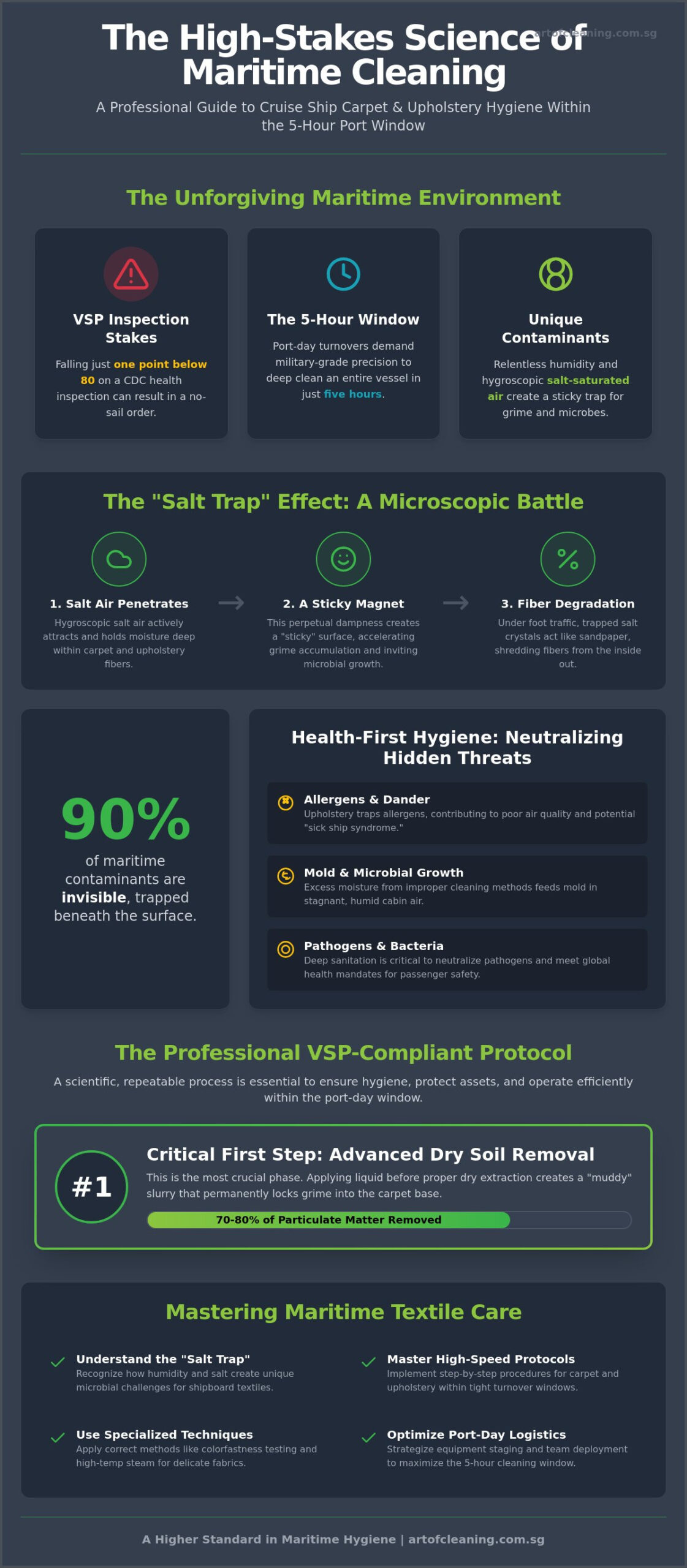
Did you know that falling just one point below an 80 on a CDC Vessel Sanitation Program (VSP) inspection can result in a forced pause on sailing? For maritime housekeeping teams, the challenge isn’t just aesthetic; it’s a high-stakes race against biology and the clock. You’re likely battling the relentless humidity that invites mold into cabins and the salt-saturated air that turns luxury flooring into a sticky magnet for contaminants. Understanding how to clean cruise ship carpet and clean cruise ship upholstery requires more than standard commercial methods. It demands a scientific approach to hygiene that respects the intense five-hour port-day window.
We agree that the pressure to maintain a pristine environment while protecting expensive maritime textiles is immense. This guide provides a professional roadmap to mastering these specialized logistics. You’ll discover a repeatable, high-speed protocol designed to extend the lifespan of your fabrics and ensure your vessel consistently achieves top-tier health ratings. From neutralizing salt-air residue to implementing advanced disinfection standards, we’re diving into the meticulous craft of deep-sea sanitation that prioritizes passenger well-being and operational efficiency.
Key Takeaways
- Understand the “Salt Trap” effect and how maritime humidity creates unique microbial challenges for shipboard textiles.
- Master the professional step-by-step protocols for how to clean cruise ship carpet and clean cruise ship upholstery within tight turnover windows.
- Learn specialized techniques for delicate fabrics, including colorfastness testing and high-temperature steam cleaning for curtains and headboards.
- Optimize port-day logistics with strategies for multi-deck efficiency and equipment staging to maximize the five-hour cleaning window.
- Discover how scientific hygiene standards and precision care protect your maritime assets while improving passenger health ratings.
The Unique Science of Cruise Ship Carpet and Upholstery Maintenance
Large-scale Cruise ships operate as complex ecosystems where environmental factors directly impact interior longevity. Unlike land-based hotels, these vessels face the relentless “Salt Trap” effect. Salt air is naturally hygroscopic, meaning it actively attracts and holds moisture within carpet fibers. This creates a perpetual state of dampness that makes surfaces feel “sticky” and accelerates the accumulation of grime. In the high-humidity environment of a cabin, this moisture doesn’t just sit; it invites microbial growth that can compromise both the fabric and the air quality.
Maintaining luxury aesthetics requires an understanding of “corridor wear.” Thousands of passengers traverse the same narrow paths daily, grinding salt and grit deep into the pile. Traditional residential methods often fail here because they rely on high-moisture saturation. At sea, excess water is the enemy. It leads to prolonged drying times and potential mold growth in stagnant cabin air. Precision care requires industrial-grade suction and low-moisture encapsulation to prevent the “wicking” of deep-seated stains. Mastering how to clean cruise ship carpet and clean cruise ship upholstery is what separates a surface-level tidy from a scientific deep clean that preserves the vessel’s capital investment.
Hygroscopic Residues and Fiber Degradation
When salt air penetrates a cabin, microscopic salt crystals settle into the base of the textiles. Under the weight of foot traffic, these crystals act like sandpaper, physically shredding individual fibers from the inside out. Standard cleaning surfactants often react poorly with these saline deposits, creating a gummy chemical residue that attracts even more dirt. Research indicates that up to 90% of maritime contaminants remain invisible, trapped beneath the surface where they silently degrade the integrity of the fabric. This is why the technical process of how to clean cruise ship carpet and clean cruise ship upholstery must account for residues that standard vacuums simply cannot reach.
Just as interior textiles require scientific decontamination, exterior hull maintenance is vital for overall vessel performance; for example, specialized boat antifouling Auckland services help prevent marine growth that can compromise a ship’s efficiency and structural health.
The Health-First Approach to Maritime Hygiene
Cleanliness on a vessel is a matter of public health. The Vessel Sanitation Program (VSP) maintains rigorous standards, and your carpet hygiene directly influences these critical scores. Upholstery in common areas and cabins often traps allergens, dander, and pathogens that contribute to “sick ship syndrome.” By prioritizing a health-first protocol, operators can neutralize these hidden threats effectively. Deep cleaning isn’t just about removing a visible wine stain; it’s about sanitizing the environment to ensure a safe, breathable space for every passenger on board. This meticulous attention to detail allows a brand to maintain its reputation for luxury while meeting the strictest global health mandates. For travelers who value this level of refinement, the opportunity to explore Grooming and premium hospitality at world-class destinations serves as a benchmark for the quality they expect on a high-end cruise.
How to Clean Cruise Ship Carpet: A Professional Step-by-Step Protocol
Execution on port days requires a military level of precision. With thousands of passengers disembarking and a new wave arriving in mere hours, the window for deep cleaning is exceptionally narrow. The process begins with a meticulous pre-inspection to identify high-traffic corridors and specific maritime contaminants such as salt crusts, hydraulic oil from maintenance, or tannin-heavy wine spills. Identifying these soil types early allows for the selection of targeted chemistry that breaks down the bond between the fiber and the contaminant without damaging the delicate textile backing.
Adhering to the Vessel Sanitation Program (VSP) standards is non-negotiable for operational success. This protocol isn’t just about appearance; it’s a critical component of public health. A scientific approach to how to clean cruise ship carpet and clean cruise ship upholstery ensures that every square inch of the vessel remains hygienic and safe. Following a structured methodology prevents the cross-contamination that often occurs with rushed, untrained cleaning crews.
Step 1: Advanced Dry Soil Removal
Dry soil removal is the most critical phase of maritime floor care. Professional standards dictate that 70% to 80% of particulate matter must be removed before any liquid solution touches the fiber. If moisture is applied to a carpet saturated with salt and grit, it creates a “muddy” slurry that is nearly impossible to extract fully. We use industrial-grade HEPA-filtration vacuums that trap microscopic allergens and prevent them from being recirculated into the cabin air. Specialized attention is given to salt-crusted edges near cabin doorways, where sea air deposits are most concentrated.
Step 2: Low-Moisture Encapsulation vs. Steam Cleaning
The choice between cleaning methods depends entirely on the available turnover time and the soil level. For rapid restoration where 30-minute dry times are required, low-moisture encapsulation is the preferred choice. This technique uses specialized polymers that crystalize around soil particles, allowing them to be vacuumed away during the next scheduled maintenance. However, for deep-set microbial removal and heavy staining, hot water extraction (HWE) remains the gold standard. Utilizing a Professional Carpet Cleaning protocol helps balance pH levels, preventing the common “fiber browning” that occurs when alkaline residues react with salt.
To ensure your vessel meets these rigorous hygiene benchmarks, consider partnering with a team that understands the nuances of professional maritime sanitization. After the extraction phase, we utilize high-velocity air movers and post-cleaning grooming brushes to reset the pile. This final step ensures the carpets don’t just look clean but feel soft and dry before the first passenger steps into the cabin.
Specialized Techniques for Cleaning Cruise Ship Upholstery and Fabrics
Luxury cabin interiors feature a sophisticated mix of textiles that require a higher level of technical care than standard residential furniture. Before any cleaning begins, we perform rigorous colorfastness testing on every sofa, armchair, and headboard. This diagnostic step prevents dye migration and protects the vibrant aesthetics of high-end cabin furnishings. Because these fabrics are subjected to constant salt-air exposure and varying cabin temperatures, they often develop a unique chemical profile that requires a customized cleaning solution. Mastering how to clean cruise ship carpet and clean cruise ship upholstery involves recognizing these subtle fiber reactions before they lead to permanent damage.
Adhering to professional IICRC cleaning standards ensures that each piece of furniture is treated with the appropriate heat and suction levels. High-touch areas like dining chairs and lounge seating are breeding grounds for microscopic contaminants. We utilize low-moisture steam technology to sanitize these surfaces effectively without over-saturating the internal padding. This approach kills bacteria on contact while allowing the furniture to be ready for use within minutes, maintaining the vessel’s operational rhythm.
Cleaning Fire-Retardant Upholstery
Maritime safety depends on the integrity of fire-retardant treatments applied to cabin fabrics. Many cruise ship textiles are IMO-compliant, meaning they meet strict International Maritime Organization standards for flame resistance. Using aggressive or highly alkaline cleaning agents can strip these critical coatings, leaving the vessel vulnerable and out of compliance. We utilize pH-neutral cleaning solutions that lift oils and grime while leaving the fire-retardant properties fully intact. A scientific approach to how to clean cruise ship carpet and clean cruise ship upholstery ensures that aesthetic beauty never comes at the cost of passenger safety or regulatory compliance.
Deep Cleaning Mattresses and Headboards
Mattresses in a high-turnover environment are magnets for allergens, dust mites, and skin cells. Because cabin turnover windows are so tight, we employ specialized extraction tools that reach deep into the mattress layers to remove 99% of hidden contaminants. For headboards, which are often fixed to delicate wall mounts, we use precision hand-tools that provide deep sanitization without risking structural damage to the cabin walls. For those interested in the technical nuances of fabric care, our Sofa Cleaning in Singapore guide offers additional insights into maintaining hygiene in high-humidity climates. This level of meticulous care extends the lifespan of expensive maritime assets while significantly improving the hygiene scores of the vessel.
Logistics and Port-Day Execution: Managing High-Speed Turnover
Port day represents a logistical marathon where timing is everything. While previous sections detailed the technical aspects of how to clean cruise ship carpet and clean cruise ship upholstery, the true test lies in the execution within a rigid five-hour window. Success requires perfect synchronization between cleaning teams and housekeeping schedules. As soon as a cabin is vacated, the deep-cleaning protocol must begin. This narrow timeframe is the only opportunity to reset the vessel’s hygiene standards before the next wave of thousands of passengers arrives. Efficiency isn’t just a goal; it’s a requirement for maintaining the vessel’s operational flow and passenger health ratings.
We prioritize a health-first approach by deploying high-velocity industrial air movers immediately after extraction. This ensures that every fiber is bone-dry before the first suitcase rolls into the cabin. Staging equipment across multiple decks simultaneously prevents bottlenecks at elevators and ensures that no area is overlooked. This level of precision protects the vessel’s capital investment and prevents the “sticky” carpet feel caused by salt air and lingering moisture.
The Tactical Cleaning Timeline
Our teams operate on a strict hourly schedule to guarantee results. During the first hour, we focus on dry soil extraction and targeted spot treatment for maritime-specific stains like salt crusts or wine. Hours two and three are dedicated to deep extraction and the sanitization of high-touch upholstery, including cabin sofas and dining chairs. The final two hours are reserved for forced drying and a meticulous final inspection. This structured timeline ensures that every cabin meets the highest hygiene benchmarks before embarkation begins.
Equipment and Power Logistics
Operating on a cruise ship presents unique power and environmental challenges. Ship-board electrical systems often have specific limitations, requiring careful cord management to prevent tripping hazards during the disembarkation rush. Art of Cleaning utilizes specialized low-decibel equipment designed for maritime environments. This allows us to perform deep-cleaning tasks without disrupting the passenger experience in common areas. Additionally, we strictly manage grey-water disposal in accordance with international maritime environmental regulations, ensuring that our precision care never compromises the ocean ecosystem.
To secure a partner that understands the high-stakes logistics of maritime turnover, book a professional consultation with Art of Cleaning to discuss your vessel’s specific cleaning requirements and schedule.
Art of Cleaning: Elevating Maritime Standards in Singapore
Singapore’s status as a premier global cruise hub demands a level of sanitation that exceeds standard commercial expectations. Local operators trust Art of Cleaning because we treat maritime maintenance as a science rather than a chore. We understand that the high-stakes environment of a luxury vessel requires a Professional Deep Cleaning Service that can deliver medical-grade hygiene without compromising the delicate fibers of expensive textiles. Our expertise in how to clean cruise ship carpet and clean cruise ship upholstery is built on years of serving the specific needs of the Singaporean maritime industry, where humidity and high passenger turnover are constant challenges.
Our commitment to health consciousness means we don’t just clear away visible dirt; we eliminate the microscopic pathogens that thrive in cabin environments. By using a scientific approach, we provide fleet managers with the quiet confidence that their vessel is a safe sanctuary for every family on board. This meticulous care is why our brand has become a hallmark of reliability in the region. We prioritize the well-being of your guests by ensuring that every surface is sanitized to the highest possible standard, reflecting the prestige of your cruise line.
Our Meticulous Maritime Process
We utilize high-impact data to verify the effectiveness of our work, quantifying the exact percentages of contaminants removed from surfaces. This data-driven methodology allows us to guarantee that 99% of allergens and microbial threats are eliminated during our deep extraction process. This artisanal attention to detail is particularly vital for luxury suites and VIP lounges, where the expectations for aesthetics and hygiene are highest. Our reputation for precision is further bolstered by our history of being featured on major national media platforms, serving as a verified endorsement of our professional standards in Singapore. We take pride in the craft of cleaning, ensuring that every project reflects the high standards associated with the Art of Cleaning name.
Next Steps for Fleet Managers
Maintaining a fleet requires a strategic partner capable of handling both routine care and unexpected challenges. We offer customized maintenance contracts designed for recurring port calls, ensuring your vessel remains in peak condition year-round without disrupting tight schedules. For high-profile events or sudden mishaps, our team provides on-call emergency stain removal to protect your assets from permanent damage. Every fleet assessment we conduct is thorough and transparent, prioritizing the long-term health of your textiles and the well-being of your passengers. We don’t just clean; we act as guardians of your onboard environment, providing the reliability you need to maintain top-tier health ratings.
Ready to elevate your vessel’s hygiene standards? Get a specialized quote for your maritime cleaning needs and discover the impact of precision maritime care.
Securing Your Vessel’s Hygiene and Longevity
Maintaining a luxury vessel requires a delicate balance between rapid turnaround and scientific precision. You’ve seen how the hygroscopic nature of salt air creates a unique “Salt Trap” and how the intense five-hour port-day window leaves no room for operational error. Mastering how to clean cruise ship carpet and clean cruise ship upholstery is ultimately about protecting your capital investment while ensuring passenger safety through verifiable hygiene standards. Surface-level tidiness is no longer sufficient for modern maritime health ratings; you need a protocol that addresses the microbial reality of life at sea.
Art of Cleaning provides the quiet confidence fleet managers need to maintain a pristine environment. We utilize specialized equipment designed for high-speed maritime turnover and provide data-driven hygiene verification to confirm the removal of deep-seated contaminants. Our meticulous approach has been featured on major national broadcasting networks, establishing our brand as a hallmark of trust in Singapore. We invite you to Book a Professional Maritime Consultation with Art of Cleaning to secure the health and beauty of your interiors. Let’s work together to ensure your ship remains a safe, luxurious sanctuary for every traveler.
Frequently Asked Questions
How long does cruise ship carpet take to dry after professional cleaning?
Most cruise ship carpets dry within 30 to 60 minutes when we utilize low-moisture encapsulation techniques. This rapid turnaround is essential for managing the tight turnover windows on port days. If a cabin requires deep hot water extraction for heavy soil, we deploy high-velocity industrial air movers to ensure the fibers are bone-dry before the next boarding window begins.
Are the cleaning chemicals used on cruise ships safe for passengers with allergies?
We prioritize the use of non-toxic, pH-neutral cleaning agents that are specifically formulated to be safe for families and passengers with respiratory sensitivities. Our scientific approach ensures that no aggressive residues remain in the fibers after the process is complete. This meticulous method effectively removes up to 99% of common allergens, such as dust mites and dander, from cabin textiles.
Can professional cleaning remove salt-water stains from cabin upholstery?
Professional cleaning effectively removes salt-water stains by neutralizing the hygroscopic crystals that trap moisture within the fabric. We use specialized chemistry to break the bond between the salt deposits and the upholstery fibers. This process prevents the “sticky” texture common in maritime environments and restores the original luxury feel of the cabin sofas and armchairs.
How often should high-traffic cruise ship common areas be deep cleaned?
High-traffic common areas, such as theater corridors and main dining lounges, should undergo professional deep cleaning at least once every quarter to maintain VSP compliance. Many luxury operators choose monthly maintenance to prevent the accumulation of “corridor wear” and salt-air residues. Consistent care extends the lifespan of expensive maritime textiles while ensuring the vessel consistently achieves top-tier hygiene ratings.
Will professional cleaning affect the fire-retardant properties of the fabrics?
Our cleaning protocols are designed to leave IMO-compliant fire-retardant treatments fully intact by using specialized, pH-balanced solutions. It’s a common misconception that deep cleaning strips these coatings; in reality, only aggressive, high-alkaline chemicals cause such degradation. Understanding how to clean cruise ship carpet and clean cruise ship upholstery safely is a core part of our technical maritime training.
How do you handle cleaning in a 24/7 cruise ship environment with minimal disruption?
We manage 24/7 environments by utilizing low-decibel industrial equipment and tactical scheduling during passenger disembarkation or late-night windows. Our teams are trained to operate with military-like precision to ensure that common areas remain accessible and quiet. This minimizes the impact on the guest experience while still achieving a deep, scientific level of sanitation across multiple decks.
What is the difference between standard commercial cleaning and maritime-grade cleaning?
Maritime-grade cleaning differs from standard commercial services by focusing heavily on salt-residue neutralization and extreme moisture control. Standard methods often fail at sea because they don’t account for the hygroscopic nature of sea air, which can lead to mold growth in high-humidity cabins. Our specialized process addresses these unique environmental variables to provide a more durable and hygienic result for the vessel.
Do you provide disinfection services alongside carpet and upholstery cleaning?
We provide comprehensive disinfection services as a standard part of our maritime cleaning protocols to eliminate hidden pathogens and bacteria. This health-first approach is essential for vessels aiming to achieve the highest scores in Vessel Sanitation Program inspections. By combining deep extraction with targeted disinfection, we create a safer and fresher environment for every passenger on board.