
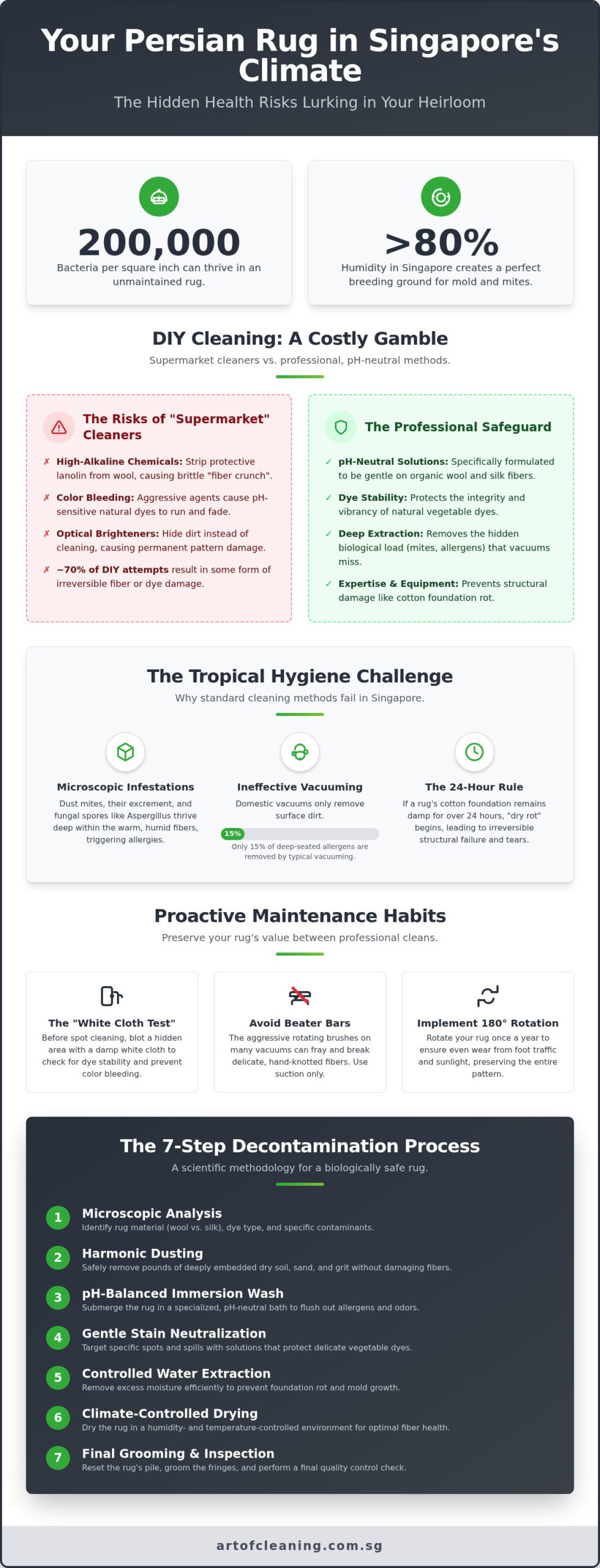
Did you know that a single square foot of an unmaintained rug can harbor up to 200,000 bacteria per square inch; making it significantly less hygienic than a typical city sidewalk? In Singapore’s unique tropical climate, where humidity levels frequently exceed 80%, your prized heirloom acts as a magnet for microscopic dust mites and fungal spores. You’ve likely spent years admiring the intricate patterns of your weave, yet you’re probably worried about the risk of color bleeding or that lingering musty odor that traditional vacuuming just won’t fix.
It’s understandable to feel protective of such a valuable asset. This guide provides a scientific roadmap on how to clean persian rug materials effectively while safeguarding their structural integrity and your family’s well-being. We’ll examine the latest 2026 hygiene standards, including the necessity of NEA-licensed expertise for professional-grade deep extraction. You will learn the specific pH-balanced protocols required to neutralize tropical contaminants, the art of preventing color bleeding during spills, and the professional drying techniques that stop mold before it starts. By the end, you’ll have the technical knowledge to keep your home environment both beautiful and biologically safe.
Key Takeaways
- Understand the biological risks of high humidity; Singapore’s moisture levels foster mold growth within the delicate organic fibers of your rug.
- Learn why traditional alkaline cleaners are dangerous for natural vegetable dyes and how to use pH-neutral solutions to prevent color bleeding.
- Master the correct techniques on how to clean persian rug spots safely using the “White Cloth Test” to ensure dye stability before any treatment.
- Discover proactive maintenance habits, such as avoiding beater bars and implementing a 180-degree rotation, to preserve the artisanal value of your textile.
- Gain insights into the professional 7-step decontamination process that quantifies and eliminates hidden pathogens for a healthier home environment.
Understanding the Delicate Anatomy of a Persian Rug
A Persian rug is a living textile that requires non-aggressive hygiene to maintain its biological and aesthetic integrity. Unlike mass-produced synthetic carpets, these masterpieces are hand-knotted structures typically composed of organic wool, silk, or a specialized blend. Gaining a scientific understanding of the delicate anatomy of a Persian rug is the first step in ensuring its longevity in Singapore’s challenging climate. Natural vegetable dyes used in these weaves are inherently pH-sensitive. They will bleed or migrate if they encounter the aggressive alkaline chemicals found in standard supermarket cleaners.
The structural foundation of the rug, known as the warp and weft, often consists of cotton. While cotton provides a sturdy base for the knots, it’s highly susceptible to rot and mold if the rug remains damp for even a few hours too long. This creates a hidden danger in humid environments where moisture becomes trapped deep within the fibers, leading to structural failure that’s often invisible until the rug begins to tear. This structural complexity is why knowing how to clean persian rug foundations properly is as important as surface care.
Wool vs. Silk: Identifying Your Rug Material
Identifying your specific material is the most critical factor when determining how to clean persian rug fibers safely. While professional fiber analysis is the only definitive method, some experts use a “Burn Test” to distinguish between protein-based wool and delicate silk. Each material demands a different scientific approach:
- Silk Rugs: These require zero-moisture or specialized low-moisture care. Liquid saturation can cause the delicate fibers to lose their sheen and structural strength.
- Wool Rugs: These act as organic air filters. They can trap up to four times their weight in microscopic dust and allergens. This makes them excellent for indoor air quality but necessitates deep extraction to remove the hidden biological load.
The Risk of DIY “Supermarket” Cleaners
Homeowners often underestimate the chemical volatility of natural dyes. High-pH detergents strip the protective lanolin from wool fibers, resulting in a brittle “fiber crunch” that accelerates wear. Many commercial products also contain optical brighteners. These chemicals don’t actually clean; they simply reflect light to hide dirt while permanently damaging antique patterns. Industry reports indicate that approximately 70% of DIY rug cleaning attempts lead to some form of fiber damage. Entrusting these textiles to an artisanal service ensures that the chemical balance remains neutral, preserving both the health of your home and the value of your investment.
The Science of Rug Hygiene in Singapore’s Tropical Climate
Singapore’s average humidity ranges between 70% and 90%. This atmospheric moisture transforms Persian rugs into biological reservoirs. Unlike rugs in arid regions, those in the tropics absorb significantly more ambient water. This moisture bonds with organic fibers, creating an ideal incubation chamber for Aspergillus and other fungal colonies. Understanding this environmental pressure is vital when researching how to clean persian rug fibers effectively in a local context. These organic textiles don’t just hold water; they trap invisible contaminants such as dust mite excrement and skin cells deep within the pile. These particles are primary triggers for respiratory distress and persistent allergies in Singaporean households. When humidity meets these biological loads, a chemical reaction occurs, releasing the volatile organic compounds (VOCs) that we recognize as that distinct, musty odor.
Combating the Tropical Dust Mite
Standard domestic vacuuming is often insufficient for deep-pile textiles. It typically removes only 15% of deep-seated allergens, leaving the majority of the biological load untouched. For many families, this results in intensified nighttime allergy symptoms as mites thrive in the rug’s warmth. Scientific decontamination requires specialized extraction or controlled heat to neutralize mite larvae effectively. While some resources offer advice on safe DIY spot cleaning for surface spills, they rarely address the microscopic infestation that requires professional-grade equipment.
Preventing Mold and “Dry Rot” in High Humidity
The 24-hour rule is a critical benchmark in tropical rug care. If a rug remains damp for more than a day, the cotton foundation begins to break down. This process, known as dry rot, is irreversible and destroys the rug’s structural integrity. We utilize professional dehumidification during our rug cleaning process to protect the warp and weft from moisture damage. Identifying early signs of mustiness is essential; that faint smell is a warning that fungal activity is already compromising the fibers. Learning how to clean persian rug foundations correctly involves managing this moisture transition with extreme precision. Taking action before structural damage occurs is the only way to preserve both the hygiene and value of your investment.
Safe DIY Spot Cleaning vs. Professional Decontamination
The moment a liquid spill hits an organic weave, a chemical clock starts ticking. Your immediate reaction determines whether the incident remains a minor spot or becomes a permanent scar on your heirloom. The most critical rule is to blot, never rub. Rubbing forces the liquid deeper into the pile and distorts the delicate fiber scales, causing irreversible texture damage. Before applying any solution, you must perform the “White Cloth Test.” Dampen a clean white towel and press it firmly onto an inconspicuous area of the rug for ten seconds. If any dye transfers to the cloth, the rug is not colorfast; any further DIY attempts will cause the colors to bleed across the pattern.
You should avoid common internet “hacks” like using baking soda. While it’s often recommended for odors, baking soda is highly abrasive at a microscopic level. It acts like tiny shards of glass against the natural cuticles of wool fibers, stripping away their protective lanolin and causing premature thinning. While home methods provide temporary relief, professional extraction removes 99% of contaminants compared to the mere 30% achieved through manual DIY scrubbing. This disparity is why understanding how to clean persian rug fibers correctly requires a balance between emergency response and professional intervention.
The Safe DIY Emergency Protocol
If you face a fresh spill, follow this scientific three-step protocol to minimize damage. First, use a clean, undyed white towel to absorb as much liquid as possible; colored towels can transfer their own dyes onto the rug. Second, use only lukewarm distilled water for rinsing. Tap water in Singapore contains minerals like calcium and magnesium that can leave unsightly rings or “tide marks” as they dry. Finally, elevate the affected section by placing a sturdy object underneath it. This allows airflow to reach both the face and the cotton foundation, preventing the 24-hour mold cycle discussed in previous sections.
When DIY Becomes Dangerous: The Limits of Home Care
Certain substances require immediate professional attention because they bond chemically with natural fibers. Spills involving tannins, such as red wine or tea, and protein-based accidents like pet urine, are notoriously difficult to neutralize at home. Using “steam cleaners” rented from hardware stores is the primary cause of rug shrinkage in Singapore. The combination of high heat and excessive moisture is fatal to hand-knotted cotton foundations. Furthermore, DIY cleaning often results in the “Shadowing” effect. This occurs when you clean a single spot so thoroughly that it leaves a bright, clean ring, highlighting the accumulated tropical dust in the rest of the rug. Understanding these limitations is essential for the long-term proactive maintenance for your rug.
Proactive Maintenance: Preserving Your Rug Between Deep Cleans
Maintenance is the silent guardian of your textile investment. While professional decontamination is essential for health, your daily habits dictate how long the organic fibers remain resilient. Rotating your rug 180 degrees every six months is a non-negotiable practice in Singaporean homes. In high-traffic living areas, this simple action prevents localized wear patterns and ensures that the pile settles evenly. It stops the “pathway effect” where specific sections become permanently matted; making them nearly impossible to restore even with advanced equipment. Mastering how to clean persian rug surfaces daily ensures that microscopic grit doesn’t turn into sandpaper within the foundation.
The Correct Way to Vacuum a Persian Rug
Vacuuming is a mechanical process that requires precision rather than force. You must disable the “beater bar” or rotating brush on your machine immediately. These aggressive components are designed for synthetic wall-to-wall carpets. On a hand-knotted rug, they act as abrasive tools that shred the delicate cuticles of the wool fibers. Use suction-only attachments to remove surface debris without causing fiber shedding. Once a month, flip the rug over and vacuum the back. This technique vibrates deep-seated grit out of the foundation, which prevents the sharp particles from cutting the cotton warp and weft. Always treat the fringe with extreme care. It is the most vulnerable part of the rug’s structural integrity; never run a vacuum head over it. Instead, use a soft-bristle brush to straighten the fringes manually.
Sunlight and Placement Strategy
Tropical sunlight is a silent catalyst for chemical degradation. Even through high-quality glass, UV rays penetrate natural vegetable dyes, causing permanent sun bleaching in localized patches. Using UV-filtering window films is an effective way to protect your rug’s vibrant palette. Additionally, the high humidity in Singapore demands that your rug “breathes” to prevent the fungal growth discussed in our hygiene section. Never use plastic or rubber underlays. These materials trap moisture against the floor and accelerate foundation rot. Opt for high-quality felt padding instead. It provides a protective buffer that prevents fiber friction against hard flooring while allowing essential airflow. If you have already noticed signs of pile crushing or localized fading, it’s time to consult our artisanal cleaning specialists for a restorative treatment.
Heavy furniture also poses a risk to the structural health of your rug. Always use wide “coasters” under the legs of sofas or tables to distribute the weight. This prevents permanent pile crushing that can snap the underlying threads over time. By combining these placement strategies with correct vacuuming, you create a home environment that prioritizes both the longevity of your decor and the hygiene of your living space.
Professional Rug Cleaning: The Art of Cleaning Methodology
Professional decontamination is a scientific necessity rather than a luxury for Singaporean homeowners. While DIY methods only address 30% of surface pollutants, our methodology focuses on quantifying and eliminating the invisible pathogens residing deep within the knot foundation. We treat every textile as a unique biological environment. Our approach balances aesthetic restoration with rigorous deep-tissue sanitization, ensuring your heirloom is as healthy as it is beautiful. This meticulous attention to detail is why our specialized Rug Cleaning Singapore service remains the safest alternative to risky home washing attempts.
Our artisanal process follows a strict 7-step hygiene protocol. It begins with a comprehensive fiber analysis to determine dye stability and material composition. We then perform high-frequency dry soil extraction to remove the abrasive grit that standard vacuums miss. After applying pH-neutral, eco-friendly solutions, we utilize controlled agitation to break down protein stains and tannins. The process concludes with a specialized rinse and our signature drying phase. This systematic journey ensures that every fiber is restored to its optimal state without the risk of chemical residue or fiber damage.
Deep Extraction and Allergen Removal
The base of a hand-knotted rug is a complex trap for biological contaminants. Our professional-grade deep extraction equipment reaches the very core of the cotton foundation, removing 99.9% of dust mites, bacterial colonies, and fungal spores. This level of hygiene is impossible to achieve with domestic tools. In Singapore’s humidity, the drying phase is the most critical step. We utilize a controlled environment with industrial dehumidifiers to ensure the rug dries rapidly and evenly. This prevents the “dry rot” and stiffness discussed in previous sections; leaving the wool supple and the foundation structurally sound.
Trust and Transparency in Textile Care
Choosing a service provider requires a foundation of health-based trust. We take pride in our status as a verified hygiene partner, having been featured on major local broadcasting networks for our commitment to home safety. Our team doesn’t just clean; we act as guardians of your living space. We maintain a completely transparent pricelist for both residential and commercial clients, ensuring there are no hidden fees or surprises. When you understand the technical requirements of how to clean persian rug materials, the value of an expert, health-conscious team becomes clear. Your family deserves a home environment free from hidden allergens and pathogens. Contact Art of Cleaning today for a professional rug assessment and experience the precision of our artisanal care.
Securing the Longevity and Hygiene of Your Heirloom
Preserving a Persian rug in Singapore requires a shift from surface aesthetics to scientific hygiene. You now understand that high humidity transforms organic fibers into biological reservoirs; making professional decontamination a necessity rather than a choice. While daily maintenance like correct vacuuming and 180-degree rotation extends the life of the pile; it’s the deep extraction that removes 99.9% of allergens and bacterial colonies. Mastering how to clean persian rug materials involves recognizing the limits of home care and trusting artisanal expertise.
As specialists in high-value textile hygiene featured on major local broadcasting networks; we provide the precision your home deserves. Our 99.9% allergen removal guarantee ensures that your living environment is biologically safe for your family. Restore your rug’s health with Art of Cleaning and ensure your living space remains a sanctuary of well-being. Your investment is a piece of history; let’s work together to keep it vibrant and safe for generations to come.
Frequently Asked Questions
Can I use a steam cleaner on my Persian rug?
You should avoid using a domestic steam cleaner on a Persian rug. The high-temperature vapor causes natural fibers like wool and silk to become brittle; while the excessive moisture often leads to irreversible shrinkage of the cotton foundation. This process can also trigger dye migration. Professional deep extraction is the only safe method for managing how to clean persian rug materials without compromising their structural integrity or aesthetic value.
How often should a Persian rug be professionally cleaned in Singapore?
In Singapore’s high-humidity environment, we recommend professional cleaning every 12 to 18 months. If your household includes pets, young children, or individuals with respiratory sensitivities, increasing this frequency to every 6 to 9 months is advisable. Regular professional intervention prevents the accumulation of microscopic tropical contaminants and ensures the rug doesn’t become a biological reservoir for mold spores or dust mite larvae.
Is it safe to clean a Persian rug with vinegar and baking soda?
It’s not safe to use vinegar or baking soda on high-value textiles. Vinegar’s acidity can destabilize natural vegetable dyes, leading to permanent color bleeding. Baking soda is microscopically abrasive and strips the essential lanolin from wool fibers, causing them to become dry and prone to breaking. For safe maintenance, stick to blotting with distilled water and seeking professional assistance for any significant stains or odors.
What should I do if my Persian rug starts to smell musty?
A musty odor indicates active fungal growth or mold within the foundation. You should immediately elevate the rug to improve airflow and reduce ambient humidity in the room. Don’t attempt to mask the scent with retail sprays; as these often add moisture that feeds the fungi. Professional sanitization is required to kill the spores and deep-clean the fibers, ensuring your home environment remains hygienic and odor-free.
How do I know if my rug is real silk or wool?
You can distinguish materials through a simple “Burn Test” on a tiny, inconspicuous thread. Wool and silk are protein-based and will smell like burning hair while leaving a crushable black ash. Synthetic fibers typically melt like plastic or smell like burning paper. Real silk also feels significantly cooler to the touch and possesses a natural luster that changes when viewed from different angles compared to artificial “viscose” silk.
Will professional cleaning cause the colors of my rug to bleed?
Professional cleaning shouldn’t cause color bleeding when performed by specialists using pH-neutral solutions. We conduct a stability test on every rug before the process begins to identify any fugitive dyes. Our artisanal methodology involves using specific dye stabilizers and controlled drying techniques to prevent migration. This scientific approach is the safest way to manage how to clean persian rug fibers while ensuring vibrant patterns remain sharp and distinct.
Can you remove pet urine stains and odors from Persian rugs?
We can effectively remove pet urine stains and odors using specialized deep extraction equipment. Unlike surface cleaning, our process neutralizes the uric acid crystals trapped deep within the rug’s knotting. We use health-conscious, enzyme-based treatments that break down the biological components of the stain without damaging natural fibers. This ensures the complete elimination of odors rather than simply masking them with artificial fragrances.
How long does the professional rug cleaning process take?
The professional rug cleaning process typically requires 7 to 10 working days. This duration allows for a meticulous 7-step protocol, including thorough fiber analysis, deep soil extraction, and essential controlled drying. In Singapore’s climate, we prioritize a slow, dehumidified drying phase to prevent any risk of foundation rot or stiffness. This careful timing ensures that your rug is returned in a perfectly hygienic and restored condition.