
What if the haze has cleared from the sky, but fine dust is still sitting on shelves, floors and fabrics? After a haze episode, it can be difficult to tell what needs cleaning. Dry sweeping or wiping may send settled particles back into the air, so a careful after haze cleaning checklist helps you tackle the home in a practical order.
Dust can settle on overlooked surfaces and soft furnishings, so the cleaning method matters as much as remembering each spot. Start by capturing loose dust with suitable tools, then damp-wipe surfaces that can tolerate moisture.
This guide takes you room by room and surface by surface, from high-touch areas and floors to curtains, rugs, sofas and mattresses. You’ll learn what to clean first, how to care for different materials, and when routine upkeep may not be enough. For fabrics that need deeper care, Art of Cleaning provides professional cleaning tailored to the item and cleaning need.
Key Takeaways
- Use the after haze cleaning checklist to work through overlooked spots, from entryways and window sills to appliance exteriors and floors.
- Follow a practical sequence: assess the home, capture loose dust, wipe suitable surfaces, clean floors, then reassess.
- Check carpets, sofas, mattresses and curtains for signs that routine care may not be enough. Dust alone doesn’t automatically call for intensive cleaning.
- Use a final walkthrough to catch missed areas, and follow current National Environment Agency updates when making air-quality and ventilation decisions.
- When fabrics need deeper care, Art of Cleaning offers professional cleaning tailored to the item and cleaning need, using eco-friendly, family- and pet-safe solutions.
After haze in Singapore: when to start your home cleaning checklist
This checklist is for cleaning dust that has settled indoors after haze, not for protecting your household during an active haze episode. Before deciding when to open windows, ventilate rooms or begin cleaning, check the latest National Environment Agency (NEA) updates and follow current air-quality guidance. A full clean can wait until conditions make it sensible to proceed.
Haze is an atmospheric phenomenon involving particles such as smoke and dust that can affect visibility; see What is Haze? for a general overview. Indoors, you may not see a clear film on every surface. Check frequently used surfaces and fabric-covered items too. Post-haze cleaning is the systematic removal of settled indoor dust from surfaces and furnishings, using methods suited to each material.
What to assess before cleaning after haze
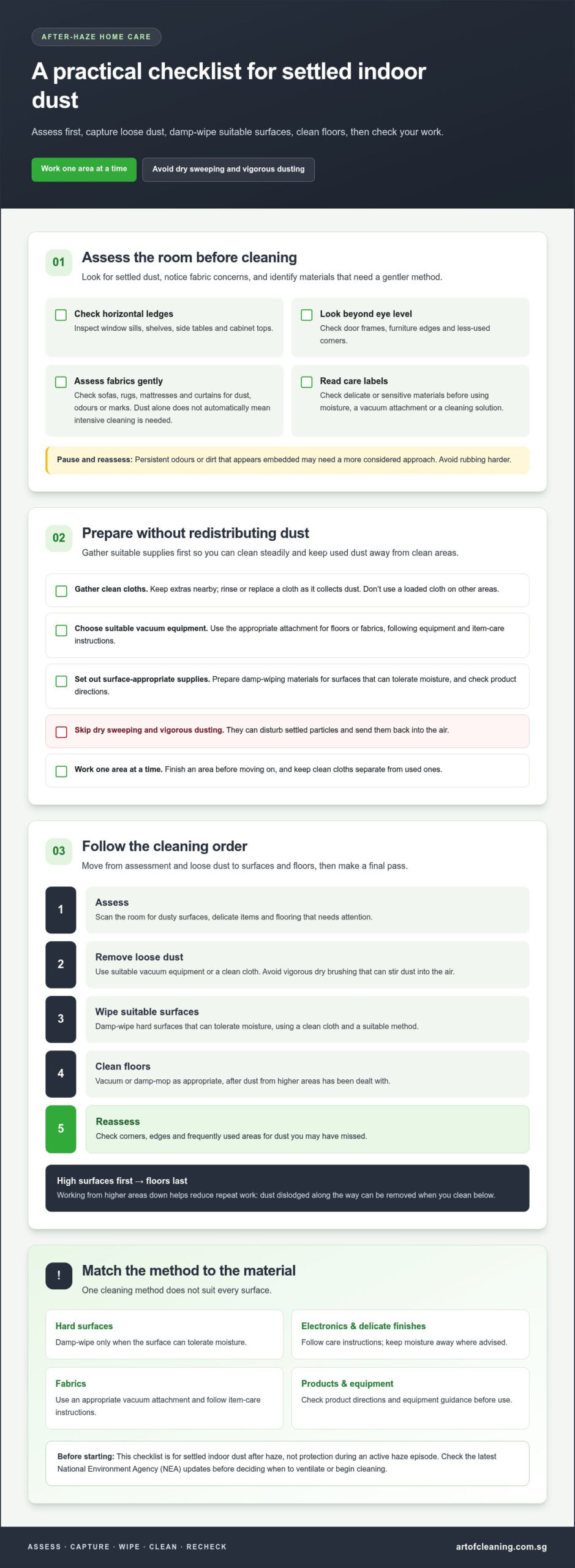
Walk through one room at a time before choosing tools or cleaning products. Look across ledges, floors, furniture and fabric surfaces, including places you touch or use daily. This quick assessment helps you distinguish light surface dust from odours or embedded dirt that routine wiping may not address.
- Check horizontal ledges: Look at window sills, shelves, side tables and cabinet tops, where fine dust can settle.
- Look beyond eye level: Inspect door frames, furniture edges and less-used corners, not just the most visible surfaces.
- Assess fabrics gently: Check sofas, rugs, mattresses and curtains for dust, odours or marks. Dust on fabric alone doesn’t mean intensive cleaning is necessary.
- Read care labels: Identify delicate or sensitive materials before using moisture, a vacuum attachment or any cleaning solution.
Note what you find rather than treating every item the same way. A dusty hard surface may need a careful wipe, while delicate fabric may require a gentler approach. If you notice persistent odours or dirt that appears embedded, set the item aside for a more considered cleaning approach instead of rubbing harder.
How to prepare without spreading settled dust
Gather your supplies before starting so you can clean steadily and avoid carrying dust from one area to another. Choose equipment and products appropriate for each surface, and work methodically rather than trying to clear the whole home at once.
- Gather clean cloths: Keep extras nearby and rinse or replace each cloth as it collects dust. Don’t use a loaded cloth on other areas.
- Choose suitable vacuum equipment: Use an appropriate attachment for floors or fabrics, following the equipment and item care instructions.
- Prepare surface-appropriate supplies: Keep damp-wiping materials ready for surfaces that can tolerate moisture. Check a product’s directions before applying it.
- Skip dry sweeping and vigorous dusting: These actions can disturb settled particles and send them back into the air.
- Work one area at a time: Finish an area before moving on, and keep clean cloths separate from used ones.
This preparation makes the after haze cleaning checklist easier to follow and reduces the risk of redistributing dust as you clean. As professional residential housekeeping services like Valley Clean often emphasize, working with clean, staged supplies is essential to contain dust effectively. Once you’ve assessed the home and gathered suitable supplies, move through the checklist in a deliberate order.
The right post-haze cleaning order: work from dust removal to damp wiping
A clear sequence helps you remove settled dust without carrying it from one surface to the next. Use this order for your after haze cleaning checklist, adapting each step to the material and the equipment you have:
- Assess: Scan the room and identify dusty surfaces, delicate items and flooring that needs attention.
- Remove loose dust: Start with suitable vacuum equipment or a clean cloth. Avoid vigorous dry brushing that can stir dust into the air.
- Wipe surfaces: Damp-wipe hard surfaces that can tolerate moisture, using a clean cloth and a suitable method.
- Clean floors: Vacuum or damp-mop as appropriate, after dust from higher areas has been dealt with.
- Reassess: Check corners, edges and frequently used areas for dust you may have missed.
Removing loose dust before damp wiping helps prevent a dusty cloth from smearing particles across a surface. The right approach depends on the material. A damp cloth may suit a sealed hard surface, but it isn’t automatically appropriate for electronics, delicate finishes or fabric. Follow care instructions and equipment guidance rather than applying one method everywhere.
Start high and capture loose dust
Begin with reachable ledges, shelves, window frames and other horizontal surfaces, working from higher areas down. A suitable vacuum attachment can collect dust from edges and crevices; a clean cloth may suit surfaces that need a lighter touch. Take care around electronics and delicate objects. Follow their care instructions, keep moisture away where advised, and don’t brush dust vigorously into the room.
Cleaning higher surfaces before floors reduces repeat work because any dust dislodged during the process can be removed when you clean below. For example, deal with a shelf and window frame before vacuuming or mopping the floor beneath them. Move small objects only if you can handle them safely, and clean each item using a method suited to its material.
Finish with contact surfaces and floors
Once loose dust has been captured, damp-wipe suitable hard surfaces with a clean cloth. Give attention to frequently touched handles, switches and tabletops, while using surface-safe methods and avoiding excess moisture. Rinse or change the cloth as it collects dust. Otherwise, you may spread residue from one spot to another.
Leave the floor until last. Vacuum carpets and other suitable flooring with appropriate equipment, or damp-mop hard floors that can tolerate it. Check corners, skirting edges and spaces around furniture, where dust can gather out of sight. If a surface is delicate or you’re unsure how it responds to moisture, pause and follow its care guidance instead of trying a stronger method.
If your walkthrough points to fabrics needing deeper care, Art of Cleaning’s professional cleaning services can be tailored to the item and cleaning need, using eco-friendly, family- and pet-safe solutions.
Room-by-room after haze cleaning checklist for overlooked surfaces
Use this room-by-room after haze cleaning checklist to catch dust on surfaces that are easy to miss during a quick tidy. Work through one space at a time, and choose a method suited to each material. For delicate finishes, electronics and appliances, follow the manufacturer’s care instructions before wiping or vacuuming.
Living spaces and bedrooms
Dust can collect on furniture tops and ledges even when the rest of the room looks clean. Check window areas carefully, but avoid brushing loose dust from tracks onto a surface or floor you’ve already cleaned. Keep any vacuum attachment or cloth under control, and don’t force tools into narrow gaps.
- Living area: Check coffee and side tables, cabinet tops, shelves, picture-frame ledges and reachable door frames. Wipe suitable hard surfaces, and inspect sofa arms and nearby rug edges without assuming fabric needs intensive cleaning.
- Bedrooms: Look over bedside tables, wardrobes, headboards and shelves. Check the window sill and accessible parts of the window track, then vacuum the floor or rug using equipment appropriate for the surface.
- Windows and ledges: Remove dust carefully from sills and reachable frames. If a track holds loose particles, use a suitable tool that captures them rather than flicking dust into the room.
Vents and air-conditioning surfaces can also collect dust. Limit cleaning to gentle dusting of accessible exterior surfaces. Don’t reach into vents or open equipment to clean internal parts. Follow the appliance instructions for filter care and other maintenance.
Kitchen, bathroom, and entryway
These areas combine frequently handled surfaces with finishes that may react differently to moisture or cleaning products. Choose a surface-safe method, and check product directions before applying anything broadly.
- Kitchen: Wipe suitable counters, cabinet exteriors, handles and appliance exteriors. Pay attention to the top and sides of appliances where accessible, and use care around controls, screens and openings. Keep moisture away from electrical areas as directed by the appliance maker.
- Bathroom: Check shelves, mirror edges and accessible ledges. Clean each with a method appropriate to its material, taking care with delicate finishes and surfaces that can be marked by abrasive tools.
- Entryway: Wipe the door frame, reachable ledges, shoe-storage surfaces and handles. Dust can enter on shoes and belongings, so include the area where items are placed when coming home.
- Floors: Finish by vacuuming or damp-mopping suitable flooring, including corners and edges. Use a method appropriate to the floor material, then check beneath accessible furniture where dust may have gathered.
As you move between rooms, keep used cloths separate from clean ones and replace them when they become dusty. A careful pass over these overlooked spots is more useful than applying the same wet method to every surface. If a finish is delicate or its care instructions are unclear, pause rather than risk damage.
Carpets, sofas, mattresses, and curtains: what needs deeper post-haze care?
Soft furnishings can hold dust, but a dusty surface alone doesn’t mean an item needs intensive cleaning. Start with a close inspection, check the care label or manufacturer’s instructions, then choose routine care that suits the material. Consider deeper care if dust persists after suitable surface cleaning, or if you notice lingering odours or embedded dirt.
| Item | Inspect | Routine care | Deeper-care cue |
|---|---|---|---|
| Carpet or rug | Look for visible dust, tracked-in debris and lingering odours. | Vacuum with equipment and settings suitable for the material. | Dust or debris remains after appropriate vacuuming, or odours persist. |
| Sofa | Check cushion surfaces, seams and creases where dust can gather. | Vacuum only if the care guidance allows it; use a suitable upholstery attachment. | Soiling or odour remains, or dust appears lodged beyond routine surface care. |
| Mattress | Inspect the surface and seams without pressing dust further into the fabric. | Follow the manufacturer’s care instructions for routine upkeep. | Persistent odour or visible soiling calls for more than the recommended routine care. |
| Curtain | Look for visible dust and check the fabric’s care label. | Use only a care method compatible with the fabric. | Dust remains after suitable routine care, or the fabric needs a specialist method. |
Assess carpets and upholstered furniture
For carpets and rugs, distinguish loose surface dust from debris caught deeper in the pile. Vacuum only with suitable equipment and in line with the item’s care guidance. For a sofa, check cushion seams and creases as well as the open surfaces. Don’t use a brush or vacuum attachment that may snag or damage the upholstery. If you’re considering more thorough carpet care, look for a remaining issue rather than treating the haze episode itself as a reason for deep cleaning.
Use the same measured approach for upholstered seating: inspect first, then decide whether routine care has addressed what you found. Avoid adding moisture or cleaning solutions unless the material instructions permit them.
Assess mattresses and curtains
Check mattress surfaces and seams, and follow the manufacturer’s directions before vacuuming or applying any product. For curtains, inspect the fabric in place for visible dust, then choose care compatible with its label. A method suitable for one curtain may not suit another, so don’t assume wet cleaning or steam is appropriate for every fabric.
When routine care doesn’t address a specific concern, Art of Cleaning provides Carpet Cleaning, Rug Cleaning, Sofa Cleaning, Mattress Cleaning, Curtain Steam Cleaning and Curtain Dry Cleaning. The team tailors its approach to the item and cleaning need, using professional-grade equipment and eco-friendly, family- and pet-safe solutions. Explore professional fabric cleaning services for carpets, sofas, mattresses and curtains that need deeper care.
Keep your home feeling clean after haze and choose the right next step
A thorough clean doesn’t mean repeating every task until the home feels spotless. Use your after haze cleaning checklist for one final, focused walkthrough: look for remaining visible dust, then address only the areas that still need attention. Haze conditions can change, so keep monitoring official National Environment Agency updates and use current guidance when making decisions about ventilation.
A practical post-cleaning check
Walk through the rooms you’ve cleaned and check ledges, floor edges, frequently touched surfaces and soft furnishings. Look for visible dust that remains, not a reason to start every task again. If a surface appears clean and you have no specific concern, leave it alone. This keeps the reset manageable and avoids unnecessary cleaning of delicate materials.
- Check key areas: Revisit window sills, shelves, handles and corners, along with fabrics you noted during your initial assessment.
- Reset your supplies: Rinse or replace used cloths, and clean vacuum attachments according to their instructions.
- Store equipment carefully: Put clean, dry supplies away so collected dust isn’t transferred back onto household surfaces.
A clean home can still be affected by particles entering later. This walkthrough helps catch what remains after cleaning, but one session cannot prevent new dust from settling. Adjust ventilation decisions to the latest official guidance rather than assuming conditions will stay the same.
When professional cleaning can help
Routine care may be enough when dust is light and responds to a suitable vacuum or fabric-safe method. Consider deeper care if visible dirt remains after appropriate routine cleaning, an odour lingers, or soil appears embedded in carpet or upholstery. Check care labels first, especially for delicate fabrics, and avoid using a wet method just because dust is present.
Art of Cleaning provides Carpet Cleaning, Sofa Cleaning and Mattress Cleaning for items that need deeper fabric care. The team uses professional-grade equipment and eco-friendly, family- and pet-safe solutions, tailoring the approach to the item and cleaning need. Professional cleaning can be a practical next step for a carpet that still looks soiled after suitable vacuuming, or upholstered furniture with a persistent concern that routine care hasn’t addressed.
Art of Cleaning serves customers across Singapore, with a free quote available for every service. If a fabric item needs more than routine care, share which item needs attention when requesting a quote.
Make your next cleaning step count
A post-haze reset doesn’t need to become a recurring deep clean. Let what you find guide your next move: keep up simple surface care, follow current guidance for ventilation, and set aside only fabrics with persistent visible dirt, odour or embedded soil for deeper attention. Your after haze cleaning checklist is a practical reference, not a reason to clean every item more often than its condition calls for.
If carpets, sofas or mattresses still need attention after suitable routine care, choose a cleaning approach suited to the specific fabric and concern. Art of Cleaning uses professional-grade equipment and eco-friendly, family- and pet-safe solutions. The company serves customers across Singapore and has been featured on Mediacorp Channel 8.
Ready to plan the right care for the items you’ve identified? Request a free quote for professional cleaning and take a clear next step toward a fresher-feeling home.
Frequently Asked Questions
Should I clean my home during haze or wait until it improves?
For a post-haze clean, wait until conditions and current guidance make it appropriate. During an active haze period, prioritise reducing exposure and follow the National Environment Agency’s latest advice rather than opening windows to clean. If a small indoor spill needs attention, avoid stirring up dust; save a full reset for when you can clean without compromising your household’s air-quality precautions.
Can haze dust settle on carpets, sofas, and curtains?
Yes. Airborne particles can settle on fabric, including carpet pile, sofa upholstery and curtains, even if there’s no obvious grey layer. Textured surfaces and folds may make dust harder to spot than it is on a smooth tabletop. Inspect fabrics in good light, but don’t assume that any dust means they need intensive treatment. Let the item’s condition and care instructions guide what you do next.
How do I clean haze dust without spreading it around?
Work gently and avoid shaking fabrics or dry sweeping, which can disturb settled dust. For suitable hard surfaces, use a clean, slightly damp cloth and turn or rinse it as dust collects. For floors and fabrics, choose vacuum equipment appropriate to the material. Empty and clean the vacuum according to its instructions, so collected debris isn’t released during storage or the next use.
Is vacuuming enough to remove haze dust from a carpet?
Vacuuming may be enough for loose surface dust if the carpet’s care guidance allows it and the carpet looks and smells clean afterward. Move furniture only if you can do so safely, and check accessible edges where dust or tracked-in debris may gather. If visible soil or an odour remains after suitable vacuuming, consider whether Carpet Cleaning is appropriate for the carpet material and condition.
Do I need to wash curtains after every haze episode?
No. Washing curtains after every haze episode isn’t automatically necessary. First check for visible dust, then read the care label because fabrics can require different cleaning methods. If the curtains look clean and have no persistent odour, routine care may be sufficient. Avoid taking them down or applying water or heat without checking the instructions, as unsuitable treatment can affect the fabric or its finish.
Does air-conditioning remove haze particles from indoor air?
Don’t assume that air-conditioning alone removes fine haze particles. An air conditioner’s filtration depends on its design and filter, so consult the unit’s instructions for what it can capture and how to care for its filters. During haze, follow current NEA advice on ventilation. An air purifier with effective fine-particle filtration may help reduce indoor particles, but it doesn’t replace official health guidance.
When should I consider professional cleaning after haze?
Consider professional cleaning if appropriate routine care leaves visible dirt, a lingering odour or soil that appears embedded in a carpet, sofa or mattress. Before choosing a method, review the item’s care instructions, especially for delicate materials. Professional care can be useful when the fabric needs a more tailored approach than you can safely provide at home. Dust alone, however, doesn’t automatically call for deep cleaning.
Is professional cleaning safe for homes with children and pets?
Art of Cleaning uses eco-friendly, family- and pet-safe cleaning solutions, along with professional-grade equipment. As with any cleaning, follow the directions provided for the specific service and keep children and pets away from active work areas. If a surface has been treated, follow the care guidance before allowing children or pets to use it again. The cleaning approach is tailored to the item and cleaning need.