
After a hazy spell, dry dusting and sweeping can stir settled dust back into the air. Damp wiping and mopping are more practical ways to clean suitable hard surfaces. If you’re planning post haze cleaning Singapore, start by checking what actually needs attention: visible dust on surfaces, residue on floors, or odours and dust on soft furnishings.
Work in a simple order: clean exposed surfaces and floors, then assess carpets, sofas, mattresses and curtains. These materials have different care requirements, so avoid applying the same method to every item. This guide explains how to prioritise routine cleaning, choose appropriate methods and decide when a furnishing may need deeper attention. Art of Cleaning provides tailored carpet, sofa, mattress and curtain cleaning using professional-grade equipment and eco-friendly, family- and pet-safe solutions.
Key Takeaways
- Post haze cleaning Singapore addresses indoor dust on surfaces and furnishings. It does not measure or control outdoor air quality.
- Start with dusty hard surfaces and floors, then assess carpets and frequently used soft furnishings according to their condition and care instructions.
- Choose a method suitable for each material, and avoid cleaning actions that visibly disperse settled dust.
- A full deep clean isn’t automatically necessary. Focus professional cleaning on specific furnishings that need more than routine care.
- Art of Cleaning provides carpet, sofa, mattress and curtain cleaning using professional-grade equipment and eco-friendly, family- and pet-safe solutions.
Post-haze cleaning in Singapore: what needs attention after the air clears?
After a hazy spell, distinguish between outdoor air conditions and dust that may have settled on indoor surfaces. Post-haze cleaning is a practical response to residue on surfaces and furnishings, not a medical treatment or a way to measure or control air quality. Follow current official guidance for outdoor conditions. To assess the home, look for visible dust on accessible surfaces and fabrics rather than assuming every room needs the same treatment.
Haze has recurred in Southeast Asia, with the 2015 Southeast Asian haze offering historical context for the region. That history doesn’t mean every home has the same indoor residue after each episode. The amount of cleaning that makes sense depends on what you observe, how the home is used and which surfaces need attention.
Settled dust is a surface-cleaning concern; particles in outdoor air are an air-quality concern, and indoor cleaning doesn’t resolve outdoor conditions. Keeping the distinction clear helps set realistic expectations. Begin with areas where dust is visible and surfaces that are used often, rather than assuming every room and furnishing needs the same level of care.
What can remain indoors after a hazy spell?
Dust may be visible on reachable surfaces such as shelves, tables and window ledges. Fabrics, including carpets, curtains and upholstery, may also need attention if they look dusty or have picked up an odour. These are practical observations, not proof of a particular pollutant or an indication that every item has been affected equally.
This guide focuses on cleaning decisions. It doesn’t diagnose health effects, identify the contents of residue or measure indoor air quality. If your concern is the air itself, use relevant official guidance and readings rather than treating a surface-cleaning routine as an air-quality assessment.
Does every home need a full post-haze deep clean?
No. Decide based on visible dust, household use and the materials involved. A frequently used sofa or a carpet that looks dusty may need more attention than a little-used room with clean surfaces. Check care instructions before cleaning delicate fabrics, since an unsuitable method can damage a furnishing even when the intention is simply to remove dust.
A targeted clean may be enough. Start with areas that show residue, then assess whether routine care has addressed the issue or whether a particular fabric needs deeper cleaning. Haze alone isn’t proof that every furnishing needs professional treatment, so a whole-home reset isn’t automatic.
- Look for visible dust on accessible surfaces and commonly used items.
- Assess carpets, curtains and upholstery based on their condition and care instructions.
- Keep indoor surface cleaning separate from decisions about outdoor air quality.
This measured approach keeps post haze cleaning Singapore focused on what the home actually needs. It also gives you a clear starting point: identify where dust may have settled and choose an appropriate method for each surface.
Where haze-related dust may settle: surfaces, carpets and soft furnishings
Dust doesn’t collect evenly throughout a home. Divide the task into three groups: exposed hard surfaces, floor coverings and frequently used upholstered items. This makes it easier to judge where routine cleaning is likely to be enough and where a fabric may need more careful attention. For post haze cleaning Singapore, let visible condition and the care instructions for each material guide your choices.
Prioritise according to visible dust and material suitability, not a one-method-fits-all routine. A smooth tabletop and a textured rug need different care, even if both appear dusty.
Hard surfaces and floors: start with accessible areas
Begin with exposed furniture, window ledges and other frequently used surfaces. Choose a cloth or tool suitable for the finish, and work systematically so you don’t simply spread dust across the room. For floors, use a method appropriate to the material, whether it’s tile, vinyl, wood or another finish. Avoid dry actions that visibly disperse dust, and don’t assume a product or technique is safe for every surface.
Move small items aside so you can clean around their edges. Refresh a visibly soiled cloth before moving to the next area to avoid transferring residue. Follow the care instructions for flooring and furniture, especially for polished or delicate finishes, and avoid untested chemical mixtures.
Carpets, sofas and curtains: treat fabrics with care
Dust may be harder to spot in textured carpet fibres, folds in curtains and the seams or cushions of frequently used sofas. That doesn’t mean each item needs intensive treatment. For washable soft goods like throws and slipcovers, routine washing or dedicated laundry services such as Washed – Life Before Laundry make handling dust-laden loads simple. For fixed fabrics, look for visible dust, consider how often the item is used and check its care label before choosing a method. Avoid saturating fabric or applying an unfamiliar DIY product, as unsuitable treatment can affect the material.
Routine vacuuming or surface care may be suitable for some items. If a carpet or sofa still looks dusty after routine care, it may need deeper, material-conscious attention. Curtains also need a method suited to their fabric and construction. Art of Cleaning provides carpet, sofa and curtain cleaning, using professional-grade equipment and tailoring its approach to the item.
- Hard surfaces: Prioritise exposed, frequently used areas and choose tools suitable for the finish.
- Floors: Work methodically and use a method appropriate to the flooring material.
- Fabrics: Check care labels and assess carpets, sofas and curtains individually before choosing a deeper clean.
These categories help keep the task focused. Accessible surfaces usually call for routine care, while textured or upholstered items may need a more considered approach. If a particular fabric needs deeper attention, explore professional cleaning services for carpets, sofas and curtains as a targeted option rather than treating every furnishing in the home.
How to clean after haze: a practical sequence for settled dust
A clear order makes post-haze cleaning easier to manage and helps avoid moving dust from one spot to another. Before starting, check the latest National Environment Agency (NEA) guidance for Singapore’s current haze conditions. Outdoor air quality can change, so don’t assume it’s suitable to open windows just because the skies look clearer. Follow current advice on keeping windows closed during poor air quality and when ventilation is appropriate.
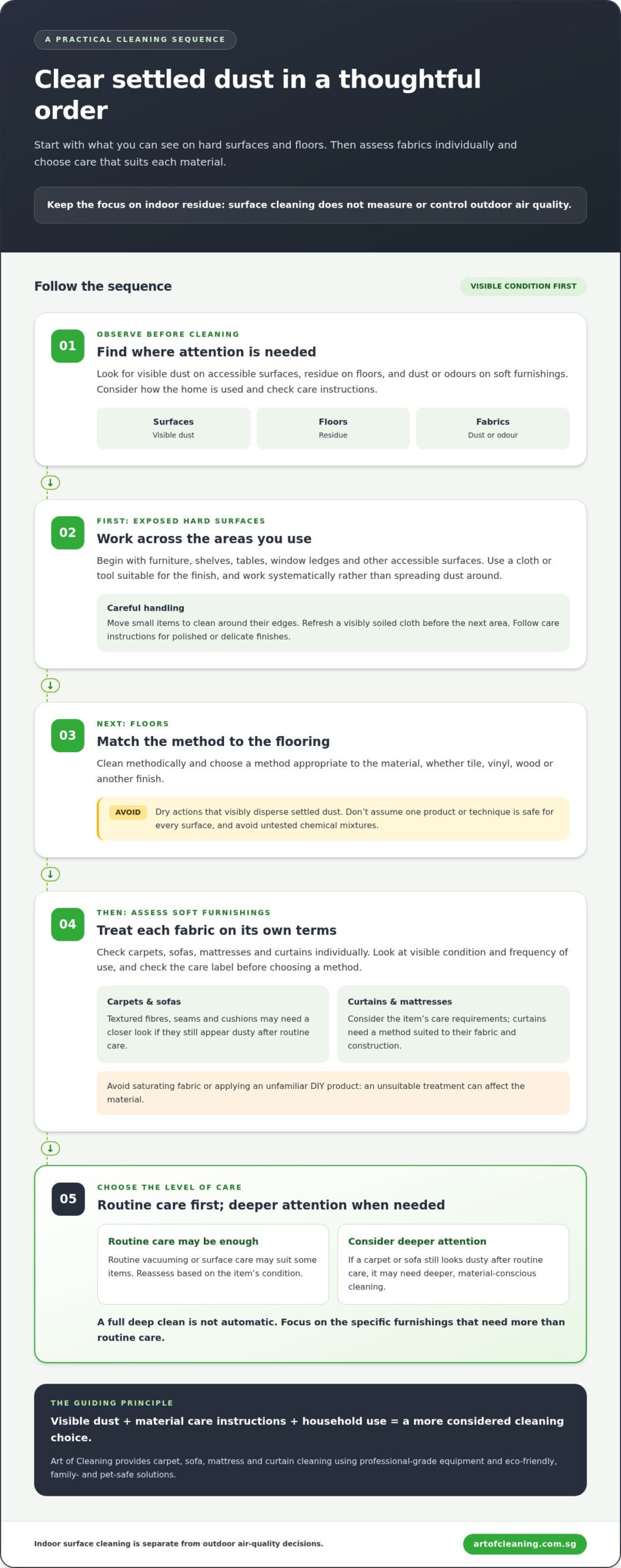
Check conditions, identify dusty areas, clean suitable surfaces methodically, then assess fabrics according to their care needs. This sequence keeps post haze cleaning Singapore focused on visible residue and the materials in your home instead of an automatic whole-home overhaul.
A simple order for cleaning the home
Start with a quick room-by-room scan. Note exposed surfaces that look dusty, floors that need attention and high-use areas such as a frequently used dining table or living-room floor. This helps you gather suitable tools before you begin and avoid spending time on areas that show no sign of needing attention.
- Check current guidance. Review NEA haze advice before deciding whether to open windows. If outdoor air quality is poor, follow guidance on keeping them closed.
- Plan by room and material. Identify the surfaces to clean and check care instructions for delicate finishes and flooring.
- Clean accessible surfaces and floors. Use a damp cloth or mop where suitable, and work systematically. Avoid dry dusting or sweeping if it visibly disperses settled dust.
- Assess fabrics separately. Check carpets, curtains and upholstery for visible dust or odour, then follow the care label before choosing a cleaning method.
Move from one area to the next using tools that suit each surface. If a cloth or mop becomes visibly soiled, refresh it before continuing so you don’t transfer dust onto an area you’ve just cleaned. For delicate finishes, follow the manufacturer’s care instructions instead of relying on a general-purpose method.
What should you avoid while cleaning?
Skip dry sweeping, vigorous shaking of fabrics and other actions that visibly send dust into the air. Don’t mix cleaning products or apply chemicals that aren’t intended for the material. Aggressive scrubbing can mark finishes, while excess moisture may harm some floors and fabrics. Test a suitable method discreetly when care guidance allows, and stop if the material changes in appearance.
Take the same care with window ventilation. Don’t open windows solely to clear a stale smell while haze conditions remain poor. Check current NEA advice for decisions about outdoor air and ventilation. Cleaning settled dust is a separate task.
If carpets, sofas or curtains still need deeper attention after routine care, professional cleaning can be a targeted option. For broader property concerns where environmental residue or smoke issues require full-scale intervention, property specialists such as TBC Restoration provide comprehensive restoration services. Decide which items need that level of care and which are fine with routine cleaning.
Routine cleaning or professional post-haze cleaning: how to decide
A haze episode doesn’t automatically mean your home needs a full deep clean. Ask a more specific question: has routine care addressed the visible dust, and do any particular fabrics still need attention? Decide item by item, considering the surface’s condition, its material and how it’s used. This keeps post haze cleaning Singapore measured instead of turning concern about haze into unnecessary work.
When routine cleaning may be enough
If accessible surfaces have light, manageable dust, suitable household cleaning may be all that’s needed. Follow care instructions for floors and furniture, then reassess the area. If it looks clean and there’s no specific fabric concern, there’s no automatic reason to arrange a whole-home deep clean. This is a practical cleaning decision, not a guarantee about airborne particles or health outcomes.
Base your decision on what you can observe. A dusty ledge that wipes clean is different from a carpet that still looks dusty after routine care or a sofa with residue in areas used every day. Focus on surfaces that show a need, and avoid harsh or unsuitable products in an effort to do more.
When targeted fabric cleaning may be useful
Assess soft furnishings individually. Carpet fibres can hold visible debris, while upholstery and sofa seams may be difficult to address with surface care alone. Mattresses and curtains have their own materials and care requirements. Check labels and choose care suited to each item rather than treating every fabric as if it responds to the same method.
Consider professional care if a specific item remains visibly dusty, has a persistent odour or needs more than routine surface cleaning. Art of Cleaning offers Carpet Cleaning, Sofa Cleaning and Mattress Cleaning, along with Curtain Steam Cleaning and Curtain Dry Cleaning. Its team uses professional-grade equipment and eco-friendly, family- and pet-safe solutions, tailoring the approach to the cleaning need.
Use this quick decision guide:
- Routine care: Suitable for accessible surfaces with light dust that responds to ordinary, material-appropriate cleaning.
- Targeted professional care: Consider this for a particular carpet, sofa, mattress or curtain that still needs attention or requires a more considered fabric-cleaning approach.
- Whole-home deep clean: Don’t assume it’s necessary after every haze episode. Choose the scope based on the condition of the home and the items involved.
This distinction helps keep the response proportionate: routine cleaning for manageable surfaces, and deeper care for specific furnishings that need it. Explore Art of Cleaning’s fabric cleaning services to see the options for carpets, sofas, mattresses and curtains.
For a tailored approach to a furnishing that needs deeper care, request a free quote from Art of Cleaning.
Arrange post-haze cleaning in Singapore with Art of Cleaning
Once routine cleaning has addressed manageable dust, focus any additional cleaning on furnishings that still need attention. Carpets, sofas, mattresses and curtains have different materials and care requirements, so choose a service based on what you want cleaned, not simply on the fact that haze has occurred. Art of Cleaning provides tailored cleaning for residential and commercial customers throughout Singapore.
Choose cleaning support based on the surfaces involved
Consider the item and its condition. Carpet Cleaning may suit a floor covering that needs more than routine care. Sofa Cleaning and Mattress Cleaning address different upholstered items, while curtains can be treated with Curtain Steam Cleaning or Curtain Dry Cleaning. Check care labels and consider visible dust, odour and how the item is used when deciding which surfaces need attention.
Art of Cleaning uses professional-grade equipment and eco-friendly, family- and pet-safe solutions, tailoring its approach to the cleaning need. This is targeted fabric care, not a promise to remove every haze particle or treat indoor air. Explore the carpet, upholstery, mattress and curtain cleaning services to identify options for the items you’ve assessed.
Request a tailored quote for the cleaning you need
When requesting a quote, describe which items need cleaning, their material if known and what you’ve observed, such as visible dust or a lingering odour. You don’t need to assume every furnishing needs a deep clean. Sharing the specific surfaces of concern helps Art of Cleaning tailor its approach and provide a free quote for the work you’re considering.
Art of Cleaning serves customers island-wide across Singapore. Whether your priority is one carpet, a sofa, a mattress or curtains, focus your enquiry on those items rather than treating post haze cleaning Singapore as an automatic whole-home reset.
If you’ve identified furnishings that need more than routine care, submit an enquiry for a free cleaning quote and describe the items you’d like cleaned.
Make your next cleaning step a considered one
Let the condition of your home guide what happens next. Note which surfaces needed attention and how they responded. That can make future post haze cleaning Singapore more straightforward, helping you focus on specific items instead of starting from scratch after every hazy spell.
If a carpet, sofa, mattress or set of curtains still needs deeper care, Art of Cleaning can tailor its cleaning approach to the items involved. The team uses professional-grade equipment and eco-friendly, family- and pet-safe solutions. Art of Cleaning has also been featured on Mediacorp Channel 8.
Share which furnishings you’d like cleaned and request a free quote. Request a free quote for your cleaning needs and take a considered next step towards a home that feels comfortable and well cared for.
Frequently Asked Questions
Should I clean my home immediately after the haze clears?
No. There’s no need to start cleaning the moment outdoor conditions improve. Check current NEA guidance, then inspect your home for visible dust when it’s practical. If surfaces look clean, there may be little to do beyond your usual routine. If you notice residue on frequently used areas, address those first instead of rushing into a whole-home clean.
Can haze dust settle inside a home even when the windows are closed?
Yes. Closed windows don’t make a home completely airtight, and fine particles can still enter and accumulate indoors. Indoor activities, including cooking, can also affect indoor air. This doesn’t mean every home has the same residue or needs the same cleaning response. Check the surfaces and furnishings in your own space, and don’t use visible dust as a measure of indoor air quality.
Is it better to vacuum or wipe surfaces after a hazy spell?
For hard surfaces, use a damp cloth rather than dry dusting. On carpets, a vacuum suitable for the flooring and consistent with the appliance instructions may be appropriate, but avoid vigorous brushing or actions that visibly send dust into the air. Don’t use one tool on every material by default. Check care labels and the vacuum manufacturer’s guidance, especially for delicate rugs or upholstery.
Do carpets and sofas need professional cleaning after haze?
Not automatically. Consider professional cleaning if a carpet or sofa still looks dusty after suitable routine care, or if you’re concerned about a particular fabric’s cleaning needs. A lightly used item with no visible residue may not need a deep clean just because there has been haze. Decide based on the item’s condition and care instructions, not on the haze episode alone.
Should I open the windows while cleaning after haze in Singapore?
Use current NEA guidance to decide. If outdoor air quality is poor, follow advice to keep windows closed; once conditions improve, ventilation may be appropriate. Don’t rely on the sky’s appearance alone, since it may not reflect current readings. Cleaning indoors and deciding when to ventilate are separate tasks, so check official updates before opening windows.
Can curtains be cleaned without taking them down?
It depends on the curtain material, its care label and the cleaning method. Don’t assume every curtain can be cleaned safely while hanging, and avoid applying steam or moisture without checking the fabric’s instructions. Art of Cleaning offers Curtain Steam Cleaning and Curtain Dry Cleaning. Choose the method according to the curtain’s care requirements.
Does post-haze cleaning remove all indoor air pollutants?
No. Cleaning surfaces addresses dust and residue on the items being cleaned; it doesn’t measure or treat every pollutant in indoor air. Post haze cleaning Singapore should therefore be understood as household surface and fabric care, not an air-quality treatment. Follow relevant NEA guidance for air-quality concerns, and don’t treat a visibly clean room as proof that all airborne pollutants are gone.