
Commercial carpet cleaning should follow foot traffic and visible soil, not a fixed calendar alone. How often commercial carpets should be professionally cleaned in Singapore depends on how quickly dirt builds up in each area. Schedule busy entrances and shared walkways more frequently, and assess quieter areas separately.
A clear schedule helps prevent carpets from looking tired without imposing the same routine on every workplace. Set cleaning frequency according to how each area is used, and adjust it when traffic, spills or visible soil change. This guide explains what to look for and how to keep the plan practical.
Routine upkeep and professional carpet cleaning serve different purposes. Vacuuming manages loose dirt between visits, while professional cleaning addresses soil that builds up deeper in the carpet. A plan based on actual use can help keep the workplace presentable without relying on guesswork.
Key Takeaways
- Map carpet zones by how they’re used so cleaning plans reflect different levels of wear across the premises.
- Give lobbies and corridors closer attention, and use visible soil buildup to help prioritise professional cleaning.
- Account for Singapore’s humid conditions when planning cleaning and drying, especially in spaces that need to return to use promptly.
- Look for persistent odours, stains and flattened or dingy areas as signs that routine upkeep may not be enough.
Cleaning a carpet
Commercial carpet care combines routine upkeep with professional treatment. In Singapore, base the schedule on foot traffic, visible soil, carpet material and access needs.
Singapore’s cleaning-sector Progressive Wage Model classifies office and commercial sites as Group 1, including offices, schools, hospitals, medical clinics and condominiums, according to Ministry of Manpower Singapore. According to Ministry of Manpower Singapore, employers must pay eligible outsourced and in-house cleaners a PWM bonus of at least two weeks of basic monthly wages annually. From 2029, according to Ministry of Manpower Singapore, minimum annual leave entitlement for outsourced PWM workers will increase from seven days to ten days. These workforce provisions offer regulatory context; plan carpet care around how each workplace is used.
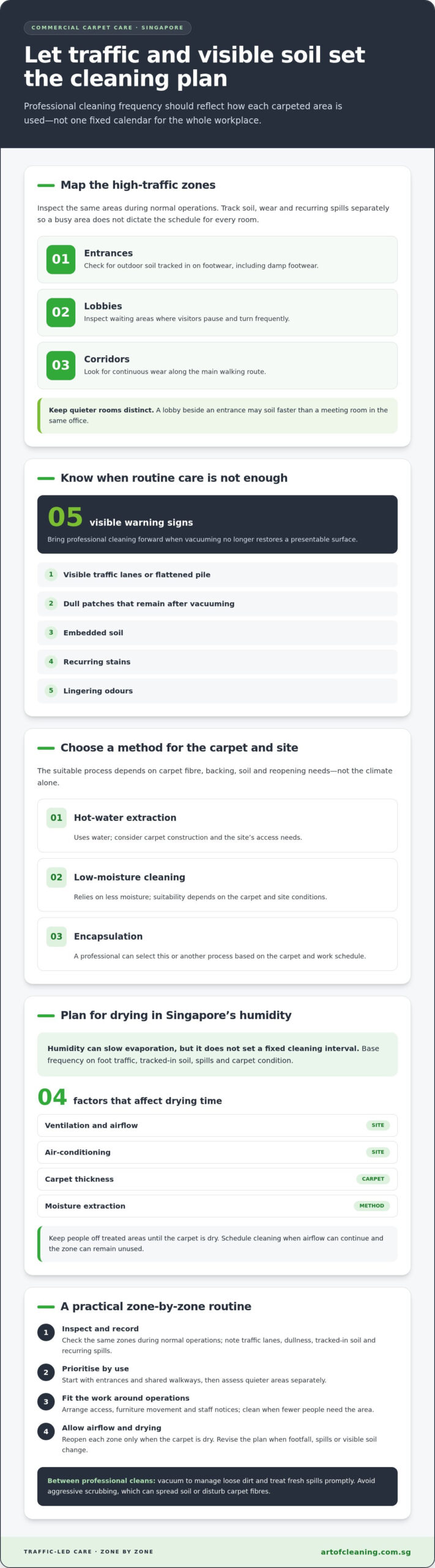
Professional carpet cleaning methods include hot-water extraction, low-moisture cleaning and encapsulation. The suitable method depends on carpet fibre, backing, soil and reopening needs. A professional can choose a process that addresses embedded dirt while accounting for the carpet material and the work schedule.
Humidity, Cleaning Frequency, and Drying
Drying time is how long a carpet needs to lose cleaning moisture before normal use. Singapore’s humidity can slow evaporation, while ventilation, air-conditioning, carpet thickness and moisture extraction also affect drying. Choose a method that suits the site’s access needs, and schedule cleaning when airflow can continue. Keep people off treated areas until the carpet is dry.
Signs a Carpet Needs Professional Cleaning
Signs that a carpet needs professional cleaning include changes that routine vacuuming doesn’t resolve: visible traffic lanes, dull patches, embedded soil, recurring stains or lingering odours. Soil left in the pile can make a carpet look worn, while excessive moisture can leave it damp. Use these signs, along with foot traffic and material, to adjust the cleaning plan.
Scheduling Cleaning Around Business Operations
Operational scheduling means choosing cleaning times and zones that limit disruption to daily work. Divide the floor into sections, starting with entrances or shared walkways, then move to quieter areas. Arrange cleaning when fewer people need access, and allow airflow and drying before reopening each zone. A site manager can coordinate access, furniture movement and staff notices.
How often should carpets be cleaned in high-traffic areas such as lobbies and corridors?
High-traffic cleaning frequency is the interval between professional cleans for areas with steady footfall. In Singapore, set it according to how quickly entrances, lobbies and corridors collect visible soil, rather than applying the same calendar to every room. A building entrance exposed to outdoor dirt may need attention sooner than a corridor used mainly by staff.
Use a simple inspection routine to adjust the schedule. Check the same carpet zones during normal operations and note whether traffic lanes, flattened pile or dull patches return soon after vacuuming. Record recurring spills and tracked-in soil. Bring professional cleaning forward when routine upkeep no longer restores a presentable surface.
- Entrances: Check for soil tracked in from outdoor paths and damp footwear.
- Lobbies: Inspect waiting areas where visitors pause and turn frequently.
- Corridors: Look for continuous wear along the main walking route.
These observations distinguish a busy route from a low-use carpeted area. For example, a lobby beside a building entrance may soil faster than a meeting room in the same office. Keep the zones separate in cleaning records so one area’s condition doesn’t dictate the schedule for the entire premises.
Between professional cleans, vacuuming and prompt spot treatment help manage loose dirt and fresh spills. Don’t scrub stains aggressively, since that can spread soil or disturb carpet fibres. If traffic lanes remain visibly dull despite routine care, arrange professional cleaning rather than waiting for the whole floor to look dirty.
A fixed schedule can miss changing use, such as a lobby receiving more visitors during a busy period. Review inspection notes after changes in footfall, renovation work or recurring spills, and revise the plan accordingly. For a professional assessment of heavily used carpeted areas, explore commercial carpet cleaning as part of your maintenance plan.
How does Singapore’s humid climate affect commercial carpet cleaning frequency and drying time?
Humidity-related drying refers to how long a carpet retains moisture after cleaning in Singapore’s humid conditions. Humid air can slow evaporation, so drying also depends on ventilation, air-conditioning, carpet thickness and how much moisture the method leaves behind. A thick carpet in a closed meeting room may take longer to dry than a thinner carpet near active airflow.
Humidity alone doesn’t determine a fixed cleaning interval. Base frequency on tracked-in soil, foot traffic, spills and the carpet’s condition. A lightly used office carpet doesn’t automatically need more frequent deep cleaning simply because the premises are in Singapore. Where dampness, spills or heavy use persist, inspect the affected section and address the cause alongside the cleaning plan.
Before booking, identify the areas that must reopen quickly. Ask the cleaning team to consider carpet construction and moisture extraction when selecting a method. Hot-water extraction uses water, while low-moisture cleaning relies on less moisture. The appropriate process depends on the carpet and site conditions, not the climate alone.
Plan the work around ventilation and access:
- Choose a period when the treated zone can remain unused.
- Keep doors or windows open where site conditions allow.
- Use available air-conditioning or fans to support airflow.
- Separate treated sections from active walkways until dry.
Check the carpet before reopening the area. Press a clean, dry cloth gently against a discreet spot; lingering dampness signals that the section needs more drying time. Don’t return furniture while the pile or backing remains damp, since trapped moisture can slow drying further. If the carpet repeatedly stays wet after cleaning, review the method, moisture extraction and ventilation before setting the next appointment. This practical review helps Singapore workplaces balance clean carpets with reliable room access.
There is no single drying time. It varies with ventilation, air-conditioning, carpet thickness and how much moisture the cleaning method leaves behind. Keep the area closed until the carpet is dry, and check it before reopening.
What are the signs that a commercial carpet needs professional cleaning?
A carpet may need professional cleaning when routine vacuuming or spot care doesn’t resolve visible changes. In Singapore workplaces, inspect entrances, reception areas and corridors for recurring soil, stains or odours. Compare these high-use sections with carpet beneath furniture. A clear difference can indicate that ordinary upkeep isn’t reaching the affected fibres.
A traffic lane is a visibly dull or flattened strip along a common walking route. Check whether the change remains after vacuuming, especially between an entrance and reception desk. Flattened pile alone doesn’t mean cleaning is needed, but persistent soil and discolouration together suggest a deeper clean may be due.
A recurring stain is a mark that returns after surface treatment. For example, a drink spill near a pantry may appear to fade, then show again as the carpet dries. Avoid repeated scrubbing, which can spread the mark or disturb fibres. Note its location and likely source so the cleaning approach can focus on the affected patch.
- Lingering odour: Check the carpet after removing the obvious source, such as a food spill.
- Visible residue: Look for sticky or gritty patches that attract fresh dirt.
- Uneven appearance: Compare busy walkways with protected areas under desks.
Use a simple inspection record to distinguish a one-off spill from an ongoing issue. Note the location, appearance and whether routine care changes it. If the same carpet zone looks soiled again soon after cleaning, review its foot traffic and maintenance approach. Persistent marks across separate areas may call for a broader professional assessment.
Arrange professional cleaning when signs remain across a busy route or resist normal upkeep. For recurring stains or visibly soiled carpet, arrange professional carpet cleaning to address the affected areas.
Art of Cleaning: Carpet Cleaning
Art of Cleaning provides professional carpet cleaning for commercial carpets that remain visibly soiled despite routine care. Arrange the service when traffic lanes look dull, stains persist or regular vacuuming no longer restores a presentable surface. Share which areas receive the heaviest foot traffic to help focus attention where it’s needed most.
For workplaces with carpeted rugs, Art of Cleaning also offers rug cleaning. Schedule professional care according to the carpet’s condition, use and cleaning needs, rather than relying on a calendar alone.
To discuss carpet cleaning for your premises, contact Art of Cleaning or visit artofcleaning.com.sg.
Make carpet care part of your workplace plan
Knowing how often commercial carpets should be professionally cleaned in Singapore is useful when it leads to a clear next step. Create a short maintenance brief for your facilities team, noting areas of concern, access requirements and a suitable cleaning window. This gives staff a reference when planning future work, even as office needs change.
Art of Cleaning provides carpet cleaning for commercial spaces, as well as rug cleaning and sofa cleaning. These services can help care for workplace soft furnishings, not just the floor beneath them.
When your carpet needs professional attention, contact Art of Cleaning today to discuss your premises and the areas you’d like cleaned. A considered plan is a practical step towards a fresher, more welcoming workplace.
Frequently Asked Questions
How often should commercial carpets be professionally cleaned in Singapore?
How often commercial carpets should be professionally cleaned in Singapore depends on how quickly each area accumulates soil and wear. Set an interval for each zone, then revise it when occupancy or use changes. For example, a reception area that begins hosting more visitors may need cleaning sooner than a back office. Keep a simple record of cleaning dates and changes in condition.
What carpet cleaning frequency is recommended for Singapore offices by foot traffic and business type?
Match cleaning frequency to foot traffic and the activities in each area. A client-facing reception, clinic waiting area or school corridor sees different use from a staff-only meeting room. Map those spaces separately, then account for spills, tracked-in dirt and changes in occupancy. After a busy event or office reconfiguration, reassess the affected zones instead of automatically changing the whole building’s schedule.
Are there Singapore regulations or workplace hygiene guidelines for commercial carpet cleaning?
Singapore’s Progressive Wage Model classifies offices and commercial sites as Group 1 and sets employment requirements for eligible cleaners. The article gives no workplace hygiene guideline prescribing a carpet-cleaning frequency.
What are the risks of cleaning commercial carpets too infrequently or too often?
Cleaning too infrequently can leave embedded soil, stains and odours, making carpets look worn or dingy. Excessively wet cleaning can leave moisture behind and slow drying.