
A carpet-cleaning schedule should follow foot traffic, not the calendar alone. For office and commercial carpet cleaning in Singapore, high-traffic areas generally need professional cleaning quarterly, while medium-traffic carpets can be cleaned every 6 to 12 months and low-traffic areas every 12 to 18 months. The right method also matters: drying time can vary with the cleaning process and the office environment.
Visible marks are only part of the picture: regular carpet care also helps remove soil embedded in the fibres and maintain the carpet over time. This guide covers practical cleaning schedules, common methods and how carpet cleaning relates to indoor air quality, carpet life and drying time. You’ll also find maintenance tips for busy workplaces in Singapore, including routine vacuuming and prompt spill care.
Key Takeaways
- Match professional cleaning frequency to foot traffic: busy entrances and corridors need more attention than quiet areas.
- Regular carpet care can help reduce embedded dirt and support carpet longevity, while daily vacuuming helps manage soil between deep cleans.
- Choose a cleaning method with the office’s downtime in mind; moisture, ventilation and humidity all influence how quickly carpets dry.
- Blot spills instead of rubbing them, use entry mats to catch dirt and moisture, and test cleaning solutions on an inconspicuous area first.
1. How Often Should You Schedule Commercial Carpet Cleaning?
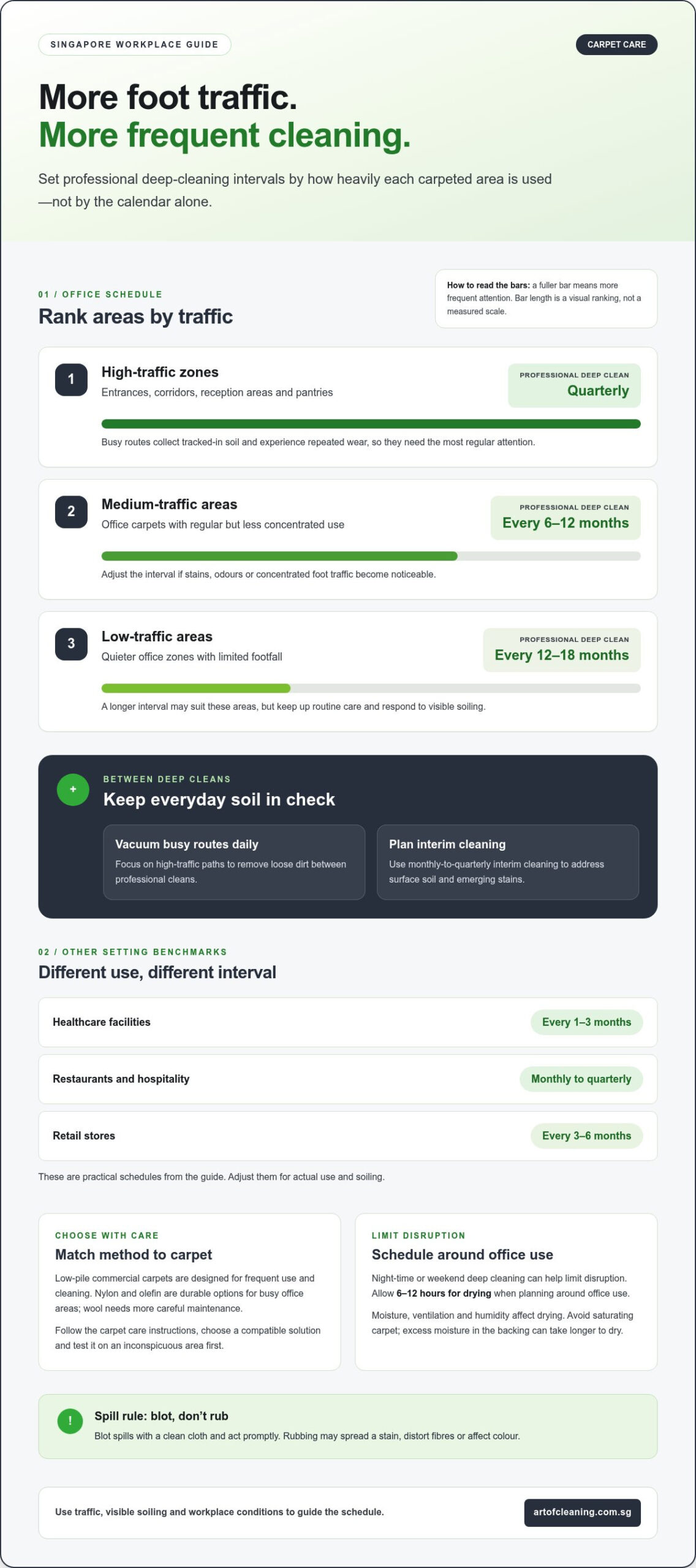
In Singapore offices, schedule professional deep cleaning according to foot traffic. High-traffic corridors, reception areas and pantries benefit from quarterly cleaning. Medium-traffic office carpets generally need deep cleaning every 6 to 12 months, while low-traffic areas can be cleaned every 12 to 18 months. Plan interim cleaning monthly to quarterly to address surface soil and emerging stains between deep cleans.
Carpet type also matters. Low-pile commercial carpets are designed to handle frequent use and cleaning, but embedded dirt still wears fibres over time. Vacuum high-traffic routes daily, and respond promptly to spills before they set. For retail stores, a 3 to 6 month professional schedule can suit customer traffic; restaurant and hospitality carpets may need monthly to quarterly attention where spills are frequent.
Healthcare facilities may need cleaning every 1 to 3 months, depending on use and soiling. For homes with normal use, deep cleaning every 6 to 12 months may be suitable; homes with children, pets or heavier traffic may need it every 3 to 6 months. Adjust these intervals when visible stains, odours or concentrated foot traffic appear.
Choose products and methods to suit the carpet fibre, not just the stain. Nylon and olefin are durable options for busy office areas and are generally easier to clean. Wool needs more careful maintenance. Follow the carpet’s care instructions, use a compatible cleaning solution and test it on an inconspicuous area first.
DIY cleaning can leave detergent residue that attracts soil, or excess moisture in the backing that may encourage mould. Rubbing a spill can spread the stain, distort fibres or affect colour. Blot with a clean cloth instead, and avoid saturating the carpet.
Schedule deep cleaning at night or on weekends to limit disruption. Allow 6 to 12 hours for drying when planning work around office use.
2. Benefits for indoor air quality and carpet lifespan
Carpet fibres collect dust, pollen, skin particles and other soil brought into a workplace on shoes. Foot traffic can disturb this material and send particles into the air near the carpet. Regular cleaning removes accumulated soil, reducing one source of airborne particles and allergens and supporting better indoor air quality. It cannot replace ventilation or address every source of indoor pollutants, but it helps prevent carpets from becoming neglected reservoirs of dirt.
Cleaning also protects the carpet itself. Grit trapped between fibres can act like an abrasive as people walk across the surface, contributing to wear and a dull appearance. Regular cleaning can extend office carpet life by 50 percent or more. That matters in reception areas and corridors, where repeated traffic places greater stress on the pile. Vacuuming removes loose dirt; periodic deep cleaning tackles soil that routine maintenance leaves behind.
The cleaning method affects both soil removal and moisture levels. Low-moisture cleaning uses less water, helping avoid saturation and making it a practical option for humid workplaces. Encapsulation is one such method; the suitable process depends on the carpet and the type and level of soiling. Avoid excess water, as a damp backing takes longer to dry and may develop musty odours.
Manage humidity alongside cleaning. Indoor humidity in Singapore office spaces should be kept between 40 and 60 percent. Ventilation and air-conditioning can help manage moisture, while prompt attention to wet spills prevents damp patches from lingering. Keep furniture from restricting airflow over recently cleaned areas, and allow the carpet to dry fully before returning heavy foot traffic. For help with scheduled professional carpet cleaning, choose a process suited to the carpet and workplace conditions.
3. Carpet drying times and factors affecting drying
Drying time depends on the cleaning method, moisture used, carpet construction and office ventilation. In Singapore, carpet cleaning typically takes 4 to 6 hours to dry, with humidity and airflow affecting the result. Hot water extraction can take 6 to 24 hours, depending on ventilation. These ranges are planning guides, not a fixed timetable for every carpet.
For offices with limited downtime, low-moisture methods reduce the amount of water applied. Encapsulation cleaning can dry carpets within 30 to 60 minutes, while low-moisture cleaning can allow drying in under two hours. Dry cleaning and encapsulation may let commercial carpets return to use in under an hour. These approaches can suit a workplace that needs frequent access, but method choice still depends on embedded soil and carpet condition.
Moisture is not the only factor affecting drying. Water evaporates more slowly in a humid room with poor ventilation than in a well-ventilated space. A saturated carpet also takes longer to dry than one cleaned with a low-moisture method. Thick pile, dense backing and damp areas near furniture can slow drying further. Air movement helps, so schedule cleaning when ventilation can run and people can avoid damp sections.
Steam cleaning is used for deep cleaning and requires drying time. Carpet shampooing combines water and detergent for a deep wash, so it generally takes longer to dry. Choose a method by weighing the level of embedded dirt, the desired appearance and acceptable downtime. For example, a reception area needed for morning visitors may call for a faster-drying method, while heavily soiled carpet may need a more thorough process and a longer closure. Don’t judge readiness by surface appearance alone: the fibres and backing need to dry before normal use resumes. Scheduling professional cleaning outside busy periods gives damp carpet time to dry and helps avoid disrupting staff or visitors.
4. Office and commercial carpet cleaning in Singapore
Singapore office carpets face tracked-in soil, spills and constant foot traffic. Daily vacuuming helps manage loose dirt in reception areas, corridors and pantries, while entrance mats trap moisture before it reaches carpet. Commercial entrance mats should provide at least 3 to 4 metres of walk-off length. Since approximately 80 percent of building dirt enters through doorways, protecting these traffic areas can reduce soil spreading across the workplace.
Common commercial carpet methods include steam cleaning, dry cleaning and encapsulation. Steam cleaning suits deep cleaning but needs drying time; dry cleaning and encapsulation use less moisture and can reduce downtime. The right method depends on the carpet fibres, soil levels and how soon employees and visitors need access again.
For a high-traffic reception area, plan cleaning around visitor flow and the carpet’s return to use. Cleaning solutions should suit the carpet fibres, and spills should be blotted rather than rubbed. Steam cleaning uses high-temperature steam to kill bacteria, but the carpet still needs to dry before regular traffic resumes.
When choosing a cleaning service, assess whether the proposed method suits the carpet, the soiling and your workplace schedule. A clear plan should cover high-traffic areas, moisture management, expected drying time and how employees and visitors will be kept away from damp sections.
Singapore businesses should consider workplace safety and chemical handling during carpet cleaning. Follow each cleaning solution’s product instructions, maintain ventilation and keep people off wet carpet to reduce slip risks. These practical precautions support safer cleaning without assuming one specific rule applies to every workplace or product.
Resume normal use only when the carpet is dry. Between professional cleans, vacuum regularly, use entrance mats and address spills promptly to protect the carpet’s appearance. For carpet tiles, replacing an individual tile that is permanently stained or damaged can avoid treating unaffected sections unnecessarily.
Art of Cleaning: Carpet Cleaning
Art of Cleaning provides Carpet Cleaning for offices and commercial spaces affected by tracked-in soil, spills or recurring foot traffic. Consider professional care when routine vacuuming no longer manages visible soiling or your workplace needs a planned deep clean. Share details such as the carpeted areas, traffic patterns and preferred timing to help align the cleaning with your workplace needs.
Art of Cleaning also offers Rug Cleaning, Sofa Cleaning and Mattress Cleaning for other fabric surfaces. Choosing the service suited to the surface helps avoid treating every material alike. If your office carpets need attention, contact Art of Cleaning to discuss Carpet Cleaning for your workplace.
Make Carpet Care Part of Your Workplace Plan
A well-maintained workplace depends on consistent care, not a one-off clean. Make carpet care part of your facilities routine: identify the areas employees and visitors use most, note recurring stains or spills, and plan cleaning around how each space functions. This practical approach to office and commercial carpet cleaning in Singapore makes maintenance easier to manage.
When carpet needs more than routine upkeep, Art of Cleaning offers Carpet Cleaning. The company also provides Rug Cleaning and Sofa Cleaning for other fabric surfaces. Choose the service that fits the surface and task, then schedule the work around your workplace’s operations.
A cleaner, cared-for environment supports a more welcoming experience for staff and visitors. Contact Art of Cleaning to discuss carpet cleaning for your workplace and take the next step toward a well-maintained space.
Frequently Asked Questions
How Often Should You Schedule Commercial Carpet Cleaning?
Schedule commercial carpet cleaning according to traffic, visible soiling and how quickly the space gets dirty again. A medium-use office may plan deep cleaning every 6 to 12 months, while a busy reception or corridor may need quarterly attention. If stains keep returning or the carpet looks dull soon after vacuuming, consider bringing the next clean forward and reviewing daily maintenance.
What Is Included in Professional Carpet Cleaning?
Professional carpet cleaning addresses accumulated dirt and soiling using a process suited to the carpet and its condition. The work may include examining the fibres, preparing stained areas, cleaning the carpet and allowing it to dry. Art of Cleaning provides Carpet Cleaning with professional-grade equipment. Please note that not all stubborn stains and spots can be removed thoroughly.
How often should office carpets be professionally cleaned in Singapore?
In Singapore, use foot traffic to set the schedule: high-traffic office areas benefit from quarterly professional cleaning, while medium-traffic carpets generally need deep cleaning every 6 to 12 months. Quiet areas may be cleaned every 12 to 18 months. For a mixed-use office, schedule each zone according to its use rather than treating rarely used meeting rooms like the entrance or pantry.
What are the benefits of professional commercial carpet cleaning for hygiene, appearance, and carpet lifespan?
Professional cleaning removes built-up soil that routine vacuuming can leave behind, helping carpets look fresher and reducing particles held in the fibres. This supports a cleaner workplace, though it doesn’t replace ventilation or address every source of indoor pollutants. Regular cleaning can also extend office carpet life by 50 percent or more, helping protect carpet condition in heavily used areas.
What steps are involved in commercial carpet cleaning, from inspection to drying?
A commercial carpet cleaning process typically begins with an assessment of the carpet’s condition, fibre type and visible stains. The surface is prepared, then a suitable method is used to lift soil. After cleaning, moisture is removed or reduced, and the carpet is left to dry before normal traffic resumes. Identify sensitive areas and point out stains before work begins so they can receive appropriate attention.
How long does commercial carpet cleaning take to dry, and how can downtime be minimised?
Drying can range from 30 to 60 minutes with encapsulation to 6 to 24 hours after hot water extraction, depending on ventilation. Low-moisture cleaning can allow drying in under two hours. Reduce disruption by arranging work outside busy periods, keeping employees away from damp carpet, and maintaining airflow. Choose the method based on soil levels and how soon each area must reopen.