
A mattress can look clean and still need regular care. In Singapore, a typical adult bedroom mattress should be professionally cleaned every 12 months; beds used by children or pets, and by people with allergies, asthma or eczema, should be cleaned every 6 months. This 2027 guide to mattress cleaning in Singapore explains why the cleaning method matters as much as the schedule.
It’s understandable to wonder whether a dry treatment is enough, or whether steam or wet extraction is the better choice. Each method works differently, so the right option depends on the cleaning need and the mattress. Read on to compare these approaches, understand what affects results and plan routine mattress care for a Singapore home.
Key Takeaways
- Choose between dry UV-C, steam and wet extraction by considering the mattress and the cleaning need; each method works differently.
- Understand why mattress size and cleaning method affect quotes, and what a deep-cleaning service may include.
- Set realistic expectations for stain removal: the cleaning method and the stain itself influence the result.
- Plan around the cleaning process and drying time so you know when the mattress can be used again.
Cleaning results and stain-removal limitations
According to Meteorological Service Singapore, mean annual relative humidity is around 82%. That local humidity makes careful drying relevant after any wet treatment.
Visible stains, urine and odours need individual assessment. A pale mark may be superficial, while an old spill can leave residue beneath the fabric.
Assessing Stains, Urine, and Odours
Assessment considers the stain’s location, appearance and likely source before a treatment is chosen. A fresh drink spill, for example, differs from a yellowed urine mark or a persistent musty smell.
Surface discolouration and odour-causing residue may sit at different depths. A technician can inspect the affected area and surrounding fabric, then consider the mattress material and stain history when planning treatment.
Treating Stains and Odours
Treatment targets the affected area with a method suited to its material and residue, rather than treating every mark the same way. A drink stain, for instance, may need different attention from urine residue that has reached deeper layers.
Odour treatment should address the source, not simply cover it with fragrance. Depending on the method, treatment may involve controlled application and extraction to help reduce residue while limiting excess moisture in Singapore’s humid conditions.
Limits of Stain and Odour Removal
Stain removal has limits: a mark may remain after cleaning if it has set, altered the fabric’s colour or penetrated deeply. Older urine stains can be especially difficult because residue may extend beyond the visible outline.
Odour can persist if its source lies deep inside the mattress or becomes noticeable again as the area dries. Cleaning can improve hygiene and appearance, but cannot restore damaged fabric or reverse permanent discolouration. Results depend on the stain, its age, the mattress material and the treatment used.
Identifying the stain before treatment helps set practical expectations. A fresh surface mark and an old, deeply absorbed spill are different cleaning problems, even if both look like small spots.
How often should a mattress be cleaned here?
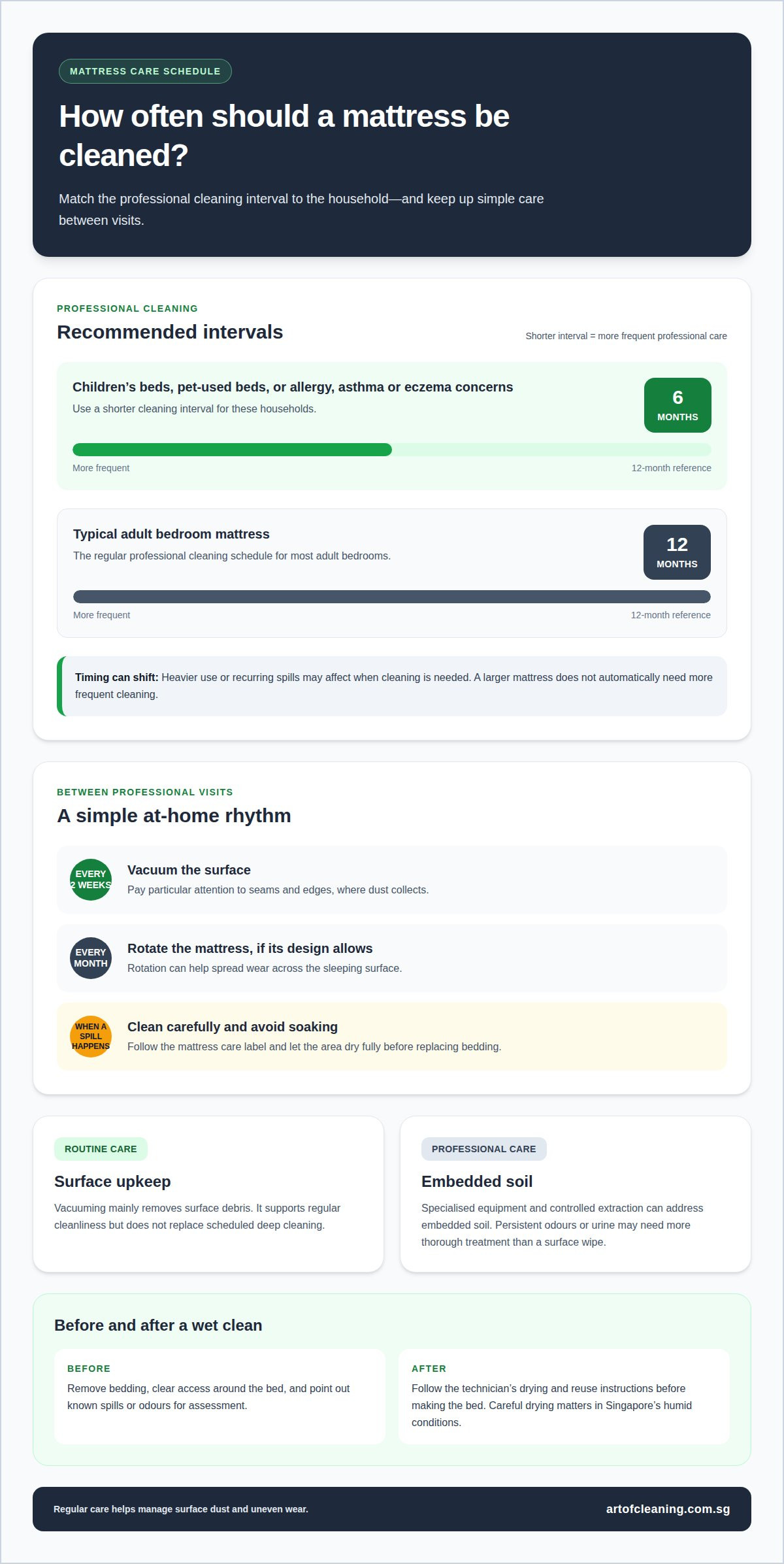
A typical adult bedroom mattress should receive professional cleaning every 12 months. Shorten that interval to 6 months for children’s beds, pet-used beds, or sleepers with allergies, asthma or eczema.
Between professional visits, routine vacuuming and mattress rotation can help manage surface dust and uneven wear.
Recommended Cleaning Frequency
Professional cleaning on a regular schedule removes soil that everyday bedroom care can miss. For most adult bedrooms, plan a visit every 12 months; for higher-use or more sensitive households, use a 6-month interval.
Children, pets and allergy concerns may be reasons to schedule cleaning more often. A larger mattress does not automatically need more frequent cleaning, but heavier use or recurring spills can affect the timing.
Routine Mattress Care
Vacuum the mattress surface fortnightly between professional visits, paying particular attention to seams and edges where dust collects. If the mattress design allows, rotate it monthly to help spread wear across the sleeping surface.
For small spills, use a suitable cleaning solution and avoid soaking the fabric. Follow the mattress care label, then let the area dry fully before replacing the bedding. These steps support routine cleanliness but do not replace scheduled deep cleaning.
Professional cleaning uses specialised equipment and controlled extraction to address embedded soil, while DIY vacuuming mainly removes surface debris. For urine or a persistent odour, a professional treatment can address the affected area more thoroughly than a quick surface wipe.
There isn’t a basis here for claiming that every Singapore mattress-cleaning service needs a dedicated licence or follows one mattress-specific safety standard. The word “professional” alone doesn’t establish safety; the method, product directions and drying guidance matter.
Before an appointment, remove the bedding and clear access around the bed. Point out known spills or odours so the affected areas can be assessed. After wet cleaning, follow the technician’s drying and reuse instructions before making the bed.
Are UV-C and anti-dust-mite treatment included?
UV-C cleaning and anti-dust-mite treatment describe different approaches to mattress hygiene. Knowing what each method covers helps you match the cleaning to your concern.
Dust Mites and Mattress Hygiene
Dust mites are microscopic organisms associated with household dust. Mattresses can collect material they feed on, including shed skin. Their presence is not the same as a visible stain, so appearance alone cannot show whether allergen residue is present.
For more thorough hygiene care, consider the whole surface, including seams and fabric folds where dust can collect. Regular vacuuming removes surface debris, while professional cleaning can target material deeper in the mattress. This distinction matters when allergens, rather than a mark or spill, are your main concern.
Reducing Dust Mites and Allergens
Allergen reduction means removing or lowering allergen-containing dust, rather than simply making the mattress look fresher. UV-C mattress cleaning in Singapore is a dry method described as suitable for all mattress types.
Steam or wet extraction follows a different process and may suit another cleaning need. The method affects what is treated and how much moisture is involved. A mattress with surface dust but no spill presents a different case from one with embedded soil or a stain.
When choosing a mattress-cleaning service in Singapore, compare the stated method, what the treatment includes and the drying guidance. A clear description helps you distinguish UV-C cleaning from steam or extraction without assuming they produce identical results.
Dust-Mite Sanitisation
Dust-mite sanitisation refers to treatment aimed at reducing mite-related allergens; it is not the same as general stain removal. A dry UV-C process adds no cleaning water, while wet methods involve moisture and extraction.
Dust mites and bed bugs are different concerns. Dust-mite treatment is not bed-bug treatment, and signs of insects call for a different response. If you see small dark marks or suspect pests, describe them separately rather than treating them as ordinary dust or a mattress stain.
Before booking, identify whether your priority is dust, allergens, a spill or suspected pests. Match that concern to the method and treatment described instead of relying on the phrase “deep clean” alone.
How does professional mattress deep cleaning work, step by step?
Professional deep cleaning combines preparation, treatment and extraction. One described process uses steam at 170°C, then hot water extraction to remove remaining contaminants. Vacuuming and shampooing may also be included. This 2027 guide to mattress cleaning in Singapore helps distinguish wet deep cleaning from dry treatment.
- Vacuum the mattress. Initial vacuuming lifts loose dust and debris before wet treatment begins, preparing the fabric for the following steps.
- Apply shampoo. Shampooing treats the fabric surface, working across the mattress rather than focusing only on visible marks.
- Use steam where the method calls for it. In the described process, steam reaches 170°C. This step applies to that method, not every dry-cleaning approach.
- Extract loosened residue. Hot water extraction removes remaining contaminants and draws cleaning liquid back out of the mattress.
- Allow the mattress to dry. Let it dry before replacing bedding or using the bed. Follow the technician’s instructions.
Cleaning one mattress takes about an hour in most bedrooms; on-site appointments take 1 to 2 hours. The method and mattress affect the process. A dry UV-C approach doesn’t follow the same steam-and-extraction sequence.
After professional cleaning, a mattress is usually dry in a few hours. A typical drying period before use is two to four hours. Follow the technician’s guidance and wait until the mattress is dry before making the bed. This helps you plan professional mattress cleaning in Singapore around the treatment and drying process.
A deep-cleaning quote should clarify whether vacuuming and shampooing are included, alongside the relevant treatment and extraction steps. For professional mattress cleaning, contact Art of Cleaning to discuss the service.
Art of Cleaning: Mattress Cleaning
Art of Cleaning provides mattress cleaning for Singapore homes when routine vacuuming is not enough, whether you are arranging scheduled care or addressing everyday soil. If you are weighing dry treatment against steam or wet extraction, discuss your mattress and cleaning needs with the team.
Professional cleaning can also be part of broader upholstery care. Carpet Cleaning, Rug Cleaning and Sofa Cleaning address other fabric surfaces that collect dust and everyday soil, helping you plan care around the areas your household uses most.
For a mattress with a persistent mark, odour or accumulated surface soil, contact Art of Cleaning to discuss mattress cleaning.
Make mattress care part of your home routine
Use this 2027 guide to mattress cleaning in Singapore as a starting point for deciding what your household needs next. Note any mattress concerns, such as a recurring odour or a stain, and consider whether other fabric surfaces also need attention. A clear priority makes it easier to discuss a suitable cleaning approach without treating every surface or concern as the same job.
Art of Cleaning also offers Carpet Cleaning, Rug Cleaning and Sofa Cleaning, which you can consider alongside mattress care when planning home maintenance. Choose the service that fits the surfaces you want cleaned, then take the next step at a pace that works for your household.
Contact Art of Cleaning to discuss mattress cleaning and move forward with a more considered care plan for your home.
Frequently Asked Questions
Can I sleep on the mattress the same night?
Usually, yes, provided the mattress has dried completely before bedtime. Wet cleaning can leave moisture in the fabric, so do not remake the bed while it still feels damp. Allow airflow around the mattress after the appointment and follow the technician’s drying guidance. If you are planning a late-night appointment, allow time for drying before replacing the sheets.
Does it really remove dust mites?
Professional mattress cleaning targets dust mites and allergens, but “removal” does not promise total eradication. Results depend on the method and what it reaches within the mattress. UV-C is a dry method, while wet cleaning uses extraction to remove loosened material. Since these methods address mattress hygiene differently, consider whether your main concern is allergen-bearing dust or embedded soil.
What are mattress cleaning prices in Singapore in 2027 by mattress size and cleaning method?
There is no single price for every mattress size and cleaning method. The quote depends on the mattress size, selected method, condition, stains and scope of work. A single mattress and a larger mattress have different cleaning areas, and additional areas or work can affect the quoted scope. Request a Free Quote for your specific mattress.
What do professional mattress cleaning services in Singapore include, and are there extra charges?
Professional cleaning may include mattress vacuuming and shampooing, depending on the selected method. The scope can differ if there are stains, persistent odours or additional areas to clean. Additional charges may apply after assessment if the upholstery condition or areas differ from the information provided. Describe the mattress and requested work accurately when requesting a Free Quote.
How often should mattresses be professionally cleaned in Singapore’s humid climate?
Routine professional cleaning can be planned annually for a typical adult bedroom mattress, or every six months for a child’s bed, a pet-used bed, or a mattress used by someone with allergies, asthma or eczema. A new spill or persistent odour may need attention sooner. Continue regular care between appointments and consider who uses the bed when planning the next clean.
How do steam cleaning, hot water extraction, and dry mattress cleaning compare?
Dry UV-C cleaning avoids adding water, while steam and hot water extraction use moisture as part of the treatment. In an extraction process, hot water helps loosen residue, then extraction removes it from the mattress. UV-C is described as suitable for all mattress types. The practical choice is between a dry method and a moisture-based clean, with drying time to consider afterward.