
The fastest-drying carpet method isn’t automatically the right fit for every office. For commercial carpet cleaning in Singapore, steam cleaning suits an average carpeted office of roughly 3,000 sq ft, while low-moisture or dry cleaning can work better when downtime needs to be limited. Dry methods may take one to two hours to dry; wet methods such as steam cleaning can take around four to six hours, depending on conditions.
Choose a carpet-cleaning method by balancing the level of cleaning needed with how soon staff must use the space again. This guide compares steam cleaning, hot-water extraction and dry-cleaning methods, explains drying times, and shows how to coordinate carpet care with hard-floor maintenance. You’ll also find practical advice on cleaning frequency, high-traffic areas and scheduling work to limit disruption.
Key Takeaways
- Choose a carpet-cleaning method by balancing the depth of cleaning with how much office downtime you can accommodate.
- Plan drying time around the method used, ventilation and Singapore’s humid conditions to reduce disruption to staff.
- Set a care routine that gives high-traffic carpet areas more frequent attention and includes prompt stain treatment.
- For professional carpet or rug care, Art of Cleaning offers services that can help maintain a cleaner, fresher workplace.
1. Steam, hot-water extraction and dry-cleaning methods
Steam cleaning, hot-water extraction and dry cleaning differ mainly in moisture use and recovery. A steam cleaning method suits a carpeted office of roughly 3,000 sq ft; cleaning takes approximately 2 hours. Despite its name, hot-water extraction applies heated water and cleaning solution, then vacuums the mixture from carpet fibres. For commercial carpet cleaning in Singapore, this extraction step helps remove loosened soil and leftover liquid. Wet fibres still need time to dry.
For office carpets, compare the method with the carpet material, soil level and work schedule. Wet cleaning can address embedded grime, while low-moisture or dry cleaning suits Singapore offices with limited downtime. Encapsulation cleaning applies a low-moisture solution that captures soil as it dries, allowing residue removal through vacuuming. Dry carpet cleaning offers an alternative to methods that use more moisture. This guide to commercial carpet cleaning in Singapore helps offices weigh cleaning needs against access and downtime.
When choosing a commercial cleaning company, review relevant credentials, documented safety procedures and insurance for accidental damage. Do not assume a licence is required unless a specific rule applies. Credentials and insurance help clarify how the company manages accountability, a standard upheld by professional services such as Brilliant Office Cleaning across workplace and facility maintenance.
Singapore’s chemical and wastewater requirements depend on the products used and how wastewater is disposed of. Follow each product’s label and safety instructions, and handle recovered cleaning solution according to the building’s wastewater procedures and applicable requirements. Never assume extracted liquid can be poured into any drain.
Commercial carpet-cleaning prices depend on the carpet area, fibre type, soil level, furniture, access and cleaning method. Poor extraction can leave excess moisture or residue, which may contribute to odour, mould growth or fibre damage. Eco-friendly options include low-moisture methods and solutions described as eco-friendly. Compare them by moisture use and suitability for the task, not by name alone.
2. Carpet cleaning and drying times
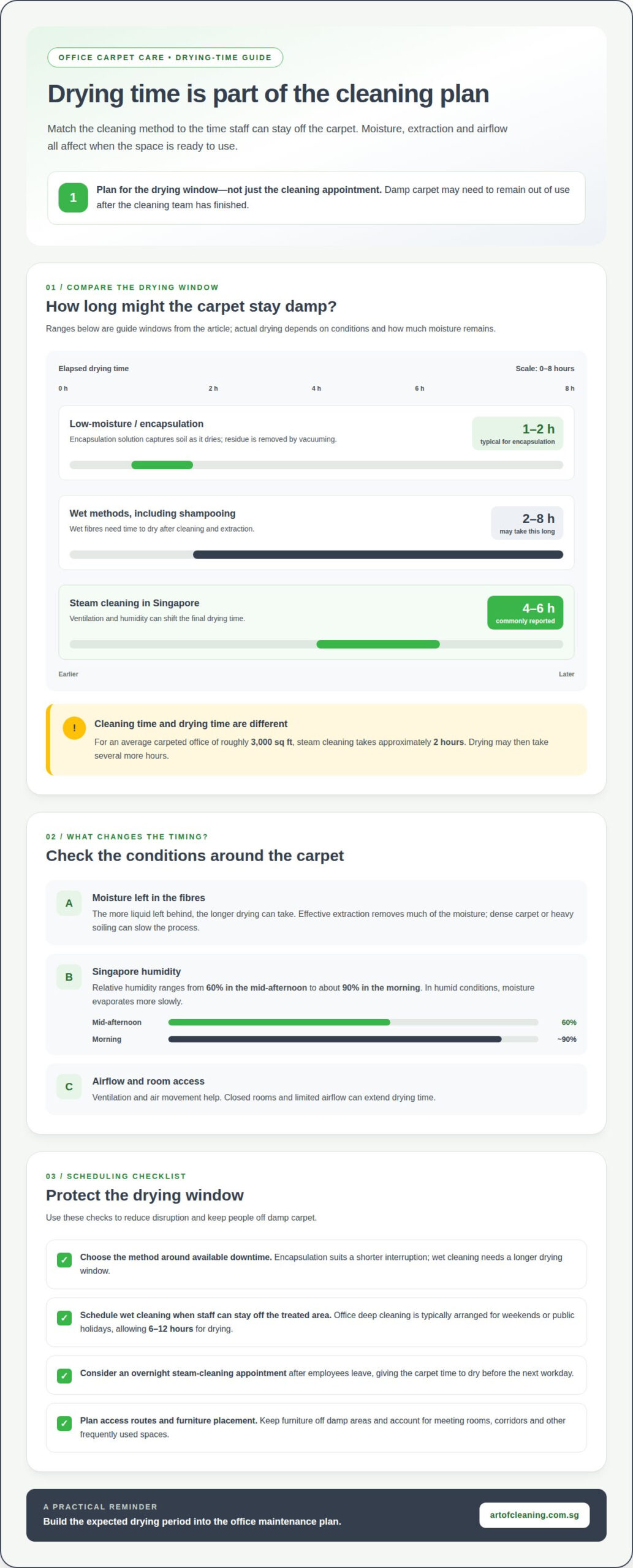
Drying time depends on the cleaning method, how much moisture enters the carpet and how much extraction removes. Office encapsulation cleaning typically dries within one to two hours. Wet methods, including shampooing and steam cleaning, may take two to eight hours. Steam-cleaned carpets in Singapore commonly take four to six hours to dry, with ventilation and humidity affecting the final timing.
Hot-water cleaning leaves carpet fibres damp after the cleaning solution loosens the soil. Effective extraction removes much of the moisture, but dense carpet or heavy soiling can slow drying. The more liquid left behind, the longer the carpet takes to dry. A technician can adjust the cleaning process and extraction to suit the carpet and the office’s planned use.
Singapore’s relative humidity ranges from 60% in the mid-afternoon to about 90% in the morning, according to Meteorological Service Singapore. In humid conditions, moisture evaporates more slowly, so an indoor carpet may remain damp longer than expected. Ventilation and air movement help; closed rooms and limited airflow can extend drying time.
Schedule wet carpet cleaning when staff can stay off the treated area while it dries. Office deep cleaning is typically arranged for weekends or public holidays, allowing six to twelve hours for drying. An overnight steam-cleaning appointment after employees leave can give the carpet time to dry before the next workday. Plan access routes and keep furniture off damp areas until the carpet is dry.
Before scheduling, match the method to the available downtime: encapsulation suits a shorter interruption, while wet cleaning needs a longer drying window. Build the expected drying period into maintenance plans, especially for meeting rooms, corridors and other frequently used spaces. For help coordinating carpet care with office routines, explore cleaning information for workplaces.
3. Cleaning frequency and stain or odour removal
Commercial carpets in Singapore are recommended for professional cleaning every 3-6 months. Treat this as a planning interval, then adjust it to actual foot traffic, visible soiling and spill frequency. A reception area used throughout the workday needs more attention than a lightly used meeting room. Regular cleaning can extend office carpet life by 50 percent or more.
High-traffic zones may need interim cleaning monthly to quarterly, while the rest of the carpet follows its planned deep-cleaning cycle. Mark busy routes, such as entrances and lift lobbies, on a simple floor plan. This helps the cleaning team focus treatment where soil builds up instead of using the same schedule in every room.
Daily vacuuming removes loose grit before it gets worked deeper into carpet fibres. Vacuum reception paths and corridors regularly, and deal with tracked-in dirt before it spreads into work areas. Vacuuming supports routine maintenance, but it does not replace periodic professional cleaning when embedded soil or persistent odours remain.
Treat coffee, food and other liquid spills promptly. Blot the spot with a clean, absorbent cloth, working from the outside towards the centre. Rubbing can spread the stain and disturb the fibres. Gently remove any solid material, then use a treatment suitable for the carpet. Test cleaning products on an inconspicuous area first, as dyes and fibres can respond differently.
Odours can linger if liquid reaches the carpet backing or underlay, so a surface treatment alone may not address the source. Note where and when the spill happened and what was spilled, then share those details with the cleaning team. Encapsulation can support interim care by capturing soil in residue that is removed during vacuuming. Review the schedule if stains, odours or unusually heavy use recur, as these patterns may mean the current interval needs adjusting.
4. Office carpet and hard-floor cleaning procedures
A clear floor-care routine separates daily upkeep from periodic deep cleaning. Vacuum high-traffic carpet areas daily, and set a suitable schedule for lower-traffic spaces. This removes loose soil before it gets pressed into the fibres. Carpets and upholstered furniture can also harbour dust mites and allergens, so regular care supports a cleaner indoor environment.
Encapsulation cleaning uses 80% less liquid than conventional carpet shampooing. Its lower moisture use can suit offices that need to manage disruption, while vacuuming between treatments helps remove loose dirt. For a practical maintenance plan, map entrances, corridors, workstations and meeting rooms, then match cleaning attention to traffic and visible soil.
Singapore’s cleaning productivity indicator estimates that vacuuming 100 sq metres of office floor space takes 9.03 minutes. Use this as a planning reference, not a fixed schedule for every layout: furniture, obstacles and carpet condition affect the work. Proper access to spaces helps cleaners cover edges and corners, where dust can collect.
Hard floors need a separate cleaning process. Remove loose debris first, then use a method suited to the floor’s finish. Vinyl and polished stone, for example, require different care; abrasive tools or unsuitable chemicals can affect the surface. Keep treated areas clear until they are ready for use.
Address spills promptly. Blot carpet spills instead of rubbing, and clean spills on hard floors quickly to reduce slip risks. In shared spaces, include desks, door handles and shared equipment in the routine because they are high-touch surfaces. A consistent checklist helps staff report fresh stains, odours or damp patches before they spread or worsen.
For a tailored plan covering carpet and hard-floor care, explore professional cleaning services for Singapore workplaces.
Art of Cleaning: Carpet Cleaning
Art of Cleaning provides carpet cleaning for offices and businesses that need more than routine vacuuming. Consider professional cleaning when foot traffic leaves visible soil, spills need targeted attention or a planned deep clean calls for a suitable method and drying schedule.
For coordinated upholstery care, Art of Cleaning also cleans rugs, sofas and mattresses. Including carpets and furnishings in an overall maintenance plan can help keep shared spaces fresh and presentable. The right approach depends on each item’s material, condition and cleaning needs.
To discuss carpet care for your workplace, contact Art of Cleaning.
Set a Clear Plan for Your Workplace
Turn carpet-care decisions into a practical maintenance plan. Note which spaces need attention first, what concerns staff have raised and when the areas can be accessed. Starting with priorities helps match cleaning to how your workplace is used instead of treating every room alike. Use this complete guide to commercial carpet cleaning in Singapore to plan care for your premises.
Art of Cleaning offers carpet cleaning, rug cleaning and sofa cleaning, making it possible to consider workplace floor coverings and selected furnishings together. Share the areas you want cleaned and any issues you have noticed, such as persistent marks or a tired appearance. This gives you a clear starting point for planning the work.
Discuss your workplace cleaning needs with Art of Cleaning, and take the next step towards a cleaner, more welcoming space.
Frequently Asked Questions
Is steam cleaning or dry cleaning better for carpets?
Dry cleaning may be more practical when an office needs carpets ready sooner, while steam cleaning or hot-water extraction may suit carpets that need a deeper wet clean. The right option depends on the carpet’s fibre, soil level and available drying time. A busy corridor with limited access time, for example, may need a different approach from a stained meeting room scheduled for maintenance.
What commercial carpet cleaning methods are used in Singapore offices, and how do they compare?
Common methods include hot-water extraction, steam cleaning, shampooing and low-moisture encapsulation. Extraction rinses and removes loosened soil with cleaning liquid, while encapsulation uses less moisture and leaves captured soil to be removed later by vacuuming. The methods differ in process and drying time, so consider the carpet construction, existing stains and office schedule. No single method suits every carpet or cleaning task.
How often should offices and businesses in Singapore clean their carpets?
Professional cleaning is recommended every 3-6 months for commercial spaces in Singapore, with interim attention to high-traffic zones monthly to quarterly. Use the shorter interval for entrances, reception areas or corridors that collect tracked-in dirt. A lightly used private office may need less frequent interim work. Reassess the plan when occupancy patterns or visible soiling change.
How long does office carpet cleaning take to dry, and can it be done after hours?
Depending on moisture levels and extraction, drying can take one to two hours after encapsulation or two to eight hours after wet methods. After-hours scheduling helps keep staff away from treated areas while the fibres dry. For example, cleaning can be arranged after employees leave, with rooms reopened once the carpets are dry. Ventilation and Singapore’s humidity also affect drying time.
What carpet cleaning services are available for Singapore offices, hotels, retail spaces, and commercial buildings?
Art of Cleaning provides carpet cleaning for commercial spaces, as well as rug cleaning and sofa cleaning. These services can address floor coverings and selected upholstered furniture in offices and other business premises. For example, a workplace may arrange carpet care for shared areas and rug cleaning for a reception space. The cleaning method should suit each item’s material, condition and use.
What is the step-by-step process for professional commercial carpet cleaning?
The process depends on the method. Hot-water extraction applies heated water and cleaning solution, then vacuums the mixture and loosened soil from the carpet. With encapsulation, a low-moisture solution captures soil as it dries, and vacuuming removes the residue. Let the carpet dry before using the area.