
The cheapest-looking option isn’t necessarily the right fit for your rug. Choosing the best rug cleaning services in Singapore in 2026 starts with matching the cleaning method to the rug’s material, condition and stains, then understanding what the service includes and what may cost extra. A clear explanation of the process matters as much as a clean-looking result.
It’s reasonable to want a service that removes embedded dirt without being too harsh on delicate fibres. This guide explains how professional rug cleaning works, what to compare when choosing a service, and which factors affect the quote. You’ll also learn when stain treatment or other additional work may be relevant, so you can make an informed decision for your home or workplace.
Key Takeaways
- Look beyond surface appearance: the right cleaning approach should account for fibre type, embedded dirt, stains and allergens.
- Compare services by their cleaning method, assessment process and explanation of what the work includes, not by headline promises alone.
- Ask how the rug’s material, condition and requested treatments affect the quote so you can understand potential extra charges.
- For Singapore-wide convenience, consider how your location and the rug’s size and condition fit into the cleaning plan.
Deep dirt, stain and allergen removal
Surface vacuuming lifts loose particles, but embedded soil needs a deeper cleaning process. For carpeted areas, the International Institute of Inspection, Cleaning and Restoration Certification (IICRC) recommends professional cleaning every 6-12 months. Homes with children, pets or heavy foot traffic may need more frequent attention. For rugs, the fibre, backing, dyes and stain type all affect the suitable method. Wool, synthetic fibres and delicate handwoven rugs don’t respond identically to moisture or agitation.
A careful process begins with inspection. Identify the rug’s material, check for colour transfer, and locate stains before applying cleaning agents. A fresh drink spill, for example, needs different treatment from oily soil tracked in from an entrance. Blot liquid rather than rubbing it deeper into the pile. Then remove dry debris, apply a method suited to the fibre, and extract loosened soil and residue. Steam cleaning can suit some materials, but drying time matters: steam-cleaned carpets require four to six hours to dry.
- For dust and grit: Thorough vacuuming and suitable extraction help lift particles trapped below the surface.
- For stains: Identify the spill and treat the affected area with a fibre-appropriate process.
- For allergens: Remove accumulated dust and debris through cleaning, then allow the rug to dry fully before placing it back in use.
Dust mite concerns call for realistic expectations. Cleaning can remove accumulated dust and debris from rug fibres, but it shouldn’t be presented as a cure for allergies or a guarantee that every allergen is gone. Keep the rug dry after treatment, vacuum it regularly, and address recurring sources of dust in the room. For cleaning methods and related service information, see the professional cleaning services overview. These steps help readers distinguish a surface refresh from a process designed to address embedded soil, visible stains and household allergens.
How can I choose the right carpet cleaning service?
Compare the cleaning method, equipment, solution, written scope and aftercare, not just the advertised result. For a Singapore home, match the process to the rug’s fibre and backing; for an office, also consider foot traffic, access and how quickly cleaned areas can return to use. A clear estimate should distinguish routine cleaning from stain treatment, deodorising or protective coatings.
For wool, silk, Persian, Oriental or other delicate rugs, choose a cleaner experienced with that material and construction. The method should account for dye stability, fringe and backing, rather than applying one process to every rug. A visibly delicate or colour-sensitive piece needs assessment before wet cleaning.
Equipment matters because vacuuming, agitation and extraction perform different tasks. A suitable process removes dry soil first, applies a fibre-appropriate cleaning solution, then extracts loosened residue. Stronger equipment or more solution does not automatically mean better cleaning: excess moisture or unsuitable chemistry can affect fibres, dyes and backing. Look for a method explained in clear steps, including drying and post-cleaning care.
Before collection or on-site work, move small furniture and fragile objects, remove loose items, and point out stains, odours and previous repairs. Photograph existing damage and identify any areas with colour fading. This gives the cleaner useful details and creates a record of the rug’s condition before treatment.
For Singapore’s humid climate, base frequency on soil, foot traffic, pets and household sensitivities, rather than humidity alone. The International Institute of Inspection, Cleaning and Restoration Certification (IICRC) recommends professional carpet cleaning every 6-12 months; that guidance is for carpets, not a fixed schedule for every rug. Regular vacuuming and prompt spill care help manage the interval.
Review the written scope for exclusions, pre-existing damage and how permanent stains or colour changes are handled. Cleaning can improve appearance and remove soil, but it can’t reverse fibre wear, fading or every old stain. A clear record of the rug’s condition and agreed work helps prevent misunderstandings at home or at work.
Additional charges after assessment
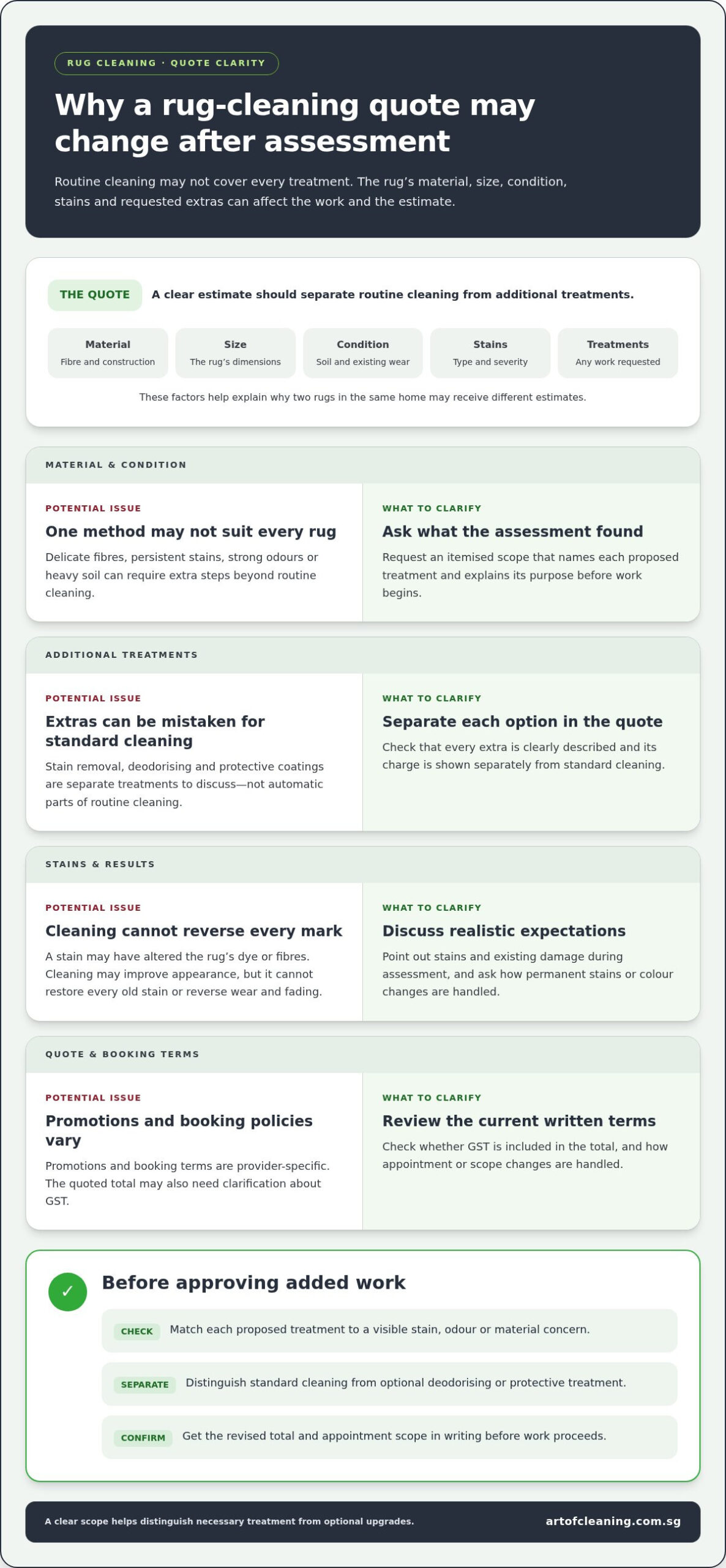
A rug’s condition can affect the work required, so the initial estimate may not cover every treatment. Delicate fibres, persistent stains, strong odours or heavy soil can call for extra steps beyond routine cleaning. Ask for an itemised scope that names each proposed treatment and its purpose before work begins.
Stain removal, deodorising and protective coatings are common additional treatments to discuss. A visible food stain may need targeted treatment, while a lingering odour may call for deodorising. A protective coating is a separate option, not an automatic part of cleaning. Check that each extra is clearly described in the written quote, with its charge shown separately.
The price depends on the rug’s material, size, condition, stain severity and treatments required, and is provided after a quote request. These factors explain why two rugs in the same home may receive different estimates. A small wool rug with a set-in stain can require a different process from a larger synthetic rug with ordinary soil.
Are there Singapore-specific promotions, GST charges, or booking policies for rug cleaning in 2026? Promotions and booking terms are provider-specific, so compare the current written quote and booking conditions. Check whether GST is included in the quoted total, and review how changes to the appointment or scope are handled.
Before approving added work, use this simple review:
- Match every proposed treatment to a visible stain, odour or material concern.
- Separate standard cleaning from optional deodorising or protective treatment.
- Confirm the revised total and appointment scope in writing before work proceeds.
An assessment helps distinguish necessary treatment from optional upgrades. If a mark has altered the rug’s dye or fibres, cleaning may not restore its original appearance. The cleaner should explain the treatment’s purpose and limitations in plain language, especially for older rugs or after previous stain attempts. Clear written terms make it easier to compare the quote with the final work and avoid unexpected additions.
Islandwide service in Singapore
Singapore’s compact geography doesn’t make every rug-cleaning visit equally straightforward. A rug in a Tampines flat may involve different access arrangements from one in a Jurong office or a central-area condominium. Before arranging a visit, note the building type, entry instructions, loading arrangements and where the rug sits. These details help establish whether the work can be handled on-site or needs another cleaning arrangement.
Service convenience depends on more than the address. A large rug may be difficult to move through a narrow corridor, while a smaller piece near a lift may be easier to access. Share the rug’s approximate dimensions, floor level and whether it can be moved safely. For an office, explain access hours and whether furniture or work areas need to remain available.
Use a short preparation checklist for any Singapore location:
- Share the block, building name and unit access instructions when arranging the visit.
- Describe the rug’s size, material and condition, including stains or odours.
- Clear nearby furniture and fragile items, and identify any access restrictions.
- Ask whether cleaning will take place at the property or require a different arrangement.
These details help make an islandwide service plan practical, whether the rug is in a home, shop or office. Consider the stated coverage alongside the cleaning method, access needs and drying arrangements. For example, a rug in a busy reception area may need a plan that limits disruption, while a household rug can often be cleaned with fewer access constraints.
The price depends on the rug’s size, material, condition, cleaning method and access arrangements; the exact figure is given in a quote for your case. Share those details upfront so the quote reflects the work and location requirements.
For help with cleaning needs across your home or workplace, explore cleaning services in Singapore and consider which arrangement best fits your rug and access situation.
Art of Cleaning: Carpet Cleaning
Art of Cleaning provides carpet and rug cleaning for homes and workplaces where embedded soil, stains or routine upkeep need professional attention. Its related sofa and mattress cleaning services can help care for other fabric surfaces in the same space. Share the rug’s material, size, condition and any specific concerns when requesting a quote, so the proposed work reflects the item being cleaned.
For delicate fibres, persistent marks or rugs that need assessment before treatment, professional cleaning is a practical next step. It can also help when regular vacuuming no longer lifts visible soil or when a rug is part of a broader home or office cleaning plan. Choose a service that matches the surface and cleaning need, rather than treating every textile the same way.
To discuss a suitable cleaning service, visit Art of Cleaning online.
Make a confident next move for your rug
Choosing the best rug cleaning services in Singapore in 2026 means weighing professional cleaning and prices against your rug’s needs. Before booking, gather a clear photo, note the material if known, and describe any previous stain treatments. These simple details give the discussion a practical starting point and help you focus on the outcome that matters most in your space.
After cleaning, keep the care guidance and service details together. A short record of the rug’s condition and treatment can help you plan future maintenance and explain changes if stains or odours return. For related fabric-care needs, Art of Cleaning also provides carpet, rug and sofa cleaning.
Ready to discuss your rug’s cleaning needs? Contact Art of Cleaning to enquire, and take the next step towards a cleaner, more comfortable home.
Frequently Asked Questions
How much does carpet cleaning cost in Singapore?
The cost depends on the carpet’s size, material, condition, cleaning method and any additional treatment. A heavily soiled carpet or delicate fibre may need more work than routine cleaning. For a useful comparison, look for a quote that describes the work included and separates optional treatments. The final amount is provided after a quote request, based on the carpet and cleaning requirements.
What are the best-rated rug cleaning services in Singapore in 2026?
There’s no single best-rated service for every rug; suitability depends on its material, condition and required care. Compare recent customer feedback for comments about thoroughness, communication and handling of specific rug types, rather than relying on a rating alone. Art of Cleaning’s customer feedback praises professionalism and thoroughness. For any provider, read reviews alongside the stated cleaning scope and terms.
What rug cleaning methods do Singapore providers offer, such as steam cleaning, dry cleaning, and hand washing?
Common methods include steam or hot-water extraction, low-moisture cleaning, dry-compound processes and hand washing. The right choice depends on the rug’s fibres, dyes, backing and condition. A delicate or colour-sensitive rug, for example, may need a gentler approach than a durable synthetic rug. Ask what preparation, soil removal, rinsing or extraction, and drying steps the selected method involves.
How much does professional rug cleaning cost in Singapore by rug size and material in 2026?
Rug-cleaning quotes depend on dimensions, material, condition, access and the treatment required. A large rug uses more cleaning time and resources, while delicate fibres may need extra care. Stains, odours and protective treatments can also affect the scope. Provide accurate measurements and describe the rug’s material and issues so the quote reflects the work required.
How do Singapore rug cleaning services compare on reviews, experience, and service guarantees?
Compare review details, relevant rug-handling experience and written service terms, not star scores alone. Look for specific feedback about communication, care and results, and check whether the cleaner explains limitations before work. Art of Cleaning’s terms state, “Please note that not all stubborn stains and spots can be removed thoroughly.” They also state, “Goods or services sold are not refundable.”
What is included in a standard rug cleaning service in Singapore, and what costs extra?
A standard service typically covers assessment and cleaning suited to the rug, while stain removal, deodorising or protective coatings may be additional treatments. Confirm which steps the quote includes and whether optional work is itemised. Art of Cleaning states, “We may impose additional charges after assessment should there be additional areas or the conditions of the carpet or upholstery if deemed to be different from the information provided by the customer.”