
Is your nursery truly safe just because the furniture is brand new? Many parents don’t realize that the “fresh” scent of a new crib often signals the presence of volatile organic compounds (VOCs) that can irritate a newborn’s sensitive respiratory system. As you work through your getting house ready for new baby checklist, it’s easy to focus on buying gear while overlooking the invisible allergens like dust mites or chemical residues that linger in carpets and upholstery. We know the overwhelming pressure to create a perfect sanctuary and the anxiety that comes with protecting a child whose immune system is still developing.
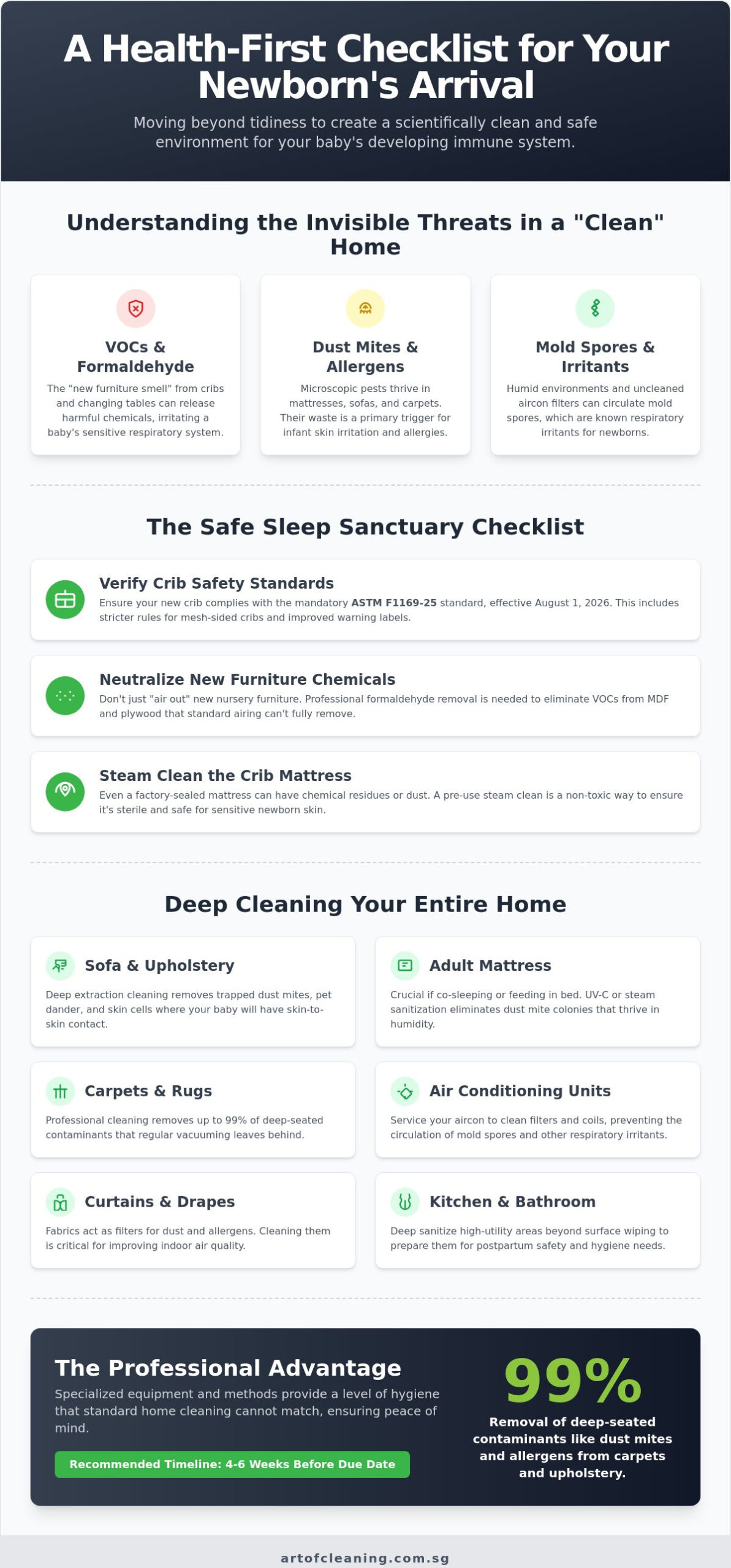
This guide moves past the standard “must-buy” lists to provide a scientific approach to home sanitation for 2026. You’ll learn how to navigate the latest safety updates, such as the mandatory ASTM F1169-25 crib standards effective August 1, 2026, and how to eliminate hidden contaminants from your living spaces. We’ll show you how to manage indoor air quality and ensure every textile meets the highest hygiene standards. By the end of this article, you’ll have a clear, actionable plan to create a clean, organized environment that prioritizes your family’s health and reduces postpartum stress.
Key Takeaways
- Understand the difference between visual tidiness and scientific hygiene to protect your newborn’s developing immune system from hidden allergens.
- Identify the risks of VOCs and formaldehyde off-gassing in new nursery furniture and learn the steps to neutralize these invisible threats.
- Follow our comprehensive getting house ready for new baby checklist to ensure aircon systems and curtains are free of mold spores and respiratory irritants.
- Prepare high-utility areas like the kitchen and bathroom for postpartum safety by focusing on deep sanitation rather than just surface wiping.
- Explore how professional disinfection and specialized cleaning services can provide the peace of mind needed to focus on your new arrival.
The Hygiene Foundation: Deep Cleaning Your Living Spaces
A standard vacuuming routine might make your floors look tidy, but it barely scratches the surface of what a newborn requires. Infants possess a developing immune system that is significantly more vulnerable to environmental triggers than an adult’s. When building your getting house ready for new baby checklist, hygiene must be the foundation rather than an afterthought. Surface cleaning often leaves behind microscopic threats like dust mites, pet dander, and shed skin cells that settle deep into upholstery fibers. These invisible contaminants are primary triggers for infant skin irritation and respiratory distress.
Professional cleaning services utilize specialized equipment to extract these pollutants at the source. High-grade extraction methods can remove up to 99% of deep-seated contaminants, creating a baseline of safety that standard domestic tools cannot achieve. We recommend scheduling this deep clean approximately 4 to 6 weeks before your due date. This timing ensures the home is ready before the final weeks of pregnancy, when physical mobility becomes limited, and allows ample time for any residual moisture to fully dissipate before the baby arrives.
Sanitising the Living Room Sofa and Carpets
The living room sofa often serves as a “second nursery” where parents spend hours during skin-to-skin contact or nursing sessions. Because a baby’s skin is significantly thinner than an adult’s, it absorbs environmental toxins more readily. Professional sofa and carpet cleaning is essential to neutralize these risks. By using industrial-grade HEPA filtration, specialists ensure that airborne particles are captured rather than recirculated into the nursery air. For families in the region, prioritizing Professional Carpet Cleaning Singapore ensures that deep-seated allergens are removed using methods tailored to local environmental factors.
Mattress Sanitisation: Preparing Your Own Sleep Space
While much focus is placed on the crib, the adult mattress is equally critical for newborn care and safety, especially if you plan on co-sleeping or nighttime feeding in your own bed. Singapore’s persistent humidity, which frequently exceeds 80%, creates an ideal breeding ground for dust mite colonies. These pests thrive on the skin cells shed during sleep, and their waste products are potent allergens. Mattress sanitisation is a non-toxic process using steam or UV-C light. This professional intervention eliminates the biological load within the mattress, ensuring the primary sleep environment is as sterile as the nursery. Including this in your getting house ready for new baby checklist guarantees that the invisible environment is as clean as the freshly laundered sheets.
Creating a Safe Sleep Sanctuary: The Nursery Checklist
Setting up the crib is often the emotional highlight of preparing for a newborn. However, physical assembly is only the first step in ensuring your child’s security. For 2026, all full-size baby cribs must meet the updated ASTM F1169-25 safety standard, which becomes mandatory on August 1. This regulation introduces stricter requirements for mesh-sided cribs and improved warning labels to prevent entrapment. As you refine your getting house ready for new baby checklist, verify that your nursery furniture complies with these latest federal protections. Beyond mechanical safety, the chemical environment of the sleep sanctuary requires equal scrutiny.
New nursery furniture frequently releases volatile organic compounds (VOCs) into the air. That distinct “new furniture smell” is often the result of formaldehyde off-gassing from the adhesives and resins used in plywood or medium-density fiberboard (MDF). These chemicals can irritate a newborn’s respiratory tract and exacerbate skin sensitivities. Since infants spend up to 17 hours a day sleeping, their exposure to these gases is significantly higher than that of an adult. Following established child safety tips means ensuring the air they breathe is as secure as the mattress they lie on. Even a factory-sealed mattress can harbor factory dust or chemical residues, making a pre-use steam clean a wise precaution for sensitive skin.
Formaldehyde Removal for New Nursery Furniture
Standard “airing out” techniques can take months or even years to fully dissipate formaldehyde from new materials. For parents on a tight timeline, professional formaldehyde removal services use specialized neutralizing agents to accelerate this process. These treatments break down the chemical bonds on furniture surfaces, drastically reducing the concentration of VOCs before the baby arrives. This proactive step ensures that the nursery remains a healthy environment from day one, protecting your child’s developing lungs from invisible irritants.
Bedding and Soft Toy Preparation
Even brand-new linens and plush toys can carry industrial residues or dust from the manufacturing facility. Wash all bedding, swaddles, and clothing in baby-safe, fragrance-free detergents to prevent contact dermatitis. For plush toys that can’t withstand a high-heat wash, use the “Dust Mite Freeze” method. Placing soft toys in a sealed bag in the freezer for 24 hours effectively kills dust mite colonies without damaging the fabric. This step is a vital addition to any comprehensive getting house ready for new baby checklist for parents prioritizing long-term health. Once sanitised, organize these items in closed storage bins to maintain their cleanliness and ensure 3 AM efficiency when you need a fresh change quickly.
Beyond the Crib: Preparing Air Quality and Fabrics
While furniture and mattresses are now secured, the invisible environment of the nursery depends heavily on vertical surfaces and climate control systems. Curtains are frequently the most neglected item on a getting house ready for new baby checklist, yet they function as massive air filters that trap dust, pollen, and pet dander over months of use. When these fabrics become saturated, they release allergens back into the air every time they’re drawn. This poor indoor air quality is a documented trigger for infant eczema and other skin sensitivities, as a newborn’s respiratory system is highly reactive to airborne particulates. Integrating air purity into your getting house ready for new baby checklist bridges the gap between a visually tidy room and a scientifically safe one.
Ensuring a sterile environment involves more than just washing clothes. According to the Children’s Hospital of Philadelphia’s newborn preparation guide, maintaining high safety standards throughout the home is essential for long-term health. This includes the feeding station, whether it’s a dedicated armchair in the nursery or a space in the living room. Nursing pillows and nearby upholstery must be kept free of milk residues and skin cells that can encourage bacterial growth in the warm, humid air.
Professional Curtain Steam Cleaning
Standard home washing often fails to penetrate heavy blackout fabrics and can lead to shrinkage or damage. Professional Premium Curtain Cleaning Singapore utilizes high-temperature steam to eliminate 99.9% of bacteria and dust mites without requiring the curtains to be removed from their tracks. This method is superior because it provides a deep thermal sanitisation that reaches the core of the fibers. It ensures that the fabric surrounding your baby’s crib isn’t a reservoir for respiratory irritants.
Aircon Sanitisation and Filter Care
In a tropical climate, the air conditioning unit is a primary source of indoor air pollutants. “Dirty Sock Syndrome” occurs when mould and bacteria colonize the evaporator coils, resulting in a musty odor and the distribution of spores throughout the nursery. A professional chemical wash is the only way to fully eradicate these colonies and restore air purity. For ongoing maintenance, parents should follow these steps:
- Rinse the mesh filters under warm water every 14 days to prevent dust buildup.
- Ensure the area around the external compressor is clear of debris to maintain efficiency.
- Keep the nursery humidity between 40% and 60% to discourage new mould growth.
By prioritizing these air-quality measures, you create a holistic sanctuary where every breath your baby takes is clean and safe. To further enhance your home’s environment with advanced air purification and cooling technology, check out Daikin Singapore for energy-efficient solutions.
The “Not-So-Obvious” Home Prep: Kitchen and Pets
While the nursery often receives the most attention, the kitchen and bathroom are high-traffic zones that require a different level of scrutiny on your getting house ready for new baby checklist. The kitchen serves as the biological hub for your family’s nutrition. Postpartum recovery usually involves a high volume of pre-prepared meals and constant sterilization of bottle or breast pump parts. A refrigerator that has not been deep-cleaned can harbor Listeria or mold, which poses a significant risk to both a recovering mother and a vulnerable infant. Recent 2026 bacterial recalls in baby products remind us that a newborn’s immune system is highly sensitive to environmental pathogens.
Bathroom sanitation is equally vital for the first few weeks of life. The first baby bath is a major milestone, but it must occur in an environment free of soap scum, hard water deposits, and mildew. Scrubbing the tub or sink with non-toxic, anti-microbial agents ensures that the baby’s porous skin is not exposed to residual bathroom bacteria. A “Final Sweep” or move-in style deep clean for the entire property acts as a reset button, ensuring that every corner of the home meets a professional standard of hygiene before the baby arrives.
This sense of security should also extend to your family vehicle, ensuring it is as clean and safe as your home for the baby’s first trips. For parents looking to upgrade to a more reliable or spacious ride, Carz World Pte Ltd offers a wide range of quality new and pre-owned cars in Singapore perfect for growing families.
Kitchen and Pantry Preparation
Efficiency in the kitchen is essential for managing the sleep-deprived weeks ahead. Start by clearing out all expired items from the pantry and fridge to make ample room for breast milk or formula storage. Sanitising the microwave and oven is a critical step, as you will rely on these for quick meal heating. We recommend defining a “sterilisation zone” on your countertop, a dedicated area that is kept strictly free of raw food prep or household clutter to maintain the integrity of feeding equipment.
Introducing Pets to the New Environment
Pets are beloved family members, but their presence introduces dander and hair that can trigger allergies in newborns. Managing this transition requires defining clear boundaries weeks in advance. Setting up pet-free zones in the nursery allows your animals to adjust to new restricted areas before the baby becomes the focus of your attention. Professional rug cleaning is the most effective way to remove deeply embedded pet hair and allergens from floor-play areas. If you need a comprehensive solution for your entire home, you can explore Art of Cleaning’s full service list to find specialized treatments for pet-heavy households.
A professional deep clean provides a level of microscopic decontamination that standard household chores cannot match. To ensure your home is truly safe for your new arrival, contact our specialist team to schedule a pre-baby disinfection and deep cleaning service today.
Professional Support: Why a Pre-Baby Deep Clean is Essential
The nesting instinct is a powerful biological drive that compels parents to prepare their environment for a new arrival. However, there’s a distinct difference between visual organization and scientific decontamination. While you’re likely focused on ticking off items on your getting house ready for new baby checklist, the physical demands of deep cleaning become increasingly difficult as you enter the third trimester. Outsourcing the heavy lifting allows expectant parents to prioritize rest and recovery before the rigorous demands of newborn care begin. At Art of Cleaning, we treat hygiene as a precise craft, moving beyond surface-level tidiness to ensure your living space is biologically safe.
Planning your professional cleaning schedule is best handled in stages. We recommend researching services during your second trimester and scheduling the actual visit for your eighth month. This timeline ensures the home is at its peak level of sanitation just as you’re preparing for the hospital. A professional intervention at this stage removes the accumulated dust, pet dander, and skin cells that have settled over the preceding months. This creates a fresh baseline for your homecoming, ensuring that your getting house ready for new baby checklist accounts for the invisible environment as much as the visible one.
The Health ROI of Professional Cleaning
The value of professional support is found in the data. Our specialized processes achieve a 99% reduction in allergens and microscopic contaminants that domestic vacuums simply can’t reach. Early environmental control is a proactive measure in reducing the long-term risk of childhood asthma and allergic rhinitis. By eliminating the biological triggers found in mattresses and upholstery, you’re providing your child’s developing respiratory system with the best possible start. A clean home is the first step in a baby’s health journey.
Booking Your Pre-Baby Decontamination
We offer customizable packages designed specifically for growing families, typically combining mattress, sofa, and curtain cleaning for a holistic result. During a professional visit, our technicians prioritize your comfort and safety. All processes are non-toxic and designed to be non-disruptive for pregnant residents. You can expect a systematic approach that addresses every fabric surface in your home with artisanal precision and care. To ensure your environment is fully prepared for your new arrival, get a quote for your pre-baby deep clean today.
Securing Your Home for a Healthy Future
Transitioning from a house to a sanctuary for a newborn requires more than just furniture assembly. It demands a scientific approach to hygiene that addresses invisible threats like formaldehyde off-gassing and deep-seated allergens. By working through your getting house ready for new baby checklist, you’ve identified the critical importance of air purity and textile sanitisation. These steps are essential for protecting your child’s developing respiratory and immune systems from the very first day.
Art of Cleaning brings a level of meticulous craft to this vital preparation. As a specialist featured on MediaCorp and Channel 5, we utilize specialized HEPA-filtration equipment and non-toxic, baby-safe cleaning solutions to ensure your environment is truly secure. We take pride in the precision of our labor, removing up to 99% of contaminants from the surfaces your family touches most. Book Your Pre-Baby Professional Deep Clean today to gain the peace of mind that comes with a scientifically clean home. You’re creating a beautiful space for your new arrival, and we’re honored to help you make it a healthy one.
Frequently Asked Questions
When is the best time to start getting the house ready for a new baby?
You should ideally begin the preparation process in your second trimester and aim to complete all major tasks 4 to 6 weeks before your due date. This timeline ensures that the home is fully sanitised before physical mobility becomes a challenge in the final weeks of pregnancy. Starting early also allows ample time for any “new furniture smells” or residual moisture from deep cleaning to dissipate completely. Including professional decontamination in your getting house ready for new baby checklist during this window provides a stress-free environment for your return from the hospital.
Is it safe to have my carpets professionally cleaned while pregnant?
Yes, professional carpet cleaning is safe as long as the service utilizes non-toxic, baby-safe solutions. It’s actually highly recommended to remove the deep-seated allergens and dust mites that accumulate in carpet fibers over time. We advise expectant mothers to remain in a separate, well-ventilated area during the process to avoid any temporary sensitivity to humidity. Our artisanal approach ensures that all moisture is properly extracted, preventing the growth of mold or mildew that could compromise indoor air quality.
How do I get rid of the “new furniture smell” in the nursery?
The distinct scent from new cribs or wardrobes is often the result of volatile organic compounds (VOCs) off-gassing from adhesives and finishes. While natural ventilation can take months to reduce these levels, professional formaldehyde removal services can accelerate the process significantly. These treatments use specialized neutralizing agents to break down chemical bonds on the furniture’s surface. This intervention ensures that the nursery air is safe for your baby’s sensitive respiratory system from the very first night.
Do I really need to clean my curtains if they look clean?
Curtains act as massive vertical air filters, trapping microscopic dust, pollen, and pet dander that aren’t visible to the naked eye. Even if they appear spotless, they can harbor millions of dust mites that trigger infant skin irritation and allergies. Steam cleaning is the most effective way to sanitise these fabrics without removing them from the tracks. This step is a vital part of any getting house ready for new baby checklist to ensure that the air surrounding the crib remains pure and free of respiratory irritants.
What is the difference between general cleaning and deep cleaning for a baby?
General cleaning focuses on surface-level aesthetics like dusting, mopping, and tidying, whereas deep cleaning targets the invisible biological load of the home. A pre-baby deep clean involves specialized processes such as mattress sanitisation, high-temperature steam cleaning for upholstery, and aircon chemical washes. These methods remove up to 99% of deep-seated contaminants that domestic tools cannot reach. This scientific approach creates a sterile foundation that supports a newborn’s developing immune system rather than just making the room look neat.
Can professional cleaning help with my baby’s potential allergies?
Professional cleaning is a proactive way to manage environmental triggers before they affect your child. By using industrial-grade HEPA-filtration equipment, we capture particulates as small as 0.3 microns, including mold spores and pet dander. Reducing these invisible threats in the early weeks of life is a documented method for lowering the risk of childhood asthma and allergic rhinitis. It’s an investment in your baby’s long-term health that goes beyond standard household chores.
How much does a pre-baby deep cleaning service cost in Singapore?
The cost of a comprehensive pre-baby deep clean depends on the size of your property and the specific services you choose to bundle, such as mattress and curtain cleaning. While general part-time cleaning has a lower entry point, specialized decontamination involves artisanal labor and industrial-grade equipment designed for health-based results. Every home has different requirements, so we recommend requesting a customized quote to ensure you’re only paying for the specific treatments your living space needs to be baby-ready.
Is formaldehyde removal necessary for all new baby furniture?
Formaldehyde removal is particularly critical for furniture made from plywood, MDF, or items that use heavy adhesives, as these materials are the primary sources of VOC off-gassing. Even some high-end nursery sets can release chemicals that irritate a newborn’s lungs and skin. If you notice a lingering chemical scent or if the furniture hasn’t been aired out for several months, a professional treatment is a wise precaution. This ensures that your child’s sleep sanctuary meets the highest safety standards for air quality.