
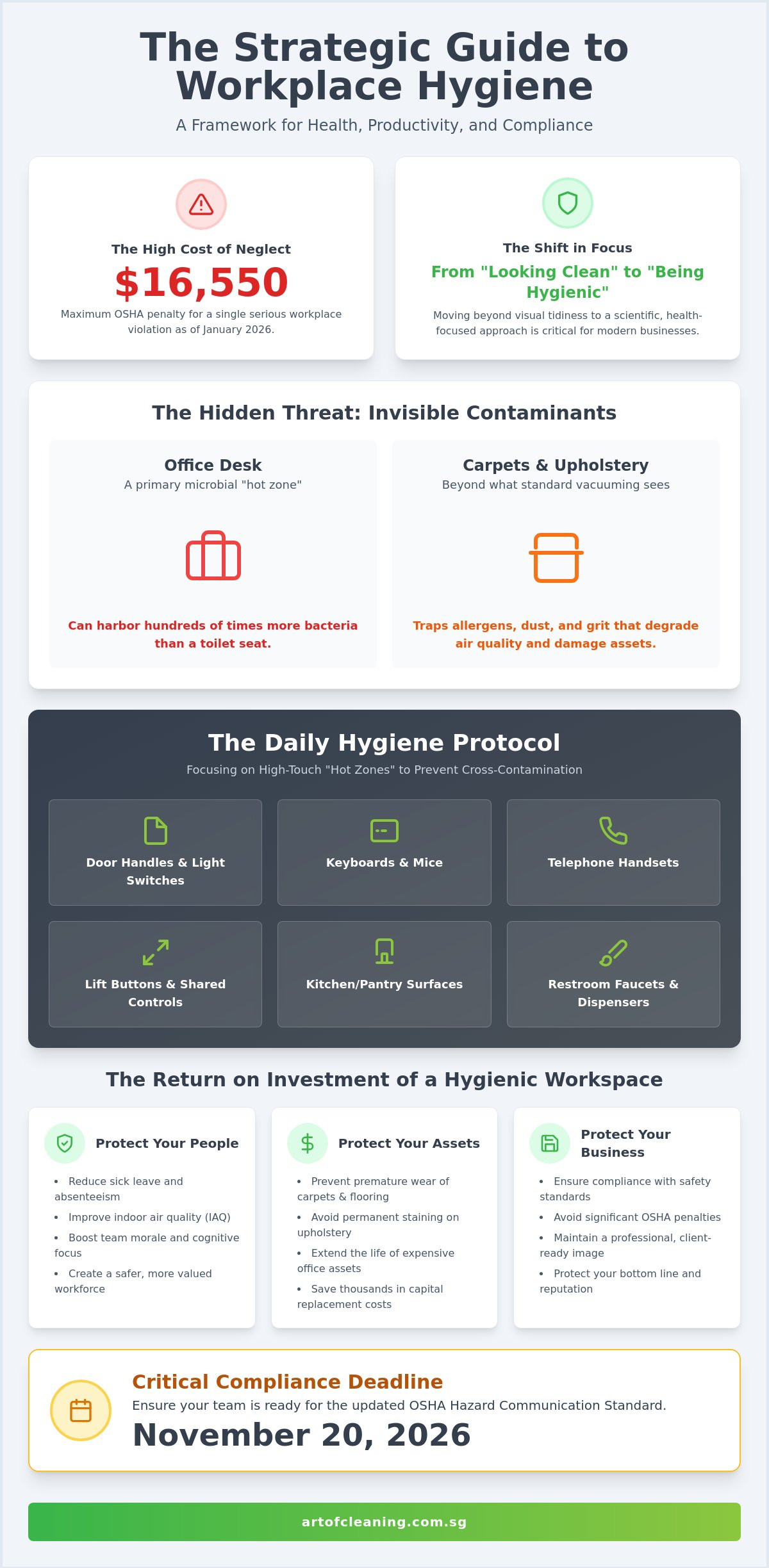
As of January 2026, the maximum OSHA penalty for a serious workplace violation has reached $16,550 per occurrence. For many business owners, this figure is a stark reminder that facility maintenance is no longer just about emptied bins or a vacuumed rug. You likely already know that a cluttered workspace dampens morale, yet the real threat lies in the invisible pathogens and hidden allergens that drive up absenteeism. Implementing a rigorous Office Cleaning Checklist is the only way to bridge the gap between looking clean and being truly hygienic.
We’ve designed this guide to help you master workplace hygiene through a scientific, health-focused lens. You’ll gain a clear framework for holding cleaning vendors accountable and ensuring every high-touch surface meets modern safety standards. We’ll walk you through essential daily tasks, deep cleaning protocols for carpets, and the critical OSHA Hazard Communication Standard updates required by November 20, 2026. This comprehensive approach ensures a professional, client-ready environment that actively protects your team’s well-being and your company’s bottom line.
Key Takeaways
- Learn why shifting your focus from visual tidiness to microbial hygiene is the key to reducing sick leave and boosting team morale.
- Discover how to implement a structured Office Cleaning Checklist that targets bacterial “hot zones” and high-touch surfaces for daily protection.
- Identify the hidden contaminants in office upholstery and carpets that standard vacuuming leaves behind.
- Understand how a professional cleaning framework protects your business from significant OSHA penalties and ensures compliance with updated safety standards.
- Gain a clear set of criteria for selecting a professional partner capable of managing a high-standard hygiene program.
The Strategic Importance of a Professional Office Cleaning Checklist
In a modern professional environment, “looking clean” is a surface-level metric that often masks significant biological risks. Research suggests office desks can harbor hundreds of times more bacteria than a toilet seat; this makes a rigorous Office Cleaning Checklist an operational necessity rather than a luxury. By 2026, the industry has pivoted toward “cleaning for health,” prioritizing the removal of invisible pathogens that compromise employee safety and business continuity. This shift moves beyond simple dusting to a methodology rooted in microbial hygiene.
A structured approach to sanitation doesn’t just satisfy aesthetic requirements. It serves as a shield against the high costs of absenteeism and the silent drain of presenteeism. When employees work in an environment where hygiene is managed with scientific precision, they feel valued and safe. This psychological assurance is a critical component of modern corporate culture. Adhering to recognized Commercial cleaning standards ensures that every square foot of your facility supports your team’s health instead of threatening it.
The Link Between Hygiene and Productivity
Air quality and surface sanitation are directly linked to cognitive performance. Poor indoor air quality (IAQ), often caused by trapped dust in carpets and upholstery, can lead to headaches and fatigue. By strictly following an Office Cleaning Checklist that includes high-level dusting and deep floor care, businesses can see a measurable improvement in staff focus. Eliminating allergens and pathogens reduces the likelihood of office-spread illnesses, keeping your workforce active and present. A meticulously maintained workspace sends a clear message of stability and professional excellence to both staff and visiting clients.
Asset Longevity and Cost Savings
Neglecting the deep fibers of your office furniture and flooring leads to rapid degradation. Dirt and grit act like sandpaper on carpet fibers, while oils from skin can permanently stain upholstery if not addressed through professional specialized cleaning services. Regular maintenance prevents the premature replacement of expensive office assets, saving the company thousands in capital expenditure over time. Periodic floor restoration, such as vinyl polishing or marble honing, preserves the structural integrity of your facility’s surfaces. Preventative cleaning is a strategic, scheduled maintenance program designed to eliminate contaminants before they cause illness or permanent asset degradation, ensuring a high return on investment for facility management.
The Daily Hygiene Protocol: High-Touch Surfaces and Shared Zones
While many janitorial services prioritize emptying trash bins, a truly effective Office Cleaning Checklist focuses on the microbial “hot zones” where pathogens actually spread. Bacteria and viruses thrive on non-porous surfaces, making high-touch points like door handles, lift buttons, and light switches primary vectors for cross-contamination. Scientific studies have shown that the impacts of office environment on employee health are profound, with contaminated surfaces contributing significantly to annual sick leave rates. To combat this, daily protocols must utilize hospital-grade disinfectants that are EPA-registered to neutralize pathogens within specific contact times.
Restroom maintenance requires a shift from visual tidiness to verifiable disinfection. A floor that looks shiny can still harbor significant colonies of E. coli or Streptococcus if the cleaning process doesn’t involve the correct chemical dwell time. Every daily routine should include the deep sanitization of faucet handles, soap dispensers, and flush levers. For businesses aiming to exceed standard benchmarks, integrating a professional disinfection service ensures that even the most stubborn bio-films are removed from communal facilities, protecting both staff and visitors from preventable illness.
Workstation and Desk Sanitisation
Individual workstations are often the most neglected areas in a standard cleaning cycle. Keyboards, mice, and telephone handsets require meticulous attention as they frequently harbor more bacteria than common restroom surfaces. A “clear desk policy” is essential here; it allows cleaning teams to access the entire surface area of the desk without moving personal items, which can lead to damage or misplaced documents. Tech equipment should be treated with 70% isopropyl alcohol or specialized electronic-safe wipes to sanitize dual-monitor setups and docking stations without compromising the hardware’s integrity.
Pantry and High-Traffic Common Areas
The office pantry is a high-risk zone for food-borne illnesses and viral spread. Daily protocols must go beyond wiping down counters to include the sanitization of coffee machine handles, microwave buttons, and refrigerator door grips. Sinks and countertops should be disinfected at the end of every day to prevent the growth of mold and bacteria in damp environments. In the reception area, the focus is on creating a safe first impression. Meticulous care of guest seating and transaction counters ensures that clients enter a space that isn’t just professional in appearance, but fundamentally healthy and safe.
Weekly and Monthly Deep Cleaning: Beyond the Surface
Daily sanitization handles the immediate risk, but a comprehensive Office Cleaning Checklist requires a tiered approach to address long-term contaminant buildup. Dust and allergens don’t stay on the surface. They migrate into high-level reservoirs and deep carpet fibers, eventually compromising the air your team breathes. By scheduling weekly and monthly restorative tasks, you prevent the slow degradation of indoor air quality and maintain a truly professional environment. This systematic approach allows you to address hidden dangers before they manifest as increased sick leave or physical damage to your office furniture.
Weekly Maintenance Priorities
Weekly maintenance shifts the focus to areas that don’t require daily intervention but still impact health and aesthetics. Deep vacuuming must reach into corners and under desks, where a significant portion of office dust typically accumulates over five working days. This cycle is also the ideal time to sanitize shared technology like printers and photocopiers. These communal hubs are frequently touched but rarely disinfected during a standard daily sweep. Beyond flooring, maintaining clear glass partitions and windows during this phase ensures a bright, welcoming atmosphere for both staff and clients. It’s a process that balances the visual requirements of a modern office with the underlying need for a biologically safe workspace.
Monthly and Periodic Hygiene Audits
Monthly hygiene audits target the areas that are out of sight but critical for environmental health. Cleaning aircon vents is a non-negotiable step to prevent the spread of airborne pathogens and allergens throughout the workspace. High ledges, ceiling fans, and intricate window treatments act as magnets for particulate matter and require meticulous dusting to prevent shedding into the air. This is also the time to perform a detailed inspection for mould or humidity-related damage in soft furnishings like sofas or acoustic panels. As you update your safety protocols for the upcoming November 20, 2026 OSHA HazCom deadline, use this monthly window to audit your chemical inventory and safety data sheets. To ensure these tasks don’t interfere with your team’s output, schedule them for weekends or after-hours when the office is vacant. For businesses that lack the specialized equipment for these tasks, outsourcing to professional office cleaners ensures a level of craft and precision that protects your facility assets. This periodic deep cleaning acts as an insurance policy for both your staff’s health and your property’s value.
Specialised Maintenance: Carpets, Upholstery, and Floor Restoration
A standard Office Cleaning Checklist often treats carpets and upholstery as static furniture rather than active filters for particulate matter. While daily vacuuming removes surface debris, it fails to address approximately 90% of the contaminants lodged deep within the pile. In Singapore’s high-humidity environment, these trapped particles combine with moisture to create a breeding ground for mould and mildew. This biological buildup isn’t just an aesthetic concern; it’s a direct threat to the health of your workforce and the longevity of your office assets.
Visual tidiness is a poor indicator of true hygiene. Soft surfaces act as “sinks” for allergens, skin cells, and microbial life that regular janitorial tools simply can’t reach. To protect the structural integrity of your facility, you must transition from reactive cleaning to a specialized restorative program. This ensures that expensive materials like marble, parquet, and designer fabrics remain in peak condition for years to come.
Professional Carpet and Rug Care
The science of professional carpet cleaning singapore focuses on high-temperature deep extraction. This process uses pressurized water and specialized solutions to break the bond between soil and fiber, effectively removing dust mites and bacteria that vacuuming leaves behind. For high-traffic commercial zones, we recommend a deep cleaning cycle at least once every quarter to maintain hygiene standards. Regular intervention prevents the “sandpaper effect” where grit grinds down fibers, extending the life of your flooring significantly.
Office Upholstery and Curtain Sanitisation
Office chairs and sofas are significant reservoirs for skin cells and oils. Despite being used for eight hours a day, they’re frequently ignored in a basic Office Cleaning Checklist. Deep sanitizing these surfaces through steam or dry cleaning methods ensures that the microbial load remains low. Similarly, the benefits of curtain cleaning singapore extend beyond visual freshness to improved air quality. Curtains trap airborne pollutants that would otherwise circulate through the ventilation system; professional steam cleaning neutralizes these threats without damaging delicate office fabrics.
Hard Floor Restoration and Polishing
Hard surfaces require more than just mopping to retain their professional lustre. Vinyl floor polishing creates a protective barrier that resists scuffs and spills in busy corridors, while marble and parquet restoration is essential for executive boardrooms. These specialized processes involve honing and resealing to protect the underlying material from permanent wear. For exterior entryways, pressure jet washing removes grime and slip hazards, ensuring a safe and pristine arrival for every client. This level of craft transforms your facility into a high-performance professional environment.
To secure the health and appearance of your workplace assets, explore our full range of specialized office maintenance services today.
Implementing Your Checklist: Choosing the Right Professional Partner
Implementing an Office Cleaning Checklist is the first step toward a healthier workplace, but the effectiveness of that list depends entirely on the precision of its execution. A checklist on a clipboard doesn’t remove pathogens; trained specialists with hospital-grade equipment do. Transitioning from a basic task list to a managed hygiene program requires a partner who understands the microbial risks discussed in previous sections. You need a team that can execute daily sanitation while simultaneously managing long-term restorative tasks like carpet extraction and floor polishing.
Evaluating office cleaning services singapore requires looking beyond the monthly contract price. Ask potential vendors about the specific grade of disinfection chemicals they use and whether their equipment features HEPA filtration to capture 99.97% of airborne particles. A professional partner should hold bizSAFE certifications, ensuring they adhere to strict safety protocols that protect your staff and minimize your company’s liability. Check for professional endorsements and features on major local broadcasting networks, as these are hallmarks of a verified and prestigious service provider.
Evaluating Cleaning Vendors
Selecting a vendor is a high-stakes decision for facility management. You should prioritize partners who offer a seamless blend of daily maintenance and specialized services. Companies like All InOne Complete Janitorial demonstrate the value of this model by providing professional janitorial, window, and carpet services for commercial and medical facilities. Ask if they provide comprehensive insurance and janitorial bonds to safeguard your office assets. A specialist who can handle both high-traffic vinyl polishing and delicate upholstery sanitization reduces the friction of managing multiple contractors, ensuring that your Office Cleaning Checklist remains a living document of health rather than a neglected administrative task.
The Art of Cleaning Advantage
At Art of Cleaning, we treat facility maintenance as a meticulous craft rather than a standard chore. Our approach to office cleaning singapore is rooted in scientific hygiene, ensuring that every desk, pantry, and boardroom meets the highest safety standards. We balance aesthetic brilliance with verified health-based results, removing the hidden contaminants that standard cleaning leaves behind. Our specialists are trained to handle the specific humidity challenges of the Singapore market, protecting your curtains and carpets from microbial growth.
We take pride in the precision of our labor, suggesting a level of craft that goes beyond standard service. We invite you to experience the precision and care that has made us a dependable specialist for businesses across the region. Contact us today for a customised office hygiene audit and pricelist to begin your journey toward a safer, more professional workspace.
Elevate Your Workplace Health Standards
Transitioning your facility maintenance from a reactive task to a strategic hygiene program is essential for long-term business resilience. A robust Office Cleaning Checklist ensures that high-touch zones remain disinfected and hidden contaminants are extracted from deep within carpet fibers. By prioritizing microbial safety over mere surface-level tidiness, you protect your team’s health and preserve the integrity of your office assets. It’s about moving beyond the basics to invest in a workspace that actively supports productivity and well-being.
As specialized upholstery and carpet deep cleaning experts, we bring a level of craft that has been featured on major national broadcasting networks. Our comprehensive facility care includes advanced marble and vinyl polishing to keep your executive spaces in peak condition. We understand the specific environmental challenges of the local market and provide the scientific precision required to maintain a truly professional atmosphere.
Request a Professional Office Hygiene Audit & Quote
We look forward to helping you create a pristine and safe environment where your business can truly thrive.
Frequently Asked Questions
How often should an office be professionally deep cleaned?
High-traffic professional environments typically require a deep clean every three to four months. This frequency ensures that an Office Cleaning Checklist remains effective in removing deep-seated allergens and bacteria that daily maintenance misses. For executive suites with lower footfall, a semi-annual schedule is often sufficient to maintain hygiene standards and protect facility assets from degradation.
What is the difference between general office cleaning and disinfection services?
General office cleaning focuses on visual tidiness, such as emptying bins and wiping surfaces. In contrast, a disinfection service uses EPA-registered chemicals to neutralize 99.9% of microscopic pathogens and viruses. While general cleaning is an essential daily task, specialized disinfection is a targeted health intervention designed to break the chain of infection during flu seasons or outbreaks.
Does professional carpet cleaning disrupt office work hours?
Professional carpet cleaning is usually performed after-hours or during weekends to ensure zero disruption to your operations. Specialized low-moisture or steam extraction methods are used, allowing carpets to dry within a few hours. This flexibility ensures your team returns to a hygienic, fresh-smelling workspace on Monday morning without any impact on their daily productivity.
How do I know if our office needs formaldehyde removal services?
If you’ve recently installed new furniture, applied fresh paint, or completed a renovation, your workspace likely requires formaldehyde removal services. Formaldehyde is a colorless gas found in adhesives and resins that can cause respiratory irritation and headaches. Meticulous air quality testing can confirm elevated levels, but a persistent “new office” smell is a reliable sign that chemical contaminants need professional neutralization.
Are the cleaning chemicals used safe for employees with allergies?
Specialists prioritize the use of non-toxic, low-VOC, and hypoallergenic cleaning agents that are safe for sensitive individuals. These solutions effectively remove contaminants without leaving behind harsh chemical residues that trigger asthma or skin allergies. By following a health-focused Office Cleaning Checklist, we ensure the environment is refreshed and safe for every member of your workforce.
Can professional cleaning help with the smell of dampness in the office?
Professional deep cleaning targets the source of damp odors by removing mold spores and bacteria from carpets and upholstery. In Singapore’s humid climate, moisture often gets trapped in soft fibers, leading to a persistent musty smell. Specialized steam cleaning and aircon sanitization neutralize these microbial colonies, replacing the odor of dampness with a fresh, clean atmosphere.
What should be included in a daily office restroom cleaning checklist?
A daily restroom protocol must include the disinfection of all high-touch surfaces, such as flush handles, faucet grips, and soap dispensers. Floors should be scrubbed with hospital-grade sanitizers to remove biological contaminants. Additionally, the checklist should cover the replenishment of hand towels and soap to encourage proper hand hygiene among employees throughout the workday.
How does aircon cleaning impact the overall hygiene of the office?
Aircon cleaning is critical for office hygiene because it prevents the HVAC system from circulating dust, mold, and airborne pathogens. When cooling coils and filters are neglected, they become breeding grounds for bacteria that are then distributed throughout the workspace. Regular sanitization ensures the air remains crisp and free of allergens, directly supporting the respiratory health of your team.