
Recent Singapore indoor allergen studies reveal that your sofa is likely a major reservoir for dust mites and microscopic contaminants. With the global upholstery cleaning market projected to reach 120.8 billion dollars by 2035, it’s clear that homeowners are shifting their focus from surface tidiness to deep microbial hygiene. You’ve probably noticed a musty scent lingering in your living room despite regular vacuuming. It’s a common frustration in our humid climate, leading many to ask: is professional upholstery cleaning worth it 2026?
It’s natural to feel hesitant about the cost or worry that the wrong chemicals might ruin your delicate fabric. We understand that your furniture represents a significant financial investment and a central part of your family’s well-being. This guide demonstrates why specialized sanitation is a critical health intervention that pays for itself through asset preservation. You’ll discover how modern standards like UV-C sterilization and low-moisture technology remove deep-seated allergens while extending the lifespan of your pieces. We’ll break down the scientific value of professional care so you can make an informed decision for your home’s environment.
Key Takeaways
- Learn how modern hybrid fabrics require specialized chemical knowledge and deep-extraction processes that go far beyond surface-level scrubbing.
- Quantify the health benefits of eliminating millions of microscopic organisms to decide if is professional upholstery cleaning worth it 2026 for your home’s air quality.
- Identify the risks of DIY rental machines, including the potential for mold growth and fiber damage caused by improper suction and chemical residues.
- Use our decision framework and the “2-Year Rule” to determine the optimal cleaning frequency for natural and synthetic upholstery.
- Explore how high-heat steam and industrial extraction systems protect your financial investment by significantly extending the lifespan of your furniture.
Evaluating the Real Value of Professional Upholstery Cleaning in 2026
Many homeowners view sofa maintenance as a simple cosmetic task. In reality, the grit trapped deep within your furniture acts like sandpaper. Every time you sit, these microscopic particulates grind against the fibers, causing premature thinning and fraying that no surface spray can fix. When asking if is professional upholstery cleaning worth it 2026, you have to consider the long-term cost of replacing an entire sectional versus the price of scientific preservation. Neglecting this deep-seated debris doesn’t just make the fabric look dull; it actively destroys the material’s structural integrity from the inside out.
Modern furniture in 2026 often features complex hybrid textiles. These high-tech synthetic blends offer durability but react poorly to generic household detergents. Professional care utilizes specific chemical knowledge to break down oils without stripping the fabric’s protective coatings. By employing advanced professional cleaning methods like hot water extraction, technicians can safely remove contaminants that would otherwise become permanent stains. This specialized approach ensures that your investment remains in showroom condition for years longer than expected.
Visual Cleanliness vs. Deep Sanitization
Approximately 90% of upholstery contaminants are completely invisible to the naked eye. Skin cells, pet dander, and fine dust settle deep into the weave where they accumulate over months of use. Standard domestic vacuums lack the industrial-grade suction required to pull these heavy particulates from the core of the cushions. Deep sanitization is the removal of bio-contaminants at the sub-fiber level. This process ensures that your living space isn’t just visually tidy but is fundamentally hygienic for your family.
Singapore’s Unique Upholstery Challenges
Our local environment presents specific risks that homeowners in drier climates don’t face. With relative humidity often exceeding 80%, foam cushions become perfect breeding grounds for mold and mildew. This isn’t just an odor issue; it’s a health risk. Perspiration and skin oils mix with this tropical moisture, creating a sticky binder that traps pollutants deep within the fabric. Even with constant air conditioning, the deep tissue of your furniture remains vulnerable because standard cooling only treats the air, not the dense, porous materials of your sofa. Choosing a professional upholstery service is the only way to effectively neutralize these invisible threats before they cause permanent damage.
The Health ROI: Why Professional Sanitization is a 2026 Necessity
Your sofa is the largest air filter in your living room, but unlike the filters in your air conditioner, it’s one that families rarely think to deep-clean. Over months of use, soft furnishings trap millions of microscopic organisms that standard cleaning routines simply cannot reach. When homeowners ask is professional upholstery cleaning worth it 2026, they’re often looking at the financial cost, but the real return on investment is measured in biological health. A single gram of house dust can contain thousands of dust mites. In Singapore’s persistent humidity, these populations thrive, turning your favorite armchair into a significant source of indoor pollution.
Professional sanitization goes beyond removing visible crumbs or pet hair. It addresses the bio-decontamination of your living space. Bacteria and certain viruses can survive on fabric surfaces for weeks, hidden within the weave. By utilizing high-heat steam and medical-grade extraction, professional services neutralize these threats at the source. This level of hygiene is especially critical for households with young children who spend significant time playing on or near furniture surfaces. It provides a layer of protection that a simple wipe-down cannot achieve.
Dust Mites and Respiratory Wellness
Dermatophagoides, or common dust mites, are the primary cause of indoor allergy triggers in Singapore. Their microscopic waste products are potent allergens that can exacerbate asthma and eczema symptoms. Most domestic vacuums lack the true HEPA-grade filtration required to trap these micro-allergens, often blowing them back into the air you breathe. Scientific studies show that professional steam treatment removes allergens from furniture through a non-toxic thermal kill method. This process effectively eliminates parasites without the use of harsh residual chemicals that could irritate sensitive skin.
Eliminating Volatile Organic Compounds (VOCs) and Odors
Fabrics are porous, meaning they absorb everything from cooking smells to environmental pollutants known as Volatile Organic Compounds (VOCs). Over time, these trapped particles create a heavy, musty odor that persists even if you open the windows. Masking these scents with aerosol sprays only adds more chemicals to your environment. Professional extraction removes the source of the odor rather than just covering it up. If you’ve noticed a lingering scent in your home, it might be time to consider a professional sofa cleaning to restore the air quality of your living space. This deep-tissue extraction ensures your furniture remains a safe, fresh environment for everyone, including the elderly and those with compromised respiratory systems.
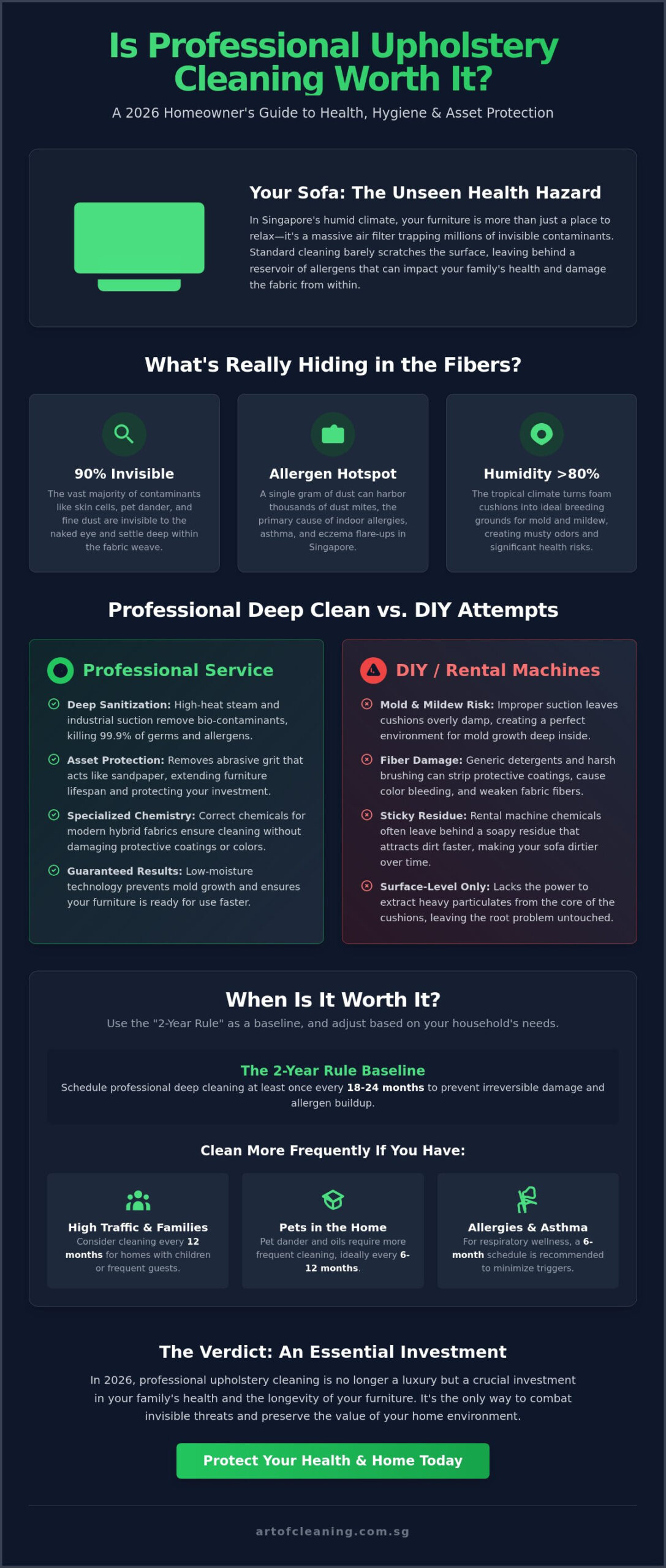
Professional vs. DIY Upholstery Care: A Risk-Reward Analysis
Choosing to clean your own sofa might seem like a cost-saving measure, but the hidden risks often outweigh the initial savings. Many homeowners turn to consumer-grade rental machines, unaware that these units typically lack the necessary suction power to extract deep-seated moisture. When asking is professional upholstery cleaning worth it 2026, you must evaluate the power of the equipment involved. Industrial-grade systems utilize 2-stage vacuum motors that recover a vast majority of the water used; consumer portables often leave half of it behind. This residual moisture trapped in the foam is a primary cause of internal rot and mold growth in our humid climate.
Chemical sensitivity is another significant factor to consider. Off-the-shelf cleaners often contain high-pH surfactants that leave a sticky residue on the fibers. This film acts like a magnet for new dirt, causing your sofa to look soiled again within weeks. Professionals use pH-balanced solutions that rinse clean, ensuring the fabric remains soft and safe for your skin. To effectively allergy-proof your home, you need a process that removes contaminants without introducing new chemical irritants. Mapping the time-value is also crucial; a professional session typically takes only 90 minutes, whereas a DIY attempt can consume an entire weekend when factoring in machine rental, setup, and the agonizingly long drying times.
The Danger of Over-Wetting and Fabric Browning
One of the most frustrating DIY outcomes is ‘wicking.’ This occurs when deep stains travel up the damp fibers as they dry, causing the original spot to reappear on the surface once the job is supposedly done. Slow drying also leads to ‘browning’ on natural fibers like cotton or linen. Professional moisture-controlled extraction prevents these issues by ensuring rapid evaporation. Delicate fabrics such as velvet, silk, or linen require even more precision; the wrong technique can permanently crush the pile or cause fiber bleed that no amount of scrubbing can fix.
Long-term Asset Protection
Professional care includes more than just cleaning. Specialized fabric protectors can be applied to create an invisible shield against spills, extending the interval between deep cleans. When you compare the price of a professional sofa cleaning to the SGD 2,000 or more required to replace a high-quality sectional, the financial logic is clear. It’s also worth checking your furniture’s fine print. Many high-end manufacturers actually void their warranties if the upholstery isn’t maintained by a certified professional. Investing in expert care is a strategic move to protect both your health and your household assets.
When is it Worth It? A Decision Framework for Homeowners
Deciding when to trigger a deep clean requires looking beyond surface stains. We recommend the ‘2-Year Rule’ as a baseline for every Singaporean household. Even if your sofa appears pristine, two years of accumulated body oils, atmospheric dust, and ambient humidity create a biological load that standard vacuuming cannot touch. When you ask if is professional upholstery cleaning worth it 2026, you’re essentially assessing the tipping point where invisible contaminants begin to degrade both fabric strength and indoor air quality. For households with pets, young children, or allergy sufferers, this interval should be shortened to every 6 to 12 months to maintain a scientifically hygienic environment.
The type of fabric you own also dictates the urgency of professional care. Natural fibers like cotton, linen, and wool are highly absorbent; they drink in perspiration and environmental pollutants, making them harder to clean using domestic methods. Synthetic textiles like polyester or microfiber are more resilient but tend to trap skin oils that lead to a ‘greasy’ texture over time. Determining if is professional upholstery cleaning worth it 2026 often depends on your specific household ecosystem. A holistic home strategy doesn’t stop at the sofa; it includes your mattresses, curtains, and rugs to ensure no reservoir of allergens remains unaddressed.
The ‘Art of Assessment’ Checklist
If you’re unsure whether your furniture needs expert attention, use this quick diagnostic to evaluate the current state of your upholstery:
- Tactile Test: Does the fabric feel stiff, tacky, or ‘greasy’ to the touch? This is a clear sign of accumulated body oils and sebum.
- Olfactory Test: Are there lingering ‘stale’ or musty odors even after the room has been thoroughly ventilated?
- Visual Shading: Is there visible darkening or ‘shading’ on high-contact areas like armrests, headrests, or the front edge of seat cushions?
Commercial and Office Worth
In a professional setting, the ROI of clean upholstery is tied directly to corporate image and staff health. High-traffic office cleaning services in Singapore must include regular maintenance of ergonomic chairs and lounge seating to prevent the buildup of bacteria and dust. Clean office furniture signals a meticulous brand identity to clients while supporting employee respiratory wellness. For a deeper look at maintaining a healthy work environment, refer to our strategic guide to workplace hygiene. Whether at home or in the office, protecting your soft assets is a vital part of environmental management. Protect your home’s health by booking a professional upholstery cleaning service today.
The Art of Cleaning Standard: Maximizing Your Investment
Precision matters. At Art of Cleaning, we don’t just scrub surfaces; we implement a rigorous health-first protocol designed to restore your home’s environmental safety. Our technicians are trained as artisans of fabric restoration, possessing the specialized chemical knowledge required to treat complex 2026 textiles without damage. We utilize industrial-grade extraction systems and high-heat steam technology that domestic machines simply cannot match. This level of precision is exactly why is professional upholstery cleaning worth it 2026 for homeowners who prioritize both asset longevity and family wellness. From the moment you begin contacting us to the final issuance of your hygiene certification, the experience is designed to be seamless and transparent.
Our Scientific Cleaning Methodology
We follow a meticulous multi-step process that begins with high-filtration vacuuming to remove loose particulates. This is followed by a targeted pre-treatment and mechanical agitation to break down stubborn oils and embedded grit. Our advanced extraction phase pulls contaminants from the deepest layers of the foam; meanwhile, our rapid-dry techniques prevent the wicking issues discussed in previous sections. We use eco-friendly, family-safe solutions that leave zero sticky residue, ensuring your fabric feels soft and natural. In fact, our specialized sofa cleaning in Singapore removes 99% of common allergens, providing a level of safety that surface cleaning cannot provide.
Total Home Hygiene Integration
A truly healthy living environment requires a holistic strategy. Dust mites and bacteria don’t restrict themselves to your sofa; they migrate between your rugs, curtains, and bedding. This is why many of our clients choose to bundle their service with professional carpet cleaning or mattress sanitization. Addressing all soft surfaces simultaneously is the only effective way to eliminate significant pest populations and maintain air quality. If you’re ready to secure your home’s environment, get a customized quote for your home today and experience the Art of Cleaning difference. We prioritize your health above all else.
Securing Your Home’s Environmental Future
Maintaining your furniture in Singapore’s climate requires a strategy that balances asset preservation with scientific hygiene. We’ve explored how professional deep extraction removes the abrasive grit that destroys fabric fibers and eliminates the biological reservoirs where dust mites thrive. By moving beyond surface-level aesthetics, you protect both your financial investment in quality furniture and your family’s respiratory health. Ultimately, deciding whether is professional upholstery cleaning worth it 2026 depends on your commitment to a truly hygienic living space that domestic tools simply cannot provide.
Art of Cleaning has been featured on major national media platforms for our specialized, health-first deep cleaning protocols. We take pride in our artisanal approach, delivering a 99% allergen removal guarantee that ensures your home remains a safe sanctuary. Don’t wait for visible stains to appear before addressing the invisible contaminants lurking within your cushions. Take the first step toward a fresher, healthier environment by trusting the experts who prioritize your well-being. Book Your Professional Upholstery Sanitization Today and experience the difference of a professionally restored home.
Frequently Asked Questions
Is it worth cleaning an old sofa, or should I just replace it?
Professional restoration is often a more sustainable and cost-effective choice than replacement if the sofa’s internal frame is structurally sound. Expert deep cleaning can remove years of organic buildup, skin oils, and embedded odors, returning the fabric to a near-showroom state. This process revitalizes the aesthetic appeal while ensuring the piece is biologically safe for your family, extending its useful life by several years.
How long does professional upholstery cleaning take to dry in Singapore?
Drying times typically range from 4 to 6 hours when industrial extraction equipment is used. Because of Singapore’s high humidity, we utilize high-powered vacuum systems that recover a vast majority of the moisture during the process. Keeping your windows open or using a ceiling fan after the service can further accelerate evaporation, ensuring your furniture is ready for use by evening.
Can professional cleaning remove all pet odors and stains?
Most pet-related contaminants can be successfully neutralized through deep-extraction and specialized enzyme treatments. These solutions target the source of the odor at a molecular level rather than just masking it with fragrance. While success depends on the age of the stain and the fabric’s porosity, professional intervention significantly improves the hygiene and scent of your soft furnishings compared to domestic spot cleaning.
Is professional upholstery cleaning safe for babies and pets?
Our protocols prioritize family safety by using eco-friendly, residue-free agents that are specifically formulated to be non-toxic. These solutions effectively break down dirt and oils without leaving behind harsh chemical films that could irritate sensitive skin or paws. We focus on a health-first approach, ensuring that your living environment is sanitized and safe for the most vulnerable members of your household.
How often should I professionally clean my upholstery in a humid climate?
In Singapore’s high-humidity environment, a 12-month cleaning cycle is the standard recommendation for most households. For families with pets, young children, or respiratory sensitivities, a 6-month interval is more appropriate to prevent the accumulation of allergens. When evaluating is professional upholstery cleaning worth it 2026, consider that regular maintenance prevents permanent fiber degradation and keeps indoor air quality at optimal levels.
Will professional cleaning shrink or damage my delicate fabric sofa?
Specialized training ensures that delicate fibers like silk, velvet, or linen are treated with the correct moisture levels and pH-balanced solutions to prevent damage. Our technicians assess each fabric’s weave and dye stability before beginning the process. This artisanal attention to detail eliminates the risk of shrinkage or ‘browning’ that often occurs during amateur DIY attempts with incorrect equipment.
What is the difference between steam cleaning and dry upholstery cleaning?
Steam cleaning uses high-pressure hot water extraction to reach deep into cushion foam for maximum sanitization and allergen removal. Dry upholstery cleaning relies on specialized chemical solvents and low-moisture techniques for fabrics that cannot withstand water, such as certain rayons or delicate silks. Both methods are effective, but the choice depends entirely on your furniture’s specific manufacturer care requirements.
Can I use a steam mop to clean my own upholstery safely?
Using a steam mop on upholstery is highly discouraged because these devices lack the necessary extraction power to remove moisture. A steam mop injects heat and water into the fabric but leaves it there, which can lead to internal foam rot and rapid mold growth in tropical climates. Professional systems use a dual-action process that injects and immediately extracts water to ensure deep cleaning without over-saturation.