
Did you know that Singapore’s average humidity of over 80% can actually trap pet urea deep within your furniture, turning a simple need for pet urine odor removal from sofa cushions into a long-term health hazard? While the surface might look dry, the porous foam of your couch often harbors millions of microscopic bacteria that thrive in our tropical climate. Surface cleaning isn’t enough. You aren’t alone if you’ve spent significant time and money on retail sprays only to have that pungent ammonia smell return within days; it’s exhausting to worry about the hygiene of your living space or the potential cost of replacing an expensive piece of furniture.
Effective odor elimination demands a scientific approach to break down uric acid crystals at a molecular level. We’re here to show you how to move beyond surface-level tidiness to achieve a truly sanitized environment for your family. This guide covers the specific enzymatic processes needed to neutralize odors permanently and provides professional insights on protecting your upholstery from future damage. By understanding the chemistry of contamination, you can restore your home to a state of total freshness and safety.
Key Takeaways
- Understand why water alone can’t dissolve the uric acid crystals that bond deep within your sofa fibers.
- Learn how Singapore’s 80% humidity turns DIY scrubbing into a risk for secondary mold and mildew growth.
- Discover why professional pet urine odor removal from sofa requires specialized enzymatic solutions to neutralize smells at a molecular level.
- Master the “blot, don’t rub” technique to prevent accidents from migrating deeper into porous foam layers.
- Gain insight into a meticulous three-step decontamination process that prioritizes your family’s health over surface-level tidiness.
The Science of Pet Urine: Why Odors Persist in Sofa Fabrics
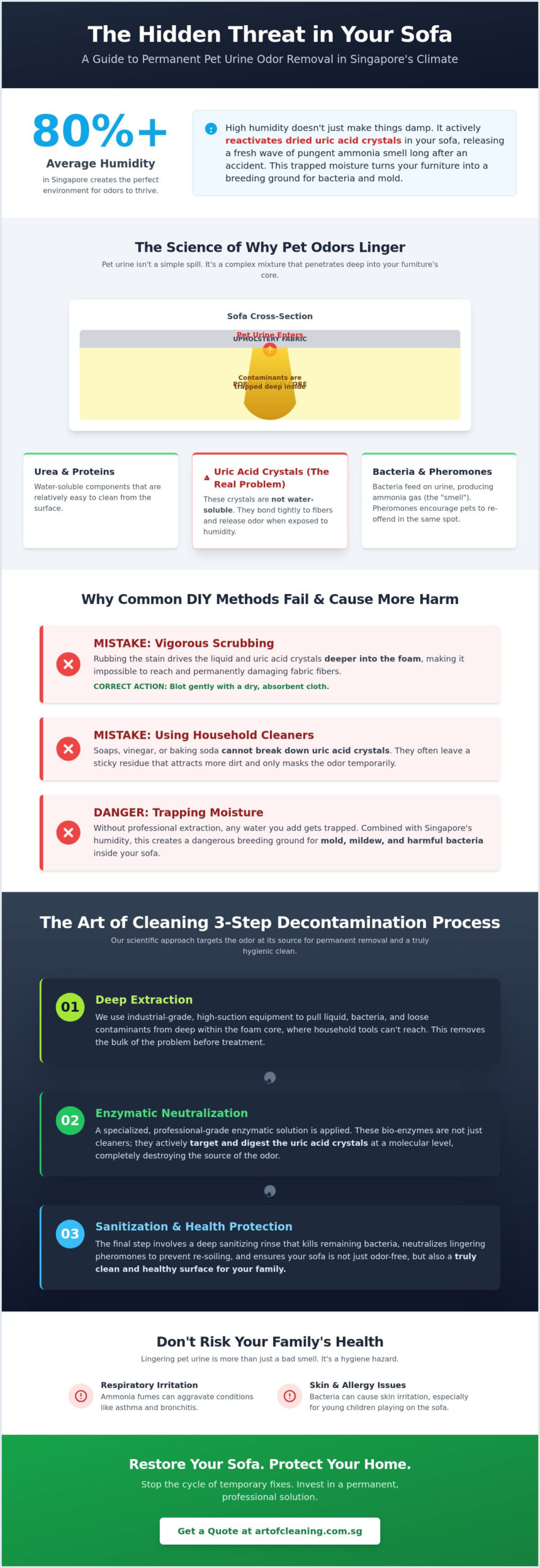
Pet urine is a complex biological pollutant, not a simple spill. It consists of urea, proteins, and uric acid. While urea and proteins are water-soluble and relatively easy to lift, uric acid presents a significant challenge. The Science of Pet Urine reveals that as the liquid evaporates, these components concentrate into a sticky residue that bonds tightly to upholstery fibers. This residue acts as a primary food source for bacteria. As these microorganisms consume the urea, they release ammonia gas. This chemical reaction creates the characteristic “stink” that plagues many households. Additionally, urine contains pheromones that act as a biological homing beacon. If these chemical markers aren’t neutralized at a molecular level, your pet will likely return to the same spot, leading to a frustrating cycle of repeated contamination.
Uric Acid Crystals: The Invisible Enemy
When pet urine dries, it transforms into concentrated uric acid crystals. These crystals are the primary reason why many DIY efforts fail. They are insoluble in water and standard household detergents. In a humid environment like Singapore, where humidity levels often exceed 80%, these crystals absorb moisture directly from the air. This hydration process causes the crystals to reactivate and release a fresh wave of ammonia gas. This explains why a sofa might smell tolerable on a dry afternoon but become pungent during a rainstorm. Because the liquid is often acidic when fresh but becomes alkaline as it ages, it can seep deep into the porous foam core. This makes effective pet urine odor removal from sofa cushions nearly impossible without industrial-grade extraction that reaches the foam’s interior.
Health Risks of Lingering Urine in the Home
Ignoring deep-seated urine isn’t just an aesthetic issue; it’s a serious hygiene concern for the entire family. Chronic exposure to ammonia can irritate the lungs and aggravate respiratory conditions like asthma or bronchitis. For families with young children, the risk is even higher. Toddlers often play directly on sofa surfaces, putting them in close contact with bacterial colonies and uric salts that can cause skin irritation or allergic reactions. Many homeowners attempt to “mask” the scent with heavy perfumes or supermarket fabric fresheners. This is a dangerous hygiene hazard. These products only cover the smell while allowing the underlying bacteria to multiply in the dark, damp layers of the foam. True safety requires total decontamination of the upholstery’s internal structure to ensure a healthy living environment.
Why DIY Methods Often Fail in Singapore’s Humid Climate
Singapore’s environmental conditions transform a minor pet accident into a persistent hygiene crisis. With an average humidity level of 80%, the air is already saturated with moisture. This makes it nearly impossible for deep sofa layers to dry naturally after a DIY scrubbing session. When you apply water and detergent to a stain, you’re often just spreading the contaminants over a larger area. The liquid travels downward, carrying uric acid and bacteria into the porous foam core where household tools simply cannot reach. Without the right equipment, you’re essentially trapping moisture inside your furniture.
Many homeowners instinctively rub the spot to lift the stain. This is counterproductive. Rubbing creates friction that drives the liquid deeper into the upholstery padding. It compacts the fibers and traps the biological markers that tell your pet to return to the same spot. Effective pet urine odor removal from sofa fabrics requires extraction, not agitation. Without industrial-grade suction, you’re leaving a reservoir of bacteria to fester in the dark, damp center of your furniture. This is why a sofa can look clean on the surface while remaining a biological hazard underneath.
The “Residue Trap” of Household Detergents
Supermarket cleaners and traditional home remedies often create a residue trap. While baking soda might absorb some surface moisture, it does nothing to neutralize the underlying crystals. Soapy residues left behind by upholstery shampoos are naturally sticky. Over time, these residues attract airborne dust and skin cells, leading to unsightly dark patches that look worse than the original stain. Vinegar is another common choice, but its acidic nature is often too weak to dissolve aged uric acid crystals that have already bonded to the fabric. Surface-level cleaning is only a temporary cosmetic fix that masks the odor while the underlying hygiene hazard remains.
The Risk of Secondary Contamination
The most dangerous consequence of DIY attempts in a tropical climate is secondary contamination. If a sofa remains damp for more than 24 hours, it becomes a breeding ground for mold and mildew. This results in a complex, musty odor that blends with the ammonia smell, making the furniture nearly unbearable. You might be tempted to use a hair dryer or an iron to speed up the process, but heat is your enemy. High temperatures “set” the urine proteins into the fabric fibers, making them permanent. For a truly hygienic result, you need a methodology that balances moisture control with deep decontamination. You can learn more about these standards in our Professional Deep Cleaning Services Singapore guide. If your home efforts aren’t yielding results, a specialized sofa cleaning service can provide the high-pressure extraction necessary to restore your home’s health.
Professional Extraction vs. Home Remedies: When to Call a Specialist
Choosing a professional method for pet urine odor removal from sofa upholstery is often the difference between salvaging your furniture and disposing of it. While manual blotting is a critical first step, it only manages the top layer of the spill. Research indicates that manual pressure only absorbs about 20% of the liquid, leaving the remaining 80% to sink into the foam core. In contrast, industrial-grade extractors use high-velocity suction to pull contaminants from the deepest layers of the padding. This mechanical advantage ensures that the biological pollutants are actually removed from your home rather than just redistributed across the fabric surface.
The chemistry of the cleaning agent is just as vital as the suction power. Most household soaps are designed to lift surface dirt, but they lack the enzymatic properties required to dismantle uric acid crystals. Professional technicians utilize specialized bio-enzymatic solutions that act like a biological key, unlocking the chemical bonds of the urine. These solutions neutralize the odor at its source rather than masking it with synthetic fragrances. Additionally, the drying time for professional services is typically 4 to 6 hours. This is a significant improvement over the 24 to 48 hours required for DIY methods, which drastically reduces the window of opportunity for mold and mildew to develop in Singapore’s humid air.
Signs Your Sofa Needs Professional Decontamination
It’s time to stop the DIY cycle when you notice specific indicators of deep-seated contamination. If the pungent ammonia smell returns within 48 hours of a cleaning attempt, the crystals have reactivated in the foam. You should also seek expert help if visible staining covers more than 10% of a seat cushion or if family members experience unexplained sneezing and itching while sitting on the furniture. These are clear signals that the sofa has become a reservoir for allergens and bacteria that require a meticulous sanitation process.
Evaluating Professional Cleaning Standards
When selecting a service provider, prioritize companies that use health-conscious, non-toxic cleaning agents. In a pet-friendly home, the safety of your animals and children is paramount. A reputable specialist will perform a pre-inspection to identify the fabric type and determine the most effective decontamination strategy. Look for technicians who utilize a systematic approach to hygiene, ensuring every inch of the furniture is treated. For a deeper look at what to expect from a high-standard service, you can consult our guide on Sofa Cleaning in Singapore. Investing in professional care isn’t just about aesthetics; it’s a commitment to the long-term health and safety of your living environment.
Immediate Response: 5 Steps to Take After a Pet Accident
Time is the most critical variable in successful contamination control. The moment an accident occurs, the liquid begins a chemical transition from an acidic state to an alkaline one. This shift allows the urea and proteins to bond more aggressively with the upholstery fibers. Effective pet urine odor removal from sofa cushions depends heavily on your actions within the first ten minutes. If you wait until the spot is dry, the uric acid will have already begun forming the stubborn crystals discussed in previous sections. Follow these five professional steps to mitigate damage before the contaminants reach the foam core.
- Act immediately: Every second the liquid sits, gravity pulls it deeper into the padding.
- Blot, never rub: Use clean white towels or high-absorbency paper. Rubbing creates friction that destroys fabric texture and pushes bacteria deeper.
- Avoid all heat: Never use hot water or hair dryers. Heat denatures the proteins in the urine, effectively “cooking” the stain and the odor into the fabric permanently.
- Use a neutral pH cleaner: Apply a gentle, pH-neutral solution for the initial surface wipe-down to prevent chemical burns on delicate fabrics.
- Call for professional extraction: If the volume of liquid was significant, it has likely bypassed the fabric and entered the foam. Standard home tools cannot reach this depth.
The Proper Blotting Technique
Blotting is a mechanical action, not a scrubbing one. To perform this correctly, place a thick layer of absorbent white cloth over the area and apply firm, vertical downward pressure using your body weight. You should work from the outside edges of the stain toward the center. This specific movement prevents the liquid from spreading outward and creating a larger “halo” stain. Continue this process, switching to fresh towels frequently, until no more moisture is transferred to the cloth. This meticulous approach can remove up to 70% of the surface liquid before it has a chance to soak into the internal structure of your furniture.
What to Avoid: Common Mistakes That Ruin Sofas
Many homeowners reach for bleach or ammonia-based cleaners in a panic. This is a significant error. Ammonia is a primary component of urine; using it as a cleaner actually reinforces the scent and acts as a biological marker that encourages your pet to re-soil the same spot. Bleach is equally dangerous, as it can weaken fabric integrity and create toxic fumes when mixed with the uric acid already present in the fibers. Another common myth is “drowning” the stain with water. In Singapore’s 80% humidity, adding excessive water without the means to extract it creates a stagnant moisture pocket. This leads to internal mold growth within 24 to 48 hours. If the stain has already set or the odor persists after blotting, you require a specialized sofa cleaning service to perform a deep-tissue decontamination of your upholstery.
Professional Deep Extraction: The Art of Cleaning Solution
At Art of Cleaning, we view upholstery care as a specialized craft rather than a mere chore. Our methodology for pet urine odor removal from sofa upholstery is built on a foundation of environmental health and scientific precision. While many services stop at surface-level extraction, our technicians act as artisans of hygiene, meticulously addressing the invisible threats lurking within your furniture. We utilize a health-first approach that prioritizes the safety of your children and pets, ensuring that every cleaning agent we use is non-toxic and family-friendly.
Our signature 3-step decontamination process follows a logical, effective path: Neutralize, Extract, and Sanitize. This systematic journey ensures that we don’t just move dirt around; we remove it entirely from the core of the padding. This commitment to quality has led to our brand being featured on major national media platforms, solidifying our reputation as a trusted authority in Singaporean home hygiene. We don’t just clean; we restore the foundational safety of your living environment.
Our Advanced Molecular Odor Neutralization
Standard cleaning methods often leave behind up to 99.9% of the uric acid crystals trapped within the deeper layers of the sofa foam. These invisible contaminants are the primary source of recurring smells and bacterial growth. Our process utilizes bio-enzymatic agents that target these specific molecules at a chemical level. We then deploy industrial high-pressure extraction to pull these neutralized crystals out of the padding. This level of penetration is essential for permanent pet urine odor removal from sofa cushions, especially in high-traffic family homes. By quantifying the removal of these hidden pollutants, we provide a level of transparency that goes far beyond visual results.
Restoring Your Home’s Health and Freshness
The final stage of our process involves a comprehensive sanitization step. We apply a hospital-grade disinfectant that eliminates residual bacteria, providing a truly germ-free surface for your family to enjoy. To combat the challenges of Singapore’s humidity, we utilize fast-drying technology that significantly reduces the moisture window. This prevents the development of secondary odors and ensures your living space is restored to full health within hours. You shouldn’t have to choose between a clean look and a healthy home. Book a Professional Sofa Decontamination Today to experience a scientific approach to cleanliness that protects your family’s well-being.
Secure Your Family’s Health with Professional Upholstery Restoration
Managing a pet accident requires more than just masking a scent; it demands a scientific commitment to your home’s environmental safety. You’ve learned that uric acid crystals and bacteria thrive in Singapore’s high humidity, making specialized intervention essential for true pet urine odor removal from sofa fabrics. Art of Cleaning takes pride in being featured on Mediacorp and other major national news networks, a testament to our meticulous standards. Our expert technicians utilize health-conscious sanitation methods to achieve a 99.9% contaminant removal rate. This ensures your furniture isn’t just visually clean but biologically safe for every family member.
Don’t let lingering ammonia smells or hidden bacteria compromise your living space any longer. We provide a level of artisanal care that restores both your upholstery and your peace of mind through a steady, logical process. It’s time to reclaim your home from deep-seated pollutants. Restore your sofa’s hygiene, Get a quote from Art of Cleaning today. Your family deserves a fresh, sanitized environment where they can relax together without worry.
Frequently Asked Questions
Can professional cleaning completely remove old pet urine smells?
Professional deep extraction can permanently eliminate old odors by breaking down the uric acid crystals at a molecular level. While household sprays only mask the scent, industrial-grade bio-enzymatic solutions dissolve the chemical bonds of the urine. This process ensures that the source of the smell is physically removed from the porous foam of your furniture rather than just covered up.
Is the cleaning solution safe for my pets and children?
Our cleaning protocols prioritize family safety by using non-toxic and pet-safe solutions. We select agents that are effective against pathogens but gentle on sensitive skin and respiratory systems. This health-conscious approach ensures your living space is sanitized without leaving behind harmful chemical residues that could affect children or pets playing on the sofa cushions.
How long does it take for the sofa to dry after professional odor removal?
A sofa typically takes between 4 to 6 hours to dry completely after a professional treatment. We utilize high-velocity extraction and specialized drying technology tailored for Singapore’s humid environment. This rapid process is crucial because it prevents the development of mold or mildew within the internal padding of the furniture during the drying phase.
What happens if I ignore a pet accident on my fabric sofa?
Ignoring a pet accident allows the urine to transition into an alkaline state, which can permanently damage fabric fibers through chemical burns. Bacteria will multiply rapidly in the damp foam, releasing ammonia gas that degrades indoor air quality. Over time, the trapped moisture can also trigger internal mold growth, potentially requiring the entire piece of furniture to be discarded.
Can you remove urine odors from leather sofas as well?
We provide specialized cleaning for leather sofas that includes pH restoration and conditioning. Leather is a porous natural material and can absorb urine, leading to cracking and deep-seated smells if not treated correctly. Our technicians use specific leather-safe agents to neutralize odors while preserving the material’s integrity and suppleness through professional conditioning.
How often should I have my sofa professionally cleaned if I have pets?
Households with pets should schedule professional sofa cleaning every 6 to 12 months to manage allergens and biological pollutants effectively. Regular maintenance prevents the accumulation of dander, bacteria, and microscopic urine traces that settle into the fibers over time. This proactive schedule helps maintain a high standard of hygiene and extends the overall lifespan of your upholstery.
Why does the urine smell get worse on rainy days?
High humidity levels on rainy days reactivate the uric acid crystals trapped inside the sofa foam. These crystals are hygroscopic, meaning they absorb moisture from the air, which triggers the release of ammonia gas once again. This is a clear indicator that the pet urine odor removal from sofa process was incomplete and requires industrial-grade extraction to reach the foam core.
Do you provide on-site sofa cleaning services throughout Singapore?
We provide comprehensive on-site sofa cleaning services to residential and commercial clients across all regions of Singapore. Our technicians arrive with industrial-grade equipment to perform the meticulous decontamination process directly in your home for maximum convenience. This allows us to address the specific environmental factors of your space while ensuring a pet urine odor removal from sofa result that meets our high standards.