
Mattress size is only one factor in a cleaning quote. For mattress cleaning in Singapore, the price depends on the mattress’s fabric, condition, access, and the work required. Art of Cleaning provides a transparent quote with no hidden costs after you submit a request.
It’s reasonable to want clear expectations before booking, especially if you’re dealing with a stubborn stain or need the bed ready by a certain time. The right approach depends on the stain and mattress material, while cleaning and drying times vary with the job and the mattress.
This guide explains what affects a quote, how stains are treated, what influences cleaning and drying time, and how to plan mattress care. You’ll also find practical advice on what to expect from a professional clean, helping you choose the right service for a cleaner sleeping space.
Key Takeaways
- Use mattress condition, fabric and treatment needs to understand what may shape a cleaning quote, rather than relying on size alone.
- Plan routine professional cleaning at least every two years; people with skin or sinus allergies may benefit from cleaning monthly or every 2 months.
- Learn why stain type and how long it has been present affect the cleaning approach, and why prompt attention can help guide treatment.
- Find out which parts of the cleaning process influence the time required, including the mattress condition and the work involved.
- See how professional mattress cleaning can complement carpet, rug or sofa cleaning when you’re refreshing several soft furnishings.
How Often Should I Engage A Mattress Cleaning Service?
In Singapore, professional mattress cleaning commonly includes vacuuming, deep cleaning, and targeted stain treatment. The method depends on the mattress material, its condition, and the cleaning needed. You can explore the range of professional cleaning services in Singapore when deciding what type of help suits your home.
A practical baseline is professional cleaning every two years. People with skin or sinus allergies may consider cleaning monthly or every 2 months. These are useful starting points, not a substitute for regular care between appointments. Your household’s needs, spills, visible marks, and dust accumulation can all affect timing.
Cleaning removes accumulated dust, loose debris, and residue from the sleep surface. Vacuuming lifts particles from the fabric, while deep cleaning addresses dirt and other material embedded in the fibres. A cleaner mattress can help reduce allergen-containing dust and debris, but cleaning cannot guarantee that allergy symptoms will disappear.
For allergy-related hygiene, combine professional cleaning with simple routine steps:
- Wash sheets and pillowcases regularly, following their care labels.
- Vacuum the mattress surface during a bedroom-cleaning routine.
- Address spills promptly, using a method suitable for the mattress fabric.
- Let the mattress dry fully before replacing bedding.
These habits help limit buildup between professional cleans. For example, a mattress exposed to frequent spills may need attention sooner than a lightly used guest bed. A mattress used nightly also has more contact with skin, bedding, and everyday dust than one used occasionally.
People with allergies should treat mattress cleaning as one part of bedroom hygiene. Dust can settle on bedding, floors, curtains, and upholstered furniture, too. Cleaning only the mattress may leave other sources of dust in the room untouched. Regular laundering and cleaning nearby surfaces support a more complete routine.
Are mattress cleaning products safe for babies, pets, and people with allergies? Safety depends on the product and how it is used. Follow label directions, ventilate the room, and keep babies and pets off the mattress until it is fully dry. If someone has a known sensitivity, share that information before cleaning begins.
Are allergies a reason to clean more often? They can be. For skin or sinus allergies, a monthly or every 2 months schedule is a common recommendation. Track symptoms and visible dust alongside the calendar, then adjust the routine as household conditions change. Between appointments, consistent bedding care remains essential.
What Affects Your Mattress Cleaning Price?
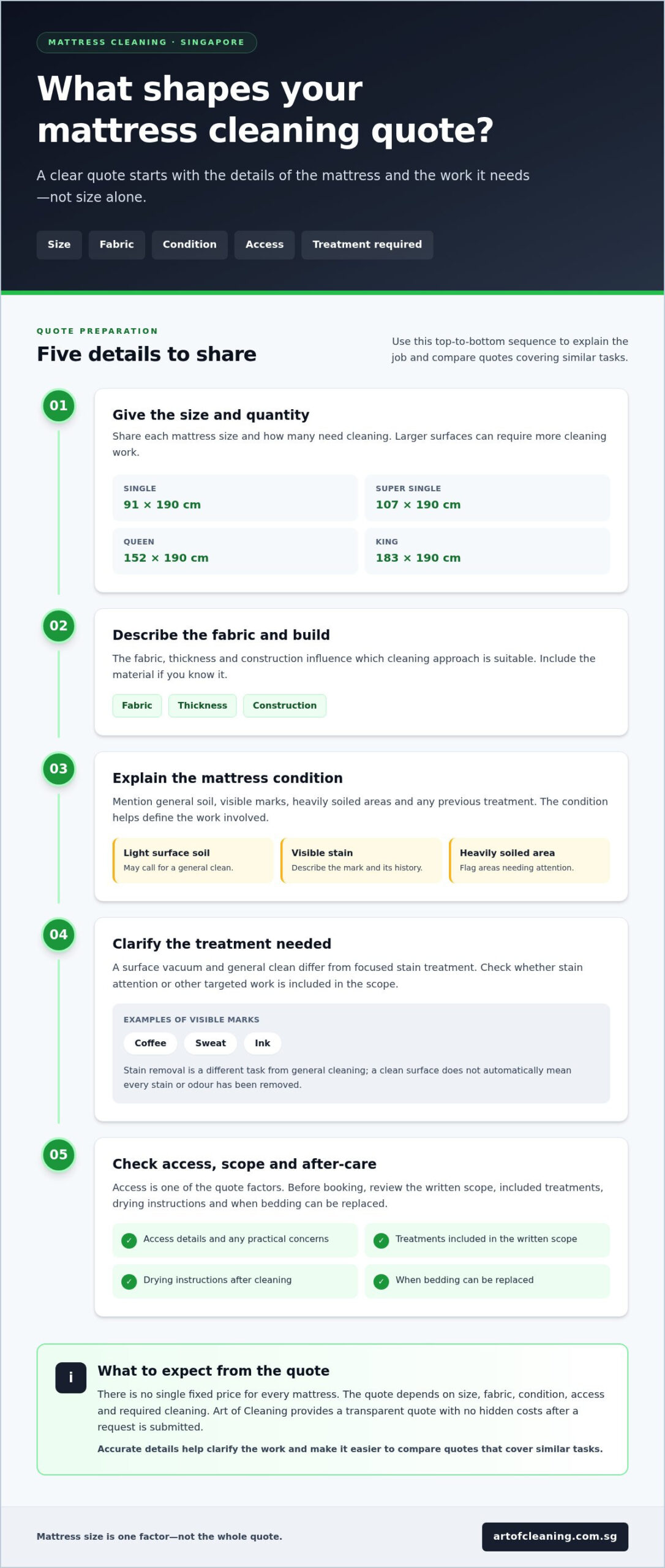
There isn’t one fixed price for every mattress. A quote depends on the bed’s size, fabric, condition, access, and cleaning requirements. A single mattress with light surface soil needs different work from a larger bed with set-in stains. The number of mattresses and any additional treatment can also affect the scope.
In Singapore, common mattress dimensions include single at 91 × 190 cm, super single at 107 × 190 cm, queen at 152 × 190 cm, and king at 183 × 190 cm. Larger surfaces can require more cleaning work. Mattress thickness, fabric, and construction also influence which approach is suitable.
Cleaning frequency helps you plan, but it doesn’t determine price alone. Industry standards suggest cleaning mattresses at least every two years, while specialists recommend cleaning monthly or every 2 months for people with skin or sinus allergies. Spills, visible soiling, and regular use may prompt earlier cleaning. A guest mattress used occasionally may need a different schedule from a bed used nightly.
The mattress condition matters because different problems call for different steps. A surface vacuum and general clean differ from focused stain treatment or attention to heavily soiled areas. Tell the service provider about the mattress size, fabric if known, visible marks, and any previous treatment. Clear details help define the work in the quote.
Before booking a mattress cleaning service in Singapore, check the written scope, what treatments are included, and which factors could change the quote. Share the mattress dimensions and describe stains or other concerns so the quoted work reflects the actual job.
Use this checklist to compare the scope of a quote:
- Size and quantity: State each mattress size and how many need cleaning.
- Fabric and condition: Describe the material, visible marks, and general soil.
- Treatment: Check whether stain attention or other targeted work forms part of the scope.
- After-cleaning care: Understand the drying instructions and when bedding can be replaced.
The price depends on the case and is given after a quote request, with mattress size, condition, fabric, and required treatments among the cost factors. For relevant mattress cleaning service details, review the service information before arranging a quote.
Frequency and price answer different questions: one helps you plan upkeep, while the other reflects the work required. For example, a mattress with a fresh spill may need targeted treatment, while a regularly maintained bed may need routine cleaning. Give accurate details upfront to clarify the scope and compare quotes covering similar tasks.
Stain removal and targeted scrubbing
Mattress cleaning removes loose soil and accumulated residue from fabric. Sanitising targets microorganisms, while stain removal treats visible marks such as coffee, sweat, or ink. These are different tasks, so a clean surface doesn’t automatically mean every stain or odour has been removed.
Can you clean a mattress yourself? Yes, for light surface soil or a fresh spill. Blot the area, use a fabric-compatible cleaner sparingly, and let the mattress dry fully before replacing the bedding.
Start with the stain, not a wet cloth. Press a clean, absorbent towel against fresh liquid to lift it. Rubbing can spread the mark and push residue deeper into the fibres. For dried stains, vacuum loose particles before applying a suitable cleaning solution.
- Identify the mark: Note whether it came from coffee, perspiration, food, or a pet accident.
- Check care guidance: Follow the mattress maker’s instructions and test cleaner on a hidden area.
- Blot carefully: Work from the stain’s outer edge towards its centre.
- Use minimal moisture: Apply cleaner to a cloth rather than pouring it onto the mattress.
- Dry completely: Keep bedding off until the treated area feels dry.
Keep targeted scrubbing gentle. A soft cloth or brush can loosen residue on suitable fabric, but forceful scrubbing may roughen fibres or spread colour. For example, treat a dried coffee ring carefully across the mark rather than vigorously rubbing the whole sleep surface.
Odours need a different approach from visible stains. A surface fragrance can mask a smell without removing what causes it. Pet urine, for example, can soak below the fabric surface. Deeply absorbed residue requires treatment suited to the mattress construction, followed by thorough drying.
Stain and odour removal have limits. Older marks, repeated spills, and colour changes within the fabric can remain visible after cleaning. Previous attempts with bleach or strong cleaners can also alter the mattress colour. Share the stain’s history and any products already used so the treatment can account for those details.
For allergy-related hygiene, avoid adding scented products simply to cover an odour. Use only products suited to the mattress material, and follow their labels. A clean, fully dry surface matters: trapped moisture can create a musty smell and complicate later stain treatment.
For a fresh spill, act promptly by blotting and using limited moisture. For a persistent stain, deep odour, or delicate fabric, Art of Cleaning’s professional Mattress Cleaning service provides deep cleaning tailored to the job. Describe the mark, its age, and any earlier cleaning attempts when requesting a free quote.
Cleaning duration
A professional mattress clean has two timeframes: the work itself and drying. The appointment covers assessment, preparation, cleaning, and any targeted treatment. Drying continues after the technician finishes. Planning around both stages helps prevent damp bedding or a rushed return to use.
The cleaning process starts by assessing the mattress fabric and condition. The technician identifies visible marks, seams, and areas needing closer attention. Loose debris is removed before any wet treatment. This assessment helps match the work to the mattress instead of applying the same steps everywhere.
Mattress size affects how much surface needs attention. A larger bed has more fabric to inspect and clean than a smaller one. The number of mattresses also changes the appointment’s overall workload. For example, cleaning a bedroom mattress and a guest-room mattress involves more preparation than treating one bed.
Condition adds another variable. Light surface soil calls for a different approach from concentrated marks or residue across several areas. Targeted stain work needs additional attention because affected spots require separate treatment. Delicate fabric may also need careful handling throughout the process.
The cleaning method matters, too. Dry vacuuming and moisture-based extraction involve different equipment and steps. Some methods require time for solution application, agitation, or extraction. The process and the mattress’s response to treatment shape the active cleaning time, so one duration won’t suit every job.
Drying is a separate stage. Moisture level, airflow, room ventilation, and mattress construction influence how quickly the surface dries. A thick mattress can retain moisture differently from a thinner one. Keep sheets and protectors off until the treated surface feels dry, and follow the care instructions provided after cleaning.
- Before the appointment: Clear nearby items and remove bedding to leave the mattress accessible.
- During cleaning: Keep the work area open for equipment and treatment steps.
- Afterward: Maintain airflow and avoid covering the mattress while it dries.
Room layout and ventilation affect preparation and drying. A mattress in a tightly arranged bedroom may need more preparation than one with open access around its sides. Moving bedside items beforehand gives the technician room to reach the edges and work without unnecessary interruptions.
When planning your day, allow time for the appointment and a separate drying period. Don’t plan to replace the bedding immediately after cleaning. If a spill or stain needs extra attention, treatment can take longer than routine surface cleaning. Share details about the mattress and room access beforehand for clearer expectations.
For a more useful time estimate, describe the mattress size, visible stains, and number of beds. Mention access constraints, such as a narrow path beside the frame. These practical details help Art of Cleaning understand the job and set expectations for the appointment and drying process.
Average cost of mattress cleaning in Singapore
There isn’t one useful average for every mattress-cleaning job in Singapore. A quote reflects the work required, not just the bed’s size. A queen mattress with routine soil differs from a smaller mattress with persistent stains. Comparing prices only makes sense when each quote covers similar cleaning steps.
The quote depends on the mattress dimensions, fabric, condition, access, and any targeted stain treatment. A larger surface can require more work, while delicate material or heavily soiled areas may call for a different approach. The number of mattresses also affects the scope.
Singapore’s common sizes include single at 91 × 190 cm, super single at 107 × 190 cm, queen at 152 × 190 cm, and king at 183 × 190 cm. Share the size when requesting a quote. If you’re unsure, measure the mattress length and width before contacting the service provider.
Ask for a clear description of the work included. One quote may cover general cleaning, while another may include extra attention to a stain. Check whether the scope covers the mattress surface, targeted treatment, and post-cleaning care. These details help explain differences between quotes without relying on a headline amount.
- Size and quantity: Provide dimensions and the number of mattresses.
- Fabric and condition: Describe the material, visible soil, and any marks.
- Requested treatment: Mention stains, odours, or previous cleaning attempts.
- Access: Note tight bedroom layouts or obstacles around the bed.
For a fair comparison, describe the same mattress and cleaning needs in each request. State whether a stain is fresh or old and whether the mattress has delicate fabric. Compare the written scope, not just the total. Different scopes may include different steps or additional treatment.
Which mattress cleaning companies in Singapore have good reviews? Look for providers with detailed, recent customer feedback about punctuality, communication, cleaning quality, and care for the mattress. Reviews describing a similar job, such as stain treatment or cleaning a king mattress, offer more useful context than a rating alone.
Before booking, have your mattress measurements and stain details ready. This gives Art of Cleaning practical information to prepare a quote and explain the recommended scope. A clear request also helps you compare like-for-like services and plan around cleaning and drying.
Request a tailored cleaning quote using your mattress size, condition, and treatment needs.
Art of Cleaning: Carpet Cleaning
Art of Cleaning provides professional Mattress Cleaning, Carpet Cleaning, Rug Cleaning, and Sofa Cleaning, using professional-grade equipment and eco-friendly, family- and pet-safe solutions. If carpets or upholstered furniture also need attention, you can request a quote for those services, too. Dust and everyday soil collect across soft surfaces, so caring for them together can support a more complete home-cleaning routine.
Choose a service when visible marks, accumulated soil, or routine upkeep calls for more than household vacuuming. Carpet Cleaning addresses soiled floor coverings, Rug Cleaning focuses on rugs, and Sofa Cleaning treats upholstered seating. Match the service to the surface and the cleaning required.
To discuss your cleaning needs, contact Art of Cleaning or visit artofcleaning.com.sg.
Make Your Next Cleaning Step Count
A cleaner sleep space starts with choosing a service that fits your home and mattress. For mattress cleaning in Singapore, describe the mattress’s condition and any concerns when requesting a free quote from Art of Cleaning. This gives the team a clear starting point without assuming every stain or fabric needs the same treatment.
You can also consider other soft surfaces in your home. Art of Cleaning offers Carpet Cleaning, Rug Cleaning, and Sofa Cleaning, so you can plan care for more than one furnishing when needed. Request a free quote to discuss the surfaces that need attention.
Choose the next step that suits your household, whether that means arranging mattress care or asking about another soft furnishing. Contact Art of Cleaning to enquire and discuss the cleaning support you need. A clear enquiry can help you move forward with confidence toward a fresher, more comfortable home.
Frequently Asked Questions
How much does mattress cleaning cost in Singapore?
There’s no single price for every mattress-cleaning job. The quote depends on mattress size, fabric, condition, access, and whether targeted stain treatment is needed. For an accurate comparison, describe the mattress and its condition, then compare the work included in each quote. Art of Cleaning offers free quotes with transparent pricing and no hidden costs.
How much does mattress cleaning cost in Singapore by size and service type?
Size and service needs shape the quote, but no universal rate applies to every mattress. A single mattress and a king mattress have different surface areas, while stain treatment can involve different work from a routine clean. Share the dimensions, fabric if known, and any specific issues so Art of Cleaning can quote for the service required, not size alone.
What methods do Singapore mattress cleaners use, such as steam cleaning or extraction?
Methods vary with mattress material and cleaning needs, so steam or extraction shouldn’t be assumed for every bed. Art of Cleaning uses professional-grade equipment and tailors its approach to the job. Deep cleaning addresses dirt, stains, allergens, dust mites, bacteria, mould, and odours, using eco-friendly solutions that are family- and pet-safe. The suitable process depends on the mattress and treatment required.
How long does mattress cleaning take, and how long does a mattress need to dry in Singapore’s climate?
Cleaning and drying are separate stages, and neither has one fixed duration for every mattress. The work involved, mattress construction, moisture used, and room airflow affect the schedule. Limited ventilation can make drying take longer. Keep bedding off until the mattress is fully dry, and follow the after-care instructions provided for the cleaning method.
How often should mattresses be professionally cleaned in Singapore?
A practical baseline is professional cleaning at least every two years, as De Hygienique suggests. For people with skin or sinus allergies, Apex Hygienic recommends cleaning monthly or every 2 months. Spills, visible soiling, or heavier everyday use can also prompt earlier attention. Between appointments, maintain clean bedding and address fresh spills promptly to support regular mattress hygiene.
Can mattress cleaners in Singapore remove dust mites, mould, urine, and odours?
Professional deep cleaning can address dust mites, mould, and odours, along with dirt and stains. Art of Cleaning’s deep-cleaning service covers these concerns using professional-grade equipment and eco-friendly, family- and pet-safe solutions. Urine may leave both a stain and an odour; describe the affected area and any previous treatment when arranging cleaning. The mattress material and depth of residue guide the appropriate treatment.