
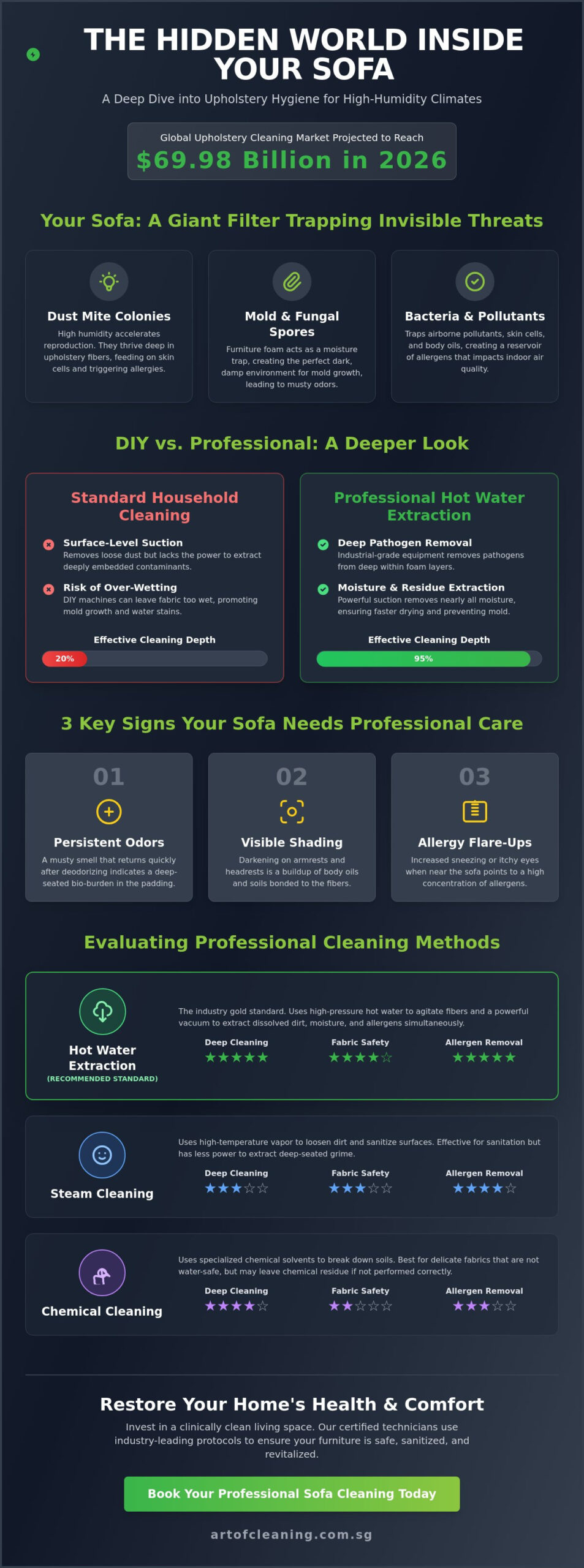
Did you know that the global upholstery cleaning market is projected to reach $69.98 billion in 2026? This massive growth is fueled by a critical shift in consumer behavior where homeowners now view professional sofa cleaning services as a health necessity rather than a luxury. In a high-humidity environment like Singapore, your furniture acts as a filter that traps dust mites, bacteria, and fungal spores, often leading to persistent indoor air quality issues.
You’ve likely noticed that even with daily care, your upholstery can develop a persistent musty smell or harbor stains that DIY kits simply can’t touch. It’s frustrating when your living room doesn’t feel as fresh as it looks, especially when family members suffer from recurring allergy symptoms. This guide will show you how professional hygiene standards can eliminate deep-seated pathogens and protect your furniture investment for years to come. We’ll examine the latest 2025 ANSI/IICRC S300 protocols and the specialized extraction techniques that ensure your living space remains a true sanctuary of health.
Key Takeaways
- Understand how Singapore’s high humidity accelerates the growth of mold and fungi within furniture foam, necessitating specialized decontamination.
- Discover why professional sofa cleaning services using Hot Water Extraction (HWE) outperform surface vacuuming in removing deep-seated pathogens.
- Learn the correct protocols for weekly maintenance, including the use of HEPA-filter equipment and strategic cushion rotation.
- Evaluate the differences between steam, extraction, and chemical methods to ensure the safest treatment for your specific fabric type.
- Identify essential standards for choosing a cleaning partner, from technical fabric chemistry knowledge to transparent, per-job pricing structures.
What are Professional Sofa Cleaning Services and Why Do They Matter?
Professional sofa cleaning services represent a rigorous, multi-stage decontamination protocol designed to restore furniture to a clinically clean state. Unlike basic household maintenance, these services utilize industrial-grade extraction systems and specialized sanitization agents that reach deep into the foam and fiber layers. This intervention is critical because standard domestic vacuums lack the suction power to remove pathogens embedded below the surface. A professional approach treats the sofa as a complex structural item rather than just a piece of fabric. It’s a technical process that combines high-pressure extraction with chemical precision to neutralize biological contaminants.
When understanding upholstery materials, it’s clear that different fibers—from natural cotton to synthetic blends—react uniquely to moisture and heat. A professional technician applies this scientific knowledge to select the correct pH-balanced solutions, ensuring the fabric’s integrity remains intact while successfully neutralizing deep-seated grime. Without this expertise, DIY attempts often lead to over-wetting, which can cause permanent water staining or even internal mold growth. By choosing a specialized service, you’re investing in the long-term structural health of your furniture while ensuring the environment remains hypoallergenic.
Beyond Aesthetics: The Health Connection
Your sofa acts as a giant filter for your home. It’s not just sitting there; it’s actively trapping airborne pollutants, skin cells, and microscopic debris. Over time, this buildup creates a dense reservoir of allergens. Neglected upholstery can become a primary trigger for respiratory issues or skin irritation, as every sit-down releases a cloud of fine particles into your breathing zone. Specialized intervention significantly reduces these household allergen counts. It transforms a potential health hazard back into a safe space for your family to relax. For many households, regular sofa cleaning services are the most effective way to manage indoor air quality and protect vulnerable family members from asthma triggers.
Common Signs Your Sofa Requires Professional Care
Sometimes the signs of a dirty sofa are invisible, but often they’re right in front of you. Recognizing these indicators early can prevent permanent damage to expensive pieces.
- Persistent odors: if a musty smell returns just hours after you’ve used a retail deodorizer, the source is likely deep within the padding.
- Visible shading: look for darkening on headrests or armrests. This shading is actually a buildup of body oils and atmospheric soils that have bonded to the fibers.
- Allergy flare-ups: if you or your children experience sneezing or itchy eyes specifically while lounging in the living room, your sofa is likely overdue for a professional purge.
If you notice these signs, it’s time to consult a specialist. You can view a detailed list of professional hygiene services to find the specific treatment your home requires.
The Science of Upholstery Contaminants in High-Humidity Climates
Singapore’s climate presents a unique challenge for home hygiene. When relative humidity consistently exceeds 80%, upholstery becomes a massive moisture trap. This moisture doesn’t just sit on the surface; it migrates into the internal foam structure. Once inside, it creates a dark, damp environment where mold spores and fungi proliferate at an accelerated rate. These aren’t just aesthetic issues. They represent a significant bio-burden that can compromise the respiratory health of everyone in the home. Professional sofa cleaning services are designed to disrupt this cycle by extracting moisture and neutralizing spores before they can colonize the deeper layers of your furniture.
Your sofa is essentially a “Dust Mite Factory.” These microscopic arachnids don’t drink water; they absorb it from the air. In environments with high humidity, their survival and reproduction rates skyrocket. Coupled with the constant supply of human skin cells, upholstery provides the ideal breeding ground. Standard household vacuums typically lack the suction required to reach the base of the pile where these colonies thrive. Beyond biology, there’s a chemical reaction occurring on your cushions. Daily contact introduces sweat, body oils, and environmental pollutants. These substances react differently depending on the fabric. Natural fibers like cotton are highly absorbent, drawing oils deep into the core, while synthetic fibers often allow oils to oxidize on the surface, leading to permanent discoloration. For those looking to manage these issues between professional visits, these Virginia Tech Furniture Care Tips provide excellent guidance on material-specific maintenance and stain management.
Dust Mites and Microbial Growth
Dust mites thrive when humidity is high, but they struggle to survive when it drops below 50%. In a tropical climate, that drop rarely happens naturally indoors. Regular vacuums only remove surface dust, leaving behind the microscopic fecal matter and decaying body parts that actually trigger allergies. Moisture trapped deep within the fibers leads to persistent, deep-seated odors that no amount of surface scrubbing can resolve. High-impact sofa cleaning services use specialized tools to ensure these microscopic triggers are physically removed from the home environment.
VOCs and Indoor Air Quality
Upholstery is also a reservoir for Volatile Organic Compounds (VOCs). These gases, often from paints, cleaning chemicals, or the furniture manufacturing process itself, get trapped in the fabric and are slowly re-released into your breathing zone. Professional neutralization is required to break these chemical bonds; simple deodorizing sprays only mask the scent with more chemicals. Industrial-grade extraction removes the source of these gases, resulting in a measurable improvement in indoor air quality. If you’re concerned about the microscopic health of your home, you can reach out to a hygiene specialist for a professional assessment.
How to Maintain Your Sofa: A Step-by-Step Guide for Homeowners
Maintaining a healthy living environment requires more than just occasional tidying. It demands a systematic approach to furniture care that addresses both visible debris and invisible pathogens. By establishing a rigorous home maintenance routine, you can significantly slow the accumulation of allergens and protect the structural integrity of your upholstery fibers. This proactive stance helps bridge the gap between your annual or bi-annual sofa cleaning services, ensuring your home remains a sanctuary of hygiene. Consistency is the primary factor in preventing permanent fiber degradation.
Weekly Hygiene Rituals
Weekly maintenance should center on high-efficiency particulate air (HEPA) filtration. Use a vacuum equipped with a HEPA filter to ensure that microscopic allergens aren’t simply redistributed into the air. Focus your efforts on the deep crevices where organic matter, such as skin cells and food particles, tends to accumulate. These areas are the primary feeding grounds for dust mite colonies. Use a soft, fabric-safe brush to gently dislodge pet hair and dander from the weave before vacuuming. Whenever possible, increase ventilation and allow indirect sunlight to reach the fabric. Natural UV light acts as a mild disinfectant, while improved airflow helps dissipate the moisture that fosters microbial growth.
Safe Spot Cleaning Techniques
Accidents are inevitable, but your response determines whether a spill becomes a permanent stain. The “Blot, Don’t Rub” rule is absolute. Rubbing forces the liquid deeper into the padding and can cause fiber friction, leading to permanent “pilling” or texture damage. Use a clean, white cloth to absorb as much liquid as possible. Before applying any solution, test it on an inconspicuous area to check for colorfastness.
- Use pH-neutral cleaners: Harsh chemicals can strip natural oils from fibers or cause synthetic dyes to bleed.
- Avoid over-wetting: Excessive water is the enemy of upholstery. It migrates into the foam where it cannot dry quickly, often leading to internal mold growth within 48 hours.
- Rotate and flip: Regularly turning cushions prevents uneven wear and stops dust from settling permanently into one side of the foam.
Environmental control is the final pillar of home maintenance. In Singapore’s climate, using a dehumidifier in the living area can keep relative humidity below the 60% threshold where mold and dust mites thrive. This simple adjustment creates a hostile environment for pests while protecting the internal components of your furniture. However, it’s important to recognize the limits of DIY care. If a stain persists after two gentle attempts, or if a musty odor remains despite your best efforts, stop immediately. Persistent issues indicate a deep-seated contamination that requires the industrial-grade suction and specialized chemistry found in professional sofa cleaning services. For a transparent view of professional intervention costs, you can review our current price list to plan your next deep-tissue hygiene treatment.
Evaluating Sofa Cleaning Methods: Steam vs. Extraction vs. Chemical
Selecting the appropriate technical methodology is the most critical decision in the furniture maintenance process. Not all sofa cleaning services are equal; the choice of equipment and chemistry must align with the specific fiber composition of your upholstery. A mismatch between fabric type and cleaning method can lead to irreversible damage, including fiber shrinkage, texture loss, or dye bleeding. Professional technicians categorize fabrics into specific cleaning codes to determine whether moisture, heat, or solvents are the safest path to decontamination.
While various techniques exist, three primary methods dominate the industry:
- Hot Water Extraction (HWE): the gold standard for deep allergen removal in most synthetic and cotton-blend fabrics.
- Dry Chemical Cleaning: the essential choice for moisture-sensitive ‘Code S’ fabrics like velvet, silk, or certain rayons.
- Encapsulation: a method that uses crystallizing polymers, suitable for commercial maintenance but often limited in deep-tissue sanitization.
Hot Water Extraction is often confused with basic steam cleaning, but the two processes are distinct. While steam cleaning relies on high-temperature vapor to loosen surface dirt, HWE uses a pressurized water-based solution to penetrate the foam layers. For delicate materials, dry chemical cleaning utilizes specialized solvents to break down body oils and grease without the use of water, preventing the warping or water-spotting that occurs on luxury fibers.
The Power of Hot Water Extraction
The “flush and suck” mechanism of HWE is what ensures a truly clinical clean. The machine injects a heated cleaning solution into the fabric under pressure, which immediately suspends the dirt, oils, and biological contaminants. A high-powered vacuum then extracts the solution along with the suspended waste. This process is superior for allergen removal because it physically removes the bio-burden from the home rather than just neutralizing it on the surface. For effective upholstery extraction, the system must maintain a consistent pressure between 100 and 200 PSI to ensure deep penetration while preventing the over-saturation of internal padding.
Sanitization and Disinfection Add-ons
Modern sofa cleaning singapore protocols frequently integrate hospital-grade disinfectants to eliminate 99.9% of bacteria and viruses. These solutions are specifically engineered to be safe for domestic use while providing a level of sanitation that regular detergents cannot achieve. While UVC light treatment is often marketed as a miracle cure, its effectiveness depends heavily on the duration of exposure and the intensity of the light source. Anti-dust mite treatments can also be applied as a post-cleaning finish, creating a residual barrier that typically remains effective for several months. To ensure your home receives this level of technical care, you can schedule a professional sofa hygiene treatment with our expert team.
Selecting the Right Professional Partner: The Art of Cleaning Standard
Choosing a partner for sofa cleaning services is a decision that impacts your home’s microbial safety and the longevity of your furniture. In an industry where many providers offer surface-level tidying, selecting a specialist who understands fabric chemistry is non-negotiable. Technicians must be trained to identify fiber types and their corresponding pH requirements to prevent permanent damage. At Art of Cleaning, we align our protocols with the ANSI/IICRC S300 Standard for Professional Upholstery Cleaning, updated in September 2025, to ensure every procedure meets the highest global benchmarks for hygiene and safety.
Transparency is the cornerstone of a professional relationship. Many companies use vague “starting from” rates that often escalate once the technician is on-site. A reliable partner provides clear, per-job pricing based on the size and material of the piece, ensuring there are no hidden costs. When evaluating social proof, look for verified results specifically within high-humidity environments. A provider with a proven track record in Singapore understands how to manage the unique challenges of tropical moisture. We integrate this health-conscious philosophy into every upholstery cleaning services singapore project, treating your living space with the meticulous care it deserves.
Our Meticulous Cleaning Process
Our methodology begins with a comprehensive pre-inspection and fabric dye-test. This step is vital to ensure zero-damage results, especially for delicate or vintage pieces. We exclusively use professional-grade, family-safe solutions that effectively neutralize pathogens without leaving toxic residues behind. Given Singapore’s 80% average humidity, post-cleaning moisture control is our priority. We utilize high-velocity air movers and industrial extraction to ensure your upholstery is dry and ready for use in a fraction of the time required by standard methods. This rapid drying prevents the secondary growth of mold spores within the foam core.
The Value of Expert Craftsmanship
We view sofa cleaning as an artisanal craft rather than a routine task. This mindset means we pay attention to the details that others overlook, such as the sanitation of hidden seams and the underside of cushions where dust mites frequently congregate. Our hygiene-first philosophy provides the peace of mind that your furniture is not just visually clean, but clinically sanitized. This level of precision protects your investment and, more importantly, the well-being of your family. If you’re ready to restore your home’s health and eliminate deep-seated allergens, you can Get a customized quote today. Trust a specialist who treats your home’s hygiene as their primary mission.
Secure a Healthier Living Environment for Your Family
Professional sofa hygiene is a vital intervention for any Singaporean home. We’ve explored how high humidity transforms upholstery into a reservoir for mold and allergens, making specialized sofa cleaning services essential for maintaining indoor air quality. By moving beyond surface vacuuming to industrial-grade Hot Water Extraction, you physically remove the bio-burden that triggers respiratory distress and skin irritation. Relying on scientifically-backed methods ensures your furniture remains a safe space for relaxation rather than a source of health concerns.
Art of Cleaning brings a scientific, artisanal approach to every project. Our commitment to 100% transparent pricing ensures you receive expert care with no hidden fees. As a trusted specialist featured on major national media platforms, we utilize specialized Hot Water Extraction technology to reach the contaminants that household tools simply can’t touch. It’s time to prioritize your family’s well-being with a level of precision that standard cleaning can’t match.
Book Your Scientific Sofa Deep Clean with Art of Cleaning
Take the first step toward a clinically clean home today. Your furniture deserves the expert care that only a dedicated hygiene partner can provide.
Frequently Asked Questions
How often should I engage professional sofa cleaning services?
You should schedule professional sofa cleaning services every 6 to 12 months to maintain a healthy living environment. For households with pets, young children, or allergy sufferers, a 6-month interval is ideal to prevent the accumulation of skin cells and dust mites. Regular intervention ensures that the microbial load within the foam doesn’t reach levels that trigger respiratory distress or skin irritation.
Is professional sofa cleaning safe for babies and pets?
Yes, our cleaning protocols prioritize family-safe, non-toxic solutions that are completely safe for babies and pets. We use specialized, biodegradable agents that effectively break down contaminants without leaving behind hazardous chemical residues. This health-conscious approach ensures that your furniture remains a safe, sanitized sanctuary for your most vulnerable family members to lounge on immediately after the drying process is complete.
How long does it take for a sofa to dry after deep extraction cleaning?
Most sofas require between 4 and 6 hours to dry completely after a deep extraction treatment. However, drying times can extend up to 24 hours depending on the fabric density, the level of soiling, and the prevailing humidity in your home. We recommend increasing ventilation and using ceiling fans or air conditioning to facilitate rapid moisture evaporation and prevent any risk of internal mold growth.
Can professional cleaning remove all types of stains and odors?
Professional cleaning successfully removes a high percentage of common household stains and deep-seated organic odors. While we can’t guarantee the total removal of permanent dyes or long-neglected chemical burns, our industrial-grade extraction tools are highly effective at neutralizing smells caused by bacteria and moisture. Success often depends on how quickly you address the spill before it bonds permanently with the upholstery fibers.
What is the difference between steam cleaning and deep extraction?
Steam cleaning uses high-temperature vapor to loosen surface dirt, while deep extraction utilizes pressurized water and industrial-strength suction. Deep extraction is the industry’s gold standard because it flushes contaminants out of the foam core rather than just treating the surface. This method is far more effective at removing the microscopic allergens and pathogens that thrive in Singapore’s unique, high-humidity climate.
Do I need to move my furniture before the cleaning team arrives?
You don’t need to move heavy furniture, but clearing the immediate area of small items and breakables is helpful. Our technicians focus on the sofa itself, so ensuring a clear perimeter allows for a more efficient and thorough cleaning process. If you have specific concerns about the flooring under your sofa, please let us know so we can take extra precautions during the extraction phase.
Can you clean leather sofas as well as fabric ones?
Yes, we provide specialized care for both leather and fabric upholstery. Leather requires a distinct approach using pH-neutral cleaners and premium conditioners to prevent the hide from drying out or cracking. Unlike fabric extraction, leather cleaning involves a meticulous hand-cleaning process that restores the material’s natural oils while removing the buildup of body oils and atmospheric pollutants that can degrade the surface over time.
Will professional cleaning help with my dust mite allergies?
Yes, professional sofa cleaning services are one of the most effective ways to manage dust mite allergies. Standard vacuuming only removes surface debris, but deep extraction physically pulls the mites and their microscopic waste from the internal layers of the furniture. This process significantly reduces the allergen count in your home, providing immediate relief for those suffering from asthma, sneezing, or itchy eyes.
Pingback: Sofa Steam Cleaner: Myth vs. Reality in Singapore Home Hygiene (2026) – Art of Cleaning Pte Ltd