
What if your attempt to sanitize your living room is actually “cooking” bacteria into the fabric? While many Singaporean homeowners invest in a handheld sofa steam cleaner to combat the rising tide of allergens, surface-level heat often fails to reach the core of the problem. You likely bought one because you’re worried about the invisible dust mites and bacteria that thrive in our tropical humidity. It’s a common belief that heat equals health. You want to protect your family from skin irritation and asthma triggers while avoiding the high cost of replacing an expensive fabric sofa prematurely.
This article reveals the scientific reality behind upholstery care and why simple steaming can do more harm than good. With the global upholstery cleaning market reaching 6.2 billion dollars in 2026, the demand for hygiene is clear, yet the methods are often misunderstood. We’ll explore the difference between surface sanitization and deep-extraction cleaning to help you maintain a truly hygienic, allergen-free home. You’ll discover how to preserve your furniture’s aesthetic value by understanding the professional-grade science required to remove deep-seated contaminants safely. By the end, you’ll know exactly how to safeguard your home’s health without risking the integrity of your upholstery fibers.
- Understand the science of how a sofa steam cleaner uses pressurized vapor to reach hidden layers and break down the proteins in common household allergens.
- Discover the reality behind common myths, including how surface-level steaming can unintentionally push contaminants deeper into upholstery fibers.
- Learn to identify the “Sniff Test” and other indicators that suggest deep-seated bacteria require professional-grade extraction rather than simple heat.
- Identify safe DIY use cases for spot treatments and when to engage a specialist to avoid creating moisture traps that lead to mold growth.
- Explore the professional multi-step process that combines thermal sanitization with industrial suction to ensure a truly hygienic and allergen-free living environment.
The Rise of the Sofa Steam Cleaner: Hygiene Essential or Marketing Hype?
The sofa steam cleaner has become a ubiquitous sight in Singaporean households. It works by converting water into a pressurized, low-moisture vapor that reaches temperatures high enough to loosen lipids and denature proteins in microbes. For many, it represents the front line of defense against the invisible threats hiding in their living rooms. In a climate where humidity levels regularly sustain dust mite colonies, the promise of chemical-free, high-heat sanitization is undeniably attractive. You’ve likely seen these devices marketed as the ultimate solution for a sterile home, but the reality is more complex than a simple burst of hot air.
We must ask if these devices are delivering true hygiene or merely providing a temporary sense of relief. The post-pandemic mindset has prioritized thermal disinfection. We’ve been conditioned to believe that heat is the ultimate equalizer. While heat is a powerful tool, it’s only one part of a complex scientific process required to maintain a healthy home. Relying on heat alone creates a false sense of security that ignores the physical presence of dirt and allergens.
Sanitizing vs. Deep Cleaning: A Scientific Distinction
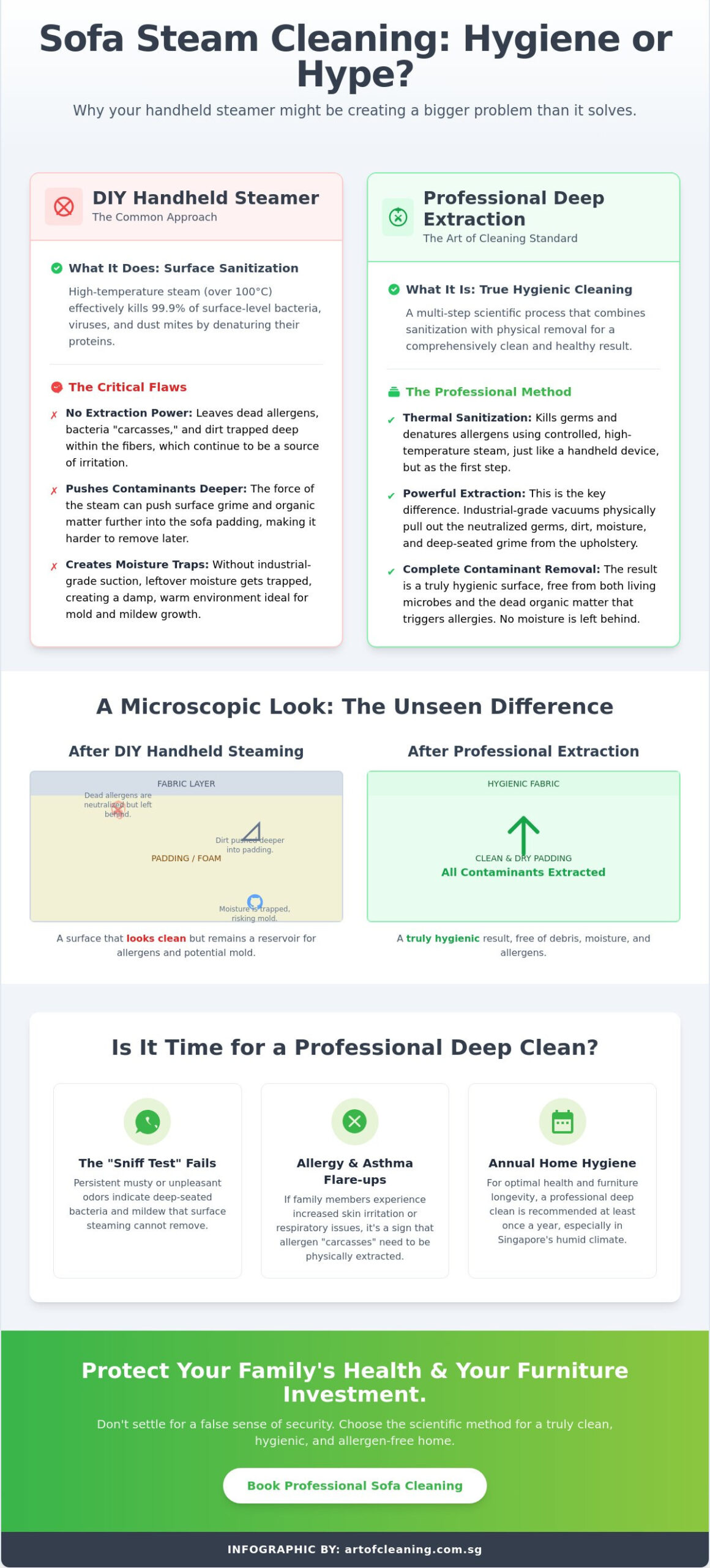
There’s a critical technical gap between sanitizing a surface and remediating a contaminant. Understanding how steam cleaning works is essential for any homeowner. Steam is exceptionally effective at killing 99.9% of bacteria and dust mites by rupturing their cellular structures. The problem lies in what happens next. Without professional-grade extraction, the microscopic remains of these organisms stay trapped within the porous layers of your sofa padding. You aren’t removing the problem; you’re simply neutralizing it and leaving the debris behind.
Visible cleanliness can be deceptive. A sofa might look pristine after a quick steam, but the biological triggers for asthma and skin irritation are still present. True home hygiene requires the physical removal of these “carcasses.” When we quantify home contaminants, we often find that surface-level steaming actually increases the biological load over time. Without proper suction, you provide the moisture needed for new colonies to thrive in the damp, warm interior of your furniture.
Why Surface Steaming is Trending in Singapore
The surge in popularity of the portable sofa steam cleaner is fueled by a perfect storm of local environmental factors and aggressive social media marketing. Singaporeans are increasingly health-conscious, particularly regarding respiratory health and pediatric allergies. Viral videos showing “instant” stain removal have convinced many that a handheld device can replace professional care. It’s a tempting proposition for a busy family looking to save time and money.
These marketing campaigns often overlook the limitations of consumer-grade hardware. While these tools are excellent for immediate spot treatments, they lack the vacuum power to pull liquid and dirt out from deep within the cushion. Relying solely on DIY methods can lead to moisture retention, which is a significant risk in our tropical climate. For those looking to understand the full requirements of professional maintenance, exploring specialized Sofa Cleaning Singapore services provides a clearer picture of the necessary steps for long-term furniture preservation and family safety.
The Science of Steam: How High Temperatures Affect Upholstery
The efficacy of a sofa steam cleaner lies in its ability to utilize gaseous water as a vehicle for heat transfer. Unlike liquid water, which can be blocked by the surface tension of tight fabric weaves, steam vapor consists of microscopic droplets that penetrate deep into porous upholstery layers. This allows the heat to reach the internal foam where dust mites, skin cells, and microbial colonies congregate. In the high-humidity environment of Singapore, where dust mite populations can surge rapidly, this thermal penetration is a primary tool for environmental health management.
Thermal disinfection is the core mechanism at play. When steam exceeds 100°C, it triggers a process called protein denaturation. This effectively “unfolds” the molecular structure of bacteria, viruses, and allergen proteins, rendering them inactive. For households struggling with persistent respiratory triggers, this microscopic intervention is vital. However, the application of heat must be precise. Applying intense heat to organic stains, such as milk, blood, or perspiration, can lead to a “cooking” effect. The heat binds these proteins to the fabric fibers, creating a permanent chemical bond that often resists all future cleaning attempts.
Thermal Disinfection vs. Physical Dirt Removal
A common misconception is that steam “dissolves” dirt. While heat successfully loosens the bond between oily grime and fabric, it does not physically eliminate the matter. Without a powerful vacuum component, you’re simply creating a “mud effect.” The steam turns dry, abrasive dust into a liquid sludge that sinks deeper into the sofa’s structural padding. Thermal disinfection is the process of using controlled heat to deactivate pathogens and microbes without physically removing them from the surface. To achieve a true deep clean, this sanitization must be followed by high-power extraction to pull the deactivated contaminants out of the home entirely.
Risks of High Heat on Delicate Fabrics
Not all upholstery is designed to withstand the rigors of high-temperature vapor. Many modern Singaporean homes feature sofas made from synthetic blends like polyester or acrylic, which have relatively low melting points. Excessive heat can cause these fibers to shrivel or fuse, permanently altering the texture of the piece. Furthermore, many high-end furniture brands use heat-sensitive adhesives to bond fabric backings. Over-steaming can lead to delamination, where the fabric separates from its support structure and creates unsightly ripples.
Natural materials like leather require even more caution. Introducing steam to leather can strip away essential oils, leading to cracking and irreversible structural damage. Before attempting a high-heat treatment, it’s often safer to consult a specialist for professional sofa cleaning to determine the thermal tolerance of your specific fabric. This meticulous approach ensures that your pursuit of hygiene doesn’t result in the accidental destruction of your furniture’s aesthetic and structural integrity.
Myth-Busting: Why a Handheld Steamer Isn’t a True Deep Clean
Consumer marketing often portrays the sofa steam cleaner as a magical wand that makes grime vanish into thin air. In reality, matter cannot simply disappear. Physics dictates that when high-pressure vapor hits a porous surface, it follows the path of least resistance. Instead of lifting dirt away, a handheld steamer often pushes liquefied contaminants deeper into the structural foam of your furniture. This creates an invisible reservoir of organic waste that remains trapped long after the surface appears dry.
The most significant technical deficiency of home units is the “Extraction Gap.” Professional-grade systems used by specialists are designed with industrial-strength vacuum motors that provide up to 10 times the suction power of a standard retail unit. While a home steamer might sanitize the top layer of fabric, it lacks the pneumatic force required to pull moisture and suspended solids back out. This leaves your sofa’s internal layers damp and laden with the very allergens you were trying to eliminate. Without this extraction, you’re essentially leaving a “microbial soup” to fester inside your cushions. For homeowners seeking to understand the full scope of what professional sofa cleaning services entail, including the latest 2025 ANSI/IICRC S300 protocols, the complete 2026 guide to professional upholstery hygiene outlines the clinical-grade standards that consumer devices simply cannot replicate.
The Humidity Trap: Mold Risks in Singapore’s Climate
In Singapore, our environment presents a unique challenge for DIY upholstery care. With ambient humidity levels frequently hovering around 80%, evaporation is significantly hindered. When you saturate a sofa with a consumer sofa steam cleaner, you often initiate a dangerous countdown. Fungal spores and mold colonies can begin to establish themselves within a 24-hour window if moisture remains trapped in the foam. While professional processes achieve near-total dryness in about 2 hours through high-airflow extraction, DIY attempts often leave the sofa damp for 12 hours or more. This extended drying time creates the perfect incubator for mildew, which can trigger severe respiratory issues for sensitive family members. For a comprehensive look at how Singapore’s climate specifically affects your furniture’s internal ecosystem, the 2026 guide to couch cleaning Singapore details the advanced extraction technologies designed to combat these tropical humidity challenges.
The ‘Mud-Caking’ Phenomenon
If you’ve ever noticed your sofa feeling stiff or looking slightly darker after a home steam session, you’ve likely experienced “mud-caking.” This occurs when steam vapor mixes with accumulated dry dust and skin cells to create a dense, cement-like residue. Once this sludge dries within the fibers, it becomes significantly harder to remove and can actually accelerate the wear of the fabric through microscopic abrasion. At Art of Cleaning, we emphasize the necessity of a thorough industrial-grade dry vacuuming phase before any moisture is introduced. Without this critical step, you aren’t cleaning your sofa; you’re essentially painting it with a layer of microscopic mud that compromises both hygiene and comfort.
When to DIY and When to Call Upholstery Specialists
A handheld sofa steam cleaner is a practical tool for immediate maintenance, but it’s not a universal solution for home hygiene. These devices excel at surface-level sanitization of non-porous areas and the quick treatment of fresh, water-based spills. If you’ve just dropped a glass of water or want to refresh the surface of a synthetic armchair, a consumer-grade steamer provides a helpful first response. However, relying on these tools for deep restoration often leads to the “mud-caking” and moisture traps discussed earlier in this guide.
The “Sniff Test” is your most reliable diagnostic tool for determining when DIY efforts have reached their limit. Odors are the gaseous byproducts of active bacterial metabolism. If your sofa emits a persistent musty or sour smell, it indicates that a microbial colony is thriving deep within the internal foam. A surface-level sofa steam cleaner cannot reach these depths. Attempting to “steam out” a smell often introduces more moisture, which provides the bacteria with the hydration they need to multiply. When odors persist after a surface clean, it’s a clear signal that the biological load has moved beyond the reach of consumer hardware.
Viewing upholstery cleaning services singapore as a health investment rather than a luxury is essential for long-term home safety. While DIY methods focus on what you can see, professional intervention targets the invisible allergens that cause skin irritation and respiratory distress. If you’re noticing yellowing fabric, unexplained watermarks, or persistent musty smells, your furniture requires clinical-grade remediation rather than simple aesthetic tidying. Families dealing with these persistent issues will find that professional couch cleaning in Singapore using clinical-grade sanitation methods addresses the deep-seated allergens and bacteria that consumer steamers consistently fail to eliminate.
The Annual Maintenance Framework
Maintaining a healthy living space requires a tiered approach to upholstery care. We recommend the following schedule to balance convenience with deep hygiene:
- Weekly: Use a vacuum cleaner equipped with a HEPA filter to remove dry particulate matter and skin cells before they sink into the fibers.
- Monthly: Perform light surface steaming for sanitization, ensuring you don’t over-saturate the material.
- Bi-Annually: Schedule a professional deep hot water extraction to remove the accumulated “microbial soup” that DIY tools leave behind.
Red Flags That Require Professional Intervention
Certain scenarios make DIY steaming dangerous for your furniture’s integrity. Protein-based stains, such as sweat, urine, or food particles, are particularly risky. Introducing high heat to these substances can permanently denature the proteins, chemically bonding the stain to the fiber and making it impossible to remove later. Furthermore, high-value fabrics like velvet, silk, or complex designer blends can suffer irreversible “pile distortion” or color bleeding when exposed to uncontrolled steam. For these delicate materials or post-illness decontamination, the precision of a trained specialist is required to meet medical-grade hygiene standards. If you’re unsure about your fabric’s tolerance, it’s best to contact us for a professional assessment before applying heat.
The Art of Cleaning Standard: Beyond Simple Steaming
While a consumer sofa steam cleaner provides a basic level of surface sanitization, true environmental health requires a more rigorous, clinical approach. At Art of Cleaning, we don’t just treat the visible fabric; we remediate the entire internal structure of your furniture. Our methodology bridges the gap between simple steaming and deep-tissue upholstery restoration. By integrating high-temperature thermal sanitization with industrial-grade extraction, we ensure that deactivated pathogens and loosened grime are physically removed from your home, rather than being pushed deeper into the foam as discussed in previous sections.
Our commitment to safety is reflected in our choice of NEA-approved, family-safe cleaning solutions. These pH-balanced pre-treatments are specifically formulated to break down complex organic bonds without leaving behind harsh chemical residues that could irritate sensitive skin or trigger respiratory issues. In our specialized process, we utilize medical-grade equipment designed to remove 99% of common household allergens. This level of precision is what differentiates a standard service from an artisanal hygiene protocol. We prioritize the well-being of your family by ensuring your living space is free from the microscopic debris that DIY tools often leave behind.
Our Professional Upholstery Hygiene Protocol
We follow a systematic journey to ensure your sofa is both visually pristine and microscopically safe. This isn’t a one-size-fits-all approach; it’s a calculated sequence of actions designed for maximum impact. Each step is performed with the quiet confidence that comes from years of specialized training.
- Step 1: Industrial-grade dry vacuuming. Before moisture is introduced, we use high-power suction to remove loose contaminants, skin cells, and abrasive dust that would otherwise turn into a “mud-caking” residue.
- Step 2: Targeted steam application. We apply controlled thermal vapor to achieve disinfection, effectively neutralizing dust mites and bacteria at a cellular level.
- Step 3: Deep hot water extraction. This is the most critical phase. We use high-pressure extraction to pull the “cooked” grime and moisture out of the furniture, ensuring the sofa is left clean, sanitized, and ready for rapid drying in Singapore’s humid climate.
Why Singaporean Families Trust Art of Cleaning
Families across the island rely on us because we prioritize health over mere aesthetics. We understand that a clean-looking sofa can still harbor invisible threats like mold spores and dust mite colonies. Our technicians are trained to treat every piece of furniture as a unique craft project, applying meticulous attention to every fiber and seam. This artisanal dedication to the “Art” of our craft ensures that your home remains a sanctuary of well-being. For those seeking professional maintenance that balances visual excellence with health-based trust, you can view our pricelist for transparent and specialized care options. We stand as the guardian of your home environment, providing a level of stability and reliability that only a dedicated specialist can offer.
Elevating Your Standard of Home Hygiene
Maintaining a healthy living environment in Singapore’s humid climate requires more than just visual tidiness. We’ve explored how a consumer sofa steam cleaner can neutralize pathogens on the surface but often fails to remove the biological debris trapped deep within the cushions. True hygiene isn’t just about killing bacteria; it’s about the physical extraction of allergens and contaminants that compromise your family’s respiratory health. By recognizing the limitations of DIY tools and the risks of moisture retention, you can protect both your furniture’s longevity and your home’s air quality.
Art of Cleaning has served over 10,000 satisfied households across Singapore, utilizing NEA-approved protocols to ensure a medical-grade standard of care. Our presence on MediaCorp and major national platforms stands as a testament to our commitment to artisanal quality and scientific precision. Don’t settle for surface-level results when your family’s well-being is at stake.
Book Your Professional Sofa Deep Cleaning Today
It’s time to transform your sofa from a hidden reservoir of allergens into a truly safe sanctuary for your loved ones.
Frequently Asked Questions
Is it better to steam clean or dry clean a sofa in Singapore?
The choice depends entirely on your sofa’s fabric composition and your hygiene goals. Steam cleaning is superior for deep sanitization and killing microbes, whereas dry cleaning is reserved for delicate, non-colorfast fabrics like silk or velvet that might shrink. For most fabric sofas in Singapore, professional steam cleaning combined with extraction offers the most comprehensive health benefits for families.
Can steam cleaning damage my fabric sofa?
Excessive heat can cause irreversible damage to specific upholstery types. Synthetic fibers like polyester can melt or shrivel when exposed to uncontrolled temperatures from a low-grade sofa steam cleaner. Additionally, high moisture levels can weaken the adhesives used in furniture construction, leading to fabric delamination or rippling. Always check the manufacturer’s care tag before applying any thermal treatment to your furniture.
How long does a sofa take to dry after professional steam cleaning?
Professional processes typically achieve near-total dryness within 2 to 4 hours. This rapid turnaround is possible because industrial-grade extraction systems remove approximately 90% of the moisture used during the process. DIY methods often leave sofas damp for 12 hours or more. This extended drying time significantly increases the risk of mold growth in Singapore’s 80% ambient humidity.
Does steam cleaning kill all dust mites in the sofa?
High-temperature steam effectively neutralizes dust mites through thermal disinfection. While the heat kills the organisms, the actual allergic triggers are their microscopic remains and waste products. A sofa steam cleaner without powerful extraction leaves these “carcasses” inside the fabric. True remediation requires the physical removal of these biological particles through high-power suction to ensure a healthy living environment.
Can I use a garment steamer to clean my couch?
Using a garment steamer is generally ineffective and potentially harmful for upholstery. These devices lack the pressure needed to penetrate deep into the foam and have no mechanism for soil extraction. You’ll likely end up with a damp surface that pushes dirt deeper into the cushions. This creates a perfect habitat for bacteria and fungal spores to thrive within the padding.
How often should I professionally clean my sofa in a humid climate?
We recommend a professional deep clean every 6 months to manage the high biological load typical of Singaporean homes. Our tropical environment accelerates the accumulation of dust mites, skin cells, and mold spores. Regular bi-annual maintenance ensures these contaminants don’t reach levels that trigger asthma, eczema, or other respiratory sensitivities for your family members.
Is steam cleaning effective for removing pet urine odors?
Steam alone often worsens pet urine smells by “cooking” the urea proteins into the fabric fibers. This heat-setting makes the odor permanent and much harder to remove later. Effective urine remediation requires specialized enzymatic pre-treatments to break down the organic crystals. This must be followed by high-power extraction to pull the liquid out of the sofa’s structural padding entirely.
What is the difference between a steam cleaner and a carpet extractor?
A steam cleaner uses high-temperature vapor primarily for sanitization and loosening surface grime. A carpet or upholstery extractor uses a combination of water pressure and powerful vacuum suction to physically lift soil out of the material. Professional services often integrate both technologies. This ensures a level of hygiene that is both microscopically sanitized and physically free of deep-seated contaminants.
Pingback: Sofa Cleaning in Singapore: The Ultimate 2026 Guide to Home Hygiene – Art of Cleaning Pte Ltd
Pingback: Sofa Cleaning Services Singapore: The 2026 Professional Buying Guide – Art of Cleaning Pte Ltd
Pingback: Couch Cleaning Singapore: The 2026 Guide to Deep Hygiene and Fabric Restoration – Art of Cleaning Pte Ltd