
What if a cleaner’s visit worked better when you decided the priorities before cleaning began? If you’re searching for “Weekly Domestic Cleaning Singapore | Reliable Home Cleaners,” you may already know how quickly household chores compete with work, family time and rest. A recurring visit can make upkeep more manageable when the plan reflects your home and routine.
The key is to agree on what matters most, rather than assume every visit will cover the same tasks. Decide which areas need regular attention, what your household can manage between visits and how to communicate changing priorities. Clear expectations help make each session useful and keep the routine practical.
In this guide, you’ll learn how to set a manageable weekly cleaning plan, define priorities and prepare for professional support. Art of Cleaning provides part-time home cleaning support in Singapore, helping households organise their cleaning needs.
Key Takeaways
- Decide whether weekly support fits your household by weighing recurring chores against work, family time and rest.
- Build a practical routine by identifying your main pain points, ranking priorities, agreeing on scope and reviewing what works.
- For Weekly Domestic Cleaning Singapore | Reliable Home Cleaners, clear communication and realistic expectations make recurring visits easier to organise.
- Prepare for a useful visit by noting priorities, access details and household preferences, without turning preparation into another big cleaning task.
- Art of Cleaning provides part-time home cleaning support. Use your household priorities to guide the discussion.
Is weekly domestic cleaning in Singapore right for your household?
Household chores can keep slipping down the list when work, family commitments and rest all compete for attention. A recurring cleaning visit may reduce the routine upkeep you manage yourself, but weekly support isn’t essential for every home. The right frequency depends on how quickly tasks build up and how much time your household can set aside between visits.
Consider how many people live in the home, how often they’re there and how responsibilities are shared. A busy household may have different upkeep needs from a smaller household where residents divide tasks comfortably. Priorities also vary: one household may focus on shared living areas, while another may want to keep particular rooms manageable. Use these points to shape a discussion, not as a standard checklist of service inclusions.
For readers comparing Weekly Domestic Cleaning Singapore | Reliable Home Cleaners, the useful question isn’t simply whether a weekly visit sounds convenient. Consider whether there’s a repeatable set of priorities and whether your household can plan around a recurring arrangement. Weekly support can add structure, but it also means agreeing on expectations and making space for the routine.
What does weekly home cleaning mean?
Weekly home cleaning means arranging cleaning support at regular weekly intervals. The tasks depend on the agreed scope and your household’s priorities; one checklist or visit duration won’t suit every home. Cleaning is one part of the wider work of household management, so a useful arrangement considers how upkeep fits alongside other responsibilities.
Before setting expectations, identify what you most want help with and define the scope clearly. Your priority might be a regularly used area or a recurring upkeep task. Treat these as preferences to discuss, not as a promise that every service includes the same tasks.
Which households may benefit from a regular routine?
A recurring routine may suit households that want a predictable way to organise domestic cleaning, especially when work hours are full, responsibilities are shared or routine upkeep repeatedly gets postponed. It can also help residents plan ahead instead of deciding from scratch whenever chores accumulate. The benefit comes from choosing a routine that fits the home, rather than defaulting to weekly visits.
There’s a trade-off: repeat visits require ongoing planning and agreement about priorities. If your household’s needs vary considerably, consider whether a weekly rhythm is practical or whether a different routine would fit better. Part-time home cleaning support is distinct from daily domestic maid services. Art of Cleaning provides part-time home cleaning support for households organising their cleaning priorities.
How to turn weekly domestic cleaning into a practical home routine
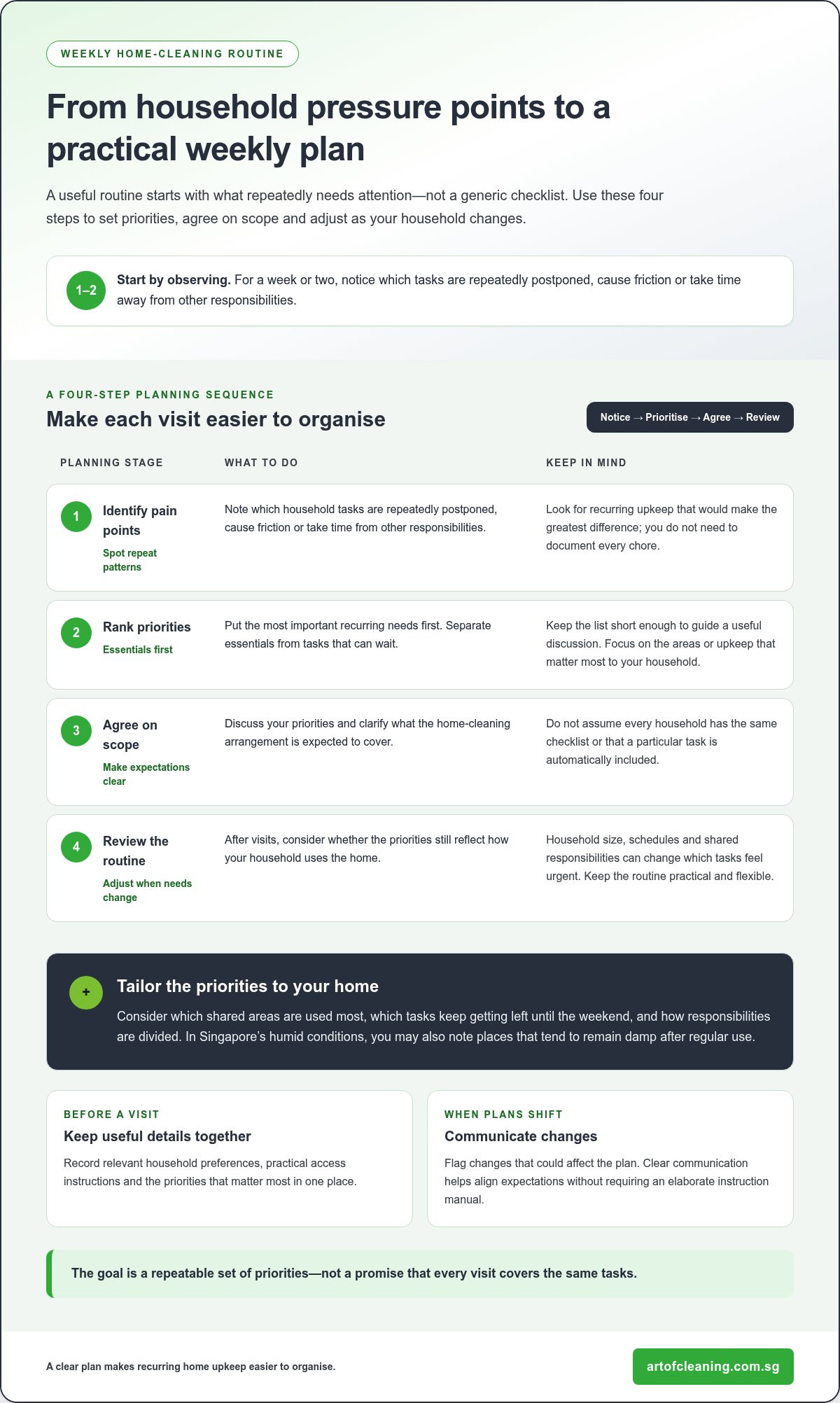
A useful weekly routine starts with your household’s real pressure points, not a generic checklist. One home may need help keeping shared spaces manageable; another may focus on recurring upkeep in areas used every day. In Singapore’s humid conditions, you may also want to note places that tend to remain damp after regular use. These observations help shape a practical discussion without assuming every visit covers the same tasks.
Use this sequence to turn general intentions into clear priorities:
- Identify pain points. For a week or two, notice which household tasks are repeatedly postponed, cause friction or take time away from other responsibilities.
- Rank priorities. Put the most important recurring needs first. Keep the list short enough to guide a useful discussion, and distinguish essentials from tasks that can wait.
- Agree on scope. Discuss your priorities and clarify what the home cleaning arrangement is expected to cover. Don’t assume every household has the same checklist or scope.
- Review the routine. After visits, consider whether the priorities still reflect how your household uses the home. Adjust them as routines or needs change.
Start with household priorities, not a generic checklist
Look for patterns rather than trying to document every chore. Perhaps the same task is left until the weekend, or household members disagree about what needs attention first. Write down the recurring upkeep that would make the greatest difference, then separate it from occasional specialist cleaning needs. The American Cleaning Institute’s home cleaning tips and routines can offer ideas for organising household tasks that you can adapt to your priorities.
Keep the list focused. Note the area or type of upkeep that matters most rather than presuming it is automatically part of a service. A clear, ordered list makes it easier to discuss scope and decide what should take priority within the arrangement.
Make expectations and communication clear
Before a visit, record relevant household preferences and practical access instructions in one place. Explain which priorities matter most and flag changes that could affect the plan. Clear communication helps align expectations; it doesn’t require you to predict every task or prepare an elaborate instruction manual.
Keep the routine flexible enough to reflect real life. Household size, schedules and shared responsibilities can change which tasks feel urgent, and one household’s priorities may not suit another’s. Part-time home cleaning support can provide a structure for discussing those needs. Explore Art of Cleaning’s home cleaning services and use your priority list to guide the discussion.
What makes a weekly home cleaning service feel reliable?
A dependable arrangement is built on shared expectations, not on the assumption that a weekly visit covers every task in the home. Reliability means the priorities and agreed scope are clear, communication can address relevant changes, and expectations remain realistic. For households researching Weekly Domestic Cleaning Singapore | Reliable Home Cleaners, these practical signs are more useful than broad promises that don’t explain what a recurring visit involves.
Use the comparison below to assess whether an arrangement feels organised and understandable as part of your household routine.
| Clear arrangements | Vague or changing expectations |
|---|---|
| Priorities are discussed and the agreed scope is understood. | Household members assume different tasks are included. |
| Relevant preferences and changes can be communicated clearly. | Instructions shift without a shared understanding of priorities. |
| Expectations reflect the agreed arrangement and the home’s needs. | Every visit is expected to cover every household task. |
| Recurring upkeep is distinguished from occasional specialist needs. | Deep cleaning or specialist treatments are assumed to be routine tasks. |
How clear scope supports dependable visits
Agreeing on priorities gives each visit a sensible point of reference. If something changes, a shared understanding makes it easier to discuss what should take precedence instead of relying on assumptions. Routine home cleaning should also be distinguished from deep cleaning and specialist treatments. Carpet, sofa or curtain care, for example, may call for a separate service discussion rather than being presumed part of a recurring home cleaning arrangement. Art of Cleaning’s professional cleaning services include specialist categories for needs beyond routine upkeep.
Cleaning product preferences can also matter to a household. The Environmental Working Group has reported research on chemicals emitted by some cleaning products and discussed potential health risks of cleaning products. This doesn’t establish what any particular service uses. If your household has product preferences, state them clearly as part of the conversation about expectations.
How to judge fit without relying on sweeping promises
Assess whether the arrangement addresses the priorities you’ve described. Is the scope clear? Can you communicate household preferences and changes? Do the expectations sound realistic for the agreed visit? These questions help you focus on practical fit, not unsupported guarantees, claims about staff continuity or assurances that every task will always be completed.
A reliable routine should be understandable to the household and grounded in what has actually been agreed. Make sure everyone sharing responsibility at home knows the key priorities and relevant instructions. Clear communication won’t prevent household needs from changing, but it gives you a steady basis for discussing those changes and keeping expectations aligned.
How to prepare your home for a useful weekly cleaning visit
Preparation should make a visit easier to organise, not leave you with another lengthy cleaning job beforehand. A few clear notes can communicate what matters, where access is needed and which household preferences should guide the work. For households considering Weekly Domestic Cleaning Singapore | Reliable Home Cleaners, the aim is to make the agreed routine practical and expectations clear.
Use this compact sequence before a visit:
- Set priorities. Note the recurring needs you most want addressed and put the most important first.
- Clarify access. Share relevant arrangements through the agreed booking process so the visit can be organised appropriately.
- Flag preferences. Mention household considerations, such as delicate surfaces or areas that need particular care.
- Separate other needs. Record occasional specialist cleaning requirements separately from routine home cleaning.
Create a simple visit-priority list
Keep the list short and easy to understand. Group recurring needs by importance, then distinguish must-address priorities from optional tasks that may be considered if the agreed scope and time allow. This helps focus the discussion without implying that every task is automatically included. A written priority list also gives household members a shared reference for expectations.
Needs can shift as routines change. A household may have different priorities during a busy period or after changes in how rooms are used. Review the list when that happens instead of assuming every visit must follow an identical plan. Keep earlier priorities visible, but update what matters most so the discussion reflects the home’s current needs.
Share practical household information clearly
Provide relevant access instructions and household preferences through the agreed booking process. Keep the information specific and concise: identify delicate surfaces, note any areas that need particular attention, and explain relevant household considerations before work begins. Clear notes are more useful than a long list of general instructions and help keep important preferences in view during the discussion.
Preparation doesn’t mean deep-cleaning the home first. Put away items that could obstruct access to priority areas if that helps, but don’t create an extensive pre-visit chore list for yourself. The purpose is to make the agreed work easier to understand, not to complete it in advance.
Keep occasional specialist needs separate from routine domestic cleaning. A specific concern involving a carpet, sofa or curtains, for example, may need its own discussion rather than being added as an assumed part of every weekly visit. Separating these needs helps you describe the routine clearly and raise specialist requirements distinctly.
Arrange part-time home cleaning support with Art of Cleaning
A consistent home cleaning routine begins with priorities that make sense for your household. Art of Cleaning provides part-time home cleaning support. If you’re considering Weekly Domestic Cleaning Singapore | Reliable Home Cleaners, identify the help you’re looking for and use your household’s needs to shape the arrangement.
Match the service conversation to your household
Before making an enquiry, gather a few practical details about your home routine. Note the recurring upkeep concerns you want to discuss, which needs matter most and any relevant household preferences. This gives the conversation a clear starting point and helps keep expectations grounded in the service scope.
Part-time home cleaning support is not the same as daily domestic maid services. It refers to cleaning assistance rather than daily household staffing. Art of Cleaning provides part-time home cleaning support. Be specific about the assistance you’re seeking and distinguish routine upkeep from other cleaning needs, such as specialist treatments.
Organise your notes into a short list before you get in touch:
- The recurring home cleaning priorities you want to raise.
- Any household preferences or practical considerations relevant to the discussion.
- Questions about the service scope or booking details.
This preparation doesn’t need to be extensive. A few precise details can make it easier to explain what you need and have a focused conversation about your household’s routine.
Take the next step with clear expectations
Before enquiring, think through the priorities you want to address and the practical details that matter to your household. Be clear about the routine upkeep you’re seeking, and avoid assuming that every task, frequency or duration applies to every home. A specific discussion makes it easier to set expectations around the support you need.
Share your priorities and the type of part-time home support you’re seeking with Art of Cleaning. This gives the enquiry a useful foundation without assuming that every home has the same requirements or that one arrangement fits all.
Choosing recurring support is a considered household decision. You’ve already done the groundwork by identifying what matters, thinking through the routine and clarifying expectations. Let those priorities guide your conversation with Art of Cleaning about part-time home cleaning support, and decide what suits your household.
Make your next cleaning step work for your household
A weekly routine doesn’t have to be perfect from the outset. Treat the first arrangement as a starting point: notice whether your chosen priorities still reflect your household’s needs, and refine them as routines change. A brief review can help keep recurring support useful without turning home care into another demanding project.
If you’re considering Weekly Domestic Cleaning Singapore | Reliable Home Cleaners, focus on practical fit: the household needs you want to address, the service scope and the expectations you’re comfortable setting. A clear conversation can turn a general intention to keep up with chores into a more organised next step.
Art of Cleaning provides part-time home cleaning support for households considering professional help with routine cleaning. Bring your priorities and questions to the conversation, then decide what suits your home. Discuss your home cleaning needs and take the next step towards a routine that works for you.
Frequently Asked Questions
Is weekly domestic cleaning worth it for a small household?
It can be worthwhile if routine chores regularly cut into work, rest or other responsibilities. If you searched “Weekly Domestic Cleaning Singapore | Reliable Home Cleaners,” the key consideration for a small household is whether upkeep stays manageable between visits, not just the size of the home. Residents with packed schedules may value recurring support, while people who share chores comfortably may prefer to manage cleaning themselves.
What is usually included in a weekly home cleaning service?
There isn’t one universal task list for every weekly service. The work depends on the agreed scope, so don’t assume a particular room, task or specialist treatment is automatically included. Describe the routine upkeep you’re looking for and discuss the service scope. This helps distinguish regular home cleaning from separate needs such as upholstery or carpet cleaning.
How many hours of weekly cleaning does a home need?
The time needed depends on factors such as the home’s size and condition, household routines and the priorities within the agreed scope. Rather than choosing a duration based only on the number of rooms, consider what you want the visit to address and discuss a realistic plan. A heavily used home may need a different arrangement from one that residents maintain regularly.
Can I choose which areas are prioritised during a cleaning visit?
You can explain which areas matter most and discuss how those priorities fit the agreed service scope. If one shared area sees heavier daily use than a spare room, for instance, explain why it matters to your household. Priorities guide the discussion, but they don’t mean every requested task is automatically included or can be completed during a visit.
Is weekly domestic cleaning the same as hiring a daily domestic maid?
No. Part-time home cleaning support is distinct from daily domestic maid services. A part-time arrangement refers to cleaning assistance rather than daily household staffing. Art of Cleaning provides part-time home cleaning support, not daily domestic maid services. Consider the type of support your household needs and discuss the scope of the cleaning arrangement.
How should I prepare my home for a weekly cleaner?
Make the visit easier to organise by noting the areas you want addressed, sharing relevant access information through the agreed booking process, and flagging household preferences or delicate surfaces. You don’t need to deep-clean beforehand. A brief note about a surface that needs careful handling is more useful than a long list of last-minute chores. Keep the information concise and update it if something changes.
Can weekly cleaning help manage household upkeep in Singapore’s humid climate?
It can provide a recurring opportunity to discuss upkeep priorities, but it can’t control indoor humidity or replace everyday household care. Pay attention to areas that remain damp after use, and follow appropriate care instructions for materials and surfaces. Airing a bathroom after showering and drying visible moisture are practical steps residents can take between visits. Mention relevant concerns when discussing the cleaning scope, without assuming a particular treatment is included.