
A clean-looking carpet can still hold soil that routine vacuuming doesn’t remove. In Singapore, professional carpet cleaning every 3-6 months, with maintenance cleaning in between, is a practical schedule for many offices; that’s why professional commercial carpet cleaning is essential for Singapore businesses seeking to maintain hygienic, presentable workspaces.
It’s understandable to focus on visible stains and appearance, but carpet care also affects indoor conditions, cleaning downtime and how well flooring holds up over time. Singapore’s humidity makes moisture management especially important: keeping indoor humidity below 60% helps prevent mould growth in carpet fibres.
This guide explains how professional cleaning supports indoor air quality, how to plan around drying, how traffic levels affect cleaning frequency and what to consider when choosing a service. You’ll also learn how routine maintenance can help protect your carpet, so you can make a practical decision for your workplace while limiting disruption.
Key Takeaways
- Match the cleaning method to your operating schedule: dry cleaning can allow carpets to be used again within one to two hours, while hot water extraction typically takes 6-12 hours to dry.
- Set a maintenance plan around foot traffic and carpet condition, and vacuum high-traffic areas at least twice a week.
- Protect carpet fibres by removing accumulated soil routinely and following care suited to the carpet material and cleaning method.
- When choosing a professional service, consider the cleaning method, expected drying time and whether technicians hold recognised credentials such as IICRC certification.
- Plan cleaning around occupancy and access needs so the process supports workplace hygiene without unnecessary disruption.
1. Carpet cleaning and indoor air quality in Singapore’s humid climate
Carpet fibres trap dust, soil and other particles tracked into an office on shoes or carried in through open doors. Vacuuming removes loose debris, but dirt can remain embedded below the surface and become airborne as people walk over the carpet. Professional cleaning helps extract accumulated soil instead of merely shifting it around the pile. In Singapore’s humid climate, controlling moisture is also an important part of carpet care.
Keep indoor humidity below 60 percent to help prevent mould growth in carpet fibres. A damp carpet that dries slowly can provide conditions for mould, while trapped moisture may also leave an unpleasant musty smell. Air-conditioning can help regulate indoor conditions, but it doesn’t replace prompt drying after a carpet has been cleaned or exposed to a spill. Facilities teams should address leaks quickly and avoid leaving wet carpeted areas closed without airflow.
Singapore’s cleaning procedures, based on Environmental Cleaning WSQ modules, include basic carpet cleaning. This provides a workplace hygiene reference, but does not by itself establish a legal requirement for how often commercial carpets must be professionally cleaned. Set a routine for vacuuming, spot treatment and periodic professional cleaning, then record completed work. A simple log helps facilities teams track recurring stains, damp areas and spots that need closer attention.
Incorrect cleaning can damage carpet fibres, leave sticky detergent residue or cause lingering dampness that encourages mould growth. Excess water is especially risky when airflow is limited, as moisture may remain in the backing even after the surface feels dry. Unsuitable or strong cleaning products can also affect colour and texture. Before cleaning, identify the carpet material, test a small concealed area and follow the product and equipment instructions.
For a practical routine, remove loose soil first, treat spills promptly and choose a method suited to the carpet. After wet cleaning, improve ventilation and keep people off the carpet until it is dry. Check edges, corners and areas beneath desks, where dirt and moisture are easy to miss. If a musty smell returns after cleaning, look for a persistent source, such as a leak, rather than masking the odour.
Clean carpets support a more hygienic workplace, but they are only one part of indoor air quality. Dust also collects on desks, upholstery and other surfaces, so a coordinated cleaning routine helps limit material that could become airborne. For example, facilities staff can pair carpet vacuuming with regular dusting and prompt spill response. These steps support a cleaner work environment without treating carpet care as a substitute for ventilation or broader workplace cleaning.
2. Drying times and commercial cleaning downtime
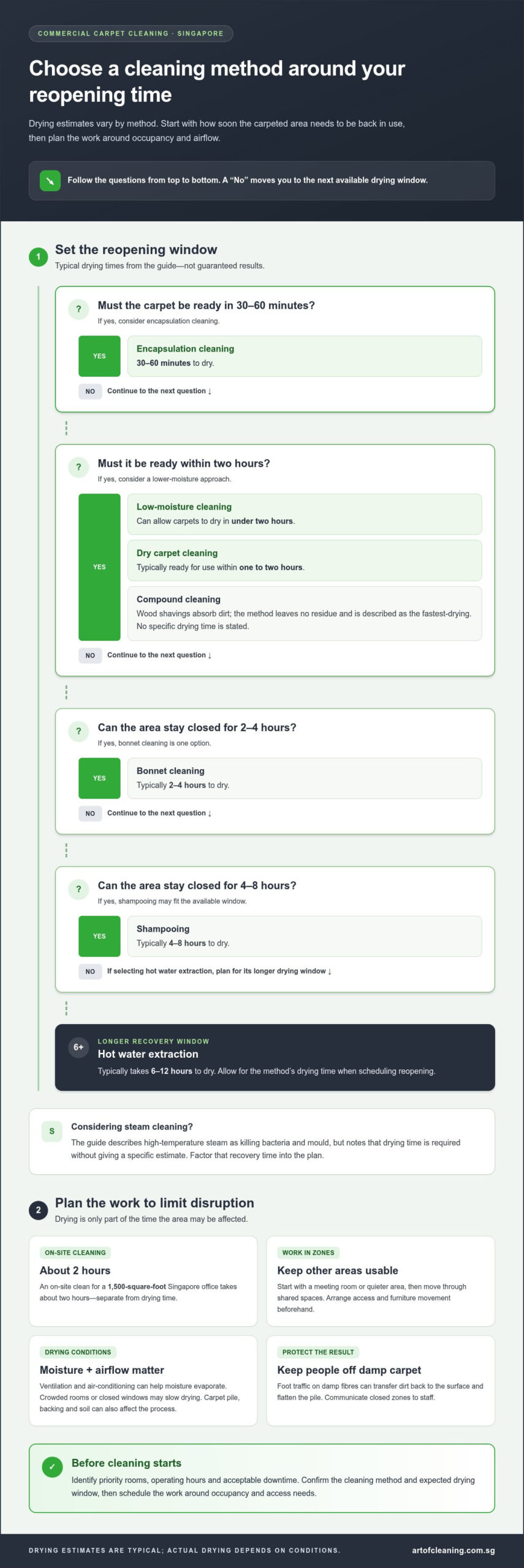
Drying time affects when staff can return to desks, meeting rooms and shared walkways. In Singapore, professional hot water extraction typically takes 6-12 hours to dry. Professional dry carpet cleaning typically allows carpets to be used again within one to two hours. These are useful planning estimates, not interchangeable results: the method determines how much moisture enters the carpet and how long it needs to evaporate.
For a business with a tight schedule, low-moisture methods can reduce the period when carpeted areas are out of use. Low-moisture cleaning can allow office carpets to dry in under two hours, while encapsulation cleaning can dry them within 30 to 60 minutes. Both approaches use less water than methods that saturate carpet fibres, making moisture control relevant in Singapore’s humid conditions. Compound cleaning uses wood shavings to absorb dirt, leaves no residue and dries fastest.
Other methods need more recovery time. Professional bonnet cleaning typically takes 2-4 hours to dry, while shampooing typically takes 4-8 hours. Steam cleaning uses high-temperature steam to kill bacteria and mould, but requires drying time. Choose based on the cleaning need and the hours available before the area must reopen, rather than selecting solely by the shortest stated drying period.
Plan the work around occupancy. An on-site carpet clean for a 1,500-square-foot Singapore office takes about 2 hours, separate from the time needed for drying. A team can schedule work by zones, starting with a meeting room or a quieter office area, then moving through shared spaces. This lets employees use unaffected areas while the cleaned section dries. For a full-floor clean, arrange access and furniture movement beforehand to avoid delays.
Drying depends on moisture, ventilation and the carpet itself. Airflow and air-conditioning can help moisture evaporate, while a crowded room or closed windows may slow drying. The pile, backing and amount of soil can also affect the cleaning process. Keep people off the carpet until it is dry: walking on damp fibres can transfer dirt back to the surface and flatten the pile.
Before work begins, identify priority rooms, operating hours and acceptable downtime. Ask for the method and expected drying window to be included in the schedule, then communicate closed zones to staff. For planning a workplace cleaning schedule, explore professional cleaning options.
3. Recommended cleaning frequency for offices and commercial spaces
A practical starting point for offices in Singapore is professional carpet cleaning every 3-6 months, with maintenance cleaning in between. Treat this as a planning baseline, then adjust it to the space’s foot traffic and visible condition. A reception area used throughout the workday collects soil faster than a private office with occasional visitors. Cleaning both on the same cycle may waste effort in low-use rooms and under-serve busy entrances.
Use traffic levels to refine the schedule. Medium-traffic office carpets typically benefit from professional cleaning every 6 to 12 months, while low-traffic office carpets may require cleaning every 12 to 18 months. High-traffic areas need more frequent attention between professional cleans. Vacuum those sections at least twice a week, and address spills promptly rather than waiting for the next scheduled visit.
Divide the floor plan into zones before setting a cleaning schedule. Mark entrances, corridors, pantry approaches and shared meeting rooms as high-use areas. Schedule private offices and infrequently used rooms separately. For example, a business might clean a busy reception area more often than a lightly used back office. Review the plan when staffing, visitor patterns or office use changes.
Use visible conditions to guide adjustments. Dark traffic lanes, recurring stains and soil near entrances may indicate that vacuuming or spot care needs attention. A cleaning log can record each zone, the date, visible issues and completed work. Reviewing the entries over several cleaning cycles can reveal problem areas and help facilities teams update the schedule. This keeps the plan aligned with actual workplace use instead of applying the same frequency everywhere.
Office upholstery also needs a maintenance plan. Fabric chairs in shared meeting rooms get frequent use, while reception seating may be exposed to visitor traffic and spills. Include sofas and chairs in the same zone review as carpets, noting visible marks and heavily used areas. Treat spills promptly using care appropriate to the fabric, and arrange professional cleaning if embedded soil or recurring stains remain after routine care.
Coordinate upholstery and carpet cleaning with room use. For example, schedule a meeting-room clean when the room can be taken out of service, then return it to the rotation once the work is complete. Review both schedules if a room’s purpose changes, such as when a quiet office becomes a shared workspace. A zone-based calendar helps facilities teams maintain consistent care without treating every carpet and upholstered seat as equally busy.
4. Carpet lifespan and maintenance
Carpet lifespan partly depends on protecting fibres from abrasive soil. Grit tracked in on shoes can settle between fibres and wear them down as people walk across the floor. In a busy Singapore office, focus routine care on entrances, corridors and desk-chair routes. Removing loose soil before it is ground into the pile helps preserve the carpet’s texture and appearance.
Many carpet manufacturers recommend hot water extraction. The method flushes soil from carpet fibres and extracts moisture and debris. Always use the manufacturer’s care instructions to guide method selection, because fibre type, backing and construction affect how the carpet should be cleaned. Following those instructions helps avoid treating every carpet as if it has the same needs.
Daily maintenance matters, too. Vacuum with equipment suited to the carpet, paying attention to edges, areas under desks and other spots routine passes can miss. A clean entrance mat can reduce the grit brought in from outside. If a drink spills near a workstation, blot it promptly with a clean cloth rather than rubbing it deeper into the pile. These simple actions help limit staining and soil build-up between professional cleans.
Keep a condition record for each carpeted zone. Note visible wear, persistent marks, loose seams, flattened pile and areas repeatedly exposed to spills. For example, if a corridor develops a dark traffic lane while a nearby office remains clean, adjust maintenance to suit each area. A record also helps facilities teams track changes over time and distinguish ordinary soiling from damage that may need repair.
Cleaning technique affects results as much as frequency. Excess cleaning solution can leave residue that attracts soil, while aggressive brushing may distort delicate fibres. Follow product instructions, use suitable tools and test a discreet area before applying a treatment across the carpet. After wet cleaning, extract moisture thoroughly and let the carpet dry before returning furniture or allowing regular foot traffic.
Arrange professional cleaning when routine vacuuming no longer removes embedded soil, stains keep returning or traffic lanes remain visibly dull. Professional carpet cleaning can address accumulated dirt, while routine care helps keep the surface in better condition between visits. Combine professional cleaning with prompt spill response, entrance-mat care and scheduled vacuuming. This balanced approach supports the carpet’s usable life, but cleaning alone cannot fix worn fibres, damaged backing or other physical defects.
5. Choosing a professional carpet cleaning service
Choose a provider by matching its cleaning method to your carpet, soil level and operating schedule. In Singapore, professional hot water extraction typically takes 6-12 hours to dry, while dry cleaning usually allows carpets to be used again within one to two hours. Ask for a method suited to the carpet’s material and the downtime your workplace can accommodate. Understanding why professional commercial carpet cleaning is essential for Singapore businesses starts with this practical fit, not simply the method name.
When choosing professional carpet cleaning in Singapore, consider whether technicians hold credentials from recognised industry bodies such as the IICRC, the Institute of Inspection Cleaning and Restoration Certification. Credentials are one factor to weigh alongside a clear explanation of the process, drying expectations and how work will be organised in occupied areas. A provider should explain the proposed method in terms you can assess against your workplace priorities.
What steps are involved in professional commercial carpet cleaning? The process typically starts with an inspection of carpet fibres and stains, followed by vacuuming, targeted pre-treatment, the selected cleaning method and moisture extraction. A final inspection checks treated areas for remaining marks or dampness. Knowing these stages helps facilities teams prepare the work area and understand what happens before it reopens.
Professional cleaning and in-house care serve different purposes. Routine vacuuming and prompt spot treatment help control everyday soil, while professional equipment can address embedded dirt more deeply. In-house work takes staff time and requires equipment and cleaning products; professional cleaning involves a service fee and can use specialised methods. Pricing depends on factors such as carpet area, condition, method and access, so request a quote for the job.
For example, an office with a busy reception and a lightly used meeting room may need different cleaning methods or schedules. Consider drying, access restrictions and the type of soil, not just the method’s name. Hot water extraction suits a deep clean, while a low-moisture method can reduce closure time. Matching the approach to the conditions is one reason professional commercial carpet cleaning is essential for Singapore businesses with different carpets and work patterns.
Before booking, document the areas to be cleaned, visible stains and any known carpet-care instructions. Share access requirements and agree on the sequence for rooms that must remain operational. To plan commercial carpet cleaning around your workplace needs, outline the carpeted areas and preferred schedule.
Art of Cleaning: Carpet Cleaning
Art of Cleaning provides Carpet Cleaning for businesses that need professional care beyond routine vacuuming and spot treatment. Choose the service when embedded soil, recurring stains or heavily used office areas call for a thorough clean. For workplaces with other fabric furnishings, Art of Cleaning also offers rug, sofa and mattress cleaning.
Before arranging a service, note the carpeted areas, visible stains and access requirements. Sharing these details helps shape a cleaning plan around your workplace and its operating needs.
Contact Art of Cleaning to discuss carpet cleaning for your workplace, or visit artofcleaning.com.sg.
Make Carpet Care Part of Your Workplace Plan
Understanding why professional commercial carpet cleaning is essential for Singapore businesses starts with treating floor care as part of workplace planning, not a last-minute response to visible marks. Choose a service plan that fits how your business uses its space, and keep a simple record of priorities such as high-use areas, recurring stains and access needs. This gives your facilities team a clearer basis for future decisions.
Art of Cleaning offers carpet cleaning for commercial spaces, alongside rug and sofa cleaning. If your workplace needs care for carpets or other fabric furnishings, identify the areas to include and consider how the work can fit your operations.
Contact Art of Cleaning to discuss your workplace cleaning needs and take a confident next step toward better-maintained interiors.
Frequently Asked Questions
What are the benefits of professional commercial carpet cleaning for Singapore businesses?
Professional cleaning helps businesses address embedded soil and stains that routine upkeep may leave behind, supporting a cleaner appearance and workplace environment. For example, tracked-in dirt can make a reception carpet look untidy even after vacuuming. A planned clean also gives facilities teams an opportunity to identify recurring spills or worn areas and respond before they become harder to manage.
How often should offices and commercial spaces in Singapore have carpets professionally cleaned?
A practical starting point is every 3-6 months, with maintenance cleaning between professional visits. Adjust the schedule to match actual use: medium-traffic office carpets typically benefit from cleaning every 6 to 12 months, and low-traffic areas may need it every 12 to 18 months. Reassess after changes such as a new office layout, more visitors, or repeated spills in a shared area.
How long does commercial carpet cleaning take, and how quickly do carpets dry in Singapore’s humid climate?
For a 1,500-square-foot office, on-site cleaning typically takes about 2 hours, excluding drying. Drying depends on the method: professional dry cleaning usually permits use again within one to two hours, while hot water extraction typically takes 6-12 hours. To keep operations moving, schedule work by room or zone and communicate which areas remain accessible while cleaned sections dry.
How can businesses choose a reliable commercial carpet cleaning company in Singapore?
Choose a company that can explain its cleaning method, planned work sequence and drying expectations for your carpet and workplace. Consider whether technicians hold credentials from recognised industry bodies such as the IICRC, the Institute of Inspection Cleaning and Restoration Certification. Before booking, make sure the proposed scope identifies carpeted areas, stains requiring attention, access arrangements and how the work will fit around staff and room use.
What are the health risks of dirty commercial carpets, including allergens, dust, and mould?
Carpets can hold dust and other particles, which may be disturbed by foot traffic. In Singapore’s humid conditions, damp fibres can also support mould growth. Keeping indoor humidity below 60 percent helps prevent mould growth in carpet fibres. Businesses should respond promptly to leaks and spills, maintain ventilation, and investigate recurring musty odours instead of masking them. Carpet care supports workplace hygiene but does not replace general cleaning or ventilation.
How can businesses minimise disruption and prepare their premises for carpet cleaning?
Prepare by identifying priority areas, clearing movable items and sharing access requirements before the work begins. Let staff know which rooms or walkways will be temporarily unavailable, then arrange alternative routes or meeting spaces. Point out visible stains and recurring spill locations so the cleaning team can plan the work. For a large office, divide the floor into zones and schedule each area around its normal use.