
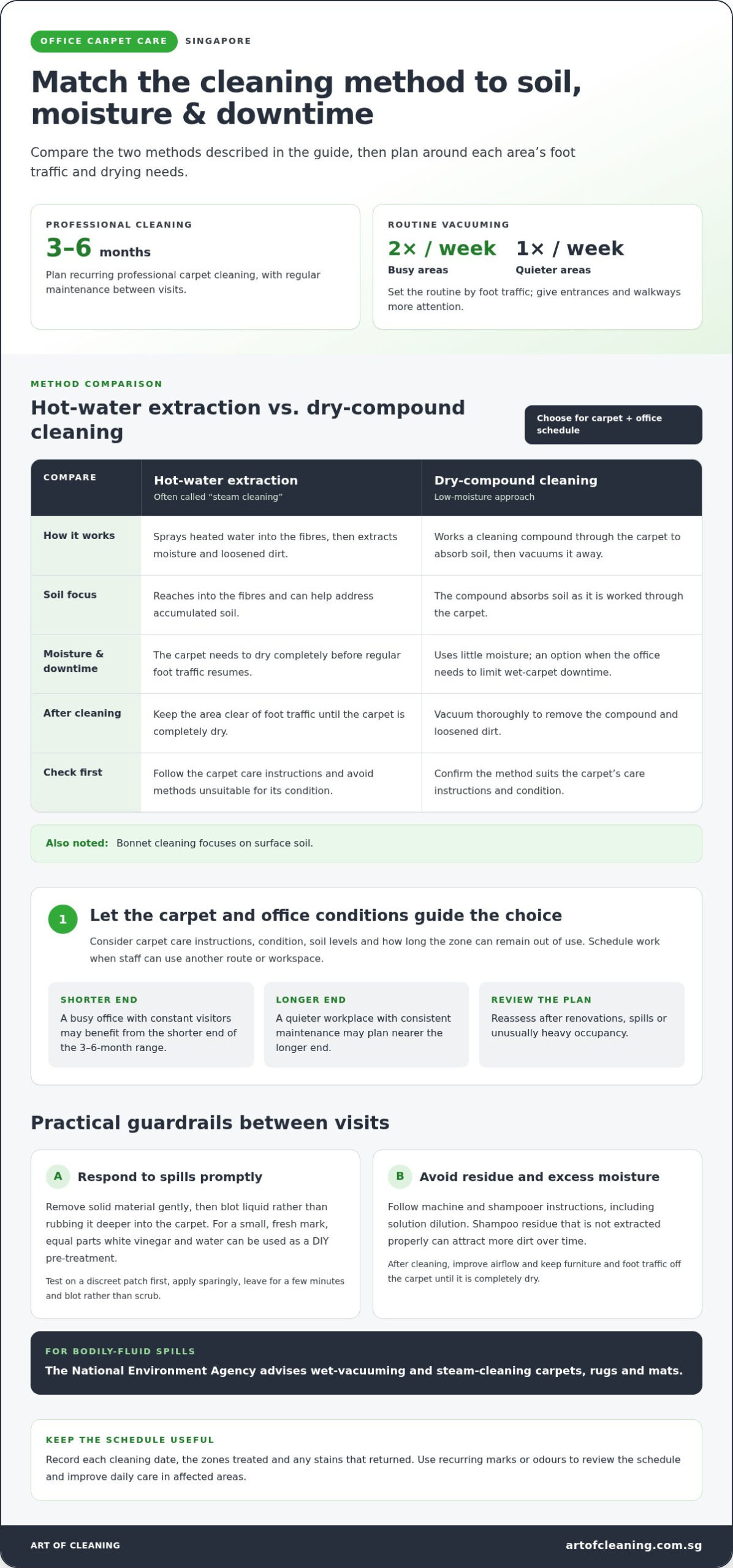
For offices in Singapore, schedule professional carpet cleaning every 3–6 months, with regular maintenance between visits. This helps keep commercial carpets clean and fresh. This guide, Office Carpet Cleaning Singapore: How to Keep Commercial Office Carpets Clean & Fresh, explains how to shape a cleaning routine around each area’s foot traffic.
Everyday foot traffic can leave soil and odours embedded below the carpet’s surface, even when fibres look clean. Read on for practical guidance on keeping commercial office carpets clean and fresh, from vacuuming frequency and professional schedules to hidden dirt and suitable cleaning methods. This Office Carpet Cleaning Singapore: How to Keep Commercial Office Carpets Clean & Fresh guide also explores how offices can maintain cleaner carpets between professional visits.
Key Takeaways
- Set a vacuuming routine by foot traffic: clean busy areas at least twice a week and quieter carpeted areas once a week.
- Plan professional office carpet cleaning every 3–6 months, with regular maintenance between scheduled cleans.
- Compare steam or hot-water extraction with dry-compound cleaning, considering the carpet’s condition and how long the area can remain out of use.
- Use prompt spot-cleaning and careful extraction to limit stains and moisture, then keep carpets clear of foot traffic until they’re completely dry.
1. How Often Should You Clean Your Carpet?
Let foot traffic set the routine: vacuum busy carpeted areas at least twice a week, and quieter areas once a week. At an office entrance, remove grit before it gets pressed deeper into the pile. A strong-suction vacuum with rotating brushes lifts loose dirt, dust and debris. In residential settings, children or pets are a reason to schedule professional carpet cleaning every 6 months.
The right method depends on the carpet’s care instructions, condition and use. Hot-water extraction sprays heated water into the fibres, then extracts the moisture and loosened dirt. Although often called steam cleaning, the process uses hot water and extraction. It can help address accumulated soil, but the carpet must dry completely before regular foot traffic resumes. Always follow the carpet care instructions to avoid using an unsuitable method.
Dry-compound cleaning uses little moisture, making it an option when an office needs to limit wet-carpet downtime. A cleaning compound is worked through the carpet to absorb soil, then vacuumed away. Vacuum thoroughly after treatment to remove the compound and loosened dirt. Check that the method suits the carpet’s care instructions and condition.
For a small, fresh mark, mix equal parts white vinegar and water as a DIY pre-treatment. Test the mixture on a discreet patch first and apply it sparingly. Leave it for a few minutes before cleaning, and blot rather than scrub. When using a machine or shampooer, such as those from commercial cleaning solution brands like Gator, follow the manufacturer’s instructions, including the solution dilution. Shampoo residue that is not extracted properly can attract more dirt over time.
For office carpet cleaning in Singapore, set a routine that reflects foot traffic, soil levels and drying needs. Hotels and hospitality spaces should receive professional carpet cleaning monthly or quarterly, depending on occupancy. For bodily-fluid spills, the National Environment Agency advises wet-vacuuming and steam-cleaning carpets, rugs and mats.
2. Professional cleaning frequency for offices
In Singapore, plan professional carpet cleaning every 3–6 months, with regular maintenance between visits. This interval gives offices a recurring deep-cleaning point without treating every room as equally busy. A reception area with steady visitor traffic may need attention sooner than a meeting room used occasionally. Use visible soil, recurring stains and persistent odours as signs to review the schedule.
Build the cleaning calendar around how each zone is used. Prioritise entrances, corridors, shared work areas and pantry routes, where people repeatedly walk over the carpet. Keep quieter rooms on the same overall plan, while directing more attention to heavily used sections. Clean up spills promptly: waiting for the next scheduled visit can allow a stain to settle into the fibres.
A professional visit should follow a clear sequence. Identify stained or worn-looking areas and note recurring odours. Select a method suited to the carpet and the soil, then allow enough time for the carpet to dry before reopening the zone. Schedule cleaning when staff can use another route or workspace, and keep foot traffic off the carpet until it is completely dry.
Choose the interval by balancing use, condition and disruption. A busy office with constant visitors may benefit from the shorter end of the 3–6-month range. A quieter workplace with consistent maintenance may plan nearer the longer end. Review the calendar after renovations, spills or unusually heavy occupancy, then adjust the next visit to address the affected areas.
Record each cleaning date, the zones treated and any stains that returned. This simple log helps facilities teams spot patterns, such as repeated marks near a pantry, and improve daily care there. It also makes the next service easier to plan. For offices considering a scheduled professional clean, explore professional cleaning services as a practical next step.
3. What’s hidden in your dirty office carpets?
Office carpet fibres trap loose dust, grit and debris carried in on shoes. Entrances and hallways collect soil quickly because staff and visitors cross them repeatedly. Vacuuming with strong suction and rotating brushes lifts loose particles before they become embedded. Give busy walkways more attention than quieter rooms, following the routine set for each zone.
Work methodically: clear small objects, then vacuum each section with slow, overlapping passes. This helps cover the pile evenly, including edges beneath desks and along walls. Move chairs where practical and vacuum the exposed carpet underneath. In meeting rooms, check chair tracks and table edges, where crumbs and fine debris can collect.
For a spill, gently remove solid material, then blot the liquid rather than rubbing it deeper into the carpet. Apply a suitable pre-treatment to a stain and leave it for a few minutes before cleaning. Work in small sections and follow the product instructions. When using a machine, make slow, overlapping extraction strokes to remove moisture without over-wetting the carpet. Keep furniture off the area until it is completely dry.
Improper cleaning can leave shampoo residue that attracts more dirt, while excess moisture can encourage mould or mildew. Damp fibres may also develop lingering odours, and harsh scrubbing can roughen the pile or spread a stain. In Singapore’s humid conditions, indoor humidity below 60 percent helps prevent mould growth in carpet fibres. After cleaning, improve airflow and let the carpet dry fully before reopening the area. These steps protect carpet texture while addressing odours and soil trapped below the surface.
4. Office and commercial carpet cleaning services
A commercial carpet cleaning service should choose its method according to the carpet, soil and office schedule. Hot-water extraction reaches into the fibres and removes loosened soil with the extracted water. Dry-compound cleaning uses a low-moisture compound, while bonnet cleaning focuses on surface soil. Consider how each method suits the carpet and the time available for drying before staff return.
Drying time affects access planning. Dry cleaning typically makes carpets ready for use within one to two hours. Bonnet cleaning usually takes 2–4 hours to dry, while shampooing typically takes 4–8 hours. Hot-water extraction needs complete drying before foot traffic resumes. Schedule work by zone, and keep treated areas closed until dry.
In Singapore, businesses providing non-domestic carpet cleaning services are required to be licensed, according to the National Environment Agency. For workplace safety, restrict access to damp carpet and keep staff off it until it is completely dry.
Before arranging a cleaning service, define the carpeted area and identify high-traffic zones, stains and odours to address. Note the carpet material and care instructions, then choose a method that suits them. A clear scope also helps plan furniture movement, the cleaning sequence and access during drying. For example, cleaning reception separately from workstations can help preserve usable office space.
Commercial carpet cleaning prices depend on the scope of the job, so request a quote. The carpeted area, its condition, the chosen method, stain treatment and site access can all affect the work involved. A large wall-to-wall office carpet may need a different plan from a few stained sections.
For an office carpet cleaning service, request a carpet cleaning quote with the area and cleaning needs you want addressed.
Art of Cleaning: Carpet Cleaning
Art of Cleaning provides carpet cleaning for commercial and residential spaces across Singapore. Arrange a professional clean when routine vacuuming no longer addresses embedded dirt, persistent stains or lingering odours, or when your office needs a planned carpet-care visit. The approach depends on the carpet’s condition, the affected areas and a method suited to its fibres. Share details such as high-traffic zones and problem spots when requesting a quote. Art of Cleaning also cleans rugs, sofas and mattresses, helping businesses care for carpets and other shared furnishings. Contact Art of Cleaning for a free quote for your office carpet cleaning.
Make a Cleaner Workplace Part of Your Routine
A well-maintained office environment takes more than a single clean. Include carpet care in your facilities plan by assigning someone to note changing conditions, recurring problem areas and upcoming workspace changes. These records can help shape future cleaning around how your team uses the space.
Use this guide to office carpet cleaning in Singapore to keep commercial carpets fresh through consistent care and methods suited to the workplace. When embedded soil, persistent stains or odours need professional attention, Art of Cleaning provides carpet cleaning for offices, as well as rug and sofa cleaning for other shared spaces.
Share the areas that need attention and the condition of the carpet when arranging service. A clear description helps focus the conversation on the workplace’s needs and the next practical step. Contact Art of Cleaning today to discuss carpet cleaning for your office. A considered plan can help your workplace feel fresher and ready for the days ahead.
Frequently Asked Questions
How Often Should You Clean Your Carpet?
Vacuum office carpet according to how each area is used: clean busy sections at least twice a week and quieter areas once a week. For professional cleaning, office and commercial carpets in Singapore should be cleaned every 3–6 months, with routine maintenance in between. A facilities log of spills, visible wear and recurring marks can help identify which zones need closer attention.
Can you remove all the stains on the carpet?
No cleaning method can promise to remove every stain. Results depend on the substance, how long it has been on the carpet, the material and any previous cleaning attempts. An old ink mark spread into the pile, for example, differs from a fresh coffee spill. Blot new spills promptly, avoid aggressive scrubbing and use a method suited to the carpet.
What’s hidden in your dirty office carpets?
Carpet fibres can hold dust, grit and debris tracked in on shoes, particularly around entrances and corridors. Art of Cleaning states, “Up to 70% of carpet dirt is hidden deep in fibers.” Regular vacuuming removes loose particles, while embedded soil needs more thorough attention. Food crumbs near desks and fine grit in walkways are practical signs to include in routine checks.
How often should commercial office carpets be professionally cleaned in Singapore?
Schedule professional cleaning every 3–6 months, with regular maintenance in between. A reception space with steady visitor traffic may need cleaning toward the shorter end of that range, while a lightly used meeting room may suit the longer end. Review the plan when spills, recurring stains or heavy use change a carpeted area’s condition, and allow treated sections to dry fully before use.
What carpet cleaning methods are best for Singapore offices: hot water extraction, encapsulation, or dry cleaning?
Choose a method based on the soil level, the carpet care instructions and how soon the space needs to reopen. Hot-water extraction flushes and removes loosened dirt, but the carpet must dry completely before foot traffic returns. Encapsulation applies a cleaning solution that forms residue around soil, which is then removed by vacuuming. Dry-compound cleaning uses an absorbent compound that is vacuumed away with relatively little moisture.
How to remove coffee, food, and ink stains from office carpets safely?
For coffee, blot the liquid with a clean cloth. For food, gently lift the solids before treating the mark. Avoid rubbing, which can push soil deeper or spread it. Ink needs particular care: test a carpet-safe product on a discreet patch and follow its label. Apply treatment sparingly, blot from the stain’s edge inward and keep the area clear until it is dry.