
The gentlest-looking option isn’t always the safest for your curtains. When comparing curtain steam cleaning vs dry cleaning, steam can suit synthetic curtains that need refreshing, while dry cleaning is often safer for delicate fabrics such as silk or wool that may shrink or lose their texture when exposed to water. The fabric, lining and type of stain matter more than choosing one method for every curtain.
It’s understandable to worry about moisture, especially with blackout curtains, whose layers can trap dampness and develop musty odours if they don’t dry properly. This guide compares on-site steam cleaning, dry cleaning and machine washing, and explains how to choose a method for your curtains in Singapore’s humid conditions.
Key Takeaways
- Use the care label, fabric, lining and stain type to narrow down the safest cleaning method before treating curtains.
- Machine washing may suit some cotton and synthetic curtains, while delicate or dry-clean-only fabrics need a different approach.
- Blackout curtains can hold moisture between layers, so proper drying is essential to help prevent musty odours.
- Compare the cleaning options by fabric suitability, stain needs and the effort involved to choose what fits your curtains.
When is steam cleaning the right call?
In Singapore, start by checking the care label, fabric, lining and type of soiling. Steam suits some curtains, but delicate fibres and stubborn stains may call for another approach.
Fabric, Lining, and Stain Factors
Compare the care label with the curtain’s lining and visible soil. An unlined synthetic curtain with dust may suit steam, while a greasy stain may need dry cleaning. Steam uses hot vapour to lift dirt without strong chemicals. In Singapore, traffic fumes and construction dust can work into day-curtain weaves, beyond what regular vacuuming removes. Match the method to the stain and construction, not appearance alone.
Fabric Suitability and Shrinkage Risk
Silk and wool curtains are better suited to dry cleaning when water could shrink them or alter their texture. Synthetic curtains may tolerate steam when their care instructions allow it. Check the manufacturer’s label, including any instructions for the lining. Delicate lining or detailed construction can change the choice even when the outer fabric seems sturdy.
Cleaning Time and Preparation
On-site steam cleaning avoids taking curtains down, saving the effort of handling panels. Dry cleaning involves removal, transport and rehanging, and the home may be without curtains for days. Before choosing either method, read the care label, identify stains, and note the fabric and lining. Clear access around the window and point out marks so the cleaner can account for them.
| Method | Fabric or soil fit | Key consideration |
|---|---|---|
| Steam | Suitable synthetics; dust | Check lining and drying |
| Dry cleaning | Silk, wool; grease stains | Panels are taken away |
| Machine washing | Some cotton or synthetics | Use care-label guidance |
Prioritise fabric safety, then consider the lining and type of stain.
For many homes in Singapore, professional curtain cleaning once a year is a practical baseline. Consider how much traffic dust and construction particles reach the window when planning care.
Comparing machine washing, dry cleaning and on-site steam cleaning
These methods differ in water use, stain treatment and handling. For home washing in Singapore, follow the care label. The choice between professional methods depends on the curtain’s fabric and cleaning needs.
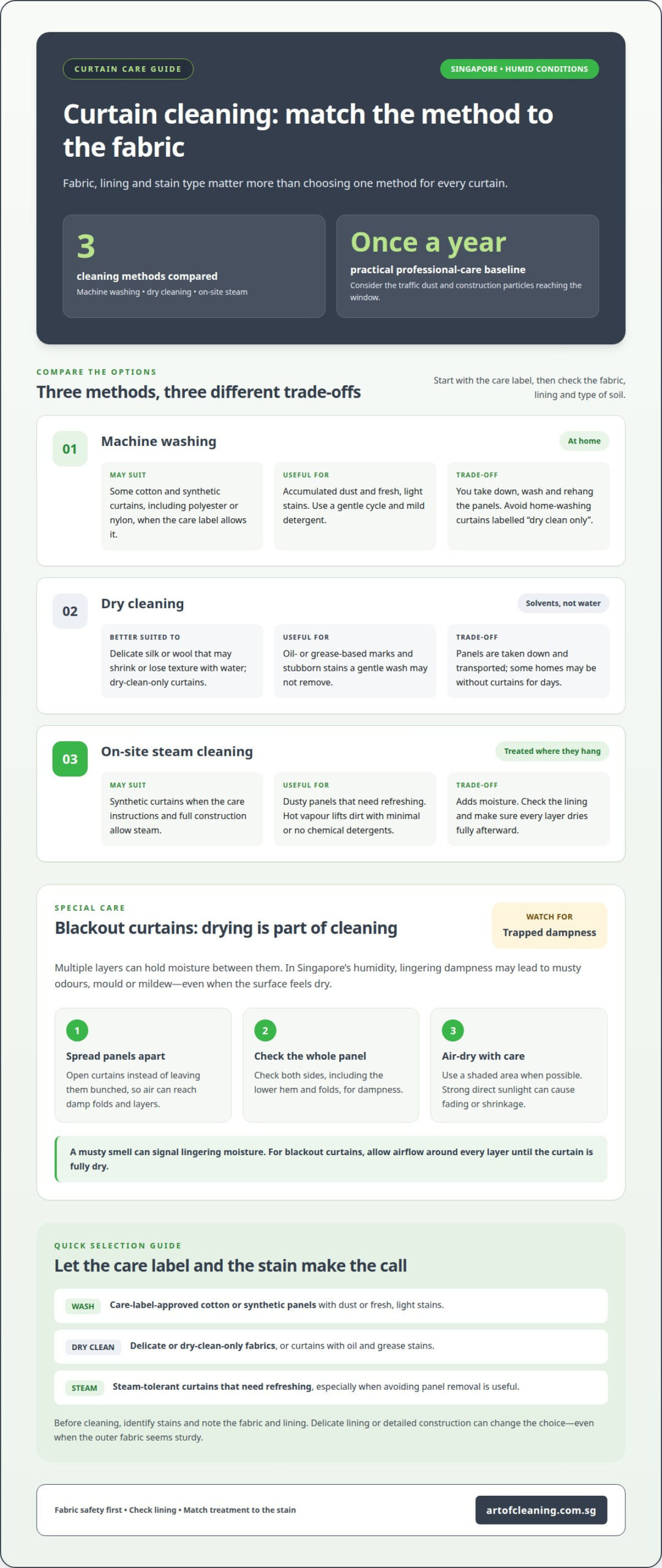
Machine washing may suit cotton and synthetic curtains, including polyester or nylon, when their care instructions allow it. Use a gentle cycle and mild detergent. This can remove accumulated dust and fresh, light stains, but you’ll need to take the panels down and handle them at home. Curtains labelled “dry clean only” generally shouldn’t be home-washed.
Dry cleaning uses solvents rather than water, making it suitable for oil- or grease-based marks. It can also address stubborn stains that a gentle wash may not remove. The trade-off is extra handling: curtains must be taken down, transported and rehung. While the panels are away, some homes may be without curtains for days.
On-site steam cleaning treats curtains where they hang, avoiding removal and transport. It uses hot vapour and typically minimal or no chemical detergents. This can be practical when panels are dusty or need refreshing, but it isn’t right for every fabric. Care-label directions and the curtain’s construction still matter.
- Choose machine washing for care-label-approved cotton or synthetic panels with dust or fresh, light stains.
- Choose dry cleaning for dry-clean-only curtains or oil and grease stains.
- Choose on-site steam when the fabric can tolerate it and avoiding curtain removal is useful.
Home washing lets you control the type and amount of detergent, but you’ll handle removal, washing and rehanging yourself. Professional methods reduce that work in different ways: steam avoids taking panels down, while dry cleaning treats curtains away from home. Art of Cleaning provides curtain steam cleaning in Singapore and Curtain Dry Cleaning for professional curtain care.
Moisture and musty odours in blackout curtains
Blackout curtains have multiple layers, and moisture can become trapped between them. In Singapore, bedroom night curtains also face humidity and moisture from sweat. When dampness lingers inside the layers, musty odours can develop even if the curtain’s surface feels dry. That’s why fabric construction and complete drying matter alongside the cleaning method.
Steam can refresh synthetic curtains and help address odours and allergens. But it adds moisture, so proper drying after treatment is essential. Excess moisture can lead to mould, mildew or lingering odours. This is especially relevant for thick blackout panels, whose inner layers may dry more slowly than the visible face.
After steam cleaning, allow air to circulate around the entire curtain. Open the panels instead of leaving them bunched together, so damp folds aren’t pressed against one another. Air-dry curtains in a shaded area when possible. Direct sunlight can cause fading or shrinkage, so don’t rely on strong sun to speed up drying.
- Check both sides of each panel for dampness, including the lower hem and folds.
- Keep blackout layers spread apart while they dry, allowing air to reach their surfaces.
- Watch for a musty smell, which can indicate lingering moisture in the fabric.
For synthetic blackout curtains, steam can be a practical way to refresh them when drying is managed properly. If the material or lining is delicate, don’t assume steam is suitable just because the outer fabric appears synthetic. A curtain cleaning service should consider the full construction, not just the visible layer. In humid conditions, drying is part of the cleaning process, not an afterthought. Choose a method suited to the curtain, then allow every layer time and airflow to dry fully.
Steam cleaning vs dry cleaning curtains: which is better?
Neither method is best for every curtain. The curtain steam cleaning vs dry cleaning decision depends on fabric, lining, cleaning needs and care instructions. Steam can suit synthetic curtains that need refreshing, while dry cleaning is a better fit for delicate materials that may be harmed by water or steam. Consider the full panel, including its backing and trims, before deciding.
On-site steam cleaning typically uses minimal or no chemical detergents. It can refresh suitable curtains and diminish bacteria and dust mites, which may help households with allergy sufferers. It also avoids taking panels down. But convenience shouldn’t outweigh fabric care: silk and other curtains that cannot take steam need another method. Any lining that reacts differently from the outer fabric also affects the choice.
Dry cleaning uses solvents rather than water. It suits silk and delicate curtains that could shrink or suffer water-related damage. It can also remove odours from cigarette smoke or cooking. For lined or deeply detailed curtains, dry cleaning helps maintain colour and structure. Choosing curtain steam cleaning vs dry cleaning therefore means weighing the cleaning goal against the risk to the curtain’s finish.
- Choose steam for suitable synthetic curtains needing a refresh, with proper drying afterwards.
- Choose dry cleaning for silk, delicate fibres, or lined and detailed panels where preserving colour and structure matters.
- Consider the problem because smoke or cooking odours may make dry cleaning a better fit.
Start with the care label, then assess the lining and the specific issue. A synthetic curtain with general dust may suit steam, while a silk panel with cooking odours points toward dry cleaning. If allergy concerns matter, steam may help diminish dust mites and bacteria, but fabric suitability comes first. Don’t choose steam solely for convenience when the material is delicate.
The better method is the one that addresses the cleaning need while respecting the fabric and lining. Explore professional on-site curtain steam cleaning services and prices in Singapore for a suitable next step.
Art of Cleaning: Carpet Cleaning
Art of Cleaning can extend your home’s cleaning plan beyond curtains with Carpet Cleaning. Carpets and rugs can collect dust and everyday soil, while sofas and mattresses need care suited to their upholstery. Keeping these soft furnishings in view helps you plan cleaning around the materials and surfaces in your home.
Turn to Art of Cleaning when carpets, rugs, sofas or mattresses need professional attention as part of a broader spring cleaning services in Singapore home refresh. Choose the service for the surface you want cleaned, then contact Art of Cleaning to discuss your cleaning needs.
Contact Art of Cleaning to discuss your home cleaning needs.
Make your next curtain-care decision with confidence
Use your next cleaning session to create a simple care record for each window treatment. Note the fabric, lining, care-label instructions and any areas needing attention. This makes future decisions easier, especially if curtains are replaced or their condition changes. For curtain steam cleaning vs dry cleaning, let the material and your priorities guide the choice instead of automatically using one method.
Art of Cleaning also offers Carpet Cleaning, Rug Cleaning and Sofa Cleaning, so you can include other soft furnishings in your home’s care plan. Choose the areas that need attention, then get in touch to discuss curtain care and related cleaning needs.
Contact Art of Cleaning about curtain care and take a considered next step towards a fresher home.
Frequently Asked Questions
Curtain Care: Should I Wash or Dry Clean?
Follow the curtain’s care label, then consider its fabric and stains. Cotton and some synthetic curtains may be machine-washed gently if their instructions allow it. For a panel marked “dry clean only,” avoid home washing; silk and wool may lose texture or shrink when exposed to water. A cotton curtain with light dust, for example, differs from a lined silk panel with a stubborn mark.
How does steam cleaning curtains work?
Steam cleaning directs hot vapour onto curtain fabric to loosen and lift dirt. It typically uses minimal or no detergent, unlike methods that rely on washing the fabric or treating it with solvents. For a synthetic panel with general dust, steam can refresh the material without taking it down. Check care instructions first, especially for lined curtains or delicate trims.
How does dry cleaning curtains work?
Dry cleaning treats curtains with cleaning solvents rather than water. It can suit delicate fabrics that may be affected by water, and can address oil-based marks or odours from cooking and cigarette smoke. The panels are removed for treatment, then returned and rehung. This approach may fit a lined curtain with detailed trim where preserving its colour and structure is a priority.
Which curtain fabrics can be steam cleaned safely?
Some synthetic fabrics, including polyester and nylon, can usually tolerate steam when their care instructions permit it. The fibre alone doesn’t settle the choice: a lining, coating or trim may respond differently from the outer fabric. Inspect a polyester blackout curtain’s label and construction before choosing steam. Delicate silk and wool are better suited to dry cleaning when water could affect them.
Can steam cleaning shrink, fade, or damage curtains?
Yes. Unsuitable heat or moisture can affect delicate curtains, while direct sunlight during drying can cause fading or shrinkage. Silk and wool need particular care because water may change their texture or size. Check the manufacturer’s instructions and assess the lining, seams and trims, not just the main fabric. After cleaning, dry curtains in the shade where possible to limit sun exposure.
How long does curtain steam cleaning or dry cleaning take?
On-site steam cleaning avoids taking curtains down, while dry cleaning can leave a home without curtains for days as the panels are away.
Pingback: Premium Curtain Cleaning Singapore: The Ultimate 2026 Home Hygiene Guide – Art of Cleaning Pte Ltd