
A ship’s carpet can look clean and still need careful treatment. Marine carpet cleaning services in Singapore for ships and yachts should be planned around the areas to be cleaned and the type of cleaning required, as these factors also shape the quote.
It helps to understand the work before arranging cleaning, especially when materials, stains and access vary from vessel to vessel. Sharing these details makes a quote request more useful and keeps the discussion focused on the areas that need attention.
This guide explains what to prepare when requesting a quote, what can affect the cleaning approach and what to consider when caring for marine carpets and upholstery. You’ll also learn how Art of Cleaning’s carpet and upholstery services relate to ship and yacht cleaning, so you can plan a practical next step.
Key Takeaways
- Prepare the carpeted areas, approximate coverage and type of cleaning needed so your quote request gives a clear picture of the work.
- Match the cleaning approach to the carpet’s material, condition and soiling rather than assuming one method suits every shipboard space.
- Plan onboard cleaning around vessel access and operations, including whether work is intended at port or anchorage.
- When assessing a cleaning service, look for clear information about technician training, safety practices and insurance relevant to the work.
Carpet cleaning quotes
A free, no-obligation quote is based on the carpeted area and type of cleaning required. For a ship or yacht in Singapore, describe the spaces clearly. A cabin carpet, a narrow corridor and a larger salon may involve different coverage and cleaning needs. This gives the quote request useful context from the start.
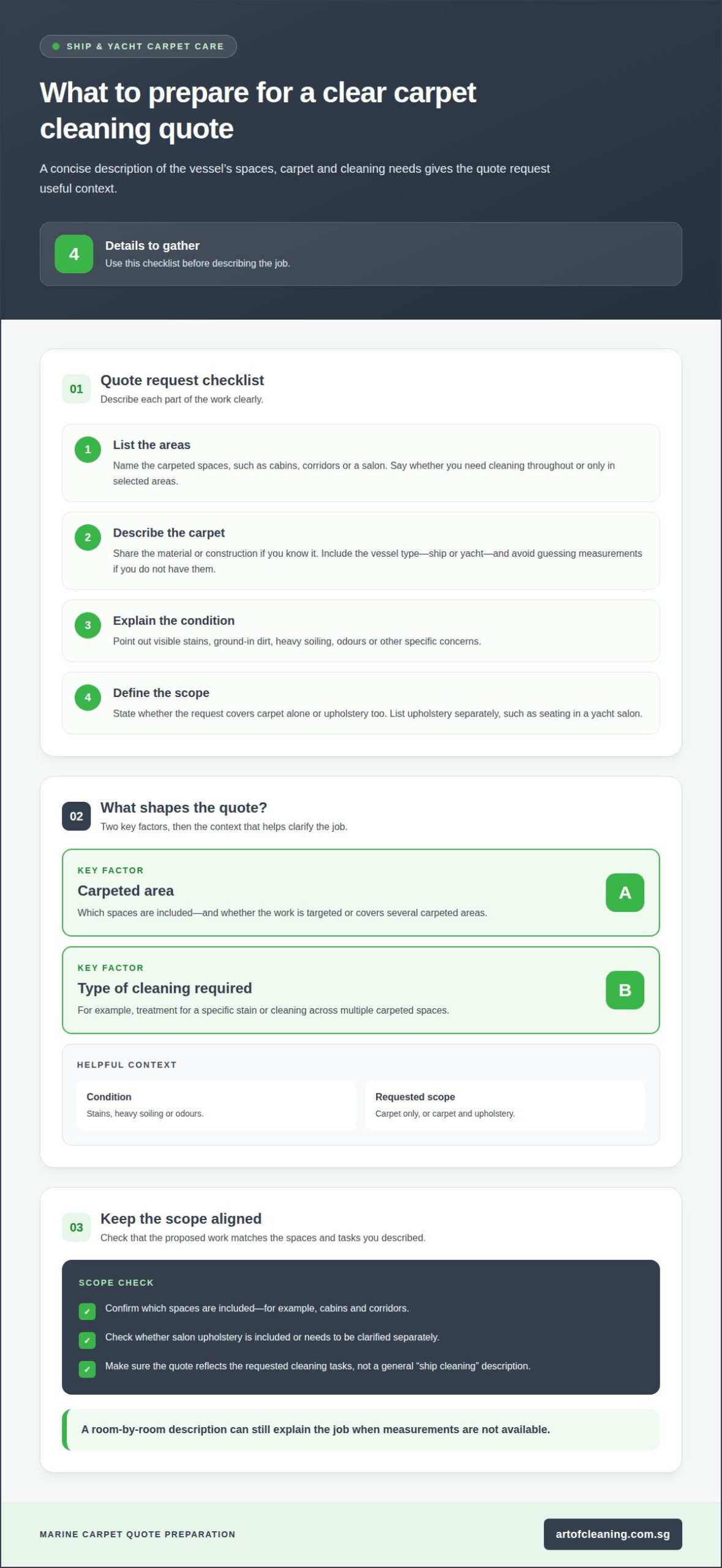
Before requesting a quote, make a simple list of the areas to be cleaned. Note which rooms or sections are carpeted, whether you need cleaning throughout or only in selected areas, and any concerns you’ve noticed. Mention visible staining, ground-in dirt or odours. List upholstery separately, such as seating in a yacht salon, so the requested scope is clear.
- List the areas: identify spaces such as cabins, corridors or a salon.
- Describe the carpet: share its material or construction if known.
- Explain the condition: point out stains, heavy soiling or specific concerns.
- Define the scope: say whether the request covers carpet alone or upholstery too.
These details help distinguish targeted stain treatment from cleaning across several carpeted spaces. Area and cleaning type are key quote factors; condition and requested scope add practical context. A concise list is often clearer than a general request for “ship cleaning.”
Keep the request focused on carpet care. A Singapore cleaning services overview can help separate carpet-related work from other interior cleaning categories. Include the vessel type, such as a ship or yacht, and identify the spaces requiring attention. Avoid estimating measurements if you don’t have them; a clear room-by-room description still helps explain the job.
After receiving the quote, compare it with the areas and tasks you described. If it covers cabins and corridors but not salon upholstery, clarify the scope before arranging the work. A precise request makes it easier to understand what the proposed cleaning includes.
What marine carpet cleaning methods are suitable for shipboard carpets?
The suitable cleaning method depends on carpet construction, soil type and moisture tolerance. Synthetic carpet in a busy passageway may need a different approach from delicate carpeting in a private cabin. The plan should suit the material and vessel interior rather than apply one technique to every surface.
Dry soil removal comes first. Thorough vacuuming lifts loose grit and dust before wet treatment, reducing the chance of driving particles deeper into the pile. A technician can then inspect traffic lanes and stains. For example, oily marks near a galley may need targeted treatment, while general dullness across a corridor calls for broader cleaning.
Common approaches include low-moisture cleaning and hot water extraction. Low-moisture methods use limited liquid and can suit spaces where dampness needs careful management. Extraction applies a cleaning solution, then removes it along with loosened soil. The choice depends on the carpet’s backing, fibre, condition and ability to dry in place.
- Vacuuming: removes loose grit before deeper cleaning.
- Spot treatment: targets a local mark without treating the whole room.
- Low-moisture cleaning: limits liquid used across the carpet.
- Hot water extraction: flushes and extracts embedded soil where the carpet can tolerate the process.
Before work begins, identify the carpet type if you know it, and point out repairs, loose edges or colour-sensitive areas. A test in an inconspicuous spot can help assess colour response. On a yacht, narrow cabins and fixed furniture may also affect equipment access and airflow for drying. These details can influence the method and work sequence.
Discuss the cleaning plan in terms of material, stains, access and moisture. For an overview of available cleaning services, consider which carpet-care details matter for your vessel. A suitable method balances soil removal with careful treatment of the carpet and surrounding interior.
Do Singapore marine carpet cleaners offer onboard cleaning at port or anchorage?
Onboard carpet cleaning at a port or anchorage depends on arranging access to the vessel. A ship alongside and a yacht at anchor involve different boarding and work arrangements. A cleaning plan needs the vessel’s location, access process and operating schedule, not just the carpeted area.
Start by stating whether the vessel will be at a berth or anchorage. Give its name, the carpeted spaces and the preferred work window. For example, a request to clean cabin carpets during a port call should specify which cabins and when they can be accessed. At anchorage, explain how the cleaning team can reach and board the vessel.
Before an onboard visit, coordinate practical details with the vessel’s designated contact. Confirm the boarding point, access arrangements, how equipment can be brought aboard and which spaces will be available. A corridor used by crew or passengers may need a different work sequence from an unoccupied cabin. Clear coordination helps avoid disrupting vessel activities.
- Identify the location: specify port or anchorage and the vessel’s planned position.
- Set the work scope: name cabins, corridors or shared areas requiring cleaning.
- Coordinate access: provide the vessel contact and boarding arrangements.
- Plan around operations: identify occupied spaces and suitable work windows.
These details also help define the work. Area and cleaning type remain central, while access and timing explain how it can be organised. If the ship changes location or the work window shifts, update the arrangements before the visit. This keeps the agreed scope aligned with the vessel’s position and the spaces available.
For a yacht at anchor, include the boarding method and access instructions in your initial request. For a ship in port, state the berth and the areas accessible during the planned visit. This makes the practical question clear: whether onboard cleaning can be arranged at that location within the vessel’s access and operating arrangements.
What certifications, safety standards, and insurance should ship carpet cleaners have in Singapore?
Credentials can indicate whether a cleaner understands carpet-care methods and their limits. IICRC and CRI certifications are relevant credentials to look for. Check that the named training relates to carpet cleaning rather than general cleaning. A certificate should identify its holder and scope, so you can assess its relevance to shipboard work.
Safety also depends on the work plan. Extraction cleaning, for example, can leave carpet damp, while hoses and equipment may create trip hazards in a narrow passage. A suitable plan should address how the work area will be managed, how electrical equipment will be handled and how treated carpet will dry. Chemical labels and product safety information clarify handling precautions.
- Training: look for relevant carpet-cleaning credentials, such as IICRC or CRI certification.
- Method: match the process to the carpet material and its moisture tolerance.
- Worksite safety: plan for hoses, equipment, damp flooring and access through confined spaces.
- Insurance: review written coverage details for property damage and work performed onboard.
Insurance is separate from certification. Training credentials and insurance documentation address different aspects of a cleaning service. Written insurance details should clarify whether the work location and activity fall within the coverage. For example, check whether the stated protection addresses accidental damage to vessel interiors during carpet treatment. The scope matters more than the policy name alone.
Before work begins, record the agreed areas and note existing damage, such as a frayed edge or loose carpet seam. This creates a shared reference for the vessel representative and cleaning team. Also identify who controls access to the work area and how crew movement will be managed. A clear record, relevant credentials, a practical safety plan and suitable insurance documentation together provide a stronger basis for assessing shipboard carpet cleaning in Singapore.
Art of Cleaning: Carpet Cleaning
Art of Cleaning provides Carpet Cleaning for customers planning carpet care. If shipboard or yacht carpets need attention, share the carpeted areas, material details if known and visible concerns when requesting a quote. This gives the discussion a practical starting point without assuming every carpet needs the same treatment.
For other interior fabrics, Art of Cleaning also offers Rug Cleaning, Sofa Cleaning and Mattress Cleaning. Describe each item separately, such as yacht salon seating alongside carpeted cabins, to make the requested scope clear.
Contact Art of Cleaning to discuss your carpet cleaning needs and request a quote.
Plan your vessel’s next carpet-care step
For marine carpet cleaning services in Singapore for ships, plan around the vessel’s maintenance schedule and access to carpeted spaces. This makes it easier to organise care alongside other onboard work, without disrupting areas that remain in use.
Art of Cleaning provides Carpet Cleaning, Rug Cleaning and Sofa Cleaning. If you’re considering marine carpet cleaning services for a ship or yacht, share the areas that need attention and any concerns about the carpet. This gives your enquiry a focused starting point.
Take the next step by contacting Art of Cleaning to discuss your cleaning needs. Thoughtful planning can help you move forward with confidence.
Frequently Asked Questions
Which Singapore companies provide marine carpet cleaning for ships and vessels?
Art of Cleaning provides Carpet Cleaning in Singapore. For vessel-related carpet care, describe the carpeted spaces and your requirements so the conversation can focus on the work involved. Marine carpet cleaning services in Singapore for ships may involve different materials, layouts and access arrangements, so share relevant vessel details when enquiring. Art of Cleaning also provides Rug Cleaning and Sofa Cleaning for those seeking care for other soft furnishings.
How much does ship carpet cleaning cost in Singapore, and what affects the price?
Ship carpet cleaning costs depend on the job and are provided after a quote request. The main factors are the carpeted area and type of cleaning required. Material, condition, stains and the number of spaces help describe the work. For example, a request covering several cabins has a different scope from one targeting a specific stained section. Give a clear description to support a quote that reflects the requested work.
What are the steps involved in cleaning and drying carpets on a ship?
A typical process starts with inspecting the carpet, identifying soiling and selecting a suitable method. Loose debris is removed before targeted stain treatment and deeper cleaning. The carpet then needs airflow to dry. Drying time depends on the method, carpet and conditions onboard. Art of Cleaning says carpets are usually touch-dry within a few hours after cleaning; touch-dry does not necessarily mean fully dry throughout.
How can I request a marine carpet cleaning quote in Singapore for a vessel?
Send a quote request describing the vessel, carpeted areas and cleaning needed. Say whether the request covers selected cabins or multiple shared spaces, and mention visible stains or other concerns. If the vessel is at port or anchorage, explain its location and relevant access arrangements. For instance, name the spaces available during the planned visit. These details help define the requested scope and inform the quote.
How quickly can marine carpet cleaning be completed during a vessel’s port call?
Carpets are usually touch-dry within a few hours after cleaning. Arrange the work around the vessel’s access and operating schedule.
What risks can result from poorly dried ship carpets, including mould, odours, and slip hazards?
Extraction can leave carpet damp, so plan for drying. Hoses and equipment in narrow passages may create trip hazards.