
A yacht’s carpet-care schedule should follow how the vessel is used, not just how it looks. Professional ship and yacht carpet cleaning in Singapore is generally recommended every 3 to 6 months for heavily used or charter yachts, and every 6 to 12 months for personal yachts. Arrange cleaning promptly after events, parties or heavy guest use.
Singapore’s humidity, seawater, sunscreen, food and outdoor footwear can all contribute to carpet stains and lingering odours. Yacht interiors need cleaning methods suited to their materials and conditions: excess moisture or unsuitable techniques may damage fibres or cause colour bleeding. This guide explains how to plan carpet care for personal and charter yachts, what cleaning and sanitisation involve, and how professional service can address soiling while protecting carpet condition. You’ll also learn what affects the process and when specialist carpet care can fit into routine yacht maintenance.
Key Takeaways
- Match carpet-care timing to how often the yacht is used, and build it into routine maintenance.
- Look beyond visible dirt: consider how onboard use and damp conditions affect interior hygiene.
- Trace lingering odours to likely sources such as spills or tracked-in residue before choosing a cleaning approach.
- Use methods suited to yacht carpet fibres to help avoid excess moisture and unnecessary material damage.
Convenience for yacht owners and marine businesses
Singapore’s humid marine environment can leave yacht carpets damp, musty and stained. Salt air, seawater, sunscreen and outdoor footwear can deposit residue on fibres, while food and drink spills add marks, especially around dining areas. On charter vessels, frequent guest turnover can make these issues more noticeable between trips.
On-site marina cleaning can reduce the need to move bulky carpeted items elsewhere. Before scheduling, coordinate access with the marina and vessel manager. Confirm the yacht’s location, boarding arrangements and the areas requiring attention. A clear work plan helps minimise disruption to crew duties or guest preparation. Singapore’s cleaning service options can be considered as part of that planning.
When comparing ship and yacht carpet cleaning services in Singapore, look for a clear description of the work, relevant experience and customer reviews. Read any stated service terms carefully, including what is covered and any limitations. A written scope helps you understand which areas and concerns are included, rather than assuming a general interior clean will address them.
Vessel access arrangements depend on the marina and the yacht’s location. Coordinate entry and work timing with the marina or vessel manager instead of assuming a cleaning team can board freely. Share practical access details in advance, including where the team should meet and which interior spaces need attention.
Marine carpet cleaning costs depend on the area, carpet condition, stain severity, access and work required. Share clear details about salt residue, spills and affected sections so the scope can be assessed accurately. Prices may change without prior notice.
Yacht interior cleaning jobs in Singapore usually take 2 to 4 hours, depending on yacht size and the number of items being cleaned. Carpet use should wait until the cleaned material is dry. Drying time varies with moisture levels, ventilation and the cleaning method.
Before the appointment, remove loose personal belongings and clear movable items from carpeted areas. Point out stains, odours and delicate sections so they can receive attention. Keep walkways accessible, and coordinate onboard access with the person managing the vessel.
Cleaning frequency for personal and charter yachts
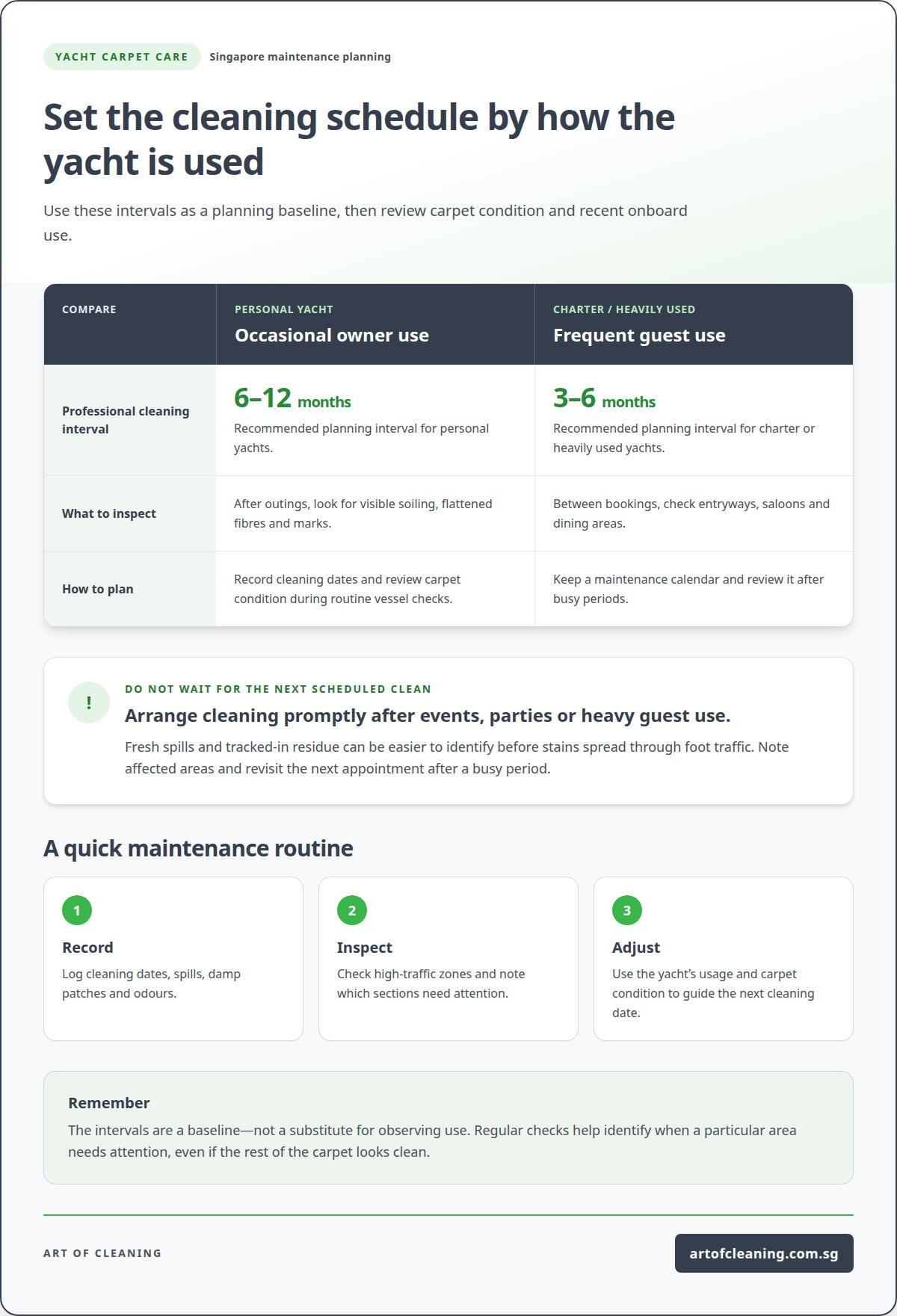
In Singapore, professional cleaning is recommended every 3 to 6 months for heavily used or charter yachts, and every 6 to 12 months for personal yachts. These intervals provide a planning baseline, not a substitute for observing how the carpet is used. A vessel hosting regular guests will collect wear differently from one used occasionally by its owner.
Use a maintenance calendar to record cleaning dates, note high-traffic areas and review carpet condition during routine vessel checks. On charter yachts, inspect entryways, saloons and dining areas between bookings. On personal yachts, look for visible soiling, flattened fibres or marks after outings. These checks help you decide when cleaning is due.
Events, parties or heavy guest usage call for immediate yacht cleaning. A celebration in the saloon, for example, can leave drink spills or tracked-in residue that shouldn’t wait for the next scheduled appointment. Addressing fresh soiling promptly also makes it easier to identify affected areas before stains spread through foot traffic.
Regular professional cleaning can help maintain the appearance and condition of carpets and rugs. It can also fit into wider yacht maintenance alongside checks of upholstery and other interior surfaces. Keep a short record of spills, damp patches and odours. These observations help explain why a particular area needs attention, even when the rest of the carpet looks clean.
Usage is the main scheduling distinction: charter and heavily used yachts need more frequent professional attention than personal yachts. Review the calendar after each busy period, then adjust the next appointment within the appropriate interval. Owners planning routine interior care can also explore professional cleaning services as part of their maintenance planning.
Health and hygiene concerns in yacht interiors
Yacht carpets collect more than visible dust. Singapore’s humidity can leave interior materials damp, while foot traffic brings in soil and residue. Entry mats, saloon carpets and cabin rugs collect different debris, so inspect them separately to identify where routine cleaning needs closer attention.
Unsuitable cleaning can leave carpets excessively wet or cause colour bleeding, shrinkage and fibre damage. Moisture trapped in a poorly ventilated cabin may also contribute to odours and microbial growth. Upholstery and other interior fabrics can be affected by unsuitable products or rough treatment. Match the cleaning method to each material and its condition.
Begin with a practical inspection. Note damp patches, visible soil, food spills and frequently used areas, such as seating near the saloon table. Check whether an odour comes from one carpeted area or several interior surfaces. These observations help distinguish a local spill from a broader moisture concern and direct attention to the affected sections.
Cleaning and sanitisation address different concerns. Cleaning physically removes soil and residue; sanitisation is a separate treatment, not an automatic result of carpet cleaning. First identify the surface and the problem. A drink spill on a rug needs stain-focused attention, while lingering dampness calls for attention to the moisture source and ventilation.
After cleaning, ventilate the cabin and keep loose items off damp carpet. Check the affected area before returning furniture or allowing foot traffic. Record recurring moisture or odours and their locations, such as a cabin corner or doorway. This simple log can reveal patterns and help you plan targeted interior care.
Odour removal and sanitisation
Start with the source, not fragrance. On yachts in Singapore, seawater, humidity, sunscreen, food, drinks and outdoor footwear can contribute to stains and odours. Check entry carpets, saloon rugs and seating areas for spills, dampness or tracked residue. A focused inspection helps establish whether the smell comes from one carpeted section or a wider interior area.
Remove loose debris, then address visible residue with a method suited to the carpet material. Blot a fresh spill rather than rubbing it deeper into the fibres. Avoid soaking the area: excess moisture can leave carpet too wet and contribute to persistent mustiness. Ventilation matters, especially in enclosed cabins where damp fabrics dry slowly.
Odour treatment works best when it addresses the cause. A lingering smell near a dining space may follow a food or drink spill; a damp odour may point to retained moisture. Identify and treat affected sections, then allow them to dry fully before replacing movable items. Masking smells with fragrance leaves the original residue in place.
Sanitisation is separate from soil and stain removal. Choose it according to the surface and concern rather than assuming it is included in every cleaning process. Marine-safe, low-moisture and eco-friendly describe different product or method attributes. Check that the stated suitability and moisture profile fit the carpet and onboard setting.
For recurring odours, note the location, likely trigger and whether dampness returns after cleaning. This record helps distinguish repeated spills from an ongoing moisture issue. A targeted cleaning plan can then address the affected carpet or rug without treating unrelated areas. Explore professional cleaning services when onboard carpets need focused attention for stains, odours or hygiene.
Singapore’s tropical climate can make professional yacht carpet cleaning especially useful when moisture and humidity contribute to odours, staining or microbial growth. If these concerns persist, consider professional help alongside the source-focused steps above. Describe the affected carpet, observed odour or staining, and any recurring dampness so the cleaning approach can address the specific concern. Focus on the affected material rather than using fragrance to cover an unresolved smell.
Art of Cleaning: Carpet Cleaning
Art of Cleaning provides Carpet Cleaning for yacht owners dealing with soiled or odorous carpeted interiors. Share details about the carpet’s condition, visible stains and recurring odours to give the service a clear focus. For rugs and other furnishings, Art of Cleaning also offers Rug Cleaning, Sofa Cleaning and Mattress Cleaning.
Professional carpet care is a practical next step when routine upkeep has not addressed accumulated soil or persistent marks. It can also help you plan interior cleaning alongside regular vessel maintenance. Describe the areas needing attention and the concerns you have noticed, such as damp patches or spill residue.
To discuss carpet cleaning for your yacht, contact Art of Cleaning.
Plan the Next Step for Your Yacht Interior
Prepare a concise brief for the vessel’s interior before your next maintenance appointment. Note which carpeted areas need attention, what you have observed, and whether rugs or upholstered seating should be included in the request. This keeps the discussion focused on specific surfaces and concerns rather than a broad cleaning task. A record of completed work and observations can also help with future planning.
Professional ship and yacht carpet cleaning in Singapore can fit that plan when carpets need more than routine onboard upkeep. Art of Cleaning offers Carpet Cleaning, Rug Cleaning and Sofa Cleaning, allowing you to discuss related soft furnishings together. Share your priorities and the areas you want addressed, then consider the next step for the vessel’s needs. Explore Art of Cleaning’s services and take a considered step towards a fresher yacht interior.
Frequently Asked Questions
What carpet cleaning methods are suitable for ships and yachts?
For professional ship and yacht carpet cleaning in Singapore, the right method depends on the carpet’s fibres, backing and condition. The material and level of soiling should be assessed before choosing a process, especially for fitted carpet near cabin edges or flooring seams. Ask for an approach that avoids unnecessary moisture and protects colour. Testing an inconspicuous area can help assess colour stability before treating a visible section. Please note that not all stubborn stains and spots can be removed thoroughly.
Do Singapore marine carpet cleaners offer onboard or after-hours service?
Onboard cleaning requires arranging vessel access with the marina and whoever manages the yacht. Do not assume after-hours work is standard. For a practical schedule, identify the permitted boarding window, prepare the work areas and coordinate cleaning around crew duties or guest use. For ship and yacht carpet cleaning in Singapore, clear access arrangements help avoid delays and make the planned cleaning period easier to manage.
How often should carpets on ships and yachts be professionally cleaned?
In Singapore, professional cleaning is recommended every 3 to 6 months for heavily used or charter yachts, and every 6 to 12 months for personal yachts. Track busy periods and note where traffic concentrates, such as entrances or shared saloons. Arrange cleaning promptly after events, parties or heavy guest usage, rather than waiting for the next routine appointment.